Published 25 May 2026 | Updated 13 October 2026 by Jane Robinson
Budapest has spent years near the top of every “cheap European city break” list, and for good reason. You can still soak in a grand thermal bath, eat a proper sit-down meal and cross the Danube on a tram for less than the price of a London lunch. But the city isn’t quite the giveaway it was a decade ago, and any guide that tells you otherwise is working from old numbers.
Advertisement
This guide covers what a Budapest trip costs now: flights from the UK, where to stay, how to get around, what to eat, and what the famous baths charge now. Prices are given in forints and pounds, at roughly 415 forints to the pound (May 2026). Exchange rates move, so treat the pound figures as a guide rather than a fixed price.
Is Budapest still cheap in 2027?
Yes, but with a caveat. Budapest is still one of Europe’s best-value capitals, with day-to-day costs running 40 to 50 per cent below Paris or Amsterdam. The catch is that prices have climbed fast.
Hungary has had some of the highest inflation in the EU since 2021, and the forint has taken a battering. Cumulative price rises have topped 50 per cent on many everyday things, so a beer, a bath ticket or a hostel bed costs noticeably more than the figure you’ll see in older blog posts. The reputation is still earned, but the maths has changed.
Here’s how it breaks down. A backpacker can get by on about £25 a day. A mid-range traveller staying in a budget hotel and eating out should budget £45 to £60. A comfortable trip, with a nice room and dinners out, runs closer to £85 to £100 a day. That’s still a lot of city for the money, but it’s worth knowing the real numbers before you book rather than after.
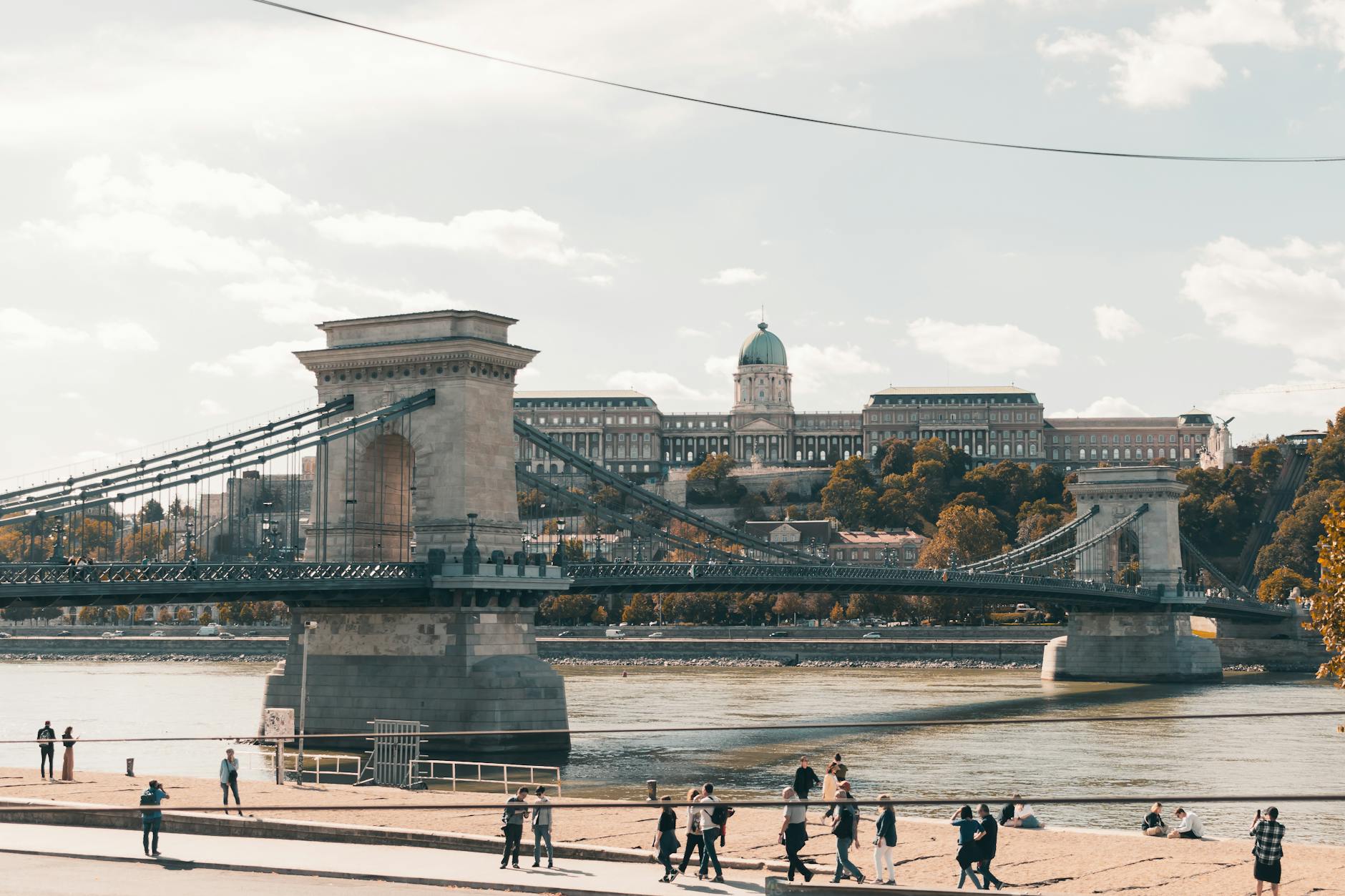
Most of Budapest’s big sights cluster along the Danube, which keeps costs down. The Chain Bridge, Buda Castle, the Parliament and the riverbank promenade are all free to look at and easy to reach on foot or by tram.
The split between hilly Buda and flat Pest matters for budgeting too. Pest holds most of the cheaper hotels, hostels and restaurants, while Buda is quieter and more residential.
Getting to Budapest: cheap flights from the UK
Flights are usually the biggest single cost of a Budapest trip, and they’re also where the easiest savings sit. Wizz Air and Ryanair dominate the route, with off-peak returns often £30 to £60 if you book a couple of months ahead.
Wizz Air runs the widest schedule from London, with daily flights from both Luton and Gatwick. Ryanair flies from London Stansted plus Birmingham, Edinburgh and Manchester. easyJet serves the route from Gatwick, British Airways flies from Heathrow, and TUI runs seasonal flights from Manchester. The flight takes about two hours and fifteen minutes, so it’s an easy short break rather than a long-haul slog.
Prices swing a lot by date. Midweek departures, especially Tuesdays and Wednesdays, are nearly always cheaper than weekends, and January and February are the lowest months of all. Our guide to the cheapest day to book flights covers the timing in detail, and if you’re weighing up the low-cost carriers, here’s how Wizz Air and Ryanair actually compare on safety and reliability. For the wider tactics, see how to get cheap flights from the UK.
| From the UK | Airlines | Flight time | Typical return |
|---|---|---|---|
| London | Wizz Air, Ryanair, easyJet, BA | 2h 15m | £30 to £60 |
| Manchester | Ryanair, TUI | 2h 30m | £40 to £80 |
| Birmingham | Ryanair | 2h 25m | £40 to £80 |
| Edinburgh | Ryanair | 2h 40m | £50 to £90 |
Getting from the airport to the city
Budapest Ferenc Liszt Airport sits about 10 miles south-east of the centre, and the cheap way in is the bus, not a taxi. Taxis from the official Főtaxi rank run on the city’s regulated meter, and a ride into central Pest costs around 14,000 HUF (about £34), including an 800 HUF airport supplement.
The simplest option is the 100E Airport Express, which runs straight to Deák Ferenc tér in the city centre every 10 to 20 minutes. It costs 2,500 HUF (£6), and you need a dedicated 100E ticket, not a standard transport ticket. If you already hold a Budapest travelcard, you can buy a 1,000 HUF (£2.40) add-on instead.
The cheapest route of all is the 200E bus to Kőbánya-Kispest, then the M3 metro into the centre. A single 90-minute ticket at 850 HUF (£2.05) covers the whole trip, though it’s slower and means a change with your bags. For most people arriving for a short break, the 100E is worth the extra £4 or so.
When to visit for the best value
Spring and autumn give you the best mix of decent weather, lighter crowds and lower prices. Winter is cheapest of all, as long as you can handle the cold and don’t mind short days.
Summer is when Budapest is at its liveliest, with ruin bars, outdoor events and the Sziget festival in August, but it’s also the busiest and most expensive stretch. If your main aim is to keep costs down, aim for late autumn or the quieter winter weeks either side of the Christmas markets, when hotel rates drop sharply.
| Season | Temperature | Crowds and prices | Best for |
|---|---|---|---|
| Spring | 4 to 23°C | Building, still good value | Sightseeing |
| Summer | 16 to 28°C | Busiest and priciest | Nightlife and festivals |
| Autumn | 10 to 24°C | Quieter, prices ease | Best all-round value |
| Winter | -1 to 7°C | Cheapest, bar the markets | Baths and Christmas markets |
Where to stay without overspending
Stay in central Pest and you’ll walk to most of what you came for. Districts V, VI and VII put you within reach of the river, the main sights and the ruin bars, which saves you money on transport and time.
Hostels here are some of the best in Europe. Flow Spaces is a quiet, social spot with clean modern dorms at backpacker prices. If you want to be in the middle of the nightlife, The Hive Party Hostel is the pick. For a private room, budget hotels and self-catering apartments in District VII start at roughly £55 to £80 a night.
If you want a bit more comfort, Hotel Moments Budapest on Andrássy Avenue delivers four-star quality at prices that undercut similar hotels in Western Europe. Book a few weeks ahead and avoid the summer peak and you’ll pay noticeably less for the same room.
Compare current Budapest hotel prices on trivago to see which of these rates are available for your dates.
Getting around the city
Budapest’s public transport is cheap, frequent and easy to use, so there’s no need for taxis. Buy a travelcard for anything more than a day or two and you’ll never think about fares again.
A single ticket is 500 HUF (£1.20), but the passes are where the value sits. A 24-hour travelcard is 2,750 HUF (£6.60) and a 72-hour travelcard is 5,750 HUF (£13.85), both covering the metro, trams, buses and trolleybuses. Validate tickets before you travel and keep them on you, as inspectors do check and fines are steep.
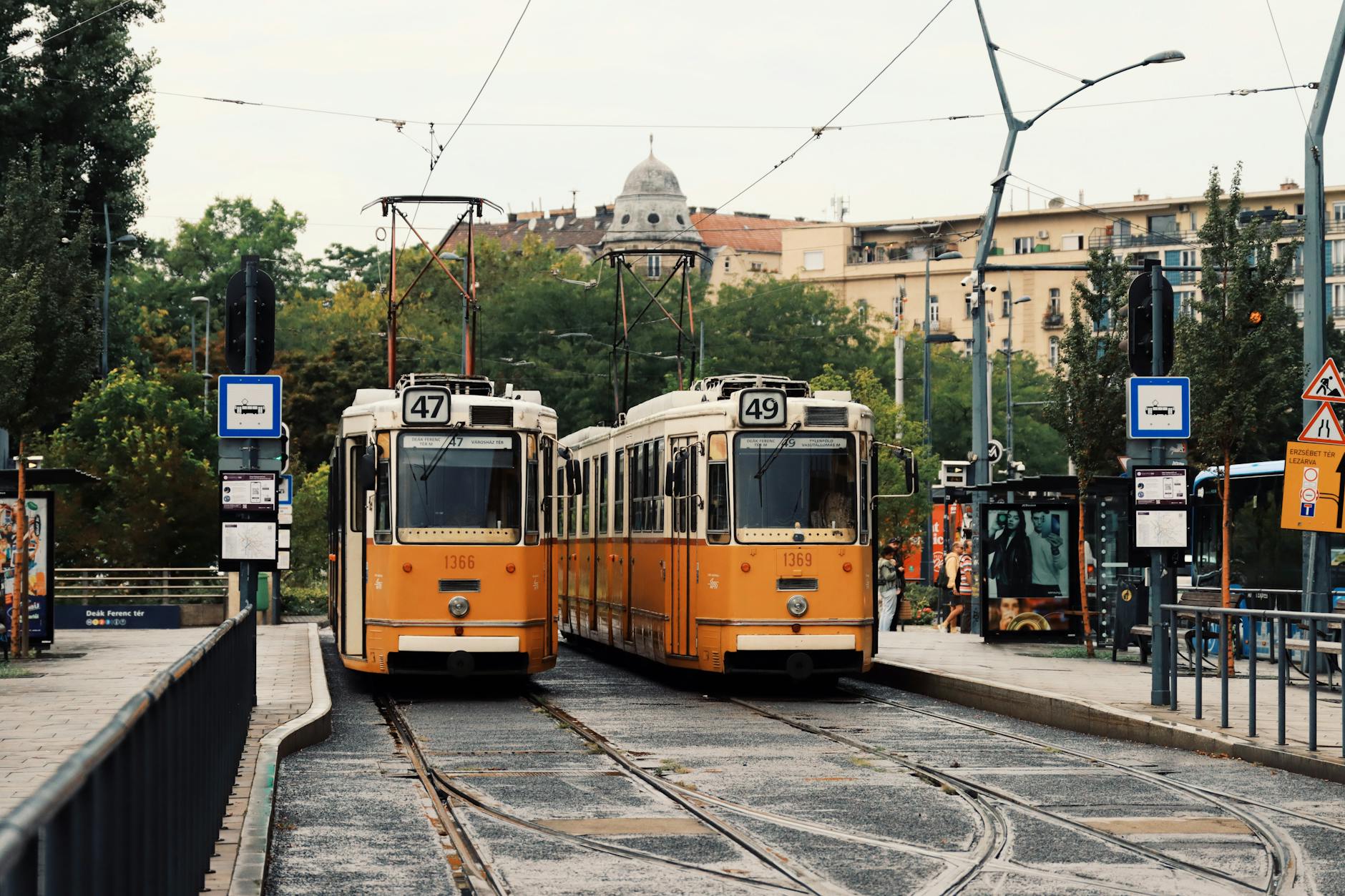
Trams are the best-value sightseeing in the city. Tram 2 runs along the Pest bank of the Danube, passing the Parliament and the Chain Bridge, with views across the river to the castle, for the price of a normal ticket.
For short hops, the MOL Bubi bike-share scheme is cheap. It relaunched in 2026 with a new fleet that includes e-bikes, and pay-as-you-go rides cost 60 HUF a minute. Check the BudapestGO app for current passes before you ride.
| Ticket | Price | Best for |
|---|---|---|
| Single ticket | 500 HUF | One-off short hops |
| 90-minute ticket | 850 HUF | Airport 200E plus metro |
| 24-hour travelcard | 2,750 HUF | A busy single day |
| 72-hour travelcard | 5,750 HUF | A long weekendBest value |
| 100E Airport Express | 2,500 HUF | Airport straight to centre |
Eating and drinking for less
Budapest is a brilliant place to eat cheaply if you step away from the riverside tourist spots. The trick is to follow the locals to small canteens and markets, where portions are big and prices are low.
Start with lángos, Hungary’s deep-fried dough topped with sour cream and cheese, which costs around 1,500 to 2,000 HUF (£3.60 to £4.80) from a market stall. For a sit-down meal, look for an étkezde, the no-frills Hungarian canteen, where a plate of goulash or a hearty main runs about 2,500 to 3,500 HUF (£6 to £8.50). Even a Michelin-starred lunch is within reach: several top kitchens do set lunch menus for around 9,000 to 12,000 HUF (£22 to £29), a fraction of what the same standard costs in London or Paris.
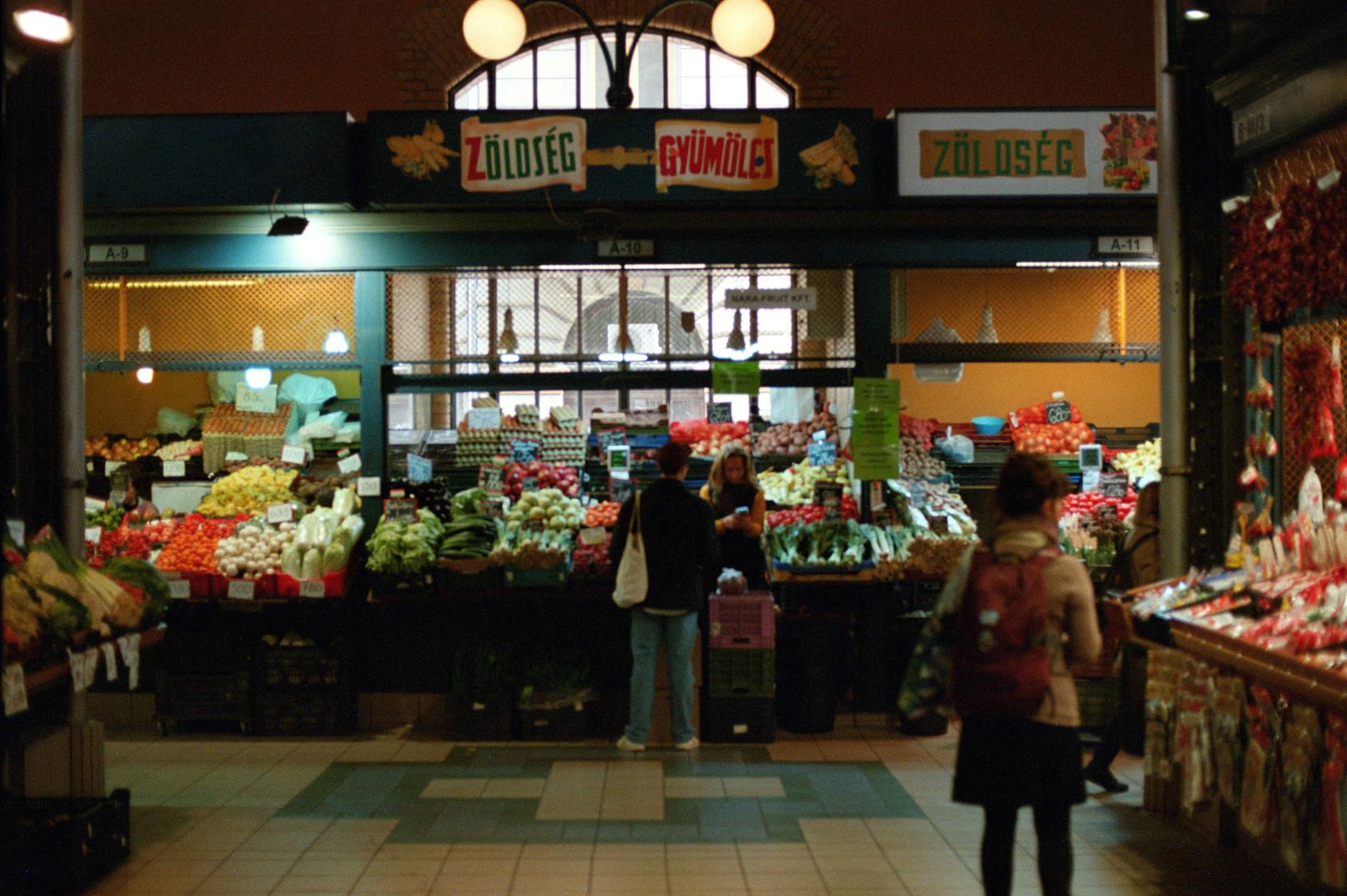
The Great Market Hall on the Pest side is the best single stop for cheap food. Upstairs stalls sell lángos and Hungarian classics, while the ground floor is stacked with paprika, sausage and produce for a picnic.
Drinks are still a bargain. A local beer runs 600 to 1,000 HUF (£1.45 to £2.40), and the ruin bars of District VII, led by Szimpla Kert, charge a little more for a lot of atmosphere.
The thermal baths and what they cost now
The baths are the one Budapest experience worth paying for, but the prices have jumped, so choose carefully. The famous Széchenyi is now well over £30 on a weekday, while the locals’ favourite Lukács gives you most of the experience for around half that.
Széchenyi is the grand one, with vast outdoor pools that stay warm even in winter, but it’s also the busiest and the most expensive. Lukács is calmer, cheaper and used by actual Budapest residents, which makes it the better-value choice. One important change: the historic Gellért Baths closed in October 2025 for a major renovation and aren’t due to reopen until around 2028, so ignore any guide that still recommends them.
| Bath | Weekday from | Worth knowing |
|---|---|---|
| Lukács | 7,000 HUF | Locals’ favourite, best valueBest value |
| Széchenyi | 13,200 HUF | The famous one, grand outdoor pools, busiest |
| Gellért | Closed | Shut for renovation until around 2028Closed |
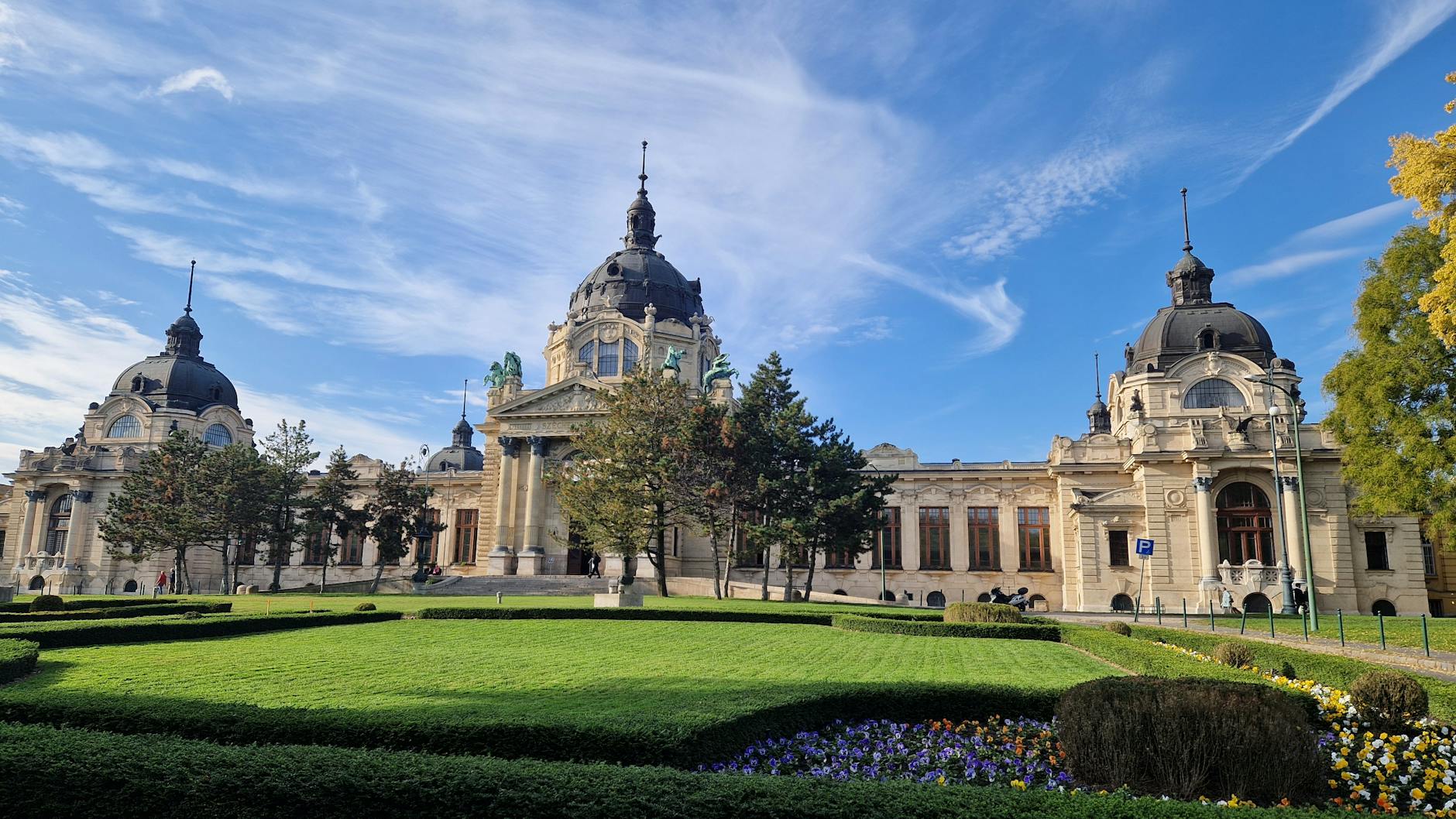
Széchenyi’s yellow palace and steaming outdoor pools are the postcard image of Budapest, and worth it once even at the higher price. Go early on a weekday to dodge the worst of the crowds.
Whichever bath you pick, bring your own towel and flip-flops. Hiring them on site adds a few thousand forints you don’t need to spend.
Free and cheap things to do
A lot of the best of Budapest costs nothing. The views, the bridges and the riverbank are all free, which is why the city works so well on a tight budget.
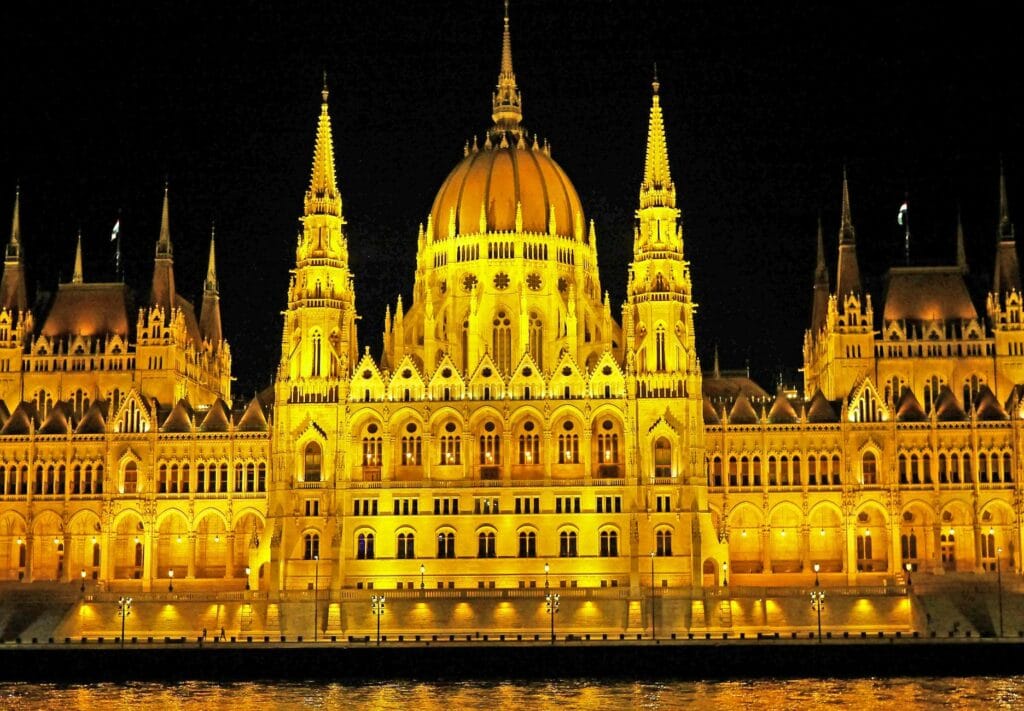
Walk up Castle Hill for the Buda Castle complex and Fisherman’s Bastion, where the upper terraces charge a small fee but the lower level and the views are free. Stroll the Danube promenade after dark, when the Parliament and the bridges are lit, and cross to Margaret Island, a large car-free park in the middle of the river that’s ideal for a free afternoon. The Shoes on the Danube memorial and St Stephen’s Basilica (a small suggested donation) round out a day that needn’t cost more than your transport.
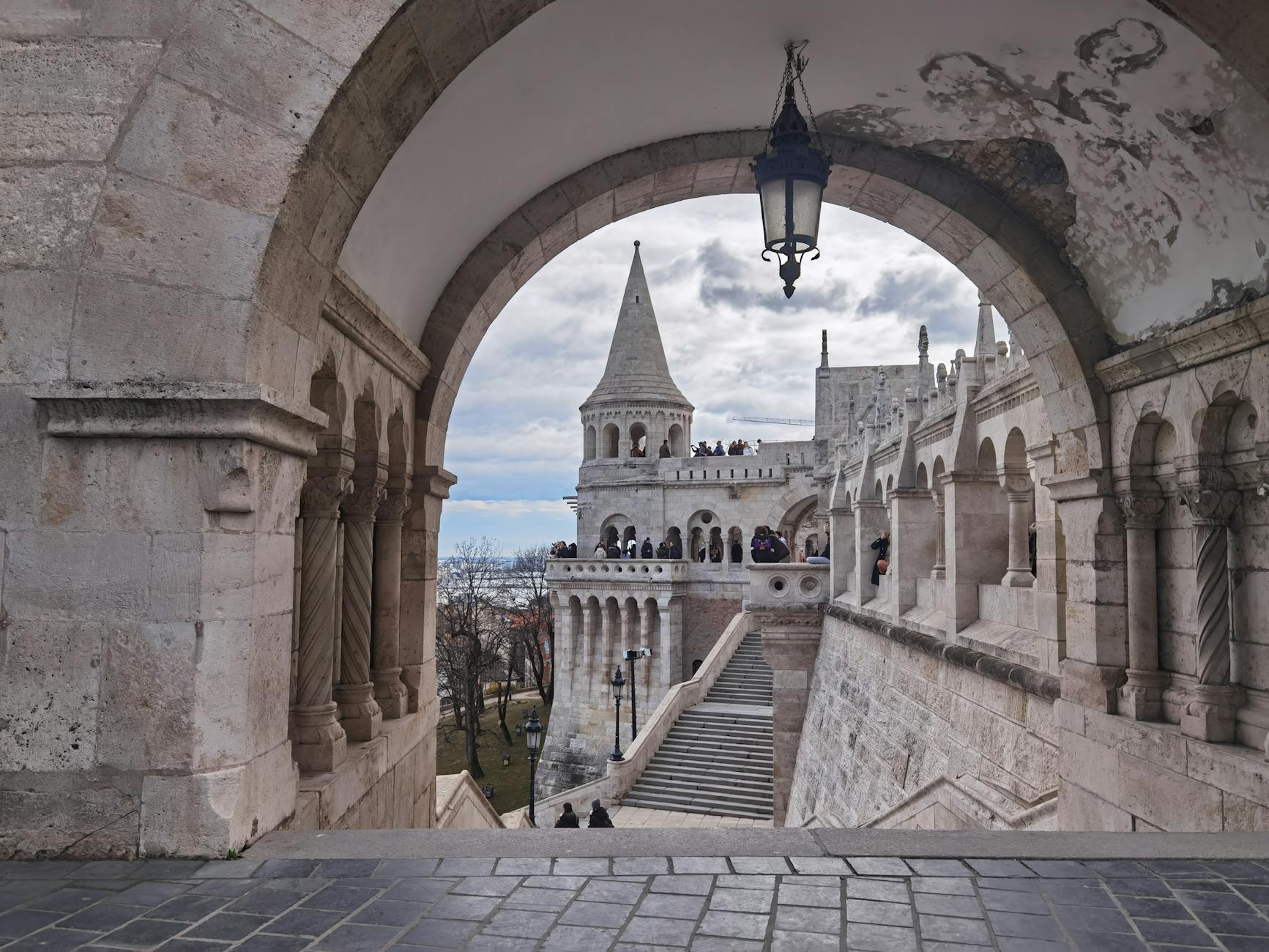
Fisherman’s Bastion gives you the best view in the city, across the Danube to the Parliament. The fairytale white terraces are free to wander at the lower levels, with only the very top charging an entry fee.
Time your visit for early morning or late evening and you’ll have the place close to yourself, and the light is better for photos too.
How much does a Budapest trip cost?
For a sense of the whole picture, here’s what a day in Budapest costs at three different paces. The figures cover everything on the ground except flights, which sit on top.
The pattern is the same one that holds across the city: public transport, markets and local canteens are cheap, while taxis and riverside tourist restaurants are not. Spend where it counts, skip the tourist traps, and Budapest stays one of the best-value capitals in Europe.
| Style | Per day | What it covers |
|---|---|---|
| Shoestring | £25 to £30 | Hostel dorm, public transport, street food, free sights |
| Mid-range | £45 to £60 | Budget hotel, restaurant meals, a couple of paid sights |
| Comfortable | £85 to £100 | Boutique hotel, dinners out, baths and a tour |
Money tips: cash, cards and avoiding rip-offs
A few simple habits will keep your costs down and stop you losing money to poor exchange rates. The biggest one is how you pay.
Hungary uses the forint, not the euro, and cards work almost everywhere. Carry some cash for markets, small cafés and tips, but withdraw it from a bank ATM such as OTP or Erste rather than the orange Euronet machines, which charge heavily. When a card machine or ATM asks whether to charge in pounds or forints, always choose forints, as the “pay in pounds” option hides a bad exchange rate. A Revolut, Monzo or Wise card gives you close to the real rate.
Beyond that, the rules are the ones above: take the airport bus instead of a taxi, buy a travelcard, eat where locals eat, and pick Lukács over Széchenyi if you’re watching the pennies. Budapest isn’t as cheap as it was, but get these basics right and it’s still one of the best-value city breaks in Europe. If you’re comparing options, our guides to budget travel in Prague and Berlin on a budget cover two more Central European cities that punch above their price, and you’ll find the full set in our destination guides.
Frequently asked questions
| Question | Answer |
|---|---|
| Is Budapest cheap in 2027? | Yes, by Western European standards, with day-to-day costs 40 to 50 per cent below Paris or Amsterdam. Prices have risen sharply since 2021, so it’s good value rather than dirt cheap. |
| How much money do you need for a day? | A backpacker can manage on about £25 a day and a mid-range traveller on £45 to £60. A comfortable trip with a nice hotel and dinners out runs closer to £85 to £100. |
| How do you get from the airport cheaply? | Take the 100E Airport Express for 2,500 HUF (about £6) straight to the centre. The 200E bus plus the M3 metro is cheaper at around £2, and a taxi costs around £34. |
| What is the cheapest time to visit? | Winter, from November to February, has the lowest flight and hotel prices, aside from the Christmas market weeks in December. Spring and autumn offer the best balance of mild weather and lower costs. |
| Is Budapest cheaper than Prague? | They’re very close, and both rank among Europe’s best-value capitals. Budapest tends to win on thermal baths, while Prague is marginally cheaper for beer. |
| Do you need cash, or can you pay by card? | Cards work almost everywhere, but carry some forints for markets, small cafés and tips. Always choose to pay in forints rather than pounds when a machine offers the choice. |

Jane Robinson is Senior Editor at Flight Tribe. She has a Master’s in English and Journalism, and writes about flight deals, holiday offers and practical ways UK travellers can spend less without wasting time on weak promotions. Jane has spent time living and working across Asia and New Zealand, which gave her a lasting interest in how people travel, eat, move around and spend their free time in different places.
At Flight Tribe, her work focuses on verified prices, realistic travel dates, booking terms and whether a deal is actually worth attention.
How Jane works
Jane checks offers against live supplier pages wherever possible, including prices, dates, departure points, baggage rules and booking conditions. She is quietly sceptical of anything that sounds too good to be true, and helps keep Flight Tribe’s travel advice useful, honest and easy to act on.
Editorial standards
Flight Tribe covers deals for readers first. Affiliate links do not decide whether an offer is worth writing about.