
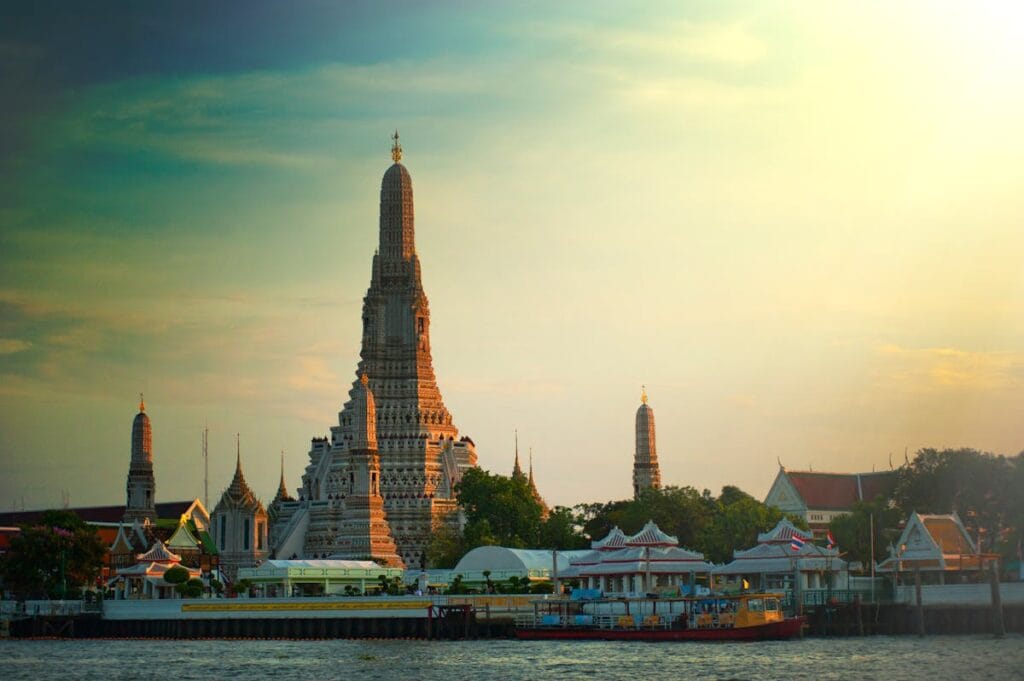
Published 17 May 2026 | Updated 30 August 2026 by Kate Acaster
Search Thailand flights and hotels
Thailand offers some of the most reliable sunshine in southeast Asia, with a warm climate, outstanding food and a range of destinations that suits everyone from beach-lovers to temple visitors. The challenge is the monsoon, which sweeps in from the southwest each summer and makes the west coast islands wet and choppy from May onwards.For most UK travellers, November to February is the best time to visit. The skies are clear, temperatures are manageable at 27 to 30°C, and the seas are calm on both coasts. But there is an important exception that catches many UK families out.If you’re tied to UK school summer holidays in July or August, the east coast islands, particularly Koh Samui, offer an alternative that sidesteps the monsoon entirely. The two coasts run on opposite seasons. Understanding that distinction is the most useful thing you can know before booking.
Thailand by month
| Month | Weather | Crowds | Prices | Verdict |
|---|---|---|---|---|
January | ||||
February | ||||
March | ||||
April | ||||
May | ||||
June | ||||
July | ||||
August | ||||
September | ||||
October | ||||
November | ||||
December |
Two coastlines, two seasons
The most important thing to understand about Thailand’s weather is that the east coast and the west coast follow opposite monsoon patterns. Most UK travellers don’t know this, and it leads to a lot of unnecessary disappointment in August.The west coast, which includes Phuket, Krabi and the Phi Phi Islands, sits on the Andaman Sea. It gets the southwest monsoon from May to October. Seas can be rough and rainfall heavy, particularly in September, when some beachfront resorts close entirely and several dive operators suspend trips.The east coast, which includes Koh Samui, Koh Phangan and Koh Tao, sits on the Gulf of Thailand and runs on a different schedule. Its monsoon runs from October to January, making it wet around Christmas but excellent between June and September. That’s exactly the opposite of what’s happening on the other side of the country.Bangkok and northern Thailand, including Chiang Mai and Chiang Rai, follow a third pattern. They have a dry season from November to April and a wet season from May to October. Bangkok rain during the wet season usually arrives as heavy afternoon downpours rather than all-day drizzle, so the city remains perfectly functional year-round.
UK school holidays and Thailand
Thailand maps reasonably well onto UK school holiday periods, but not uniformly across all destinations.Easter (typically early to mid-April) falls in the hot season. Thailand is dry but scorching, with temperatures regularly hitting 34°C. It’s a viable time to visit, particularly for Bangkok and the northern cities, where temple visits and street food tours work regardless of the heat. The beaches are good but intensely hot at midday. Easter also coincides with Songkran, the Thai New Year water festival, on 13 to 15 April. It’s a joyful experience in Chiang Mai and Bangkok, but transport can be disrupted, and getting caught in the street celebrations without preparation is a surprise. Worth knowing before you go.Summer holidays (late July to early September) is where the two-coastline rule matters most. Families booking Phuket packages in August are heading to a destination in full monsoon. It’s not unvisitable, but you’ll have periods of sustained rain and choppy seas. Koh Samui and the Gulf Coast, by contrast, are at their absolute best in July and August. The sea is calm, the sky is mostly blue and prices are lower than the December peak. If you can route through Bangkok and take a domestic flight or ferry to the Gulf islands, the summer holidays work well.October half-term (late October) is an underrated window. The west coast is drying out, Bangkok and Chiang Mai are entering their best few months, and prices haven’t yet hit the Christmas surge. It’s not guaranteed perfect everywhere, but it’s a solid option and noticeably cheaper than December.Christmas and New Year (mid-December to early January) is peak season without exception. The weather across Phuket, Bangkok and the entire country is about as good as it gets. Demand from UK and European travellers is at its highest, and prices reflect that. Return economy fares from London to Bangkok in late December typically run 30 to 50 per cent above the mid-year price.
Getting to Thailand from the UK
The main point of entry is Bangkok Suvarnabhumi Airport (BKK), which has direct routes from London Heathrow. British Airways, Thai Airways and EVA Air all operate non-stop flights from Heathrow, with a flight time of around 11 hours 30 minutes.From October 2026, Virgin Atlantic is launching a direct seasonal service from London Heathrow to Phuket International Airport (HKT), operating three times a week. It’s the only direct UK-to-Phuket route and reduces the need to transit through Bangkok for west coast holidays.Travellers from regional UK airports typically connect via Middle East hubs. Emirates flies from Manchester to Bangkok via Dubai. Qatar Airways connects via Doha from Manchester and several other UK airports. Etihad connects via Abu Dhabi from Birmingham. Add three to four hours to the total journey time depending on the layover length.| UK airport | Route | Airlines |
|---|---|---|
London Heathrow (LHR) | ||
London Heathrow (LHR) | ||
Manchester (MAN) | ||
Birmingham (BHX) | ||
Edinburgh (EDI) | ||
Glasgow (GLA) |
Best time by region

Bangkok and northern Thailand
Bangkok works year-round. The wet season brings afternoon thunderstorms rather than sustained rainfall, and air-conditioned temples, markets and shopping centres are unaffected. The ideal window is November to February, when temperatures settle around 28°C and evenings are comfortable. March and April are fine but very hot. Chiang Mai is best in November and December, when the cooler northern climate makes hiking and cycling very pleasant and the annual Yi Peng lantern festival lights up the night sky.Phuket and the Andaman Coast
December to March is the prime window for Phuket, Krabi, Koh Phi Phi and the Similan Islands. The sea is flat and clear, visibility for snorkelling and diving is at its best, and rainfall is minimal. By May, the southwest monsoon arrives. July to September brings sustained rain and rough seas on the Andaman Coast, and some dive operators suspend liveaboard trips entirely during this period. If a Phuket trip in this window is unavoidable, the rain usually falls hardest in the afternoons, leaving mornings usable.Koh Samui and the Gulf Coast
Koh Samui, Koh Phangan and Koh Tao run on the reverse schedule. Their best months are June to September, when the Andaman Coast is in full monsoon. October brings the Gulf’s own monsoon, and November and December can be very wet on Koh Samui, despite its reputation as a year-round sun destination. The months of February and March are also good on the Gulf Coast before the heat builds, which gives UK visitors another shoulder option outside school holiday periods. If you’re visiting Koh Samui in October or November, check recent weather conditions before booking.Our verdict
November is the sweet spot for most UK travellers. It offers reliable dry weather across all regions, comfortable temperatures and prices that haven’t yet hit the Christmas peak. If you can travel in mid to late November, before the school Christmas holidays fully drive up demand, you’ll get near-identical conditions to January for considerably less money.For school summer holidays, the east coast is your friend. Koh Samui in July and August offers what many people imagine Thailand to be: clear blue water, reliable sunshine and good value accommodation. It just requires routing through Bangkok rather than flying directly to Phuket.September is worth repeating: it’s the one month to avoid across the board. Both coasts are affected simultaneously, flights are cheap for good reason, and there’s no easy workaround.October half-term is worth a second look. Bangkok and Chiang Mai are entering their best months, the west coast is drying out, and prices are below the December peak. It’s not a guaranteed sun holiday, but for a city-focused trip, it’s an underrated window.For more on finding affordable flights to Thailand year-round, see our guide on whether last-minute flights get cheaper and when flights are cheapest by season.
Frequently asked questions
| Question | Answer |
|---|---|
What is the best month to visit Thailand from the UK? | |
Is Thailand a good destination for UK school summer holidays? | |
What is Thailand like in December? | |
Is September a good time to visit Thailand? | |
When is the cheapest time to fly to Thailand from the UK? | |
How long is the flight from the UK to Thailand? |

Kate Acaster is Chief Editor at Flight Tribe. She writes about practical travel planning, budget airlines, baggage rules, city breaks, beach holidays and good hotels that do not cost daft money.
Kate has travelled through Europe, South America and beyond, usually with a notebook, a half-formed plan and a strong opinion on airport snacks. At Flight Tribe, her work focuses on helping UK travellers understand what is included, what costs extra, and whether a trip is worth booking at the price shown.
How Kate works
Kate checks the details that can change the value of a trip, including cabin-bag rules, airline fees, hotel location, seasonality, travel dates and booking conditions. She is especially interested in offers that look useful on the surface but need a proper reader-first check before they are worth recommending.
Editorial standards
Flight Tribe covers deals and travel advice for readers first. Affiliate links do not decide whether an offer is worth writing about.