Published 15 May 2026 | Updated 7 September 2026 by Jane Robinson
Return flights to Antalya from London Gatwick cost around £70 per person in early May. The same seats in late July typically cost £180 or more, and package holiday prices follow the same pattern. A week at a coastal resort that sells for £600 per person in May can reach £1,200 or more during UK school summer holidays. Turkey has one of the steepest peak-to-shoulder price gaps of any destination from the UK, and the decision about when to go is the single most effective thing you can do to reduce the cost.
Advertisement
This guide covers the full year for UK travellers: when to visit the Turkish coast, Istanbul and Cappadocia, how 2026 school holidays affect every price bracket, which UK airports fly direct, and what the current exchange rate means for your holiday budget. For general deal-finding strategy, see our guide to how to get cheap flights from the UK. For resort-by-resort prices and costs, see our full Turkey budget travel guide.
Search Turkey flights and hotels
The quick verdict
For UK adults without school-age children, May, June, September and October offer the best combination of warm weather, lower fares and manageable resorts. July and August are peak season on the Turkish coast, with prices and crowding to match. Istanbul works well as a city break in spring and autumn. Cappadocia is at its best in May, June and September, when hot air balloon conditions are most reliable.
| Month | Avg high | Crowds | Price from UK | Verdict |
|---|---|---|---|---|
| January | 15°C | Very low Very low | Very low Very low | Istanbul city break only |
| February | 16°C | Very low Very low | Very low Very low | Istanbul or Cappadocia (snow) |
| March | 18°C | Low Low | Low Low | Shoulder starts |
| April | 22°C | Low–moderate Low–mod | Moderate Moderate | Excellent outside Easter |
| May | 26°C | Low Low | Low Low | Best value beach month |
| June | 31°C | Low–moderate Low–mod | Moderate Moderate | Strong shoulder month |
| July | 35°C | Very high Very high | High High | Family peak; book 4–6 months ahead |
| August | 35°C | Peak Peak | Very high Very high | Beach resort only; avoid Istanbul heat |
| September | 31°C | Low Low | Moderate→Low Moderate | Best overall month |
| October | 26°C | Low Low | Low Low | Excellent value |
| November | 20°C | Very low Very low | Very low Very low | Off-season; Istanbul works well |
| December | 16°C | Low / Very high Split | Low / Very high Split | Istanbul city break before 21 December |
Month by month
Here is what each part of the year looks like in practice, written for UK travellers.
January and February
January and February are off-season on the Turkish coast. Average highs on the Antalya Riviera sit at 15 to 16°C, which is mild compared with northern Europe but well short of beach conditions. Most large resort hotels close for the winter. Istanbul is a different story. The city functions year-round: the Hagia Sophia, Topkapi Palace, Grand Bazaar and the waterfront Bosphorus districts are all open. Temperatures in Istanbul average 8 to 9°C, similar to a mild February in London, and the city is at its least crowded and most affordable. Fares from UK airports are the lowest of the year.
Cappadocia is also worth considering in January and February for visitors who want dramatic photography. Snow on the fairy chimneys and volcanic valleys around Göreme is a striking sight. Hot air balloon flights operate when conditions allow, though cancellations are more frequent in winter fog. The February half-term week brings a modest spike in fares. Outside that week, both months offer the best value of the year.
March and April
March is when the coastal shoulder season begins. Average highs climb toward 18°C on the Antalya coast and coastal hotels start reopening from mid-month. Bodrum, Marmaris and Dalaman are not yet busy. Istanbul in March averages 11°C, with spring approaching and the city quieter than in the main tourist season. Fares remain low and the country is largely free of package holiday traffic.
April is the best month for Istanbul. Average highs reach 16°C, the tulip season in the city’s parks runs through the first half of the month, and the Hagia Sophia and Grand Bazaar are accessible without the summer queues. On the coast, April temperatures reach 22°C, and the sea warms to 19 to 20°C. The complication is Easter. When UK school Easter falls in April, fares and package prices rise sharply for the two surrounding weeks. Outside Easter week, April is excellent value for both coastal and city travel.
May and June
May is the best month for a beach holiday from the UK. Average highs on the coast reach 26°C, the sea warms to around 22°C, and fares are among the lowest of the year. The major coastal resorts, including Bodrum, Antalya and Marmaris, are open but not yet busy. Hotel availability is good and prices are low. Istanbul in May reaches 21°C, and the Bosphorus is at its most photogenic in spring light. Cappadocia in May is close to ideal: the valley walks are comfortable in the warmth, and balloon flights operate with fewer cancellations than in winter. The one exception is the May half-term week at the end of the month, when UK family demand pushes fares up modestly.
June steps up significantly. Coast temperatures reach 31°C and the sea warms to 24°C. Fares have risen from May lows but remain well below the July and August peak. All resorts are operating at full capacity. This is the best month if you want guaranteed hot weather and a swimming sea without the extreme heat of high summer or the full peak-season pricing. Istanbul and Cappadocia are also excellent in June: warm, busy but not overcrowded, and with long daylight hours.
July and August
Peak season. Average highs on the Turkish coast reach 35°C, occasionally higher during heatwave periods. The sea reaches 26 to 27°C, its warmest. For a beach-focused holiday where you spend most of your time in or near the water, the heat is manageable and the sea temperature is excellent. For any holiday that involves sightseeing, city exploration or outdoor activity, the heat is a significant constraint. Walking the streets of Bodrum old town, exploring the Ephesus ruins, or spending a day in Istanbul’s covered bazaars in July or August requires resilience and an early start.
For UK families tied to school holidays, this is your window. July is consistently cheaper than August, and the price gap between the two months has widened in recent years as demand has concentrated in the final weeks of the school summer break. Book flights and accommodation four to six months ahead for either month, particularly from UK regional airports where Turkish capacity is more limited. The coastal resorts of Antalya, Belek, Side, Bodrum and Marmaris all handle summer volume adequately. Package deals from major UK operators including Jet2 Holidays, TUI and easyJet Holidays cover most of these destinations from multiple UK airports.
September and October
September is the best single month for most UK adults without school-age children. The coast cools marginally to around 31°C average highs, but the sea holds at 26°C, its warmest of the year. Prices drop sharply as soon as UK schools return in early September. The major resorts clear quickly. Bodrum and Marmaris in the second and third weeks of September are genuinely pleasant: the facilities are all open, the beaches have space, and fares from UK airports can fall to a third of August levels. Book the first two weeks of September for the best combination of warm sea and lower prices.
October cools to around 26°C on the coast with a sea temperature of 24°C. Fares are low. Most coastal hotels remain open through October, though some smaller properties close in the final week of the month. Istanbul in October is excellent: 19°C average highs, manageable tourist numbers, and the city at its most atmospheric in autumn light. October is also one of the best months for Cappadocia. The balloon flights are reliable, the valley colours are striking, and accommodation prices are well below summer levels.
November and December
November is the cheapest month. Coastal resorts are largely closed or operating with minimal facilities. Istanbul and Cappadocia remain good destinations. Istanbul in November averages 13°C, with some rainfall, but the major sites are at their most accessible and the restaurant scene is excellent. Fares drop to annual lows.
December follows the familiar split. The first three weeks offer the lowest fares of the year. From approximately 21 December, prices jump for Christmas and New Year. Istanbul at Christmas is an underrated short break option: milder than most northern European cities, extraordinary history, and food and drink that costs a fraction of comparable destinations. Fly in before 20 December and return before Christmas Day to avoid the holiday price premium.

Turkey is one of the most popular summer family destinations from the UK, which means UK school holidays have an outsized effect on prices. The gap between term-time and holiday-period fares is wider for Turkey than for most comparable destinations, and the summer holiday premium in particular can double or triple the cost of a package deal.
The table below shows how each major school holiday period affects Turkey prices, with 2026 dates and practical guidance on what to do if your dates overlap. For the best approach to finding low fares regardless of season, see our guide to when UK flights are cheapest.
How UK school holidays affect Turkey prices
| UK school break | Approx 2026 dates | Price premium | What to do |
|---|---|---|---|
| February half term | 16–20 Feb 2026 | 10–20% Low–medium | Modest spike. Coastal resorts are still closed. Istanbul is the only practical Turkey destination in February, and demand there is not high enough to move fares significantly. |
| Easter | 3–17 April 2026 | 25–45% High | Significant spike. Turkey is one of the most popular Easter break destinations from the UK, and coastal hotels sell out quickly. Book early or travel either side of the holiday week. The first week of April is cheaper than the second. |
| May half term | 25–29 May 2026 | 15–30% Medium | Moderate spike. The three weeks before half-term are the best-value beach period of the year for Turkey. Travel 1–22 May for the lowest fares and fewest crowds. |
| Summer holidays | 24 Jul–4 Sep 2026 | 80–150% Very high | The biggest spike of the year by a large margin. Turkey is a primary summer family destination from the UK. Book flights and hotels four to six months ahead. August is consistently more expensive than July. |
| October half term | 26–30 Oct 2026 | 15–25% Medium | Moderate spike. Turkey is a popular half-term destination. The coast is still warm and open in late October. Check hotel availability: some properties close from mid-October. |
| Christmas / New Year | 21 Dec 2026–2 Jan 2027 | 30–50% High | Istanbul before 20 December is excellent value. The Christmas week itself sees a sharp price rise. New Year in Istanbul is lively and expensive. |
Turkey is well served by UK airports, with direct flights to multiple Turkish airports from London and most major regional hubs. Istanbul has year-round services from Heathrow and Gatwick. The coastal resort airports, Antalya (AYT), Bodrum (BJV) and Dalaman (DLM), operate seasonally, typically from April through to October.
The airline you fly with matters as much as the airport. The cheapest fares to Turkey typically come from easyJet, Ryanair, Jet2 and Pegasus, all of which carry the most restrictive baggage policies. Check your hand luggage allowance before booking, as add-ons for checked bags can easily add £40 to £80 per person to the headline fare.

Which UK airports fly direct to Turkey?
Istanbul Ataturk and Istanbul Airport (IST) have year-round direct services from London Heathrow and London Gatwick. The coastal resort airports operate on seasonal schedules, typically April through October, with the widest choice of UK departure points in June, July, August and September.
| UK airport | Flight time | Airlines | Turkish destinations served |
|---|---|---|---|
| London Gatwick (LGW) | ~4h to IST | easyJet, British Airways, Pegasus, Turkish Airlines, TUI | Istanbul, Antalya, Bodrum, Dalaman |
| London Heathrow (LHR) | ~4h to IST | British Airways, Turkish Airlines | Istanbul (year-round), Antalya (seasonal) |
| London Stansted (STN) | ~4h to IST | Ryanair, Pegasus, easyJet | Istanbul, Antalya, Bodrum |
| Manchester (MAN) | ~4h 30m to IST | easyJet, Jet2, TUI, Turkish Airlines, Ryanair | Istanbul, Antalya, Bodrum, Dalaman |
| Birmingham (BHX) | ~4h 15m to IST | Jet2, TUI, Turkish Airlines, Pegasus | Istanbul, Antalya, Bodrum, Dalaman |
| Bristol (BRS) | ~4h to AYT | easyJet, Jet2, TUI | Antalya, Bodrum, Dalaman |
| Edinburgh (EDI) | ~4h 45m to AYT | Jet2, TUI, easyJet | Antalya, Bodrum, Dalaman, Istanbul (seasonal) |
| Newcastle (NCL) | ~4h 30m to AYT | Jet2, TUI | Antalya, Bodrum, Dalaman |
| Glasgow (GLA) | ~4h 30m to AYT | Jet2, TUI | Antalya, Dalaman |
| Belfast (BFS) | ~4h 45m to AYT | easyJet, Jet2 | Antalya, Dalaman |
For more on finding the best fares from your local airport, see our guide to how to get cheap flights from the UK.
Turkey is three destinations in one for UK visitors: the Mediterranean and Aegean coast (Antalya, Bodrum, Marmaris, Dalaman), Istanbul as a city break, and Cappadocia in central Anatolia. Each has a distinct climate and peak season. What works for a coastal holiday does not always work for the other two.
Istanbul and Cappadocia: different seasons from the coast
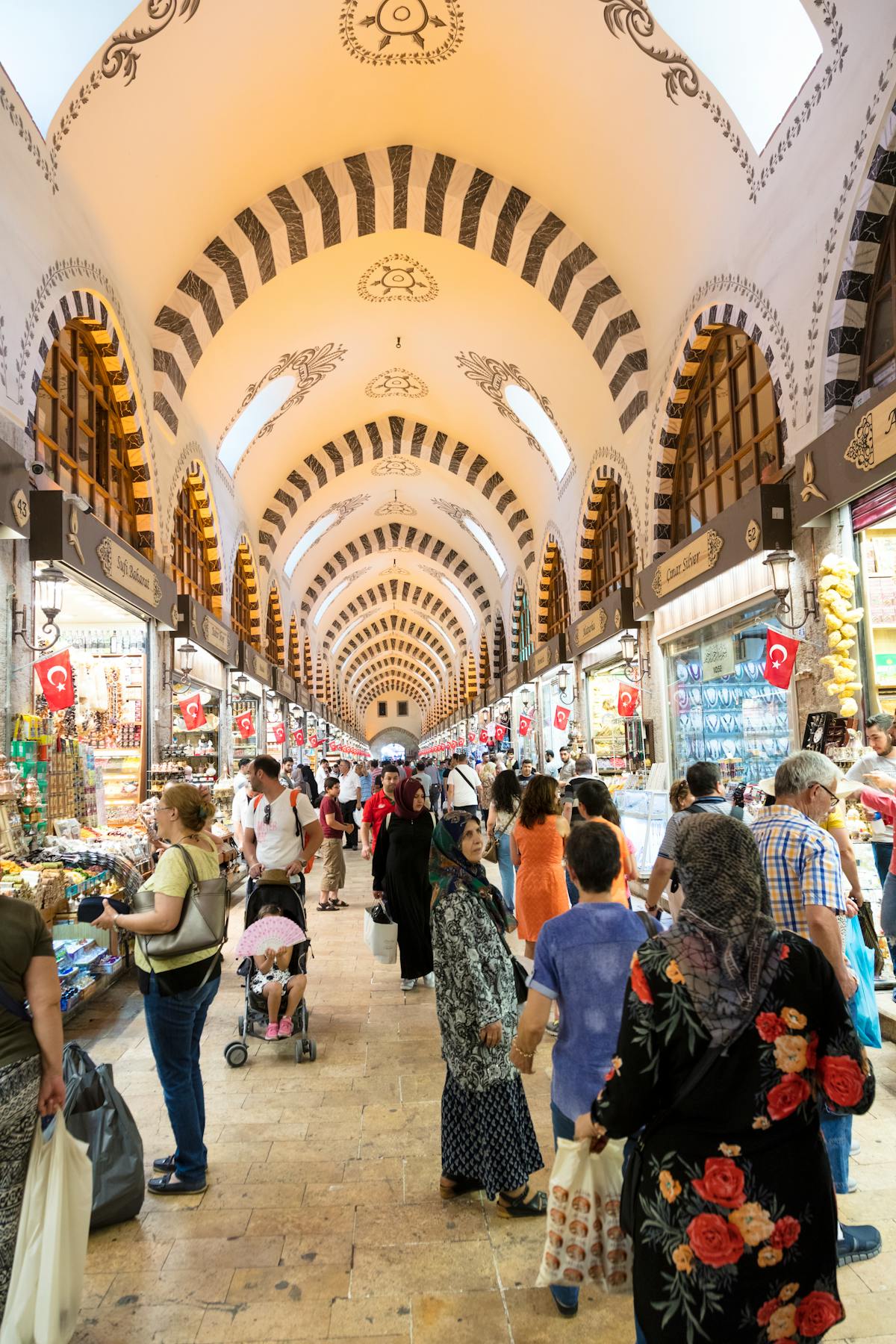
Istanbul is a year-round city break destination. The Hagia Sophia, Topkapi Palace, Blue Mosque, Grand Bazaar and the Bosphorus waterfront are all accessible in every month. The best conditions are April through June and September through October. Temperatures in those months range from 16 to 26°C, which is comfortable for walking the city’s hills and crossing between the European and Asian shores. Summer in Istanbul, by contrast, is genuinely hot. July and August average 28 to 30°C, and the narrow lanes of the Grand Bazaar and the crowded courtyards of the major mosques become uncomfortable in the heat of the afternoon. Istanbul in July and August is manageable with early starts and afternoon rests, but it is not the most pleasant version of the city. Winter (December through February) is cold, at 8 to 9°C, but fully functional. A two-night winter break to Istanbul can be remarkably cheap and the crowds at the major sites are minimal.
Cappadocia has a continental climate with much sharper seasonal extremes than the coast. Winters are cold, with overnight temperatures below zero in January and February and occasional snow on the valleys. Summers are hot, with July and August reaching 35°C in the valley. Spring (April and May) and autumn (September and October) are the best months: mild temperatures for walking the Göreme valleys and visiting the underground cities, good conditions for horse riding, and the most reliable weather for hot air balloon flights.
Hot air balloon flights above the fairy chimneys of Cappadocia are one of the most photographed experiences in Turkey. The flights operate at dawn year-round from the valley floor, but conditions vary significantly. Spring and autumn have the most consistent winds and clearest skies. Summer flights operate but morning haze is more common. Winter flights are subject to frequent weather cancellations. Check the operator’s cancellation policy carefully before booking non-refundable accommodation around a specific balloon date.
Is Turkey good value for UK tourists in 2026?
Yes. £1 buys approximately 61 to 62 Turkish lira at the time of writing, which makes Turkey one of the most affordable sun and sea destinations accessible from the UK. A meal for two at a local restaurant, with bread, mezze, grilled fish and soft drinks, costs around £15 to £25. A glass of Turkish tea (çay) at a traditional tea house is a few pence. A local dolmus minibus to a nearby beach costs under £1 in most coastal towns. A sun lounger and parasol on a well-maintained public beach, which would cost £20 to £30 per day in parts of Spain or Portugal, is available for £5 to £10 in most Turkish resorts.
The contrast with comparable Mediterranean destinations has grown significantly. In Majorca, Algarve and the Spanish costas, food and drink prices in tourist areas now approach UK levels. Turkey’s coastal resorts feel considerably cheaper by comparison, particularly for anyone eating at local restaurants rather than hotel buffets. A family of four spending a week in a Turkish resort can typically save £300 to £500 on food and drink compared with an equivalent holiday in Spain, even before accounting for the lower base price on flights and packages.
The exception is imported goods and alcohol. Turkey taxes alcohol heavily, and a beer at a beach bar costs more than you might expect relative to food prices. International branded goods, imported food products and anything sold in tourist-facing shops near the major attractions are priced at rates that assume exchange rate-aware tourists. The value is in the local economy: local restaurants, local transport and local markets.
Is Turkey safe for UK tourists in 2026?
The main UK holiday destinations in Turkey are all considered safe by the UK Foreign, Commonwealth and Development Office (FCDO). Istanbul, Antalya, Bodrum, Dalaman, Marmaris, Fethiye and Cappadocia are not subject to any FCDO travel restriction and fall within the standard “normal precautions” advice level.
The FCDO advises against travel within 10km of the border with Syria, covering areas in the far south-east of Turkey. It also advises against all but essential travel to Sirnak city and Hakkari province. These areas are in the extreme south-east of the country, far from any mainstream UK tourist route or tour operator itinerary. No British tour operator includes these areas in their Turkey programmes.
Petty theft and bag snatching, particularly in the busier tourist areas of Istanbul including the Grand Bazaar, the Sultanahmet district and the Istiklal Avenue area, is worth being aware of, as it is in any major city. The standard advice applies: use a money belt or inside pocket for passports and cash, and keep bags and phones secure in crowded areas. The FCDO website carries the most current advice for Turkey and should be checked before booking, as guidance can change.
Frequently asked questions
What is the best month to visit Turkey from the UK?
September is the best single month for most UK adults. The Turkish coast averages 31°C with a sea temperature of 26°C, prices drop sharply once UK schools return in early September, and the major resorts are noticeably quieter than in August. For the best combination of low fares and beach weather, the first two weeks of September are the sweet spot. If you want even lower prices and do not mind a slightly cooler sea, May (outside the half-term week) is the best value beach month of the year, with average highs of 26°C and a sea temperature around 22°C. See also our guide to the best time to visit Greece from the UK for a comparable Mediterranean destination.
Is Turkey good value for UK tourists in 2026?
Yes. £1 buys around 61 to 62 Turkish lira at the time of writing, which translates to significantly lower costs on food, local transport and entertainment than comparable Mediterranean destinations. A meal for two at a local Turkish restaurant costs around £15 to £25. A sun lounger on a public beach is typically under £10 per day. Self-catering costs are low. The main exceptions are alcohol (heavily taxed) and imported goods, which are priced at rates aimed at tourists. Stick to local restaurants and avoid the tourist-facing souvenir shops for the best value.
How long is the flight from the UK to Turkey?
About 4 hours from London to Istanbul (IST) or Antalya (AYT), depending on the airline and routing. From northern UK airports such as Manchester, Edinburgh, Newcastle and Glasgow, flight times are around 4 hours 30 minutes to 4 hours 45 minutes. Dalaman (DLM) and Bodrum (BJV) are at similar distances to Antalya. There is no significant difference in flying time between the main Turkish coastal airports from any UK departure point.
Which UK airports fly direct to Turkey?
Gatwick, Heathrow, Stansted, Manchester, Birmingham, Bristol, Edinburgh, Newcastle, Glasgow and Belfast all have direct services to Turkish airports. Istanbul has year-round direct services from Heathrow (British Airways and Turkish Airlines) and Gatwick (easyJet, Pegasus and Turkish Airlines). The coastal resort airports, Antalya, Bodrum and Dalaman, operate seasonally from most UK airports, typically from April through to October. The frequency peaks in July and August, when most regional UK airports add additional capacity.
Is Turkey safe for UK tourists in 2026?
The main holiday destinations, Istanbul, Antalya, Bodrum, Dalaman, Marmaris and Cappadocia, are all considered safe and carry no FCDO travel restriction. The FCDO advises against travel within 10km of the Syrian border in south-eastern Turkey, and against all but essential travel to Sirnak city and Hakkari province. None of these areas are on any mainstream UK holiday itinerary. For the latest guidance, check the FCDO Turkey travel advice page before you book.
What is the cheapest time to fly to Turkey from the UK?
November through March has the lowest fares year-round. For the cheapest fares where you can still have a coastal beach holiday, May outside the half-term week (roughly 1 to 22 May) and the first two weeks of October are the best options. Return flights to Antalya from London Gatwick in early May can fall below £70 per person on budget carriers. After UK schools return in early September, fares for late September drop significantly from the summer peak. The summer holiday period from late July through August is the most expensive time to fly to Turkey from the UK by a wide margin.

Jane Robinson is Senior Editor at Flight Tribe. She has a Master’s in English and Journalism, and writes about flight deals, holiday offers and practical ways UK travellers can spend less without wasting time on weak promotions. Jane has spent time living and working across Asia and New Zealand, which gave her a lasting interest in how people travel, eat, move around and spend their free time in different places.
At Flight Tribe, her work focuses on verified prices, realistic travel dates, booking terms and whether a deal is actually worth attention.
How Jane works
Jane checks offers against live supplier pages wherever possible, including prices, dates, departure points, baggage rules and booking conditions. She is quietly sceptical of anything that sounds too good to be true, and helps keep Flight Tribe’s travel advice useful, honest and easy to act on.
Editorial standards
Flight Tribe covers deals for readers first. Affiliate links do not decide whether an offer is worth writing about.