Published 15 May 2026 | Updated 22 September 2026 by Jane Robinson
Portugal is one of the most dependable holiday destinations available to UK travellers. Flights from multiple UK airports take around two and a half hours, the food is excellent and the weather is reliably warm for six months of the year. Prices are considerably lower than Spain’s Costas, and the Algarve in particular holds its quality across a long season.
Advertisement
Most guides will tell you to visit in spring or autumn, but they rarely explain what that means in practice for someone booking from the UK, with school holidays to navigate and specific departure airports to consider. This guide fills that gap.
Search Portugal flights and hotels
The short answer: September is the best month for most UK visitors. The Atlantic sea temperature peaks at around 22°C, daytime temperatures ease back from the July and August highs to a more comfortable 25-28°C, and prices fall sharply once UK schools return. The Algarve in September is notably quieter than August and noticeably more enjoyable for it.
But the right month depends on what you want. Here is the full picture.
Portugal month by month
January and February are the quietest and cheapest months. Temperatures in the Algarve sit around 14-16°C, which is too cool for swimming, but the region is uncrowded and accommodation prices are at their lowest. Lisbon and Porto are excellent in winter: mild, walkable and full of life without the summer queues. January average Lisbon temperature: 12°C.
March and April see Portugal wake up. The interior, particularly Alentejo and Douro Valley, is carpeted in wildflowers. By April, Algarve beach temperatures are reaching 19-20°C in the air, though sea temperatures are still around 16-17°C. Easter is busy across Portugal, and April prices reflect that. If you want Lisbon or Sintra with manageable crowds and comfortable weather, late March is a genuinely good option.
May is arguably the best month for a beach-focused holiday on a budget. Temperatures are warming to 22-24°C on the Algarve coast, the sea is reaching 18°C, and prices have not yet hit June levels. UK May half-term (typically the last week of May) pushes prices up briefly.
June marks the official start of beach season. Algarve temperatures hit 27°C, the sea climbs to 19°C, and European visitors start filling the resorts. Prices are noticeably higher than May, but not at the extreme peaks of July and August.
July and August are peak season. The Algarve bakes at 30-35°C. The sea hits 22°C by late August. Flights and accommodation cost around 40-60% more than the same trips in September. Albufeira in August in particular is extremely busy. Peak season is not the best value for UK travellers, but families tied to school holidays have few alternatives for the main summer break.
September is the standout month. Temperatures remain genuinely warm (25-28°C), the sea stays at 22°C from the summer’s thermal mass, and prices drop significantly once UK and European school terms resume in the first two weeks of September. Late September also brings the Alentejo grape harvest, one of Portugal’s most atmospheric cultural moments. Flights in September are consistently among the cheapest for European beach destinations.
October is excellent for those who prefer cooler temperatures, lower prices and very few crowds. Algarve highs sit around 22-24°C. The sea remains swimmable at 21°C for most of October. Porto and the Douro Valley in autumn are beautiful. By late October, rain becomes more frequent in the north and on the Atlantic coast.
November and December are best for city breaks. Lisbon and Porto have mild winters (14-18°C), excellent food and museums without queues. Christmas in Lisbon is atmospheric and relatively affordable compared to other European capitals.
Month-by-month quick reference
| Month | Algarve temp | Sea temp | Crowds | Relative price | Best for |
|---|---|---|---|---|---|
| January | 15°C | 17°C | ££ | ||
| February | 15°C | 16°C | ££ | ||
| March | 18°C | 16°C | ££ | ||
| April | 20°C | 17°C | £££ | ||
| May | 23°C | 18°C | ££ | ||
| June | 27°C | 19°C | £££ | ||
| July | 31°C | 21°C | ££££ | ||
| August | 33°C | 22°C | ££££ | ||
| September | 28°C | 22°C | £££ | ||
| October | 22°C | 21°C | ££ | ||
| November | 18°C | 19°C | ££ | ||
| December | 15°C | 17°C | ££ |
Spring: March to May

Spring is one of the least-appreciated seasons in Portugal. By March, the Alentejo plains are covered in wildflowers, and Sintra, the extraordinary palaces-and-forests hill town half an hour from Lisbon, is at its most atmospheric before the summer coach parties arrive.
In the Algarve, March and April are warm enough for walking and exploring, with clear skies and uncrowded beaches. Swimming is cold (sea temperatures around 16°C) but the coastal paths, seafood and light evenings make for an excellent alternative to the typical summer trip.
May is the most versatile spring month. Air temperatures in the Algarve reach 22-24°C. The sea climbs to around 18°C. Prices are competitive with September for most UK departure airports. It is perhaps the single best-value month for a combination of good weather and reasonable cost, outside of September.
Easter falls in April 2026 (Good Friday 3 April, Easter Monday 6 April), and the surrounding week is busy and expensive. If you are travelling in April, avoid the Easter window or book well in advance.
Summer: June to August
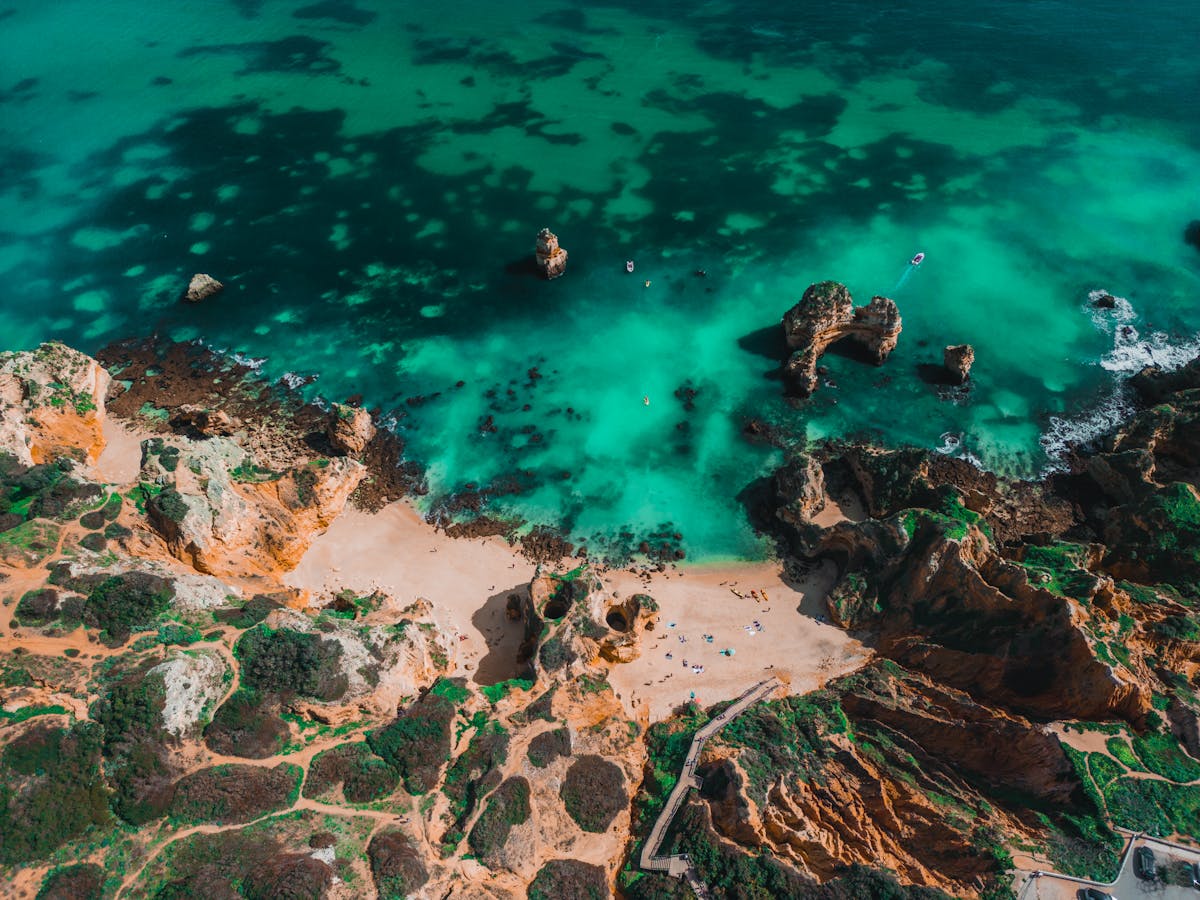
Portugal’s summer is long and dependable. From June onwards, the Algarve’s limestone cliffs and turquoise coves deliver exactly the warm-weather beach holiday most UK travellers are looking for.
June is excellent, particularly for couples and groups without school-age children. The crowds are present but not overwhelming, and prices are lower than the July-August peak. The sea reaches 19°C by June, which is warm enough for most people.
July and August are genuinely hot, with Algarve temperatures regularly exceeding 30°C. This is the time most UK families travel, and the prices reflect that. Expect to pay significantly more for flights from most UK airports, and significantly more again for accommodation anywhere near the Algarve coast. The beaches are packed, particularly around Albufeira and the resort towns of the western Algarve.
If you have flexibility within the school summer holidays, the first two weeks of July are better than late July and all of August, and the first week of September, before UK schools fully return, is often the best compromise.
To find the cheapest flights across the summer season, use our guide to how to get cheap flights from the UK.
September: why it stands out
September deserves its own section because it consistently outperforms every other month for the combination of factors UK travellers care about: sea temperature, air temperature, crowds and price.
The Atlantic’s thermal mass means sea temperatures in the Algarve peak in late August and remain at 22°C throughout most of September. Air temperatures are still 25-28°C. The Algarve coast is meaningfully quieter from around 10 September, once UK and central European school terms resume.
Prices for flights from most UK airports fall by roughly 30-40% compared to August. A return from London Gatwick to Faro that might cost £180-220 in August could drop to £100-140 in mid-September. Accommodation prices follow a similar pattern.
Late September adds the Alentejo wine harvest, centred around towns such as Évora and Estremoz. This is one of the most photogenic and genuinely enjoyable cultural events in the Portuguese calendar, and it is almost entirely unvisited by British tourists.
Autumn: October and November
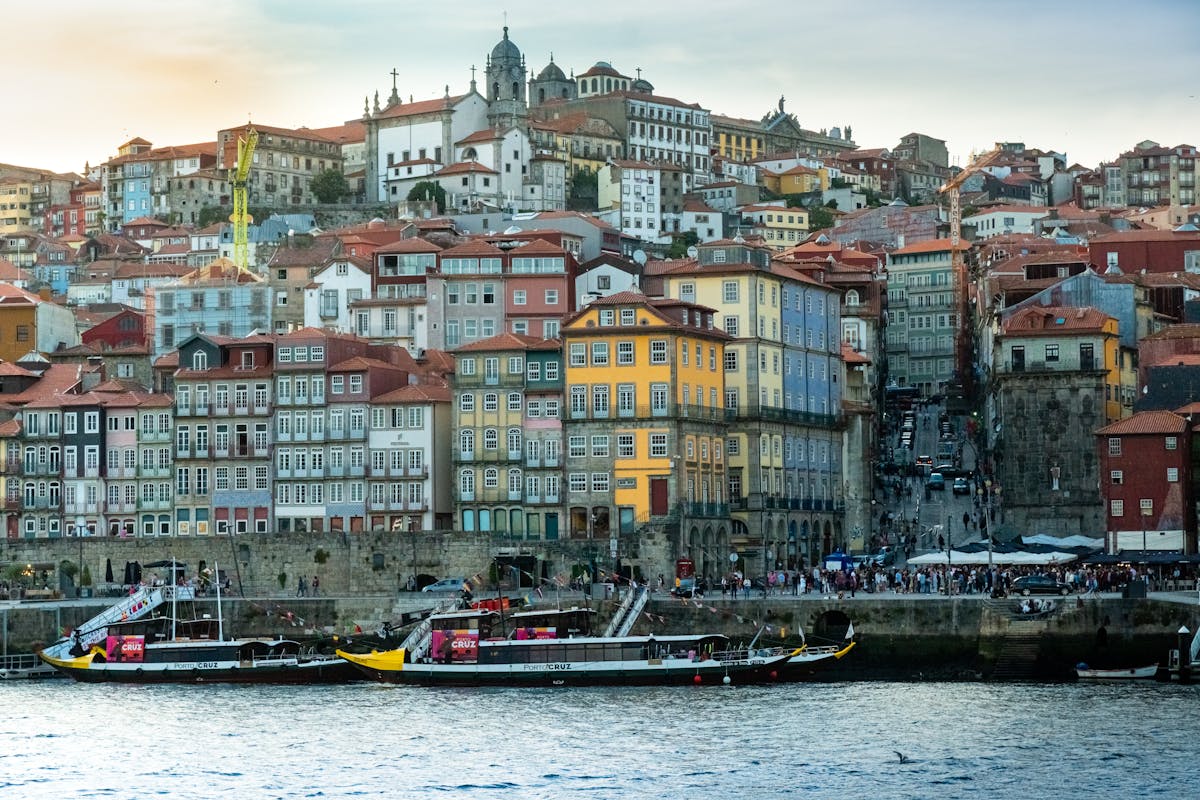
October is an underrated month that suits a different kind of trip. The Algarve is still warm (22-24°C) and swimmable, but the real case for October is Porto and the Douro Valley wine country.
Porto in autumn is magnificent. The city, built on steep hills above the Douro, has a melancholy beauty in October light, and the port wine lodges in Vila Nova de Gaia are a genuine highlight of any Portugal trip. October half-term (typically the last week of October) brings a modest price rise, but nothing like the summer peaks.
By November, the Algarve has eased into its quiet season. Temperatures are around 18°C, which is mild by UK standards, and many smaller restaurants close for the season. However, Lisbon and Porto are both excellent in November. The city museums are uncrowded, the food remains world-class, and the cost is among the lowest of the year.
For getting around once you arrive, our guide to travelling around Portugal cheaply covers trains, buses and car hire across the country.
Winter: December to February
Portugal’s winters are genuinely mild by northern European standards. Lisbon averages 12-14°C in January, which is comparable to a London spring. Rain is more frequent than in summer, particularly in Porto and northern Portugal, but there are many clear days even in January.
The Algarve in winter is largely a walking and cycling destination. Temperatures sit around 14-16°C. The coastal paths, particularly the Rota Vicentina on the Atlantic coast, are uncrowded and strikingly beautiful in winter light. Accommodation prices are at their annual low.
Lisbon in winter rewards those willing to go. Christmas and New Year celebrations are excellent, the food and wine scene is undiminished, and the city’s tram routes, viewpoints and Fado venues require no advance booking. February brings the Algarve almond blossom, a short but beautiful spectacle in the hills above Lagos and Tavira.
UK school holidays and Portugal
School holiday windows have a direct impact on Portugal flight and accommodation prices from the UK. Here is how the main 2026 dates align with Portugal travel:
Easter 2026 (31 March – 13 April): A popular Portugal window. Prices are elevated but nowhere near August levels. Good for families who want warmth without summer crowds. Book by December 2025 for the best fares.
May half-term 2026 (25-31 May): One of the best-value family windows. Portugal in late May is warm, uncrowded relative to August and significantly cheaper. Faro is well served from most UK airports during this week.
Summer holidays 2026 (approximately 21 July – 2 September): Peak season. Prices are at their highest for the full six weeks. July is marginally better value than August. If travelling with a family during this window, look at the first week of July or the last week of August (when some schools in England return).
October half-term 2026 (approximately 26 October – 1 November): A very good Portugal window. October weather is warm and stable. Porto and the Douro Valley are at their autumnal best. Modest price premium over surrounding weeks.
Christmas 2026 (19 December – 4 January): Lisbon and Porto are excellent for a festive city break. Prices are moderate compared to other European capitals at Christmas. The Algarve is quiet and cool.
UK airports with direct flights to Portugal
Portugal is well served from UK regional airports, which means fewer travellers need to go via London than for many long-haul destinations.
To Faro (Algarve): Ryanair, easyJet (including new 2026 routes from Newcastle, Glasgow and Liverpool), Jet2 (from 13 UK airports including Leeds Bradford, Manchester, Glasgow, Newcastle, East Midlands and Edinburgh), British Airways and TUI. Faro is the main gateway for the Algarve resorts.
To Lisbon: British Airways (Heathrow), easyJet (Gatwick, Bristol, Edinburgh, Manchester), TAP Air Portugal (Heathrow) and Ryanair (Stansted and multiple UK airports). Lisbon is also worth considering as an Algarve entry point, with a two-hour drive or a short domestic flight to Faro.
To Porto: British Airways (Heathrow), easyJet (Gatwick, Bristol, Edinburgh) and Ryanair (Stansted, Manchester, East Midlands, Liverpool). Porto is the natural base for visiting the Douro Valley wine country, the Minho region and northern Portugal.
Flight times are around 2 hours 20 minutes to Faro from London airports, and slightly longer from northern UK airports. Booking at least 10-12 weeks ahead for peak season and 6-8 weeks ahead for shoulder season typically secures the best prices. See our guide to when flights are cheapest to book for the full strategy.
Our verdict
For most UK travellers, September is the best month to visit Portugal. The sea is warm, the temperatures are ideal, the crowds have thinned and the prices are substantially lower than August. If you do not have school-age children, it is the clear choice.
May is the best alternative for those who want good beach weather at a competitive price, without waiting until autumn. It is warm enough for the Algarve coast, the season has not yet peaked, and UK May half-term aside, prices are reasonable.
October suits travellers who prefer cooler temperatures, cultural depth and genuinely low prices. Porto in October is one of the best city-break experiences in Europe. The Algarve is still swimmable and the coastal paths are at their best.
If you are tied to school summer holidays, aim for early July over August, and look at flying from a regional airport where competition on Faro routes drives prices down. For more on planning a Portugal trip cost-effectively, see our guide to visiting Lisbon on a budget.

Frequently asked questions
What is the best month to visit Portugal from the UK?
September is widely considered the best month for UK travellers. The sea is at its warmest (around 22°C), daytime temperatures are 25-28°C in the Algarve, crowds drop noticeably once UK schools return in early September, and flight prices fall by around 30-40% compared to August.
Is Portugal warm enough to swim in September?
Yes. The Atlantic off the Algarve coast reaches around 22°C in September, which is considered comfortably warm for swimming. September is actually the month when the sea is at its annual peak temperature, as it takes time for the Atlantic’s thermal mass to warm up from the summer sunshine.
What is the cheapest month to visit Portugal?
January and February are the cheapest months overall, with flight prices at their lowest and accommodation significantly reduced. However, the weather is cool and the Algarve is largely in its quiet season. For the best combination of good weather and reasonable prices, September and May are the strongest options.
Is October a good time to visit Portugal?
October is excellent, particularly for city breaks and wine-country trips. The Algarve is still warm (22-24°C) and swimmable in early October. Porto and the Douro Valley are at their most atmospheric in autumn. Prices are significantly lower than summer and crowds are very manageable.
When should I avoid visiting Portugal?
August is the most congested and expensive month. The Algarve in August is extremely busy, particularly around Albufeira. If you are looking for a relaxed beach holiday, August is the least suitable choice unless you are tied to school holidays. Some Algarve areas also experience uncomfortable heat (regularly above 35°C) during the August peak.
How long is the flight from the UK to Portugal?
Flights from London airports to Faro take around 2 hours 20 minutes. Flights to Lisbon are similar at around 2 hours 25 minutes. From northern UK airports such as Manchester, Glasgow or Newcastle, add approximately 20-30 minutes to both destinations. Porto is comparable to Lisbon in flight time.

Jane Robinson is Senior Editor at Flight Tribe. She has a Master’s in English and Journalism, and writes about flight deals, holiday offers and practical ways UK travellers can spend less without wasting time on weak promotions. Jane has spent time living and working across Asia and New Zealand, which gave her a lasting interest in how people travel, eat, move around and spend their free time in different places.
At Flight Tribe, her work focuses on verified prices, realistic travel dates, booking terms and whether a deal is actually worth attention.
How Jane works
Jane checks offers against live supplier pages wherever possible, including prices, dates, departure points, baggage rules and booking conditions. She is quietly sceptical of anything that sounds too good to be true, and helps keep Flight Tribe’s travel advice useful, honest and easy to act on.
Editorial standards
Flight Tribe covers deals for readers first. Affiliate links do not decide whether an offer is worth writing about.