Published 12 May 2026 | Updated 15 October 2026 by Jane Robinson
Lisbon delivers something that has become rare among western European capitals: real value for money. You can eat well, get around easily and see world-class architecture without the gnawing feeling that the city is extracting as much as it can from your wallet. The Atlantic light, the hills, the tiles, the bacalhau and the espresso at the bar for 80 cents make Lisbon on a budget one of the most rewarding city breaks in western Europe.
Advertisement
You will find more destinations covered in Flight Tribe’s destination guides, each built around verified prices for UK travellers.
That said, Lisbon has changed over the past decade. The days of absurdly cheap meals and empty miradouros are gone. Prices are closer to those in Porto or Seville than they were five years ago, and parts of the tourist core can feel expensive if you don’t know where to go. This guide sets out exactly where your money goes, what a realistic daily budget looks like now, and how to get the most from the city without overspending. For the rest of the country beyond the capital, including the Algarve and Porto, see our Portugal travel guide. Belém Tower reopened in May 2026 after restoration. Entry is now by timed half-hour slot, so book ahead.
How much does Lisbon cost per day?
Lisbon sits in a sweet spot for value in western Europe. Budget travellers staying in hostel dorms and eating at market stalls can manage on around £55 to £75 a day. A couple sharing a mid-range hotel, eating at sit-down restaurants and visiting one paid attraction will typically spend £110 to £160 each. High summer pushes room prices up noticeably across the board.
These figures reflect current prices, which have risen noticeably since the pandemic as Lisbon’s tourist numbers recovered. Accommodation in central neighbourhoods like Baixa and Chiado is the biggest variable. Move one neighbourhood out to Mouraria or Intendente and rooms get cheaper without sacrificing much convenience. Food is where Lisbon still surprises: a three-course lunch with wine at a traditional tasca can cost £10 per head. The city also has enough free sights to fill a full day without spending anything beyond transport.
| Budget tier | Accommodation | Food and drink | Getting around | Daily total |
|---|---|---|---|---|
| Budget | Hostel dorm | Markets and supermarkets | Mostly walking | £55-75
Best value |
| Mid-range | 3-star hotel | Cafes and restaurants | Metro and Uber | £110-160
Most popular |
| Comfortable | Boutique hotel | Restaurant dinners | Taxi or Uber | £200+
Premium |
Affordable:
- Goodnight Hostel. In the Baixa, on a pedestrian street a block from Rua Augusta. Social and central, with a 9.2 rating from more than 4,000 Hostelworld guests, and dorm beds at the lower end of Lisbon hostel prices. The trade-off is space: rooms are compact.
- Lisbon Destination Hostel. Inside Rossio train station, one of the most distinctive hostel settings in Europe. You step out onto a historic square with trams and the castle in view. Excellent value for the location.
Mid-range:
- Memmo Alfama Hotel. Boutique hotel in the Alfama with a terrace bar and Tagus views. The setting justifies the step up in price. You are paying for one of the best viewpoints in the city, outside your room window.
- Solar dos Mouros. Small Alfama guesthouse with azulejo tiles and real character. Rooms are compact, and the price reflects that. Consistently popular. Book early.
High-end: worth it:
- Bairro Alto Hotel. One of Lisbon’s defining design hotels. The rooftop bar is the best in the city. When you consider what a comparable hotel in Paris or London would cost, the nightly rate looks modest.
- Valverde Hotel. Twelve rooms on Avenida da Liberdade. Personal service, excellent breakfasts and a quiet elegance that larger hotels rarely match. Worth the premium for a special trip.
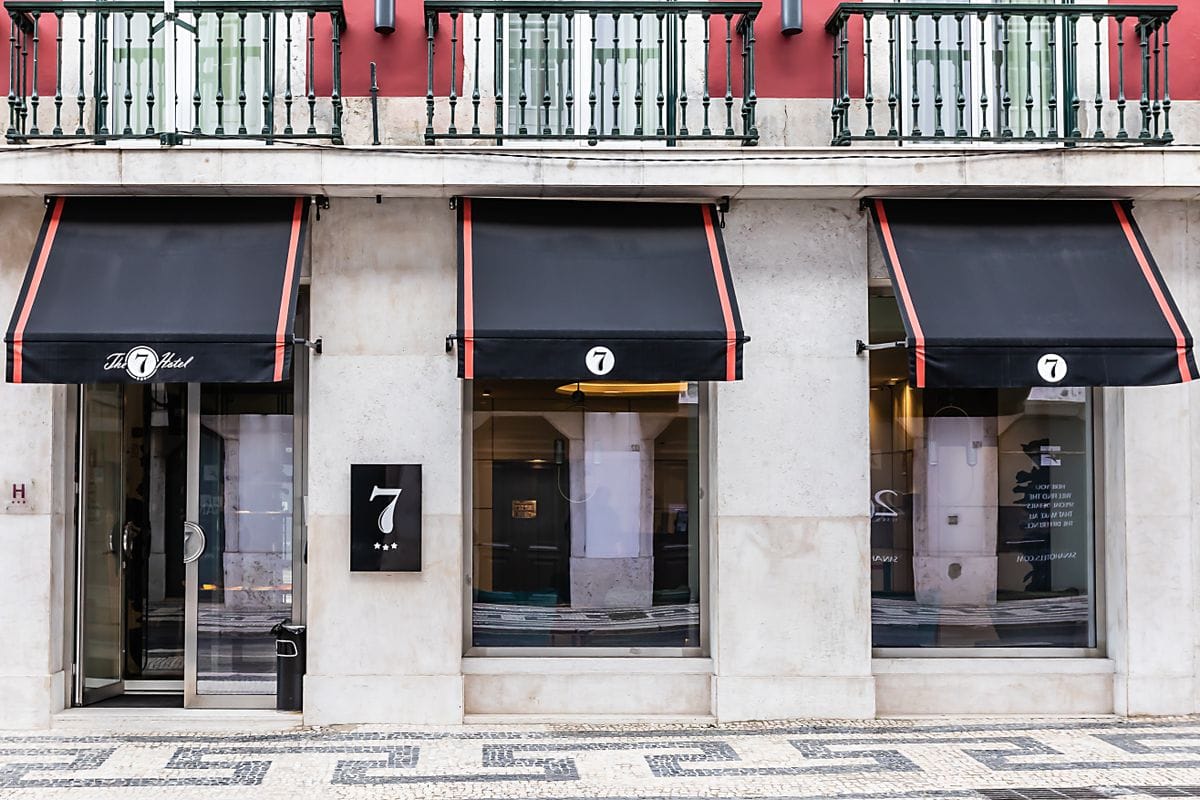
Alfama’s steep lanes hide some of the best boutique stays in the city, while Avenida da Liberdade covers the smarter end of the market. Whichever neighbourhood you pick, book early for summer: the good rooms sell out first.
When to visit Lisbon
April and May are the best months to visit Lisbon. Temperatures sit between 18 and 23°C, the hills are green, and you’ll pay noticeably less for flights and hotels than in summer. September and October are almost as good. July and August bring reliable sun but also peak prices, crowded viewpoints and a heat that can top 35°C in the streets of the Alfama.
Lisbon’s climate is one of the warmest in Europe, which means there’s no truly bad time to visit. Winter (November to March) is mild at 12 to 16°C and the lowest prices of the year. You’ll miss the outdoor cafe culture but the city feels more like itself, the museums are uncrowded and flights can be very cheap. Fado evenings in winter have a particular atmosphere that high-season tourists rarely experience. The annual Festas de Lisboa in June fills the city with sardine grills, folk music and street parties in the Alfama, making mid-June a lively option even as prices rise.
| Season | Months | Temperature | Crowds | Best for |
|---|---|---|---|---|
| Spring | April to May | 18-23°C | Moderate
Best value | Sightseeing and walking |
| Summer | June to August | 26-35°C | Very high
Peak prices | Beach day trips, Festas de Lisboa (June) |
| Autumn | September to October | 20-26°C | Moderate
Good value | Outdoor dining, shorter queues |
| Winter | November to March | 12-16°C | Low
Cheapest | Fado, museums, low prices |
How to get to Lisbon from the UK
Ryanair and easyJet serve Lisbon from most UK airports, including Stansted, Bristol, Gatwick, Manchester, Edinburgh and Birmingham. TAP Portugal flies direct from Heathrow and Manchester. Return flights typically cost £60 to £120 in spring and autumn, rising to £160 to £220 in August. The flight is around two and a half hours.
Lisbon Humberto Delgado Airport (LIS) is the main hub and sits just 7km from the city centre. Ryanair and easyJet between them cover most of the UK regional airport network, and prices are competitive year-round. TAP Portugal often offers better punctuality and included carry-on bags, which can make the headline price more comparable to budget carriers once you add bag fees. British Airways flies direct from Heathrow and occasionally runs sales in October and January that make it worth checking.
For the cheapest fares, aim to book six to 12 weeks before departure for spring and autumn travel, and three to four months out for summer. Tuesday and Wednesday bookings consistently come out cheapest across all routes. April, May, October and November offer the best combination of low fares and decent weather. If you’re checking hand luggage allowances before booking, our UK airline cabin bag size guide covers every carrier that flies the route. For general flight-finding strategy, see our guide on how to get cheap flights from the UK.
Getting around Lisbon
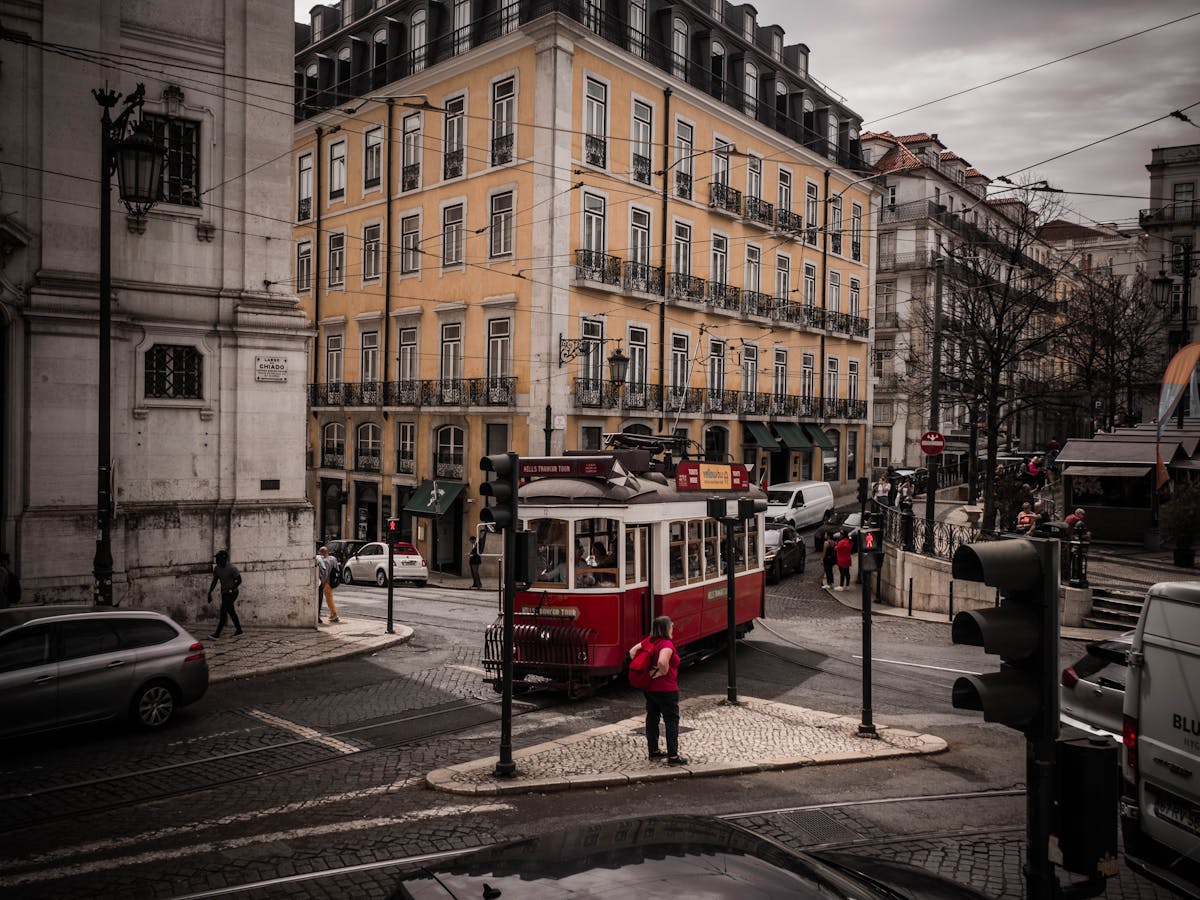
Lisbon is walkable in the centre but steep in places. The Metro is the quickest way across the city and costs €1.90 for a single ticket on a reusable navegante card. Day passes are worth buying if you plan to cross the city four or more times. Uber and Bolt are both active and consistently cheaper than taxis. Tram 28 is slow and crowded; for getting from A to B, skip it.
The Metro runs four lines and connects the airport directly to the city centre in around 25 minutes. A rechargeable navegante card costs €0.50 to buy, and a single ticket is €1.90. The Lisboa Card and the 24-hour Carris and Metro pass (€7.25) make sense for busy sightseeing days. Tram 28, the yellow wooden tram that winds through the Alfama, appears in every travel photo of Lisbon. In practice it crawls through traffic, and is one of the most targeted spots for pickpockets in the city. Take it once if you like, but use Bolt or a bus when you actually need to get somewhere. Bolt is often a little cheaper than Uber for the same journey. Ferries cross the Tagus to the south bank communities of Cacilhas and Seixal from Cais do Sodré, offering both a practical crossing and one of the best views of Lisbon. The Cacilhas crossing costs €2 for a single, or €1.60 with pay-as-you-go credit on a navegante card.
Where to stay in Lisbon
Baixa and Chiado are the most central neighbourhoods and the easiest to navigate for a first visit. Alfama has more character but is hillier. Mouraria and Intendente are cheaper and more local. Belém is quiet and close to the main monuments but further from the centre. For budget travellers, Intendente and Mouraria offer the best combination of price, safety and access.
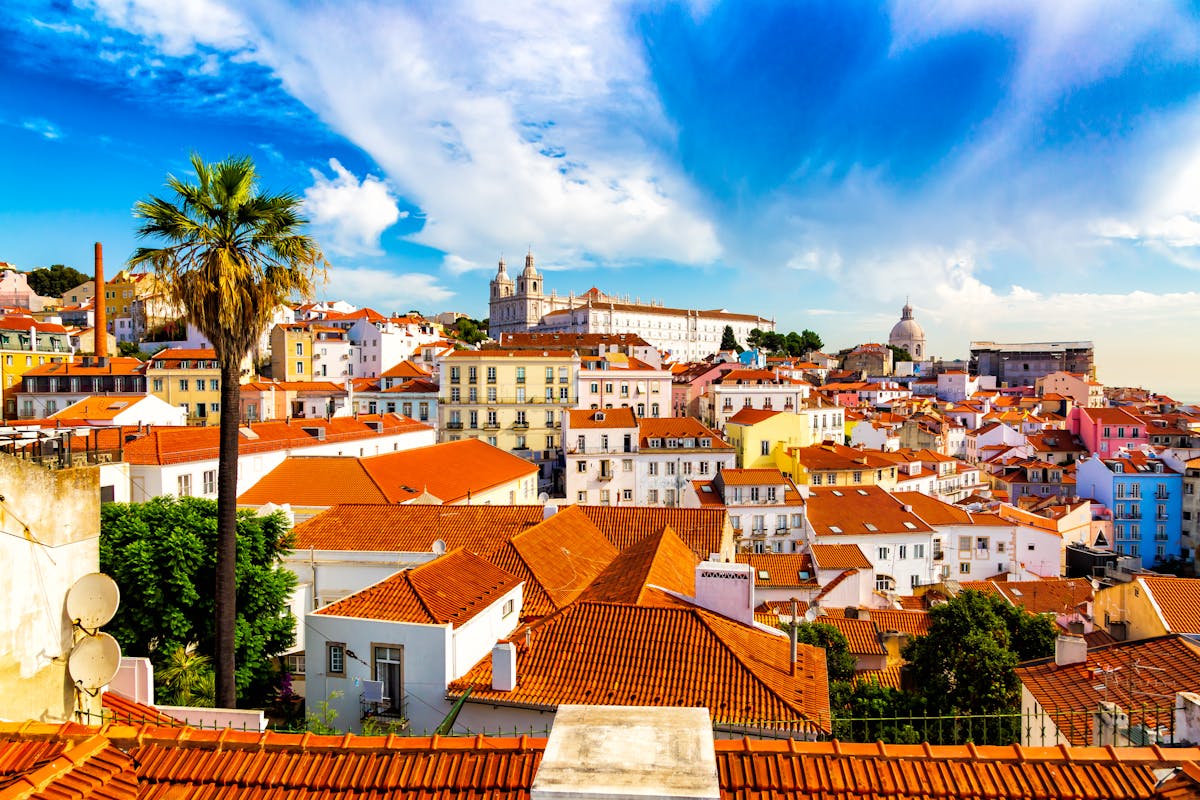
Lisbon’s neighbourhood geography matters for both budget and experience. The Baixa (downtown grid of streets) and the hilltop Bairro Alto and Chiado are where most tourists base themselves, and prices reflect that. The Alfama has a magnetic quality but the constant hills mean every journey to the supermarket is a workout. Belém is peaceful and well-connected by tram, but you lose the evening energy of the central city. For a first visit, Mouraria is worth serious consideration: cheaper rooms, local restaurants and a short Metro or walk from everywhere you want to go.
| Neighbourhood | Vibe | Hostel prices | Hotel prices | Best for |
|---|---|---|---|---|
| Baixa / Chiado | Central and lively | Mid-range | Mid-range | First timers, central access
Popular |
| Alfama | Authentic, hilly, historic | Higher | Higher | Character, nightlife, Fado
Premium feel |
| Mouraria | Local, up-and-coming | Lowest | Lowest | Budget travellers, authenticity
Best value |
| Belém | Quiet, riverside | N/A | Mid-range | Families, daytime sightseers
Peaceful |
| Príncipe Real | Upscale, design-led | N/A | Highest | Couples, boutique hotel seekers
Premium |
Free things to do in Lisbon
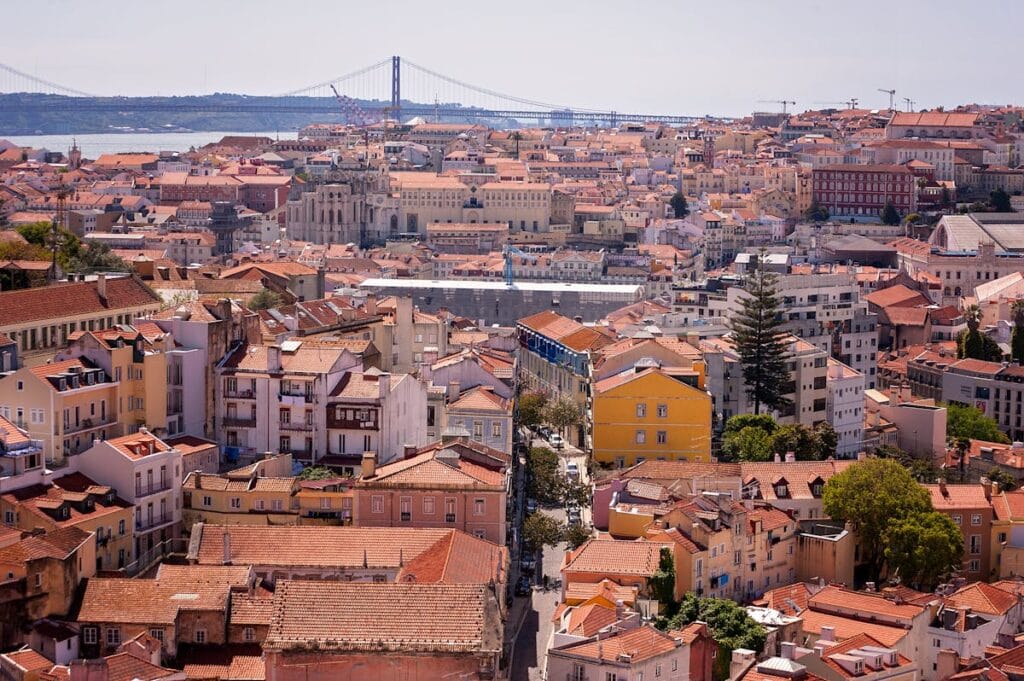
Lisbon has an unusually strong collection of free sights. The miradouros (hilltop viewpoints) are some of the finest urban panoramas in Europe. The LX Factory Sunday market, the waterfront Praça do Comércio and the streets of Mouraria are all free. A full day of walking and viewpoint-hopping is one of the best things you can do in the city.
The most rewarding free experience in Lisbon is also the simplest: walk. The city is built on seven hills and the spaces between them are full of tile-fronted buildings, unexpected squares and stairways that open onto panoramic views. The Miradouro da Graça and Miradouro de Santa Catarina draw locals in the evenings as much as tourists, and the light in the late afternoon is remarkable. None of it costs anything.
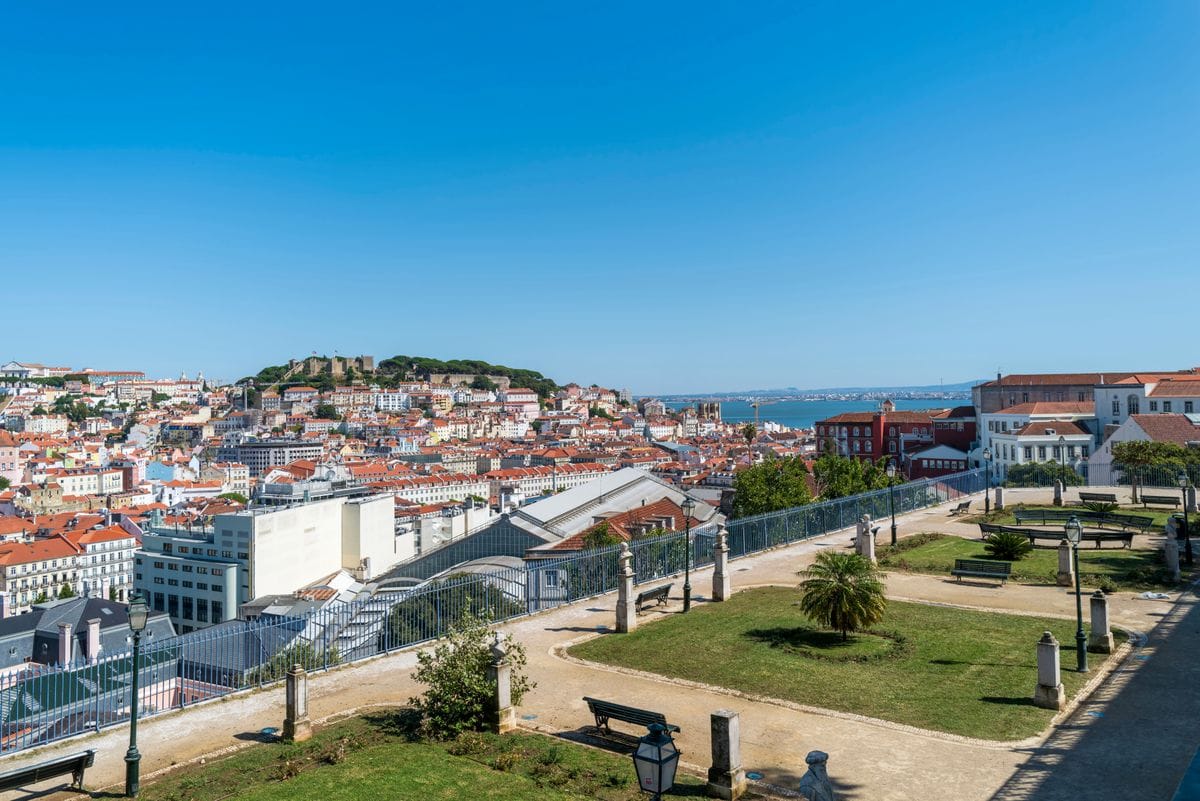
Every one of Lisbon’s miradouros is free, and most are a short walk from the centre. Go in the late afternoon for the best light, and skip the busiest ones, Santa Luzia and Portas do Sol, if you want to avoid the tour groups.
- Miradouro da Graça: the highest and least crowded of the central viewpoints, with a clear view over the castle and the river.
- Miradouro de Santa Catarina (Adamastor): a large terrace popular with locals at sundown, with food and drink vendors nearby.
- Praça do Comércio: the grand waterfront square at the mouth of the Baixa, framed by yellow arcaded buildings and open to the Tagus.
- LX Factory Sunday market: a repurposed industrial complex under the 25 de Abril bridge that fills with food, plants, books and crafts on Sunday mornings. Entry is free.
- Jardim da Estrela: a formal garden in the Lapa neighbourhood with peacocks, a bandstand and a fine view of the Basílica da Estrela dome. Good for a quiet hour.
- Street art in Mouraria: a concentrated collection of large-scale murals across the neighbourhood, much of it commissioned rather than illegal, making it some of the best-presented street art in the city.
- Parque Eduardo VII: a long formal park climbing the hill north of Pombal with an uninterrupted view straight down the Avenida da Liberdade to the river.
- Time Out Market, Mercado da Ribeira: free to enter; the food stalls in the back half of the building (away from the Time Out section) serve proper Portuguese lunches at market prices. Worth a visit for atmosphere as much as food.
Sightseeing on a budget
Most of Lisbon’s major paid sights charge between €10 and €18, and are worth the money. Jerónimos Monastery is the standout: a vast Manueline Gothic structure that took over a century to build. Free entry to national museums and monuments is for residents of Portugal only, so visitors should budget for tickets. Belém Tower is open again after restoration; book a timed entry slot before you go.
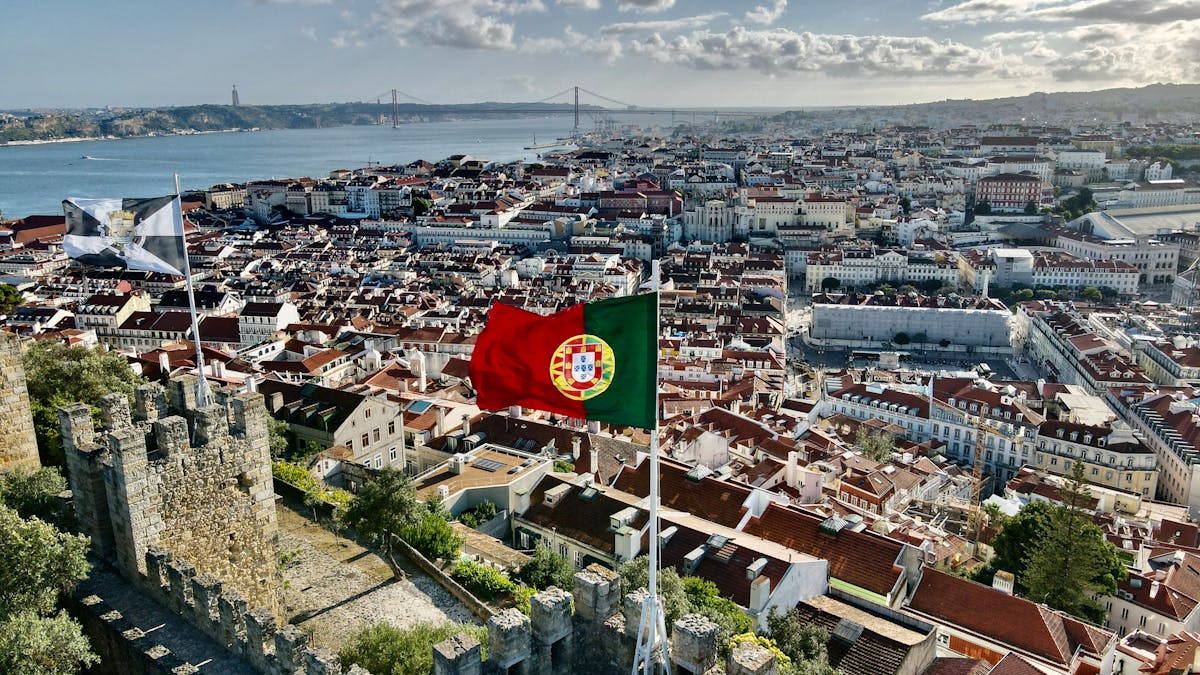
Jerónimos Monastery (€18) is the standout: one of the greatest buildings in Europe, and the church interior, where Vasco da Gama is buried, is free at all times. Castelo de São Jorge (€17) is worth it for the views over the city and the Tagus. Go early, before tour groups arrive around 10am.
The Museu Nacional do Azulejo, two floors of Portuguese tile art including a 23-metre panorama of Lisbon before the 1755 earthquake, is closed for restoration work. No reopening date has been announced, so check before you plan a visit.
| Attraction | Price | Tip |
|---|---|---|
| Jerónimos Monastery | €18 | Pre-book online to skip the ticket queue |
| Castelo de São Jorge | €17 | Arrive before 9:30am to beat tour groups |
| Museu Nacional do Azulejo | Closed for restoration | €15 for restoration workCheck the museum website before visiting |
| MAAT (contemporary art) | €16
€15 Tuesdays | Rooftop of the building is free to walk |
| Museu Nacional dos Coches | €15 | Largest royal carriage collection in the world |
| Belém Tower | €15
Timed slots | Book a half-hour entry slot ahead€15 on Mondays |
Eating and drinking in Lisbon
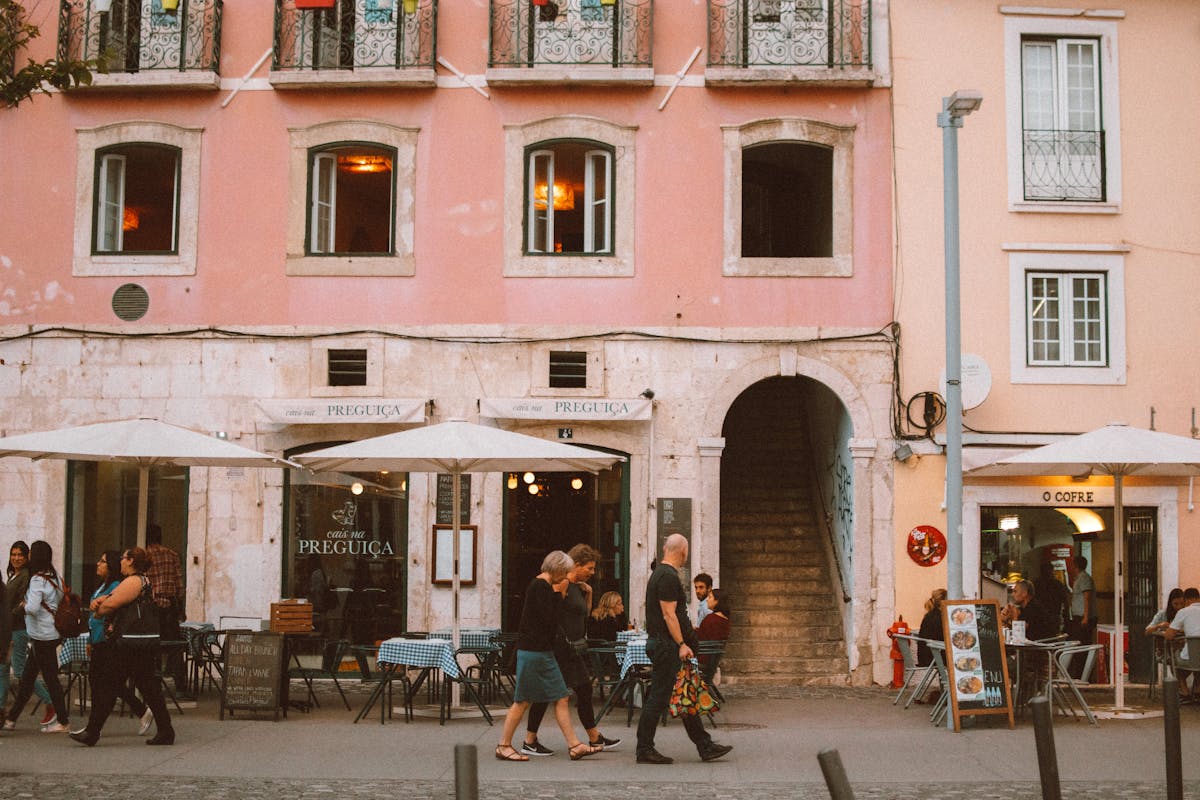
Lisbon is one of the best cities in Europe for eating cheaply without compromising on quality. The pastel de nata costs €1.20 to €1.50 eaten at a counter. A set lunch at a neighbourhood restaurant runs €8 to €12. Evening meals at local tascas with wine cost €12 to €20 per head. The city rewards people who eat where locals eat and punishes those who pick the cafes with menus displayed in six languages outside.
The pastel de nata is Lisbon’s most famous food and a real bargain: €1.20 to €1.50 for a small custard tart eaten warm from the counter, ideally with cinnamon and a flat white (uma bica). The famous Pastéis de Belém, open since 1837, is slightly better than average but involves a queue and charges €1.30 per tart; any decent pastelaria in the city comes close for the same price with no wait.
For lunch, find a tasca displaying a prato do dia on a chalkboard. These set lunches include a starter, a main course of grilled fish or meat with rice and potatoes, and a small dessert for €8 to €12 including wine or water. In the evenings, the Alfama and Mouraria have the best concentration of local restaurants. Bifanas (braised pork sandwiches), pica-pau (marinated beef in a small pot) and bacalhau (salt cod prepared dozens of ways) are the things to order. A small shot of ginjinha, the local sour cherry liqueur, costs €1.50 at A Ginjinha in Largo de São Domingos, where the drink has been served since 1840.
The Mercado de Campo de Ourique, a food market in a residential neighbourhood west of the centre, is the local alternative to Time Out Market: the same quality of produce and cooked food at noticeably lower prices and without the tourist premium.
Three restaurants worth seeking out
Budget: Zé dos Cornos: A small, family-run Mouraria tasca near Martim Moniz, known for grilled pork ribs at about €10 a plate. Expect to pay €15 to €20 a head. It is tiny and opens Tuesday to Saturday only, so arrive early or book. Beco dos Surradores, 5.
Mid-range: Cervejaria Ramiro: A Lisbon institution since 1956. Order prawns, crab and barnacles by weight from the display counter, finish with a prego (steak sandwich) as the house tradition dictates. Around €40 to €50 per head. Avenida Almirante Reis, 1H.
Worth the splurge: Belcanto: José Avillez’s flagship, two Michelin stars, consistently in the world’s top 50. Tasting menus from €165. Rua Serpa Pinto, 10A. Book well ahead.
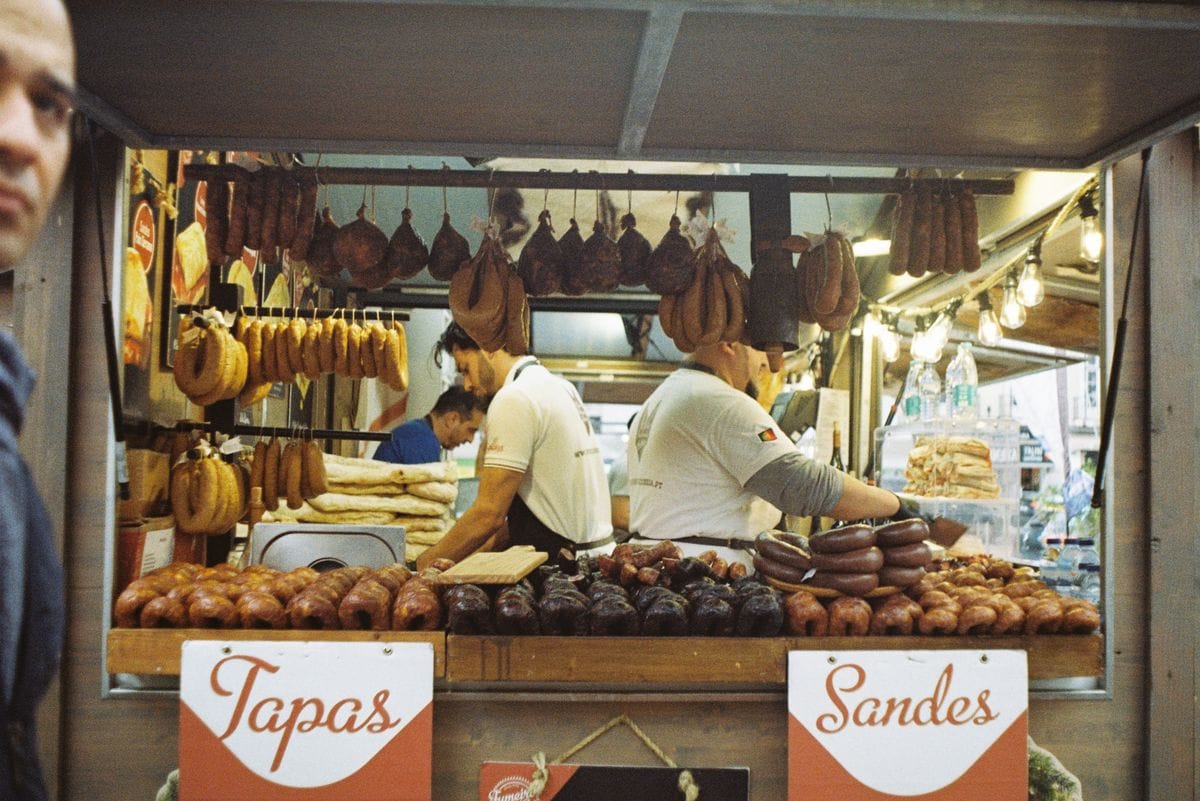
Skip the multilingual menus on the seafront and head one street back, where locals actually eat. The markets and neighbourhood tascas consistently beat anything aimed squarely at tourists.
Ten tips for Lisbon on a budget
These are the habits that separate experienced Lisbon visitors from first-timers. Most come down to knowing which transport to avoid, eating where locals eat and knowing which sights are free.
- Buy a navegante card at the airport. The €0.50 reusable card holds single tickets, day passes or pay-as-you-go credit. Reload it at any Metro machine.
- Eat lunch at a tasca with a prato do dia. A three-course set lunch with wine for €8 to €12 is the best value meal in any Portuguese city. Look for handwritten menus on chalkboards, not laminated menus in multiple languages outside.
- Drink your coffee at the bar, not at a table. Many Lisbon cafes add a small surcharge for seated service. A bica (espresso) at the counter costs €0.80; the same drink at a pavement table can be €1.80.
- Use Bolt rather than Uber. Both apps work across the city and are reliable. Bolt is often a little cheaper than Uber for broadly similar service.
- Go to Castelo de São Jorge before 9:30am. Ticket queues and visitor numbers build quickly after 10am. The early morning light on the battlements is also better for photographs.
- Know what is free. The Jerónimos church is free at all times, and so are the miradouros. Free entry to the national museums is for residents of Portugal only, so visitors should budget for tickets.
- Avoid Tram 28 for actual transport. It’s very slow and is a known pickpocket hotspot. Take it once for the experience if you like, but use Bolt or the bus when you need to be somewhere on time.
- Pre-book Jerónimos Monastery online. The ticket queue can add 30 to 45 minutes to your visit in high season. Online booking costs the same and lets you walk straight in.
- Campo de Ourique market over Time Out. Mercado de Campo de Ourique serves the same quality of Portuguese food as the famous Time Out Market but at local prices. It is a 15-minute Bolt ride from Baixa.
- Cross the Tagus by ferry for the best view of the city. The ferry from Cais do Sodré to Cacilhas costs €2 each way, or €1.60 with pay-as-you-go credit on a navegante card. The view of Lisbon on the return crossing is one of the best in the city.
Frequently asked questions
Is Lisbon cheaper than other European capitals?
Lisbon is cheaper than Paris, Amsterdam, Copenhagen and Zurich by a significant margin. It’s broadly comparable to Madrid, slightly more expensive than Porto and noticeably pricier than it was five years ago. By western European standards it remains good value, particularly for food, transport and museums.
How much spending money do I need for a week in Lisbon?
Budget around £400 to £500 per person for a week, excluding flights and accommodation. This allows for daily breakfast and coffee, a set lunch and a sit-down dinner most nights, a couple of paid museum entries, Metro and Bolt journeys and occasional drinks. Mid-range travellers should budget £600 to £800 for the same week with more flexibility on restaurants and activities.
Is Belém Tower open?
Yes. Belém Tower reopened in May 2026 after restoration. Entry is by timed half-hour slot and an adult ticket costs €15. It opens Tuesday to Sunday, 9.30am to 5.30pm, and is closed on Mondays. Book through Museus e Monumentos de Portugal, which runs the tower, rather than turning up on the day.
What is the cheapest time of year to visit Lisbon?
November through March offers the cheapest flights and hotels, with some fares dropping to £40 to £60 return from UK airports. The weather is mild by European standards (12 to 16°C) but some rain is likely in winter. For warm weather combined with lower prices, April and May or September and October are the best months: temperatures are comfortable, crowds are manageable and fares sit between summer peaks and winter lows.
Is Lisbon safe for tourists?
Lisbon is a safe city by European standards. The main concern for tourists is petty theft, particularly pickpocketing on Tram 28, around Castelo de São Jorge and in the Alfama at night. Keep valuables in a front pocket or a bag held close. The nightlife areas around Bairro Alto and Cais do Sodé are lively but not dangerous. Common sense applies, as in any major city.
Do UK visitors need a visa for Lisbon?
UK passport holders don’t need a visa for stays of up to 90 days in any 180-day period across the Schengen area. You do need a valid passport (not just a national ID card). The 90-day limit is a rolling allowance, not per trip; if you travel to the Schengen area frequently, keep track of your days. Rules can change, so check the Portuguese consulate website before travelling.
How long is the flight from the UK to Lisbon?
Direct flights from London (Heathrow, Gatwick, Stansted, Luton) take approximately 2 hours 25 minutes to 2 hours 45 minutes. From Manchester, Birmingham and Edinburgh, flights take around 2 hours 45 minutes to 3 hours. There are no stops on any of the main routes, so the journey is direct.

Jane Robinson is Senior Editor at Flight Tribe. She has a Master’s in English and Journalism, and writes about flight deals, holiday offers and practical ways UK travellers can spend less without wasting time on weak promotions. Jane has spent time living and working across Asia and New Zealand, which gave her a lasting interest in how people travel, eat, move around and spend their free time in different places.
At Flight Tribe, her work focuses on verified prices, realistic travel dates, booking terms and whether a deal is actually worth attention.
How Jane works
Jane checks offers against live supplier pages wherever possible, including prices, dates, departure points, baggage rules and booking conditions. She is quietly sceptical of anything that sounds too good to be true, and helps keep Flight Tribe’s travel advice useful, honest and easy to act on.
Editorial standards
Flight Tribe covers deals for readers first. Affiliate links do not decide whether an offer is worth writing about.