Published 14 May 2026 | Updated 3 September 2026 by Kate Acaster
Advertisement
Flying to Tenerife in May can cost £100 less per person than flying in August. Hotels drop by 30 to 40 per cent for the same rooms. There is no bad month to go, but the gap between the cheapest and most expensive periods is wide, and it comes down almost entirely to the British school calendar.
This guide covers the full year for UK travellers: when fares are lowest, which months to avoid if you are watching your budget, and what conditions to expect in each season. For detailed pricing on hotels and activities once you are there, see our Tenerife holiday budget guide.

The quick verdict
For most UK adults, May, June, September and October offer the best combination of warm weather, lower fares, and beaches that are not overcrowded. July and August are school summer peak, with prices to match. December is split: the first three weeks are among the cheapest of the year, then prices jump sharply for Christmas and New Year.
| Month | Avg high | Crowds | Price from UK | Verdict |
|---|---|---|---|---|
| January | 19°C | Low
Low | Low
Low | Good off-peak value |
| February | 20°C | Moderate
Moderate | Moderate
Moderate | Avoid half-term unless going for Carnival |
| March | 21°C | Moderate
Moderate | Moderate
Moderate | Good outside Easter week |
| April | 22°C | Moderate
Moderate | Moderate
Moderate | Book early or avoid Easter week |
| May | 23°C | Low
Low | Low
Low | Best value month |
| June | 25°C | Low
Low | Moderate
Moderate | Strong shoulder choice |
| July | 28°C | High
High | High
High | Family peak; book 4–6 months ahead |
| August | 29°C | Very high
Very high | Very high
Very high | Peak family season |
| September | 27°C | Low
Low | Moderate
Moderate | Best overall month |
| October | 25°C | Low
Low | Low
Low | Excellent value |
| November | 23°C | Very low
Very low | Low
Low | Cheapest month; some cloud in north |
| December | 21°C | Low / Very high
Split | Low / Very high
Split | Fly before 21 December for best value |
Month by month
Here is what each part of the year looks like in practice, written for UK travellers flying from the mainland.
January and February
January is genuinely quiet. Average highs in the south sit around 19°C, warm by UK winter standards, and most resorts stay open. Sea temperatures hover around 19°C, which is cool for swimming but fine for lying on the beach in the sun. It is one of the cheapest months to fly from any UK airport.
February changes the picture. Tenerife’s Carnival, one of the largest in the world, runs across much of the month, usually peaking around the time of the UK February half term. If you are travelling for Carnival, book well ahead. If you are not, that week is worth skipping. Prices and crowds rise together.
March and April
Temperatures climb through the low 20s. March is a solid shoulder month with no major school break to inflate prices. April is more complicated because Easter timing shifts each year. When Easter falls in April, prices rise sharply across all UK departure airports. Outside Easter week, April is good value, and the weather is reliably pleasant.
May and June
These are two of the best months to visit. Mid-20s temperatures, empty beaches mid-week, and fares that have not yet been driven up by the summer school break. May outside the half-term week (usually the last week of May) is consistently the cheapest time of year to fly to Tenerife from the UK. Return fares from Gatwick or Manchester regularly fall below £100 per person. June stays affordable and gets warmer still, reaching around 25°C.
July and August
Peak season. The south of the island reaches 28–30°C, every major resort is full, and prices from UK airports are at their annual high. August is generally more expensive than July. If you have children in school, this is your main window, and prices reflect the captive demand. Expect to pay 50 to 80 per cent more than you would for the same route in September.
September and October
September is, for most UK adults, the single best month to visit Tenerife. Schools return, prices fall sharply, and the island is still at its warmest. Average highs stay above 27°C and the sea reaches its peak temperature of around 24°C, warmer than August. October cools slightly to around 25°C but remains excellent, with some of the lowest fares of the year outside the half-term week at the end of the month.
November and December
November is the quietest and one of the cheapest months. Temperatures sit in the low to mid-20s. The south remains reliable, though the north can see more cloud cover. December is split: the first three weeks offer some of the cheapest fares and emptiest beaches of the year. Then prices jump for Christmas week and New Year. If you want Tenerife in December without the Christmas premium, fly before 21 December and return before 27 December.
UK school holidays move Tenerife prices more than any other factor. The island’s tourism is heavily weighted towards British family package holidays, which means every school break creates a demand spike that affects fares from all major UK departure airports simultaneously.
Knowing the dates in advance is the single most useful thing you can do when planning a Tenerife trip on a budget. The table below shows the pattern across the main holiday periods.
How UK school holidays affect Tenerife prices
The further your travel dates sit from any UK school break, the cheaper your trip will be. This is more pronounced for Tenerife than for many other European destinations because the volume of UK family package holidays flying to the island is so high. Airlines and tour operators price accordingly. For more on booking timing, see our guide to when UK flights are cheapest.
| UK school break | Approx 2026 dates | Price premium | What to do |
|---|---|---|---|
| February half term | 16–20 Feb 2026 | 20–40%
Medium | Also Carnival. Book 3+ months ahead if going. Otherwise travel the week after. |
| Easter | 3–17 April 2026 | 30–50%
High | First week cheaper than second. Book early. Mid-April dates fall sharply after school returns. |
| May half term | 25–29 May 2026 | 15–25%
Medium | Milder spike than Easter or summer. The weeks before and after are among the cheapest of the year. |
| Summer holidays | 24 Jul–4 Sep 2026 | 50–100%
Very high | Biggest spike of the year. Book 4–6 months ahead. August is pricier than July. |
| October half term | 26–30 Oct 2026 | 10–20%
Low–medium | Prices rise but not dramatically. Good weather still. Avoid if dates are flexible. |
| Christmas / New Year | 21 Dec 2026–2 Jan 2027 | 40–70%
High | 15–20 December dates are available at much lower prices. Book before September for Christmas week. |
Eight UK airports have regular direct services to Tenerife South (TFS), making it one of the best-connected Spanish island destinations for British travellers. Most major UK cities have at least one direct option, so you are rarely forced to connect through London.
Check your hand luggage allowance before booking, as rules differ significantly between easyJet, Jet2, Ryanair, TUI and British Airways, and the cheapest fares often come with the most restrictive baggage policies.

Which UK airports fly direct to Tenerife
Nearly all UK direct flights go to Tenerife South (TFS), which sits close to the resorts of Playa de las Américas, Los Cristianos and Costa Adeje. Tenerife North (TFN) serves the capital Santa Cruz de Tenerife and La Laguna, but receives very few direct UK services. If you are heading to Puerto de la Cruz or the north of the island, you can fly into TFS and travel up the motorway in around 90 minutes, or check whether your airport has an occasional TFN service.
| UK airport | Airlines to TFS | Flight time | Notes |
|---|---|---|---|
| London Gatwick (LGW) | easyJet, British Airways | ~4h 15m | Most routes and best frequency |
| Manchester (MAN) | easyJet, Jet2, TUI, Ryanair | ~4h 20m | Best northern option |
| Bristol (BRS) | easyJet, Jet2, TUI | ~4h 10m | Best for South West England |
| Edinburgh (EDI) | easyJet, Jet2, TUI | ~4h 45m | Scotland’s main option |
| Liverpool (LPL) | easyJet, Ryanair | ~4h 15m | Budget-friendly fares |
| Birmingham (BHX) | Jet2, TUI, easyJet | ~4h 20m | Strong for Midlands travellers |
| Newcastle (NCL) | Jet2, TUI | ~4h 40m | Limited schedule |
| Leeds Bradford (LBA) | Jet2, TUI | ~4h 30m | Jet2’s home base |
For more on finding the best fares from these airports, see our guide to how to get cheap flights from the UK.
North or South Tenerife: the practical choice
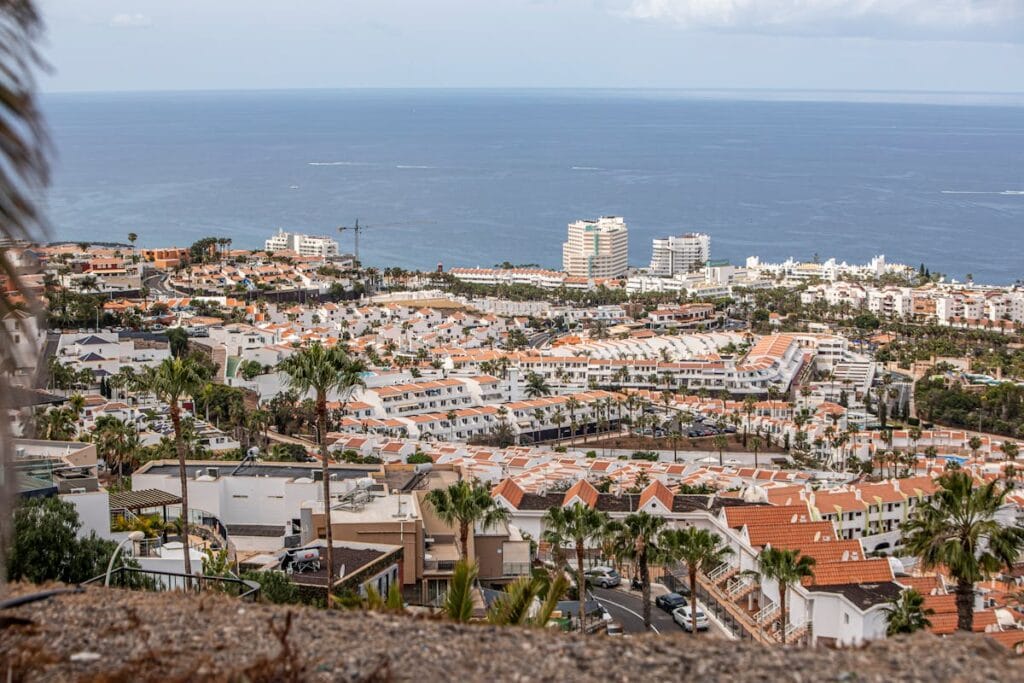
Most UK package holiday travellers end up in the south, and for a straightforward beach holiday, this is the right call. The southern coast averages around 300 days of sunshine per year. The resorts of Playa de las Américas, Los Cristianos and Costa Adeje are all within 10 to 15 minutes of TFS airport. Costa Adeje has the highest concentration of upmarket hotels and newer developments. Los Cristianos is quieter and more local in character.
The north is different in almost every way. Puerto de la Cruz, the main resort town in the north, has a more traditional Spanish feel, older hotels, and a rockier coastline with smaller lido-style pools rather than sandy beaches. The weather is less reliable: the north sits on the windward side of the island and catches cloud from the trade winds, particularly in summer. Temperatures are cooler year-round.
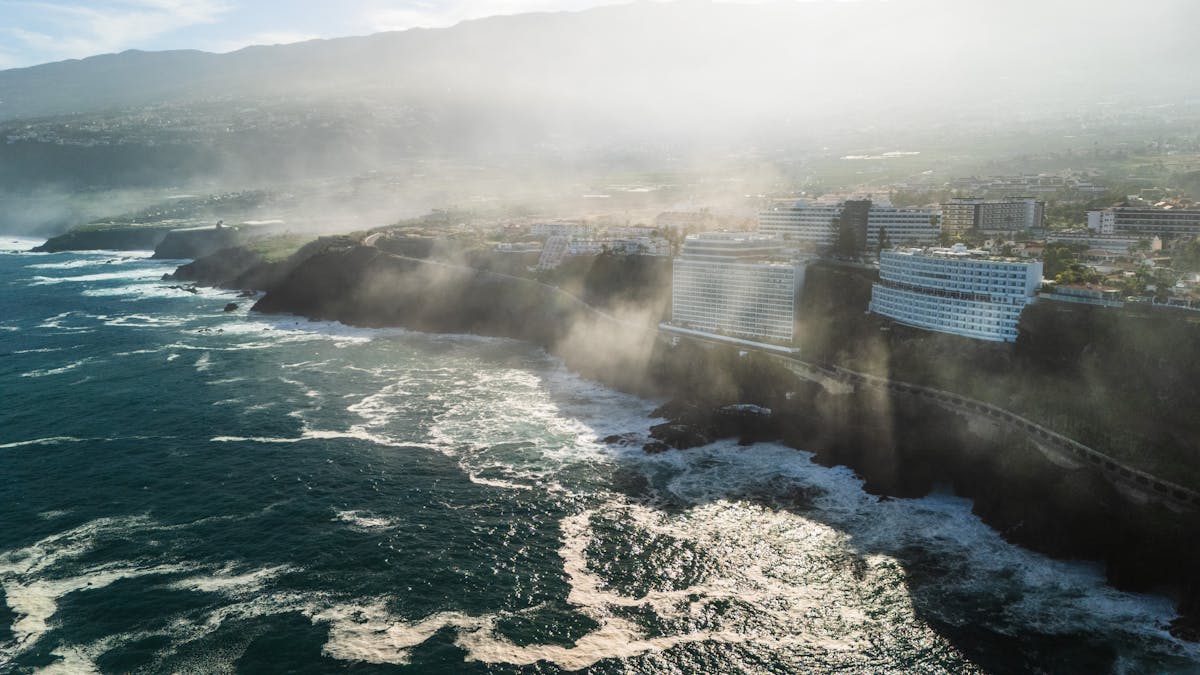
If you want more than beach and resort, the north is worth at least a day trip. The Orotava Valley is one of the most scenic parts of the island, and Teide National Park, home to Spain’s highest peak at 3,715 metres, is accessible from either coast. Most visitors based in the south combine a day trip to the park with a drive through the north before returning.
For a first visit or a family holiday, base yourself in the south and take the island at your own pace. For a second or third visit, the north gives you something genuinely different.
Best time to visit Tenerife depending on what you want
The right time to go depends on your priorities. Here is a quick breakdown by trip type.
Families with school-age children
July to early August is your main window, with July generally cheaper than August. You will pay a significant premium over the rest of the year, but Tenerife handles family peak season well. The southern resorts are set up for it: pool complexes, waterparks, shallow beaches and plenty of family-friendly hotels. Book flights and accommodation four to six months in advance for best availability.
Couples and adults without children
September is the best single month. Warm sea, empty beaches, prices well below peak, and an island that has just let out a long exhale after summer. October is a close second. Both months offer a level of calm that July and August simply cannot match, and the weather is arguably better than June because the trade winds have eased.
Travelling on a tight budget
May (outside half-term) and November are the cheapest months for UK-Tenerife flights. Late September also offers strong value once the post-summer drop has kicked in. All three periods have good weather in the south. In November, factor in that some northern parts of the island may be cloudier, but the area around Playa de las Américas remains reliable.
For Tenerife Carnival
Carnival in Santa Cruz de Tenerife is one of the most spectacular events in Europe, attracting around a million visitors. It runs across several weeks in February, with the main events concentrated in a ten-day window. Dates shift each year with the Catholic calendar. Book flights and accommodation at least three months ahead. The February half-term week often overlaps with Carnival, which drives prices up from UK airports. If you can travel outside the half-term window but still catch Carnival, you will pay less.
For walking and hiking
October through March is the best period for walking in Teide National Park. Summer temperatures at altitude can be intense, and the trails at higher elevations become very exposed. Winter and spring bring cooler conditions that are far more comfortable for extended walking. The Anaga Rural Park in the northeast of the island is accessible year-round but is best in the cooler months when the cloud forest is at its most lush.
For reliable guaranteed sunshine
June through August is the driest period in the south. Cloud cover is at its minimum. If your priority is sunshine and you do not have school-age children, June is the best compromise: warm, dry, uncrowded, and significantly cheaper than July or August.

Frequently asked questions
What is the best month to visit Tenerife from the UK?
September. Schools are back, prices drop sharply from the summer peak, average highs are still above 27°C in the south, and the sea reaches its warmest of the year at around 24°C. May and late October come close if you have more flexibility on timing and want lower prices still.
When is Tenerife cheapest to visit from the UK?
May, outside the half-term week at the end of the month, is consistently the cheapest time to fly. Return fares from Gatwick or Manchester regularly fall below £100 per person in early-to-mid May. November is also very cheap. Late September offers strong value once the summer peak has cleared. All three windows have good weather in the south of the island.
Is Tenerife worth visiting in October from the UK?
Yes. October is one of the most underrated months. Average highs are around 25°C in the south, the sea is still warm from summer, prices are low outside the October half-term week, and the resorts are much quieter than during summer. The north can be cloudier, but Playa de las Américas and Los Cristianos remain reliable for sunshine.
Which UK airports fly direct to Tenerife?
Eight major UK airports have regular direct services to Tenerife South (TFS): London Gatwick, Manchester, Bristol, Edinburgh, Liverpool John Lennon, Birmingham, Newcastle and Leeds Bradford. London Luton also operates seasonal Ryanair routes. Nearly all direct UK flights land at TFS, which is closest to the main southern resorts. If you are heading to Puerto de la Cruz or the north, TFS is still your most practical entry point, with a motorway transfer of around 90 minutes.
Is Tenerife good in winter for UK holidaymakers?
Yes, it is one of the best European options for a winter sun break. January and February average 19–20°C in the south, warm enough for beach days in good weather, and far milder than mainland Spain or the Algarve in winter. The sea is cooler (around 19°C), but the sun is reliable and the island stays open. It is particularly popular with UK retirees and remote workers who can avoid the school holiday price premiums.
How much do flights from the UK to Tenerife cost?
Outside school holidays, return fares from London Gatwick or Manchester typically range from £80 to £180 per person. During the summer school break, the same routes can reach £300 to £500 or more. easyJet and Ryanair are generally the cheapest options. Jet2 and TUI compete well when you factor in baggage allowances and package deals. Book three to four months ahead for summer travel. For shoulder season, four to six weeks out often works well. See our full guide to getting cheap flights from the UK for more detail on timing your search.

Kate Acaster is Chief Editor at Flight Tribe. She writes about practical travel planning, budget airlines, baggage rules, city breaks, beach holidays and good hotels that do not cost daft money.
Kate has travelled through Europe, South America and beyond, usually with a notebook, a half-formed plan and a strong opinion on airport snacks. At Flight Tribe, her work focuses on helping UK travellers understand what is included, what costs extra, and whether a trip is worth booking at the price shown.
How Kate works
Kate checks the details that can change the value of a trip, including cabin-bag rules, airline fees, hotel location, seasonality, travel dates and booking conditions. She is especially interested in offers that look useful on the surface but need a proper reader-first check before they are worth recommending.
Editorial standards
Flight Tribe covers deals and travel advice for readers first. Affiliate links do not decide whether an offer is worth writing about.