Published 14 May 2026 | Updated 30 August 2026 by Kate Acaster
Flying to Majorca in July or August costs around £80 to £120 more per person than the same route in May or early October. Package holidays see a similar premium, often 30 to 50 per cent higher during the school summer break. There is no bad month to visit the island, but the gap between peak and shoulder pricing is significant, and it follows the British school calendar almost exactly.
Advertisement
This guide covers the full year for UK travellers: the cheapest months to fly, which periods to avoid on a tight budget, and what weather and crowd levels to expect each season. For general deal-finding strategy, see our guide to how to get cheap flights from the UK.
Search Majorca flights and hotels
The quick verdict
For most UK adults, May, June, September and October offer the best combination of warm weather, lower fares, and uncrowded beaches. July and August are the school summer peak, with prices to match. December is split: the first three weeks are among the cheapest of the year, then fares jump sharply for Christmas and New Year.
| Month | Avg high | Crowds | Price from UK | Verdict |
|---|---|---|---|---|
| January | 15°C | Very low Low | Low Low | Good off-peak value |
| February | 16°C | Low Low-mod | Low Low-mod | Avoid half-term week |
| March | 18°C | Low Low | Low Low | Good early spring choice |
| April | 20°C | Moderate Moderate | Moderate Moderate | Book early or avoid Easter week |
| May | 23°C | Low Low | Low Low | Best value month |
| June | 27°C | Low Low | Moderate Moderate | Strong shoulder choice |
| July | 30°C | High High | High High | Family peak; book 4–6 months ahead |
| August | 31°C | Very high Very high | Very high Very high | Peak family season |
| September | 28°C | Low Low | Moderate Moderate | Best overall month |
| October | 24°C | Low Low | Low Low | Excellent value |
| November | 20°C | Very low Very low | Low Low | Cheapest month |
| December | 16°C | Low / Very high Split | Low / Very high Split | Fly before 21 December for best value |
Month by month
Here is what each part of the year looks like in practice, written for UK travellers flying from the mainland.
January and February
January is very quiet. Average highs around 15°C make Majorca one of the milder winter sun options in Europe, though it is cooler than the Canaries. The sea drops to around 15°C, which rules out swimming for most visitors, but Palma city makes for an excellent base: the cathedral, old town, and markets work well in cooler weather. It is one of the cheapest months to fly from any UK airport, and hotels in the south tend to stay open year-round.
February stays quiet outside the half-term week, which usually falls in the third week of the month for England and Wales. That week sees a modest price spike, but nothing on the scale of Easter or summer. The Tramuntana mountains are at their greenest in February. Almond blossom covers the inland valleys and the island looks quite different from its summer self.
March and April
March is a strong shoulder month. Temperatures climb into the high teens, the crowds are thin, and fares from UK airports remain low. The countryside is at its best: green hillsides, wildflowers across the interior, and quiet beaches that will be packed in three months’ time. April is more complex because Easter shifts each year. When Easter falls in April, prices and crowds rise sharply. Outside Easter week, April is excellent value and reliably warm. Aim for early April or the final weeks if Easter does not overlap.
May and June
These are two of the best months to visit. May outside the half-term week, which typically falls in the last week of the month, is the cheapest time of year to fly to Majorca from the UK. Average highs reach 23°C, the sea warms to around 20°C, and beaches are uncrowded mid-week. Return fares from London Gatwick or Manchester regularly fall below £80 per person in early to mid-May.
June takes a step closer to summer: 27°C average highs, sea temperatures rising toward 24°C, and fares that have moved up from the May lows but remain well below peak. It is the best month for people who want genuine beach weather without the August chaos. Alcudia Bay in the north and Cala d’Or in the south are both still manageable. The crowds arrive in earnest from the last week of June onwards as some schools begin to break up.
July and August
Peak season. Average highs reach 30 to 31°C, the sea hits 26 to 27°C, and every major resort is full. August is the more expensive of the two months. Expect to pay 50 to 100 per cent more for flights and packages than you would in September or October. If you have school-age children, this is your window, and the island handles the volume well: long sandy beaches, plenty of water parks, and an extensive range of family hotels. Book flights and accommodation at least four to six months ahead for summer travel.
September and October
September is, for most UK adults without school commitments, the single best month to visit Majorca. Schools return in early to mid-September, prices fall sharply from the summer peak, and the island is still at its warmest. Average highs hold at 28°C. The sea reaches its peak temperature of around 26 to 27°C, warmer than in August. Resorts that were heaving in August become manageable again. Fares drop quickly once the school year starts.
October cools a little to around 24°C but remains excellent. The sea stays warm at 23°C, fares are low, and some of the island’s best walking conditions arrive with the cooler air. The Tramuntana mountains are particularly good in October. The only complication is the October half-term week, usually the last week of the month, which causes a small but noticeable price spike.
November and December
November is the quietest and cheapest month. Many hotels in the northern and eastern resorts close for the winter, but Palma and the southwest remain open. Average highs sit at 20°C, enough for sightseeing and walking but not reliable beach weather. Fares are very low. If you want Majorca at its emptiest and most affordable, November delivers, though you need to choose your base carefully.
December is split. The first three weeks offer cheap flights and quiet resorts, with temperatures around 16°C. From roughly 21 December, prices jump for the Christmas and New Year period. If you want Majorca in December without the festive premium, travel between 1 and 20 December and return before Christmas.
UK school holidays move Majorca prices more than any other single factor. The island is one of the top destinations for British family package holidays, which means every school break creates a simultaneous demand spike across all major UK departure airports.
Knowing those dates in advance is the most useful thing you can do when planning a trip on a budget. The table below shows the impact of each main holiday period and what to do if your dates overlap.
How UK school holidays affect Majorca prices
The further your travel dates sit from any UK school break, the cheaper your trip will be. For more on booking timing, see our guide to when UK flights are cheapest.
| UK school break | Approx 2026 dates | Price premium | What to do |
|---|---|---|---|
| February half term | 16–20 Feb 2026 | 15–30% Medium | Smaller spike than Easter. The week after is immediately cheaper. |
| Easter | 3–17 April 2026 | 30–50% High | First week cheaper than second. Book early. Prices fall sharply once school returns. |
| May half term | 25–29 May 2026 | 15–25% Medium | Milder spike than Easter or summer. The two weeks before are the cheapest of the year. |
| Summer holidays | 24 Jul–4 Sep 2026 | 50–100% Very high | Biggest spike of the year. Book 4–6 months ahead. August is pricier than July. |
| October half term | 26–30 Oct 2026 | 10–20% Low–medium | Smallest seasonal spike. Still good weather. Easy to avoid if your dates are flexible. |
| Christmas / New Year | 21 Dec 2026–2 Jan 2027 | 40–70% High | 15–20 December dates are available at low prices. Book before September for Christmas week. |
Majorca is one of the most-served Spanish destinations from the UK, with direct flights from over a dozen British airports. Unlike some Mediterranean islands that rely on a single London hub, Majorca is accessible from most major UK cities without a connection.
Check your hand luggage allowance before booking. Rules differ significantly between easyJet, Jet2, Ryanair, TUI and British Airways, and the cheapest fares typically come with the most restrictive baggage policies.
Which UK airports fly direct to Majorca
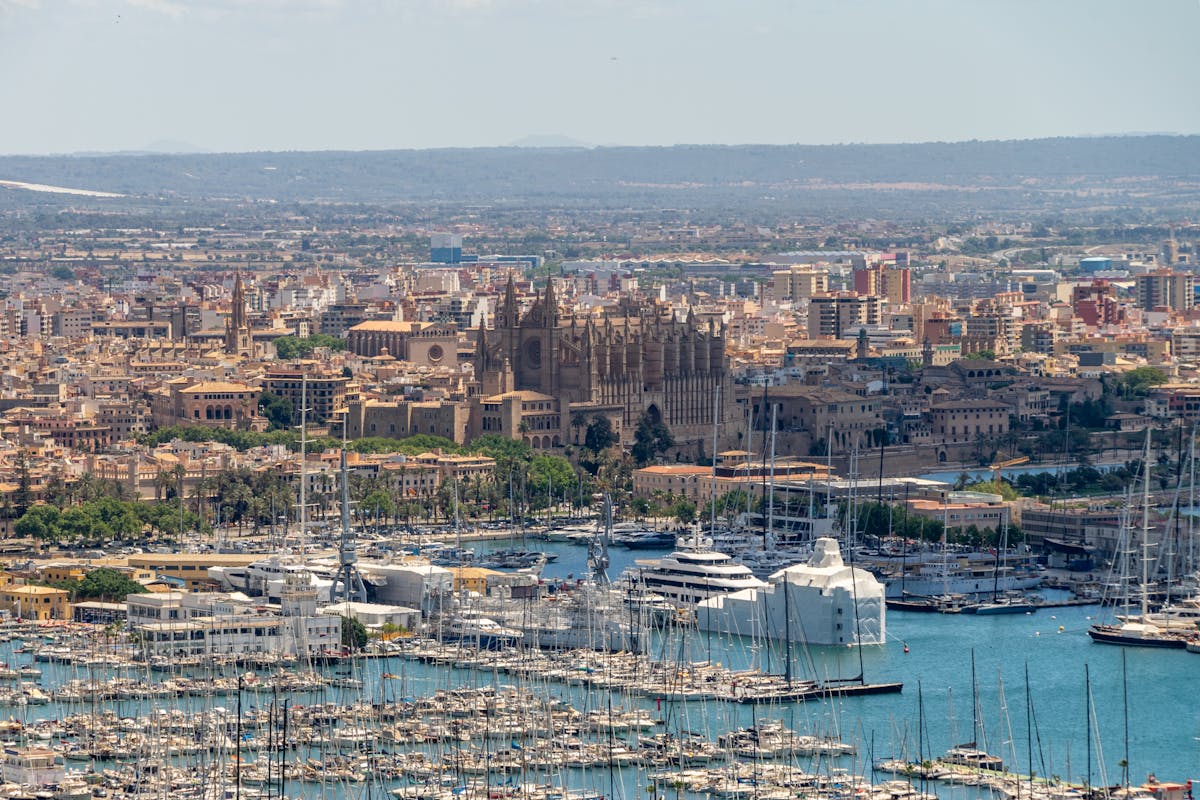
All direct UK flights go to Palma de Mallorca Airport (PMI), which sits about 8 kilometres east of the capital and is well connected to all parts of the island by road. It is one of Europe’s busiest airports in summer, handling around 30 million passengers a year at peak. Flight time from London is around 2 hours 15 minutes, making Majorca one of the quickest Mediterranean destinations to reach from the UK.
| UK airport | Airlines to PMI | Flight time | Notes |
|---|---|---|---|
| London Gatwick (LGW) | easyJet, British Airways, Jet2, TUI | ~2h 15m | Most routes, best frequency |
| Manchester (MAN) | easyJet, Jet2, TUI, Ryanair | ~2h 30m | Best northern England option |
| London Luton (LTN) | Wizz Air, Ryanair, easyJet | ~2h 15m | Good budget option |
| Bristol (BRS) | easyJet, Jet2, TUI | ~2h 20m | Best for South West England |
| Edinburgh (EDI) | easyJet, Jet2, TUI | ~2h 45m | Scotland’s main option |
| Birmingham (BHX) | Jet2, TUI, easyJet | ~2h 25m | Good for Midlands travellers |
| Glasgow (GLA) | easyJet, Jet2, TUI | ~2h 45m | Good west of Scotland option |
| Leeds Bradford (LBA) | Jet2, TUI | ~2h 30m | Jet2 home base |
For more on finding the best fares from these airports, see our guide to how to get cheap flights from the UK.
Palma, the north or the south: where to base yourself
Most UK package holidays land in the south or southwest: Magaluf, Palmanova, El Arenal and the resorts around Cala Millor. These are the classic British beach holiday destinations, purpose-built for the summer trade, with wide sandy beaches and plenty of hotels. El Arenal has a long, broad beach close to the airport and suits families wanting a no-fuss beach holiday. Magaluf is livelier and more oriented towards younger travellers. Cala d’Or, further east, is quieter with smaller coves and a more upmarket character.
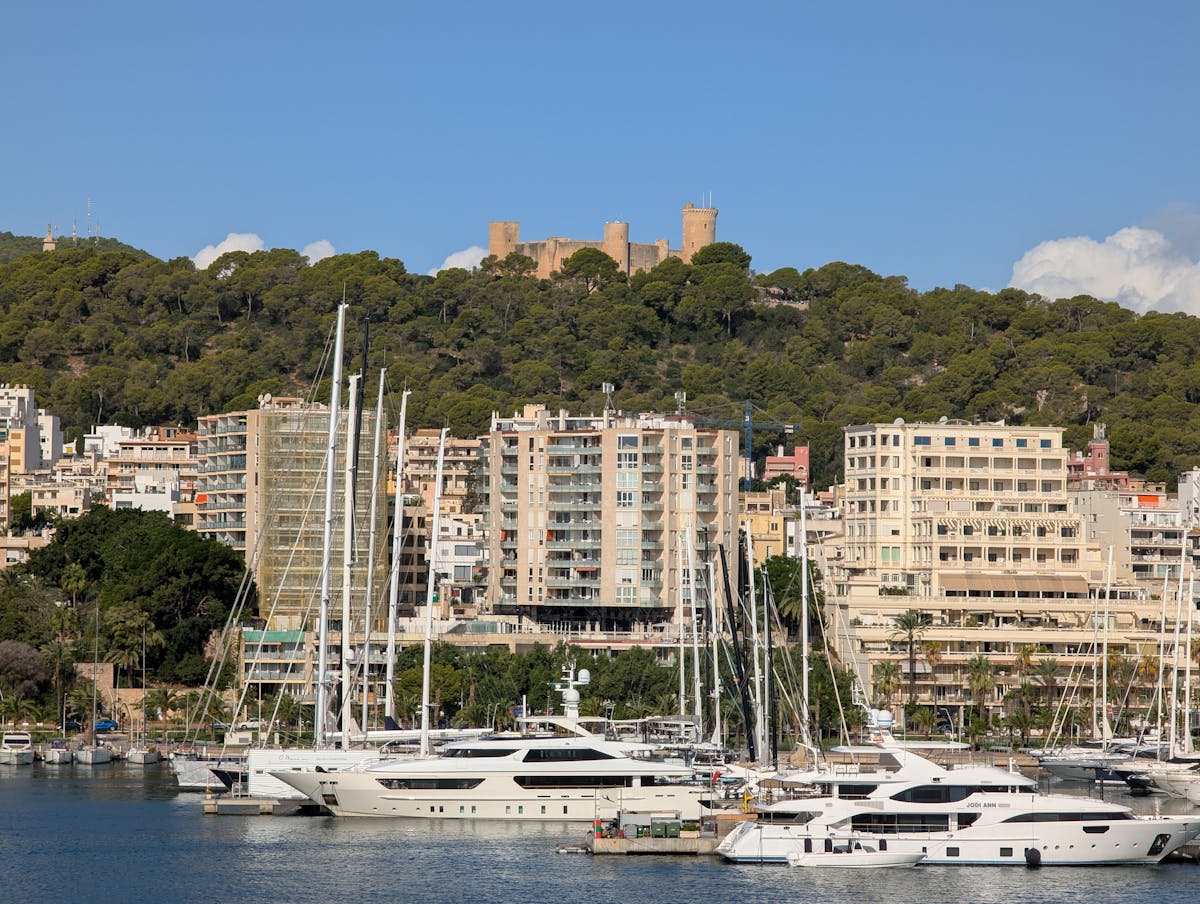
The north is different. Alcudia has a medieval walled town, a long flat sandy beach stretching around the bay, and a calmer atmosphere than the southwest. It is the best part of the island for families who want space on the beach and something to explore beyond the resort. Port de Pollença, a few kilometres west, is even quieter, with a sailing-focused harbour and the Serra de Tramuntana mountains rising immediately behind. Palma itself is worth considering as a base: the capital has a cathedral, a historic Arab quarter, good restaurants, and beaches within easy distance.
The Tramuntana mountain range along the northwest coast is a UNESCO World Heritage Site. It runs for around 90 kilometres and contains the island’s best walking and cycling routes. Valldemossía, the village where Chopin spent a winter in 1838 to 1839, and Sóller, reached by a historic narrow-gauge train from Palma, are the most visited towns in the range.
For a first visit or a family beach holiday, base yourself in the south and take day trips. For a second visit or a more active trip, the north and Tramuntana give you something markedly different from the Mediterranean resort standard.
Best time to visit Majorca depending on what you want
The right time to go depends on your priorities. Here is a breakdown by trip type.
Families with school-age children
July to early August is your main window, with July slightly cheaper than August. You will pay a significant premium over the rest of the year, but Majorca handles the volume well. The southern resorts have wide sandy beaches, water parks, and a large range of family hotels. Alcudia in the north is an alternative for families who want a quieter setting and a long, flat beach. Book flights and accommodation four to six months ahead, particularly if you need a specific airport or departure date.
Couples and adults without children
September is the best single month. Warm sea at 26 to 27°C, prices well below the summer peak, and an island that has just cleared out its busiest visitors. Port de Pollença or Palma make the best bases for this type of trip. October is a close second, particularly for people who enjoy walking and cooler conditions. Both months offer a level of calm that July and August cannot provide.
Travelling on a tight budget
May outside the half-term week is consistently the cheapest time to fly. Return fares from London Gatwick or Manchester can fall below £80 per person in early to mid-May. November and late September also offer strong value. All three windows have good weather for the beach, though November is best suited to Palma and the south rather than the northern resorts, where some hotels close for the winter.
Walking and the Tramuntana mountains
October through April is the best period for walking in the Tramuntana range. Summer temperatures at lower altitudes are high, and the mountain trails become very exposed and hot. The cooler months bring conditions that are far more comfortable for extended walking. The GR 221 long-distance route, also known as the Dry Stone Route, runs the length of the Tramuntana and is best attempted between October and April. Most stone shelters along the route require advance booking.
A Palma city break
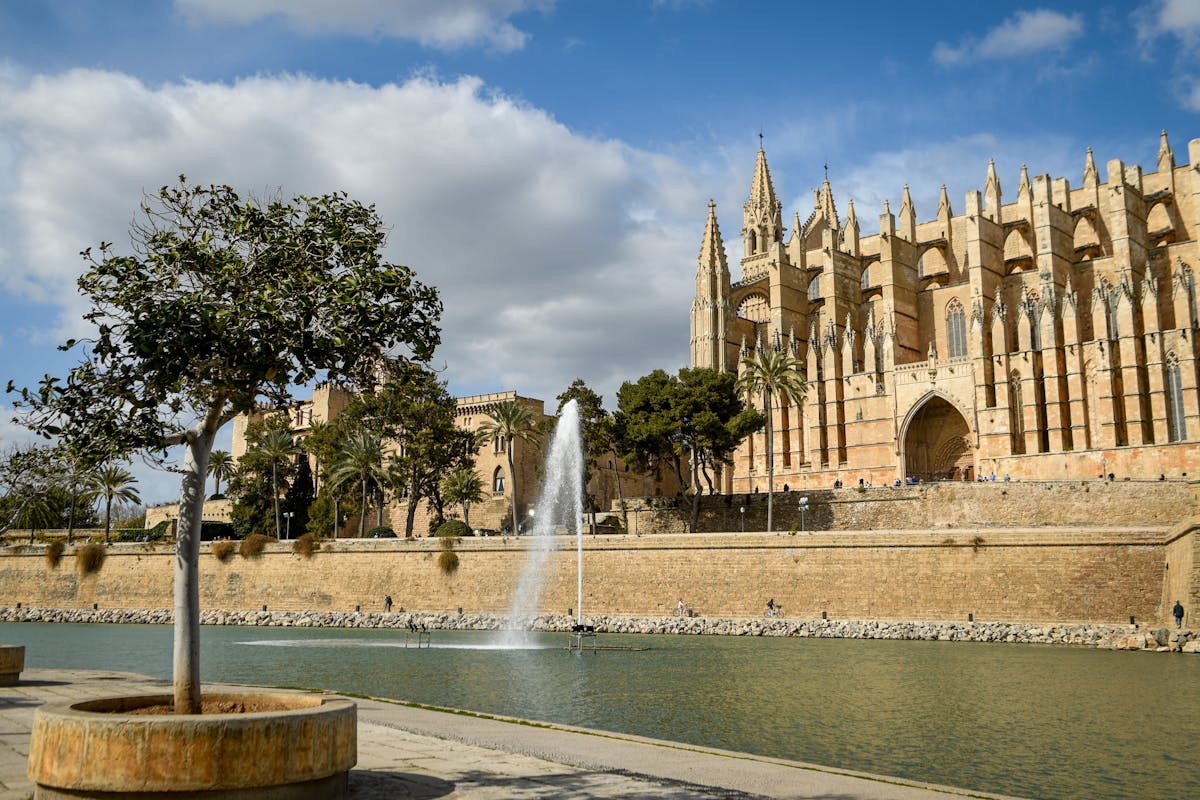
Palma works well as a city break destination from October through to April. The crowds thin, hotel prices in the city drop significantly, and the architecture and food are just as good as in summer. La Seu cathedral, the Arab Baths, the Es Baluard museum of modern art, and the market at Santa Catalina all function year-round. October and March are the pick of the cooler months for a city-focused trip.
For reliable guaranteed sunshine
June through August is the driest period across the whole island. Cloud cover is minimal and the chance of rain very low. If your priority is reliable sunshine and you do not have school-age children, June is the best compromise: 27°C average highs, dry conditions, uncrowded beaches, and prices well below July and August.
Frequently asked questions
What is the best month to visit Majorca from the UK?
September. Schools are back, prices drop sharply from the summer peak, average highs are still 28°C, and the sea reaches 26 to 27°C, its warmest of the year. May and October come close if you have more flexibility on timing and want the lowest fares. For guaranteed sunshine and warm weather without the August crowds, June is also a strong choice. If you are comparing islands, see our best time to visit Tenerife guide for the Canaries.
When is Majorca cheapest to visit from the UK?
May, outside the half-term week at the end of the month, is consistently the cheapest time to fly. Return fares from London Gatwick or Manchester can fall below £80 per person in early to mid-May. November is also very cheap, and late September offers strong value once the summer peak has cleared. All three windows have reasonable weather, though November is better suited to Palma and the south than to the northern resorts.
How long is the flight from the UK to Majorca?
Around 2 hours 15 minutes from London Gatwick or Luton, slightly longer from Manchester (around 2 hours 30 minutes) and around 2 hours 45 minutes from Edinburgh or Glasgow. Majorca is significantly closer than the Canary Islands, making it a practical option for short breaks as well as week-long holidays. All direct flights land at Palma de Mallorca Airport (PMI).
Which UK airports fly direct to Majorca?
At least a dozen UK airports operate direct services to Palma (PMI), including London Gatwick, London Luton, Manchester, Bristol, Edinburgh, Birmingham, Glasgow and Leeds Bradford. London Stansted, Newcastle, Liverpool, and East Midlands also have seasonal services. London Gatwick has the most routes and the best year-round frequency, with easyJet, British Airways, Jet2 and TUI all operating from there.
Is Majorca worth visiting in October?
Yes. October is one of the best months for adults without school-age children. Average highs of 24°C, a sea temperature of around 23°C, low fares outside the half-term week, and noticeably quieter resorts than the summer months. The Tramuntana mountains are particularly good for walking in October. The main risk is that some hotels in the north and east close from mid-October, so check availability carefully if you are not heading to Palma or the southwest.
Is Majorca good in winter for UK holidaymakers?
It depends on what you want. Majorca in January or February averages 15 to 16°C, which is mild enough for sightseeing and walking but not reliably warm enough for beach days. Palma works well in winter: the cathedral, old town, and food scene all function, and the city is quiet. The southern resorts are more mixed, with some hotels and restaurants closed. For warm beach weather in winter, the Canary Islands are a better bet. For a cultural and walking trip, Majorca in winter works well at very low cost.

Kate Acaster is Chief Editor at Flight Tribe. She writes about practical travel planning, budget airlines, baggage rules, city breaks, beach holidays and good hotels that do not cost daft money.
Kate has travelled through Europe, South America and beyond, usually with a notebook, a half-formed plan and a strong opinion on airport snacks. At Flight Tribe, her work focuses on helping UK travellers understand what is included, what costs extra, and whether a trip is worth booking at the price shown.
How Kate works
Kate checks the details that can change the value of a trip, including cabin-bag rules, airline fees, hotel location, seasonality, travel dates and booking conditions. She is especially interested in offers that look useful on the surface but need a proper reader-first check before they are worth recommending.
Editorial standards
Flight Tribe covers deals and travel advice for readers first. Affiliate links do not decide whether an offer is worth writing about.