Published 10 May 2026 | Updated 14 October 2026 by Kate Acaster
Advertisement
Rome has a reputation for being expensive. Some of it is deserved, but not all of it. A gelato near the Trevi Fountain costs €5, but a coffee at the bar is €1.20, a slice of pizza al taglio is €3, and you can see the Trevi Fountain from the piazza for free. A UK traveller who plans ahead can spend five days in Rome for well under £500 total, including flights. Here’s what everything actually costs in 2026. For more destinations like this, see the full set of Flight Tribe destination guides.
| Budget level | Daily spend per person |
|---|---|
| Budget | €80-100/day |
| Mid-range | €140-190/day |
| Comfortable | €210-290/day |
Is Rome expensive?
Rome sits in the middle tier for European capitals. It’s more expensive than Lisbon, Prague or Warsaw, but noticeably cheaper than Paris, Zurich or Copenhagen. For UK travellers in 2026, the biggest cost is accommodation, which rises sharply in summer and near the main sights. Food and transport, by contrast, are very manageable once you know where to look. Planning ahead makes a real difference to what you spend. The Colosseum sells out weeks ahead in summer. The Pantheon now charges €7 entry. Knowing this before you go saves money and frustration.
Rome sits in the middle tier for European capitals. A budget traveller spending carefully can manage on €80-100 a day, all-in. The biggest variable is accommodation: a hostel dorm costs €20-30 per night, while a private room in a decent central location starts at €60-80. Outside of accommodation, food and transport are both very affordable.
Budget on €80-100 per person per day for a comfortable budget trip, or €140-190 if you want a private room, two sit-down meals and two paid attractions. At current exchange rates, that’s roughly £70-85 and £120-160 respectively. A five-night trip for two people, including flights, can be done for around £800-1,200 in total.
Getting to Rome from the UK
Rome has two airports. Fiumicino (FCO), also known as Leonardo da Vinci, is the main international hub about 30km west of the city centre. Ciampino (CIA) is smaller and closer, used mainly by budget carriers.
- Ryanair is the most frequent budget option, flying from Stansted and Luton to Ciampino.
- easyJet serves Fiumicino from Gatwick and Luton.
- British Airways and ITA Airways fly from Heathrow to Fiumicino, typically at higher fares but with more flexibility.
- Jet2 flies to Fiumicino from regional airports including Manchester, Birmingham, Leeds Bradford, Newcastle, Edinburgh and Glasgow, making it the best option if you’re not London-based.
Ryanair’s low-season returns are the cheapest of the year. For most of the year, a well-timed booking lands you a London-Rome return for £50-100. In July and August, the same routes regularly hit £150-250 or more. Book early for summer travel and consider mid-week departures, which are usually cheaper. For more on timing, see our guide to how to get cheap flights from the UK.
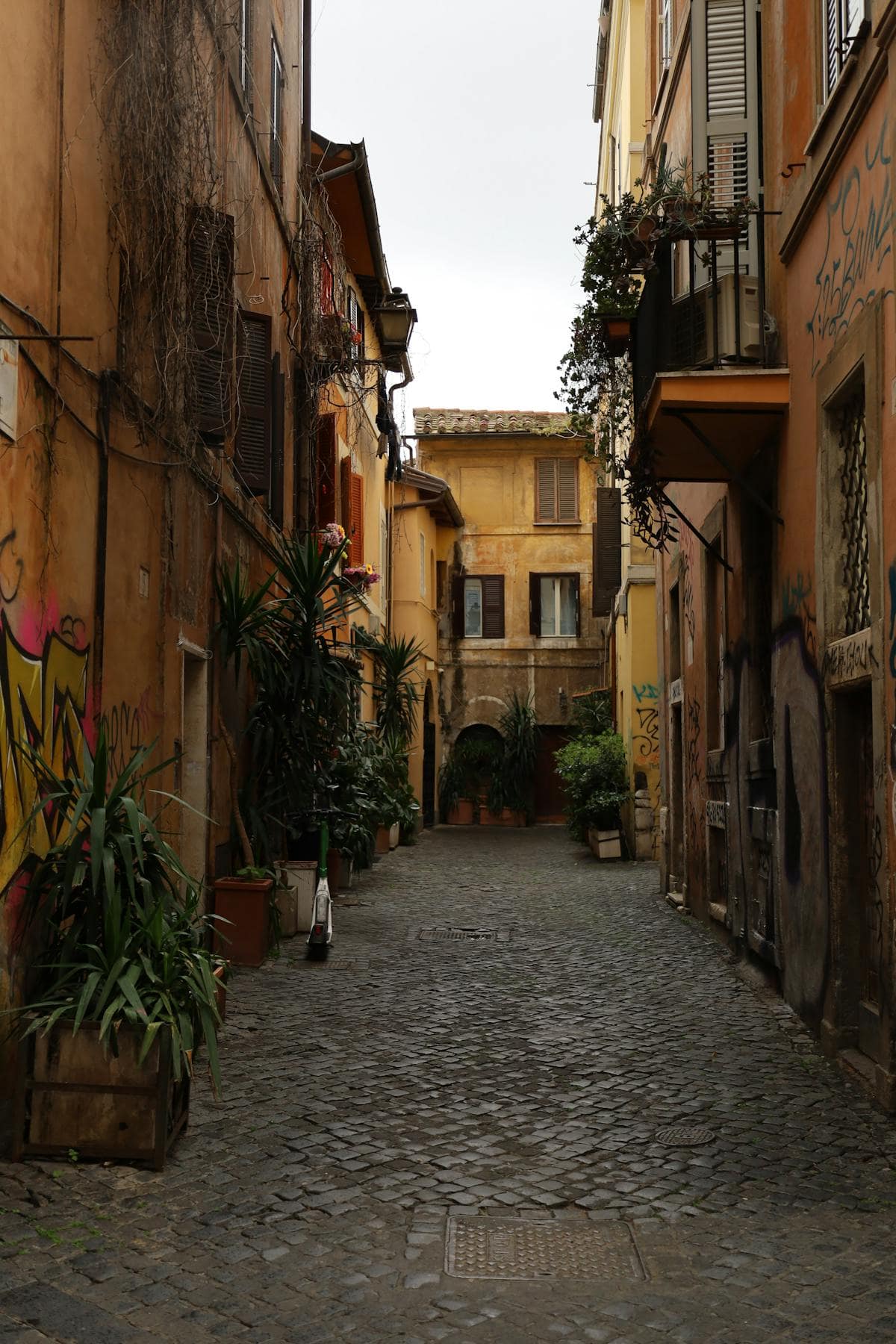
Both airports are well connected to the city. From Fiumicino, the Leonardo Express runs direct to Roma Termini in 32 minutes (€14), or the cheaper FL1 regional train reaches Trastevere in around 45 minutes (€8). From Ciampino, Terravision and SIT buses run to Termini for €4-6. Once in Rome, most of the historic centre is walkable. The metro has three lines, and Line C now stops at the Colosseum. It is reliable and cheap, and most of the main sights cluster within a short walk of each other once you cross the Tiber.
Getting around Rome
Walking is free and, within the historical centre, often the best option. The main sights, from the Colosseum to the Vatican, are between 20 and 50 minutes on foot from the Termini area. For longer distances, Rome’s metro, buses and trams are cheap and reliable. Contactless payment works at validators on buses, trams and metro gates.
From Fiumicino (FCO), the FL1 regional train to Roma Trastevere costs €8 and takes around 45 minutes. The Leonardo Express direct to Termini is faster (32 minutes) at €14 one-way. From Ciampino (CIA), Terravision and SIT run buses to Termini for €4-6, taking 40-50 minutes.
| Ticket type | Price |
|---|---|
| Single ticket | €1.50 |
| 24-hour pass | €8.50 |
| 48-hour pass | €15.00 |
| 7-day pass | €29.00 |
| FCO Leonardo Express | €14 one-way |
| FCO Regional train | €8 one-way |
| CIA bus (Terravision) | €4-6 one-way |
Where to stay in Rome on a budget
The Termini area gives you the best combination of price and location. It has the widest choice of hostels and budget hotels in the city, and you’re a 10-15 minute walk or short metro ride from the Colosseum, the Pantheon or the Spanish Steps. It’s not the prettiest part of Rome, but it’s practical and well-connected.
Affordable:
- The RomeHello Hostel. One of Rome’s most popular hostels, near Termini. Well-reviewed for its social atmosphere and consistently competitive pricing, dorms cost less than a restaurant meal at most sites near the Colosseum.
- Meininger Roma Termini. A reliable hostel chain with both private rooms and dorms. Clean, well-run and right at Termini station, which puts you 15 minutes from anywhere in the city.
Mid-range:
- Allegra’s House Caracciolo. Guesthouse-style accommodation with strong reviews for hospitality. The personal service gives it an edge over chain hotels at the same price point.
- Hotel Raffaello. Well-located and reliable. Consistently good reviews across multiple booking platforms, a sensible default for mid-range Rome.
- Hotel Santa Maria. A boutique hotel in Trastevere with an outdoor courtyard. The neighbourhood alone makes it worth considering, you’re in the best part of Rome for evening dining. Book well ahead.
High-end, worth it:
- Hotel Aventino. Smart, quiet and well-situated on the Aventine Hill. The price-to-quality ratio is notably good for Rome, where design hotels at this level often charge significantly more.
- Hotel Artemide. Centrally located on Via Nazionale, a step up in quality from standard mid-range Rome without crossing into trophy-hotel pricing.
- Palazzo Dama. Rooftop pool, exceptional design, near Villa Borghese. The benchmark for what a Roman splurge should look like, and it compares well on price with equivalent properties in Milan or Florence.
One cost to remember: Rome charges a city tax of €4 to €10 per person per night in hotels, depending on star rating, and €3.50 in hostels. It applies to the first 10 nights, and under-10s are exempt. This is collected directly by the hotel and not included in online booking prices. For a couple staying five nights in a mid-range hotel, that’s an extra €60 to €75 on arrival.
Free things to do in Rome
Rome has an unusual amount of free sightseeing for a major European capital. The key is knowing which paid attractions are worth your money and which aren’t, and planning your visit around the free days. On the first Sunday of every month, all Italian state museums and archaeological sites open free to everyone. This includes the Colosseum, the Roman Forum, the Palatine Hill and Castel Sant’Angelo. The Capitoline Museums are run by the city, not the state, and are free to everyone on the first Sunday too. It’s always busy, but the saving is significant. The Pantheon also participates in the first-Sunday free scheme.
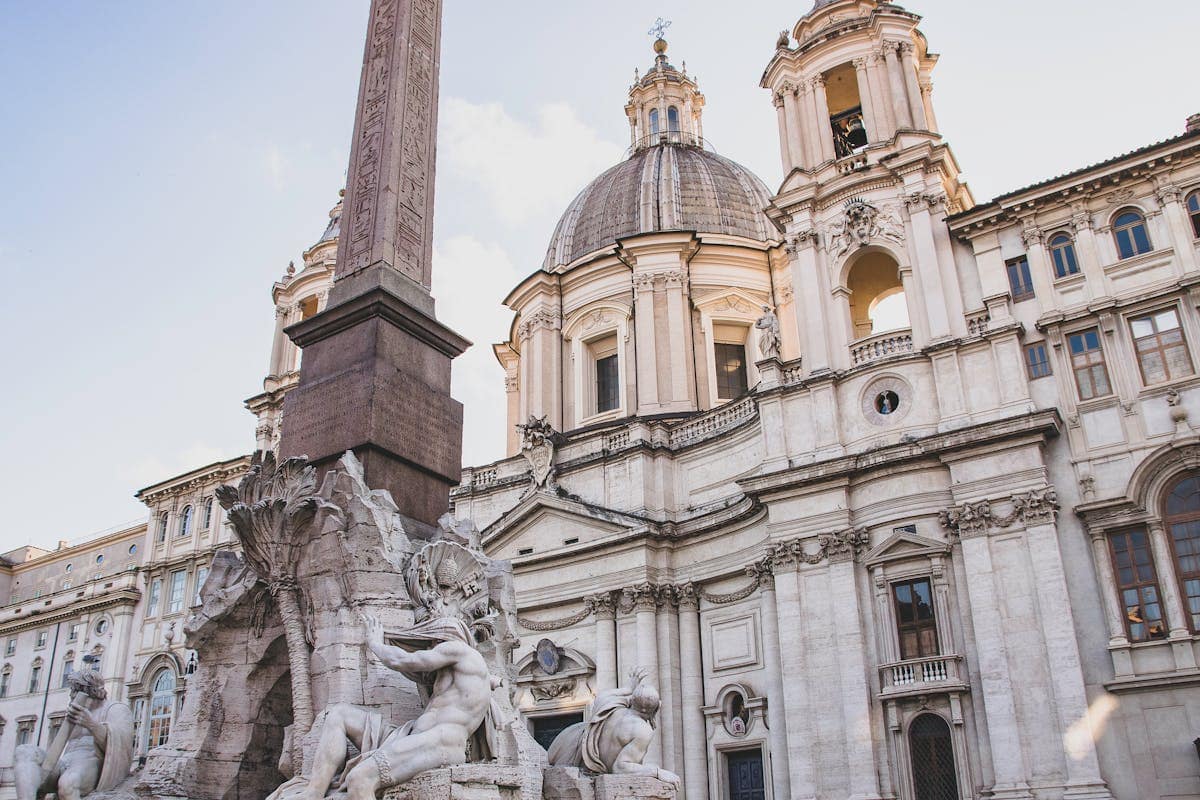
Piazza Navona is one of Rome’s great free experiences. Bernini’s Fountain of the Four Rivers dominates the centre of this elongated Baroque piazza. It’s one of Rome’s finest examples of public art you don’t pay to see. The cafes around the edge are tourist-priced, but you’re welcome to sit on the steps and take it all in for nothing. The piazza was built over an ancient Roman stadium and the elongated shape still reflects that original footprint. That kind of embedded history is everywhere in Rome, usually at no charge.
- Trevi Fountain. Free to see from the piazza. Going down to the basin costs €2 from 9am to 10pm, so arrive before 9am to beat the crowds and the charge.
- Spanish Steps. Free to walk and a great spot to sit and watch Rome go by.
- Piazza Navona. Bernini’s Fountain of the Four Rivers is one of Rome’s finest works of public art. Free to view and worth spending time with.
- St Peter’s Basilica. Entry to the basilica itself is free, though you’ll queue. The dome costs €17 by the stairs or €22 with the lift, booked online, and that ticket now includes a timed basilica visit with a digital audio guide.
- Vatican City grounds. Walking around St Peter’s Square is free. The Vatican Museums are a separate, paid attraction.
- Capitoline Hill and views. The walk up to the Campidoglio offers one of Rome’s best panoramas over the Roman Forum. Free, open all day.
- Campo de’ Fiori. A working market square with fresh produce stalls open weekday mornings. The best people-watching in the city.
- Villa Borghese gardens. Rome’s most popular park, free to enter. Note: the Galleria Borghese inside requires a paid, pre-booked ticket.
- Trastevere neighbourhood. No entrance fee to walk Rome’s most photogenic neighbourhood. The medieval lanes and cobblestones are free. Go at sunset.
- Nasoni (drinking fountains). Rome has hundreds of drinking fountains with clean, cold water. Carry a refillable bottle and use them throughout the day. This saves several euros a day on bottled water.
If you’re combining Rome with another Italian city, see our guides to Venice on a budget, Florence on a budget and Cinque Terre on a budget.
Paid attractions: what to budget for in 2026
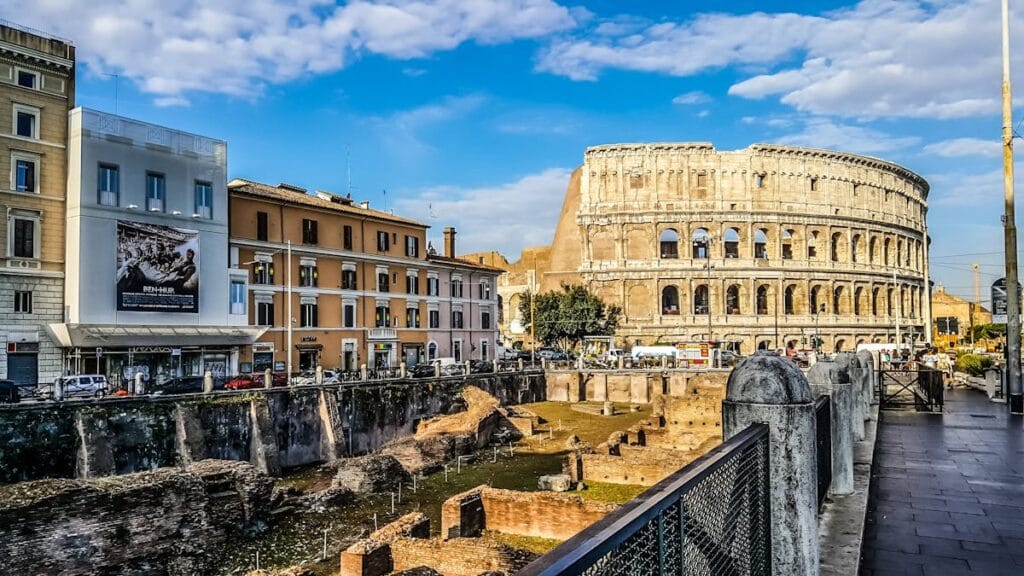
Most of Rome’s paid attractions are worth the money. The issue is that several have changed their pricing recently, and a lot of what you’ll read online is out of date. Here’s what they cost in October 2026. The most important thing to know: the Pantheon is no longer free. It started charging entry in 2023 and the full price has been €7 since 1 July 2026. Many travel guides and websites still say it’s free. They’re wrong. Book online through Musei Italiani before you go.
| Attraction | Price in 2026 |
|---|---|
| Colosseum | €18 + €2 booking fee
Free 1st Sunday |
| The Pantheon | €7 |
| Vatican Museums | €20, plus €5 to book online
Free last Sunday |
| St Peter’s Dome | €17 stairs / €22 lift |
| Galleria Borghese | €16 + €2 mandatory booking fee (€18 total) |
| Castel Sant’Angelo | €18 |
UK passport holders don’t qualify for the EU citizen discounts at Italian state museums. Only citizens of EU member states and certain associated countries get reduced admission. Budget on full price throughout.
Eating and drinking on a budget
The quality of Roman food is high and the prices are fair once you step away from the tourist traps around the main monuments. One or two streets back from any major sight, the same meal costs less and is usually better. If a restaurant has photographs on the menu and a host in the doorway trying to wave you in, keep walking. A few fundamentals that save money every day:

Rome’s trattorie are best when you get off the main tourist trail. A meal of pasta, a glass of house wine and water in a local trattoria typically comes to €15-25 per person, including the coperto. The food is usually better than anything near the Trevi Fountain, and you won’t be competing for a table. For a solid Roman dinner, Trastevere and Testaccio are worth the walk. Both are known for their trattorias, and competition between them keeps prices honest.
- Coffee at the bar (al banco). Ordering at the counter costs €1-1.50. Sitting down at the same cafe costs €3-5. Same coffee, very different bill. Romans drink at the bar.
- Pizza al taglio (by the slice). Sold by weight at pizza counters throughout the city. A generous lunch slice costs €3-6 depending on toppings.
- Coperto. Most sit-down restaurants add a cover charge of €2-4 per person. This is standard practice, not a scam. It should be listed on the menu.
- Aperitivo. From around 6pm, many bars in Trastevere and other local neighbourhoods serve free snacks with a drink for €8-12. A proper aperitivo hour is a good dinner substitute if you’re keeping costs down.
- Supermarkets. Rome has Conad, Carrefour Express and Lidl branches throughout the city. Pick up breakfast items, snacks and cold drinks here rather than at cafes near the sights.
A few restaurants worth knowing by name:
- Da Augusto (Trastevere). A no-frills neighbourhood trattoria with paper tablecloths, cash only and excellent Roman classics. Mains around €10-14.
- Taverna Romana. A local spot known for traditional Roman dishes at honest prices.
- Tavola calda (literally “hot table”). A cafeteria format common across Rome: hot dishes served from a counter, priced by portion. Quick, filling and significantly cheaper than a sit-down restaurant. Look for the sign rather than a specific venue.
For a special occasion:
- Per Me Giulio Terrinoni. Creative Italian fine dining. A treat, not an everyday option.
- Imàgo. Rooftop restaurant at the Hassler Hotel with views of the Spanish Steps.
- Aroma. Rooftop dining with Colosseum views.
Is the Roma Pass worth it?
The Roma Pass includes unlimited public transport plus free or reduced entry to Rome’s participating museums. There are two versions: the 72-hour pass (€62.90) and the 48-hour pass (€38). The Omnia Pass is a separate product that adds Vatican Museums access. At €62.90 for 72 hours, you need to visit at least two of the participating paid museums and use public transport frequently to break even. The Vatican Museums are not included in the Roma Pass. For Vatican access you’d need the separate Omnia Pass.
| Scenario | Assessment |
|---|---|
| Best case | €62.90 Roma Pass 72h
Borderline |
| Marginal | 1-2 museums, some walking
Marginal |
| Skip it | Mainly free sights
Skip it |
Best time to visit Rome on a budget
Rome is worth visiting year-round, but the difference in cost between January and August is significant. Peak summer (July-August) brings extreme heat, the highest prices and the biggest crowds. January and February have the lowest prices and shortest queues, with cooler weather as the trade-off. For most UK travellers, autumn (September-October) is the best combination of decent weather, manageable crowds and value. See our guide to when flights are cheapest by season for more on timing your booking to Rome and other European cities.
| Season | What to expect |
|---|---|
| Jan-Feb | Best value
Low season |
| Mar-Apr | Good value
Shoulder |
| May-Jun | Popular, pricier
Shoulder |
| Jul-Aug | Peak prices, extreme heat
Peak |
| Sep-Oct | Best all-round
Sweet spot |
| Nov-Dec | Good value
Shoulder |
Ten budget tips for Rome
- Book the Colosseum well in advance. In summer, tickets sell out weeks ahead. You can’t just turn up. Book at colosseo.it.
- Visit the Pantheon before 10am. Quieter and more atmospheric. Entry is €7. Book online through Musei Italiani.
- Plan a first-Sunday-of-month visit. The Colosseum, Roman Forum, Pantheon, Castel Sant’Angelo and other state sites are free. This is the best single money-saving tip in Rome.
- Don’t sit down for coffee. Standing at the bar costs €1.20-1.50. Sitting down costs €3-5. Over a week, this adds up to a decent restaurant meal.
- Eat pizza al taglio for lunch. Sold by weight, roughly €3-6 for a filling portion. Look for places where the staff are Italian and the queues are locals.
- Carry a refillable water bottle. Rome’s nasoni (street drinking fountains) provide clean, cold water throughout the city. You never need to buy bottled water.
- Contactless payment works everywhere. UK bank cards are accepted at shops, restaurants, markets and transport validators. Carry €50-100 cash for smaller cafes and market stalls.
- Stay away from restaurant photos and outdoor touts. Restaurants with picture menus and hosts trying to attract customers are almost always overpriced. Walk a street further.
- Book Galleria Borghese early. It limits entry to 180 visitors per hourly slot and regularly sells out. Leave it until you arrive and you’ll miss it.
- Use buses as well as the metro. The 40 and 64 are the most useful tourist routes. Same €1.50 single ticket applies.
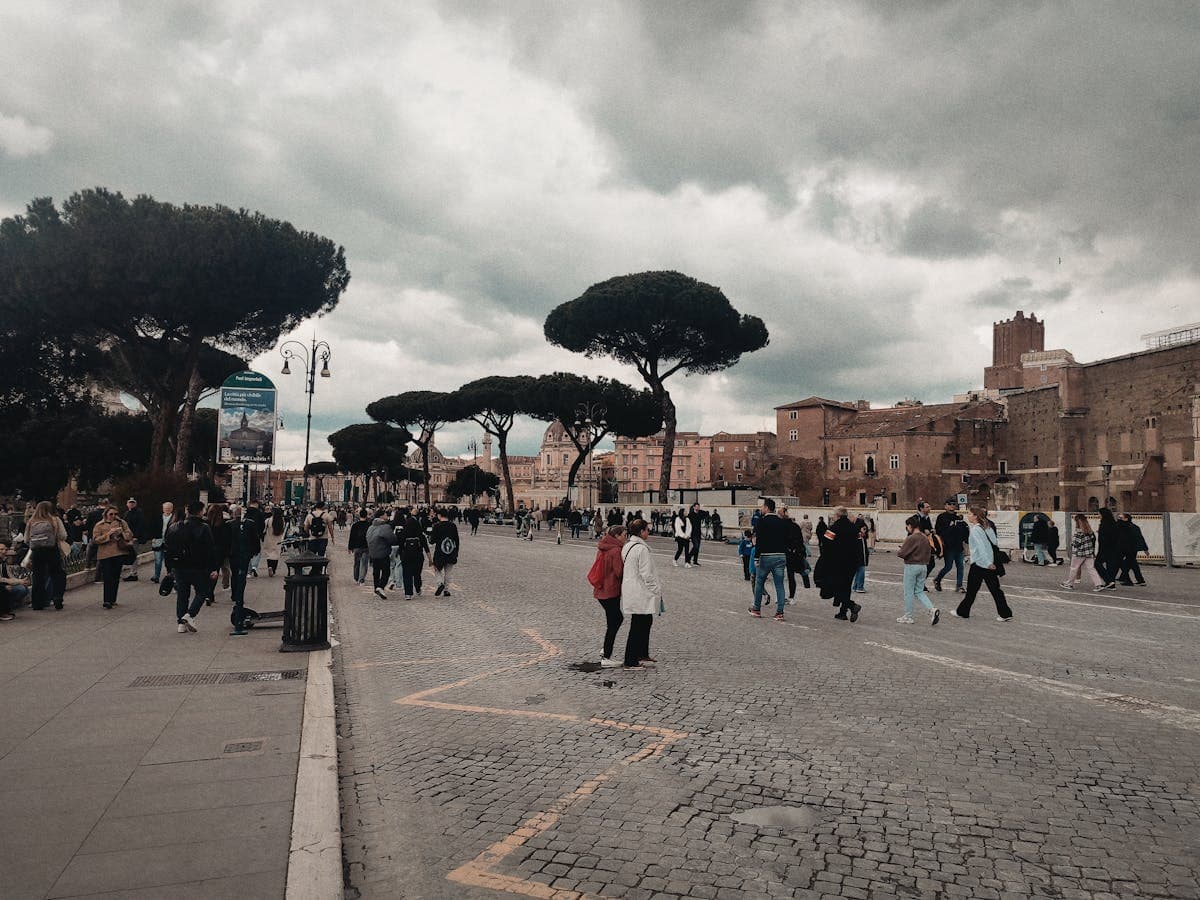
Rome’s piazzas are its living rooms. The city’s great squares, from Piazza Navona to Campo de’ Fiori, are free to use, full of life and worth hours of your time. Sit on the steps of a fountain, watch people pass, and resist the nearby cafes charging €5 for a coffee. The same coffee costs €1.50 a street away. That gap between tourist-zone prices and local prices runs through almost every category. Move one street back and the price drops without the quality following it down.
Rome budget FAQ
Is Rome cheaper than the UK?
For food and transport, yes. A coffee costs €1.20-1.50 at the bar; pizza al taglio is €3-6 for a filling lunch. A single metro ticket is €1.50 compared to £2.80+ in London. Accommodation, however, is not significantly cheaper than major UK cities. Overall Rome is comparable to or slightly cheaper than London on a like-for-like basis.
Is the Pantheon free to visit?
No. The Pantheon has charged entry since 2023. The full price is €7. Many websites still describe it as free because they haven’t updated their information. Book online in advance through Musei Italiani.
What is the cheapest way to see the Colosseum?
Visit on the first Sunday of the month, when entry is free for everyone. On other days, the standard ticket costs €18 plus a €2 online booking fee. You can’t buy on the day in summer as slots sell out. Book at colosseo.it as early as possible. The ticket includes the Roman Forum and Palatine Hill, valid for 24 hours.
Is it better to take cash or card to Rome?
Cards are widely accepted, including contactless, at restaurants, shops, transport validators and most tourist attractions. Carry €50-100 cash for smaller cafes, market stalls and some older trattorias. Don’t exchange currency at the airport; use your bank card at an ATM in the city instead.
Is Rome a good city break for a long weekend?
Three nights is the minimum to see the main sights without rushing. Four or five nights gives you time to explore the neighbourhoods and eat well without sprinting between attractions.
When is the cheapest time to fly to Rome from the UK?
January and February offer the lowest flight prices, followed by November and early December. For the best balance of price and good weather, October is usually the sweet spot: prices fall sharply after the August peak, temperatures are comfortable and the city is noticeably less crowded. See our full guide to when flights are cheapest by season.
Is there a beach near Rome?
Yes. Ostia is Rome’s main seaside resort, reached on the Roma-Lido train from Porta San Paolo, next to Piramide metro station, in around 30 to 40 minutes. It’s a working Italian beach town rather than a holiday destination in its own right, but the Lido di Ostia has free stretches of sand alongside the private beach clubs.

Kate Acaster is Chief Editor at Flight Tribe. She writes about practical travel planning, budget airlines, baggage rules, city breaks, beach holidays and good hotels that do not cost daft money.
Kate has travelled through Europe, South America and beyond, usually with a notebook, a half-formed plan and a strong opinion on airport snacks. At Flight Tribe, her work focuses on helping UK travellers understand what is included, what costs extra, and whether a trip is worth booking at the price shown.
How Kate works
Kate checks the details that can change the value of a trip, including cabin-bag rules, airline fees, hotel location, seasonality, travel dates and booking conditions. She is especially interested in offers that look useful on the surface but need a proper reader-first check before they are worth recommending.
Editorial standards
Flight Tribe covers deals and travel advice for readers first. Affiliate links do not decide whether an offer is worth writing about.