Published 27 September 2024 | Updated 5 September 2026 by Jane Robinson
Advertisement
You can find more UK budget travel advice across Flight Tribe’s destination guides.
Search Greek Islands flights and hotels
Greece is one of the most family-friendly destinations in Europe. Warm, calm seas, reliable summer sunshine, direct flights from airports across the UK and genuinely good food make a strong case for it. The question isn’t whether to go. It’s which island suits your family best, and how to make the holiday work financially. Our Greece budget travel guide covers costs across the whole country if you want the bigger picture first.
Crete is the obvious frontrunner, but Rhodes, Corfu, Naxos and Zante all deserve consideration depending on your children’s ages and priorities. This guide covers every major option, the best time to book and ten practical ways to bring the cost down without compromising the parts that matter.
Which Greek Island is Right for Your Family?
The right island depends largely on how old your children are. Crete works for almost every family because of its size and range: direct connections from most UK airports, accommodation across all price points and enough to fill a fortnight without repeating yourself. For families wanting a quieter pace, smaller islands reward the extra research.
Naxos is the island most consistently recommended by parents of toddlers and young children, thanks to its calm, shallow west-coast beaches. Corfu suits first-timers, with short flight times and a well-developed tourist infrastructure. Rhodes appeals to families who want a classic beach holiday with a historical site or water park in the mix. Zante offers something different: the chance to see loggerhead sea turtles in the wild.
| Island | Best For | Flight Time from London | Top Beach |
|---|---|---|---|
| Crete | Older kids, mixed ages, variety seekers | ~3h 45mfrom Gatwick | Elafonissi |
| Rhodes | First-timers, water park fans, history | ~4h 15mfrom Gatwick | Anthony Quinn Bay |
| Corfu | Short breaks, easy first Greek holiday | ~2h 45mfrom Gatwick | Paleokastritsa |
| Zante | Wildlife, sea turtles, beach lovers | ~3h 15mfrom Gatwick | Kalamaki |
| Naxos | Toddlers, young children, calm pace | ~3h 30mvia Athens | Agios Prokopios |
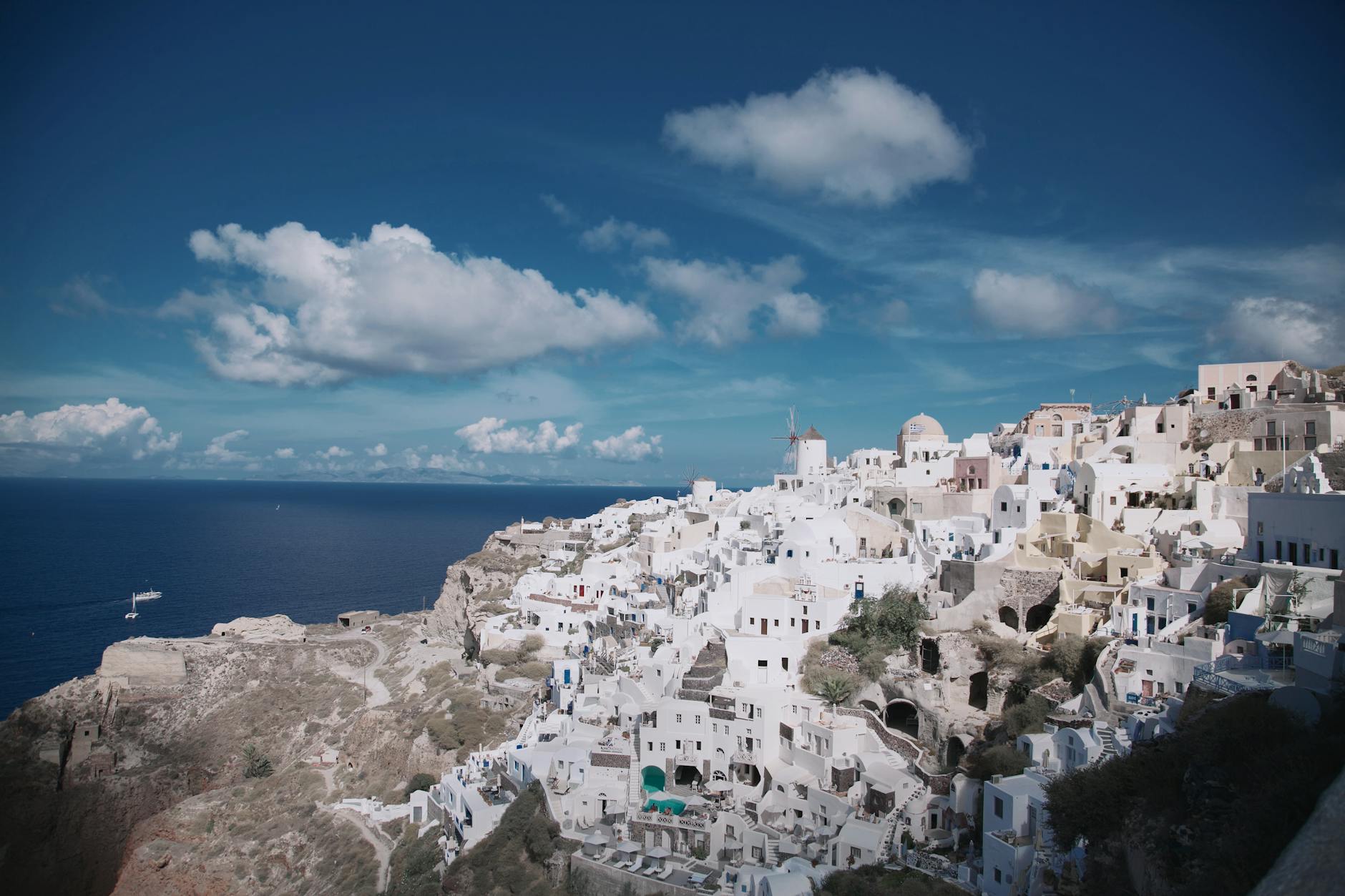
What about Santorini?
Santorini is the most photographed place in Greece and the clifftop village of Oia is genuinely extraordinary. That said, it is not the most practical island with young children. The caldera paths are steep and uneven, the famous beaches are black volcanic sand that gets extremely hot underfoot, and accommodation costs more than anywhere else in Greece.
Families with older children who appreciate dramatic scenery tend to love it. For those travelling with toddlers or children who want traditional swimming beaches, one of the other islands will work better. A day trip from Crete or Naxos is a sensible way to see it without paying Santorini accommodation prices for a full week.
When to Go: Balancing Weather, Prices and School Holidays
Greece has a long, reliable season. July and August are the hottest and most expensive months, but also when the sea is warmest and days are at their longest. Shoulder season, particularly May, June and September, offers better prices and smaller crowds with slightly cooler evenings as the trade-off. October remains possible on larger islands such as Crete, with temperatures still reaching 22–24°C.
Most UK families are constrained by school term dates, which makes late July through August the default window. Prices peak during these weeks, so the earlier you book the more you save. Booking in October or November for the following summer is the standard advice, and it holds. Our guide to school holiday flight prices covers exactly when costs peak and when they begin to drop.
| Month | Avg Temp | Sea Temp | UK School Holidays | Price Level |
|---|---|---|---|---|
| May | 22–25°C | 21°C | May half-term only | LowBest value month |
| June | 26–29°C | 23°C | Last week only | MediumGood shoulder option |
| July | 29–32°C | 26°C | Yes | HighBook early for best fares |
| August | 30–33°C | 27°C | Yes | PeakHighest demand |
| September | 27–30°C | 25°C | First two weeks | MediumPrices drop after mid-month |
| October | 22–24°C | 22°C | Half-term only | LowSome resorts start closing |
How to Get There
easyJet, Jet2, Ryanair and TUI all operate direct flights to the main Greek islands from airports across the UK. Corfu is the closest, at roughly two hours 45 minutes from Gatwick. Rhodes is the furthest of the main four at around four hours 15 minutes. Crete (Heraklion) and Zante fall between the two.
Departure airports include Gatwick, Stansted, Luton, Manchester, Birmingham, Bristol, Edinburgh, Glasgow and Belfast, though island coverage varies by departure point. Jet2 runs an extensive schedule from northern England, making it particularly competitive for families based in the Midlands and north. Naxos has no direct flights from the UK. The standard route is to fly to Athens and take a ferry from Piraeus, which adds two to three hours but is a genuine experience for older children.
For school holiday travel, packages from Jet2 Holidays, easyJet Holidays and TUI can undercut the cost of booking separately once transfers are included. ATOL protection is also a practical advantage when travelling with children. Our guide to how to get cheap flights covers the booking strategies that make the most difference for peak-season departures.
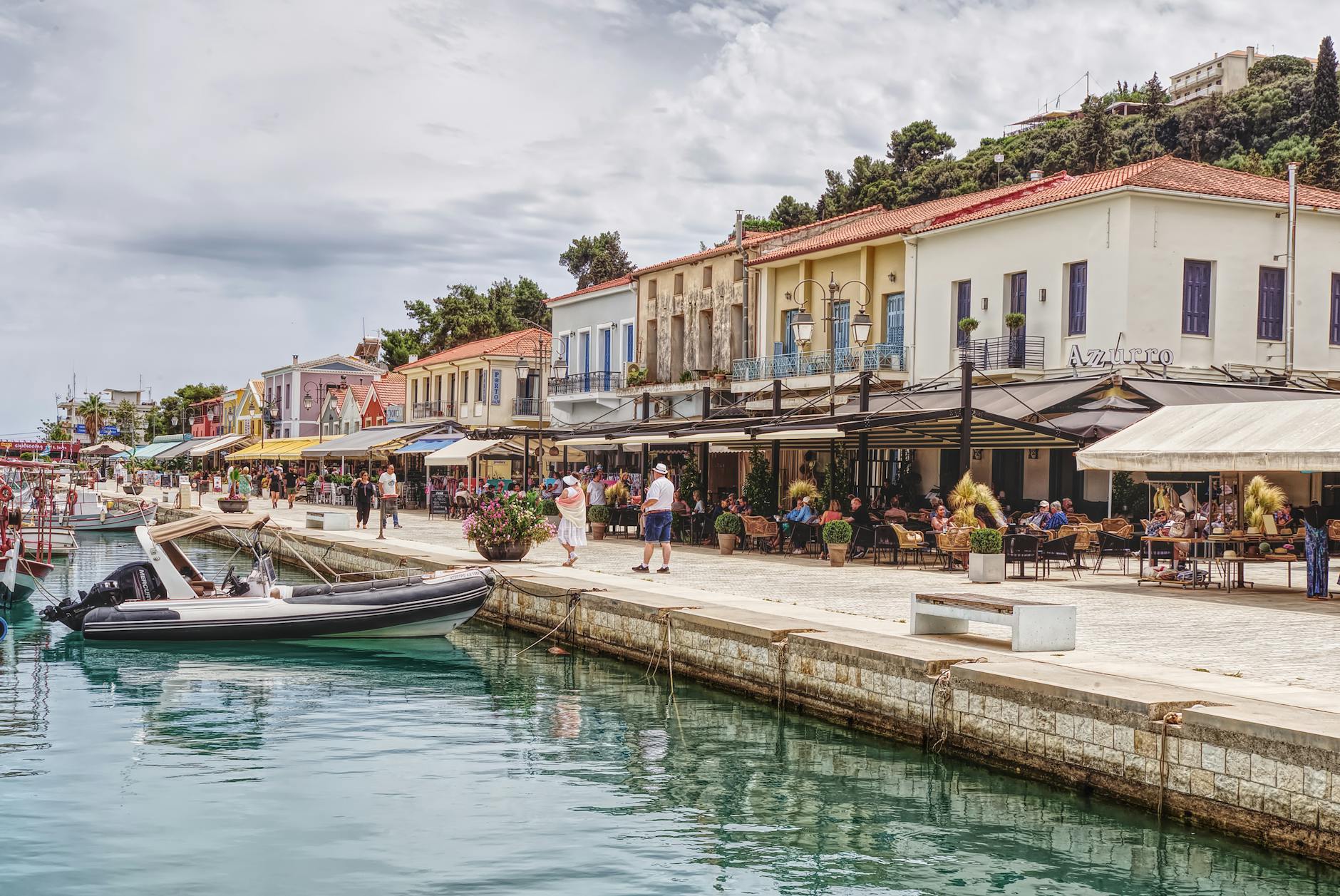
Island hopping by ferry
The ferry network is what makes visiting multiple Greek islands practical. Blue Star Ferries and Hellenic Seaways connect Athens (Piraeus) to most major islands, with journey times ranging from four hours to Naxos to nine hours to Heraklion. The boats are comfortable, with cafeteria restaurants, outside decks and indoor seating. Children generally enjoy the crossing.
For shorter hops between neighbouring islands, faster hydrofoils and catamarans reduce journey times considerably. Booking ferry tickets in advance is advisable for school holiday travel, particularly on the busiest routes in August. Children under five typically travel free.
Where to Stay: What Your Budget Gets You
Self-catering is the most practical choice for most families. A kitchen means you control breakfast and lunch costs, and you get the space to spread out over a full week. Family rooms in Greek hotels often mean four people sharing a single room, which can feel cramped after a few days. Serviced apartments give you a more comfortable base.
All-inclusive works well for families with teenagers, or for those who want a fixed daily budget without ongoing decisions about where to eat. Villas with a private pool make good financial sense for two families travelling together, splitting the nightly rate between six to eight people brings the per-person cost down considerably.
| Accommodation Type | Typical Cost/Night | Best For | Key Benefit |
|---|---|---|---|
| Self-catering apartment | £50–90/nightfamily of four | Families wanting flexibility and space | Kitchen cuts daily food costs significantly |
| Family hotel (3-star) | £80–130/nightfamily room | Families who prefer a structured base | Breakfast usually included, pool access |
| All-inclusive resort | £140–200/nightfamily of four | Mixed ages, teenagers, predictable spend | Fixed daily cost, no ongoing budget decisions |
| Villa with pool | £180–300/nightwhole property | Two families travelling together | Split 6–8 ways, excellent value per person |
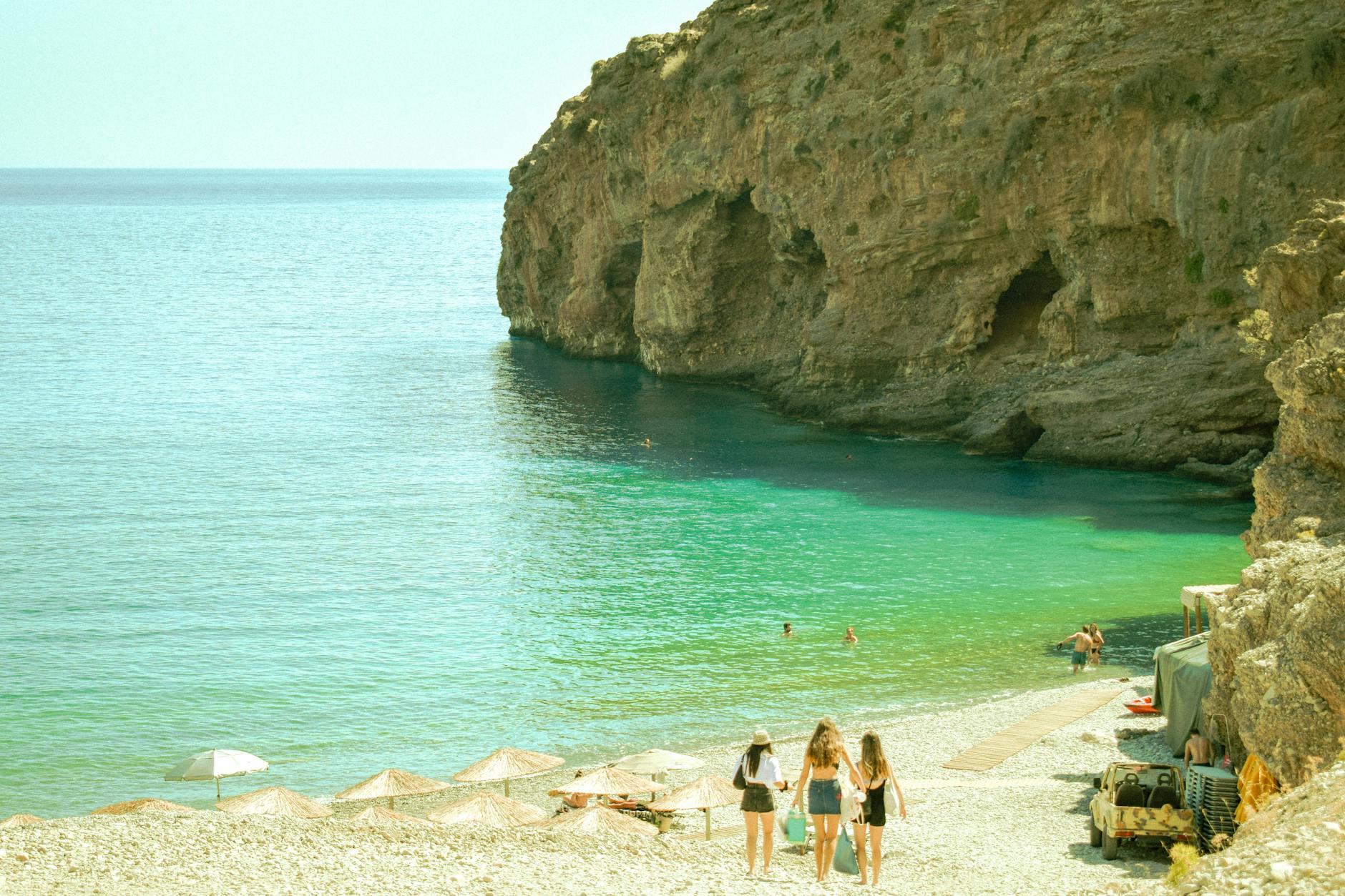
Greek island beaches are among the best in Europe for swimming with young children. Most family-friendly beaches shelve gently, meaning toddlers can paddle safely in shallow water for a considerable distance from shore. Water temperatures in July and August regularly exceed 26°C. Sunbed rental typically costs €5–8 each per day, and beach bars serving cold drinks and simple hot food are within easy reach of the water on most popular beaches.
The Aegean and Ionian coasts have distinct characters. Aegean islands, including Naxos, Santorini and Mykonos, tend to have more exposed beaches with stronger winds and occasional waves. Ionian islands such as Corfu, Zante and Kefalonia are generally calmer, which makes them the better choice for families with children who aren’t confident swimmers yet.
The Best Beaches for Children in Greece
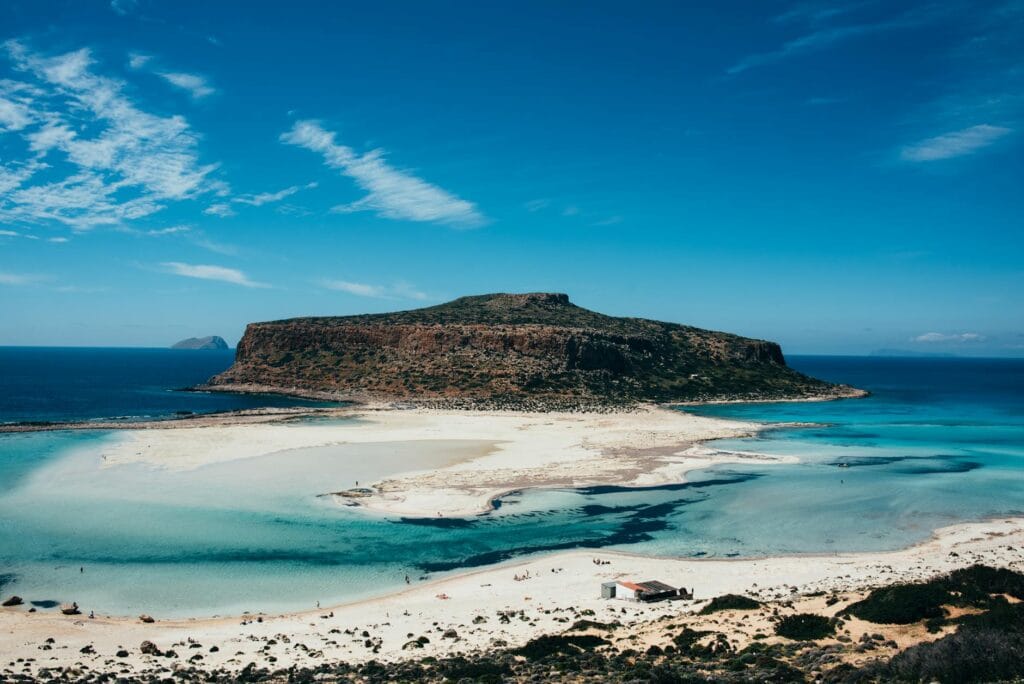
Elafonissi, Crete. The beach that changes people’s view of Crete. A shallow pink-sand lagoon on the far south-west coast, separated from the mainland by a sandbar you can walk across at low tide. The water is a remarkable shade of turquoise and stays shallow for a long distance from shore. Getting there requires a car and roughly two hours from Heraklion, but the journey is rewarded with one of the most beautiful beaches in Europe.
Agios Prokopios, Naxos. Long pale-sand beach on the west coast with calm, shallow water ideal for small children. The beach shelves so gradually that even toddlers can play safely without straying far from shore. Well-served with beach bars and tavernas immediately behind the sand.
Paleokastritsa, Corfu. A series of sheltered coves on the north-west coast, surrounded by olive-green hills. The water is exceptionally clear and the natural shelter from wind keeps conditions calm. Pedalo and kayak rentals are available for older children, and the short walk up to the Byzantine monastery above the bay adds context to the afternoon.
Kalamaki, Zante. This beach sits within the National Marine Park of Zakynthos and is one of the main nesting sites for loggerhead sea turtles in Europe. Evening boat tours from Kalamaki run during nesting season (June to August) and give families a reasonable chance of seeing turtles in the water. Swimming is restricted during active nesting periods, so check current rules on arrival.
Faliraki, Rhodes. One of the best-developed family beach resorts in Greece. The main beach has very shallow water extending a good distance from shore, particularly suitable for young children. Extensive water sports, including pedalos, banana boats and jet skis, are available for older children and teenagers who want something more active.
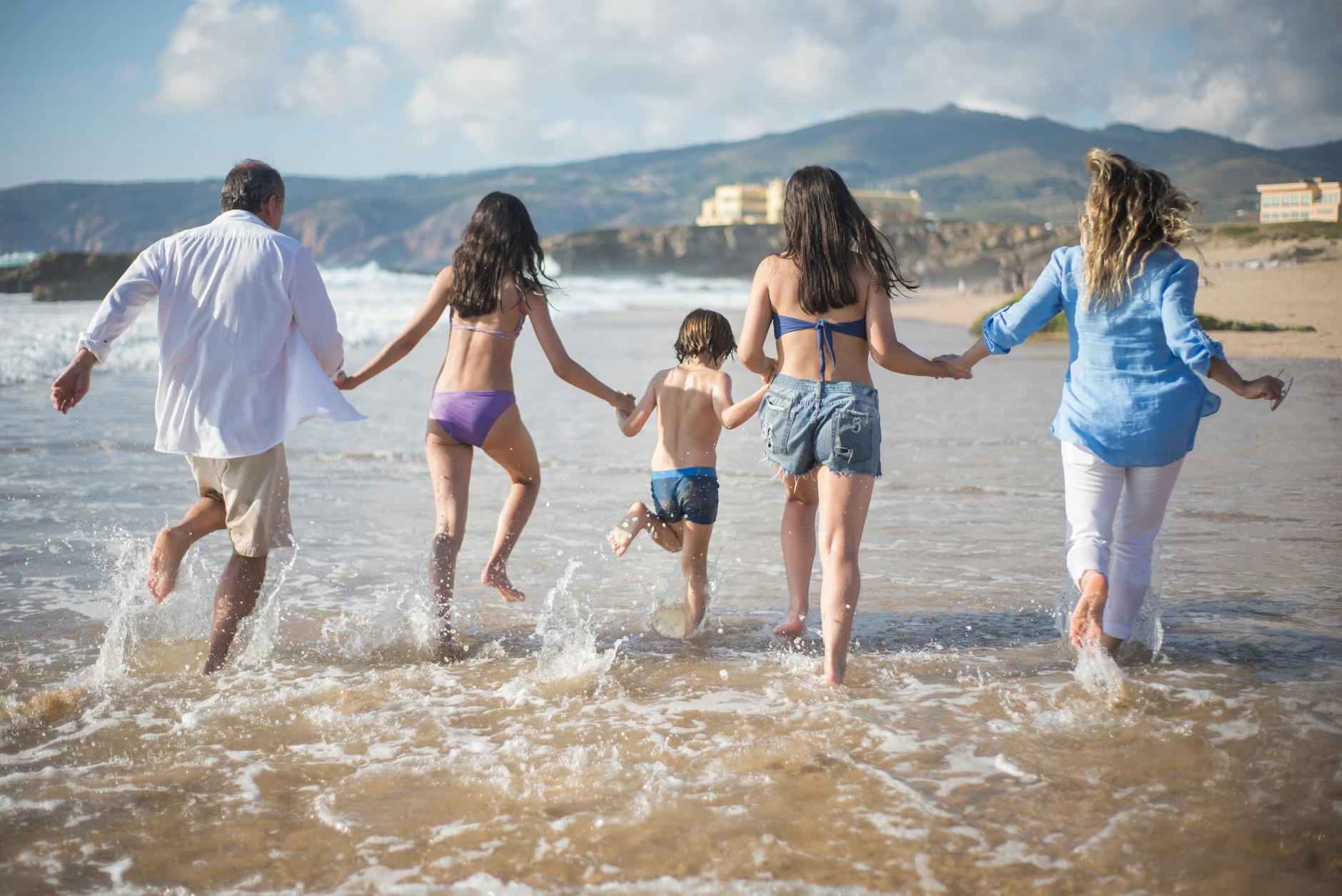
Naxos: the best island for toddlers
Naxos is consistently the island parents of very young children come back to recommend. The west-coast beaches, particularly Agios Prokopios and Plaka, have kilometres of pale sand with water that stays genuinely shallow for a long distance from shore. There are no dramatic waves, no strong undertow and no steep shelving to worry about. The island is also less commercial than Corfu or Rhodes, giving it a quieter, more relaxed character.
Getting there is more involved than flying direct to Crete or Rhodes. The standard route is to fly to Athens and take a three-to-four hour ferry from Piraeus. Most families who make the effort find it worthwhile. The ferry journey itself, particularly the approach to Naxos Town with the massive Portara gatehouse visible on the headland, is part of the experience.
Things to Do with Kids in Greece
Water parks. Crete has the best water parks in Greece. Limnoupolis near Chania and Watercity near Heraklion are well-maintained, with slides covering a range of difficulty levels. Star Beach in Hersonissos combines a water park with beach facilities. A day at a water park is a reliable full-day activity for children of almost any age and a sensible choice for the one day in the week when the beach alone isn’t enough.
History that works for children. The Palace of Knossos on Crete is compelling even for children with limited interest in ancient history. The scale of the Bronze Age ruins and the vivid frescoes depicting Minoan bull-leaping give it an energy most ancient sites lack. Hiring a guide for the family tour, which runs around 90 minutes, makes a significant difference to how much children get from the visit. Rhodes Old Town is another strong option for older children, with its medieval walls, Knights’ Street and the Deer Square where tame deer roam.
Boat trips and snorkelling. Almost every Greek island offers boat tours to sea caves, secluded coves or neighbouring islands. On Zante, the trip to Navagio (Shipwreck Beach) is one of the most spectacular excursions available anywhere in the Mediterranean, accessible only by sea. Snorkelling equipment is cheap to hire and most family-friendly beaches have clear enough water to make it worthwhile even for beginners.
Sea turtle watching, Zante. Evening boat tours from Kalamaki and Laganas Bay offer a genuine chance of seeing loggerhead turtles in the wild during nesting season. The tours operate under conservation rules with trained guides. Most children find it memorable even when sightings are brief, which they sometimes are.
The everyday stuff. The things that make a Greek island holiday genuinely good are often unplanned: eating at a waterfront taverna as the sun goes down, buying warm pastries from a village bakery in the morning, watching the ferries come and go from the harbour. These aren’t activities you book. They’re the texture of the holiday, and often what children remember most clearly.
Ten Ways to Save Money on a Greek Island Holiday
1. Book before Christmas for summer travel. The gap between booking in October or November and booking in April is substantial for school holiday departures. easyJet, Jet2 and Ryanair all release summer schedules by October, and the cheapest fares go early. Our guide to the cheapest day to book flights covers the specific windows that consistently produce the lowest prices.
2. Consider a package holiday. For families needing flights and accommodation, a package from Jet2 Holidays or easyJet Holidays can undercut booking separately once airport transfers are included. ATOL protection is a practical advantage for family travel. The savings are most visible for parties of four or more.
3. Fly from a regional airport. If you live closer to Manchester, Birmingham or Bristol than to Gatwick, check fares from your nearest departure point first. Jet2 runs extensive Greek island schedules from northern England. The total cost, once you factor out the drive to London and parking charges, is often lower than it appears. For families considering broader options, our guide to cheap school holiday destinations covers the best-value alternatives to Greece.
4. Choose self-catering accommodation. Eating breakfast and lunch from a self-catering kitchen and only going out for dinner cuts daily food spending roughly in half. Greek supermarkets are well-stocked and significantly cheaper than equivalent shops in the UK. A family can eat well for €15–25 a day in a self-catering apartment versus €50–70 or more eating out for every meal.
5. Eat where locals eat. The tourist strips nearest to beaches are consistently 20–30% more expensive than equivalent restaurants 200 metres inland. A taverna a short walk from the waterfront will serve the same dishes at lower prices. The food is generally better too.
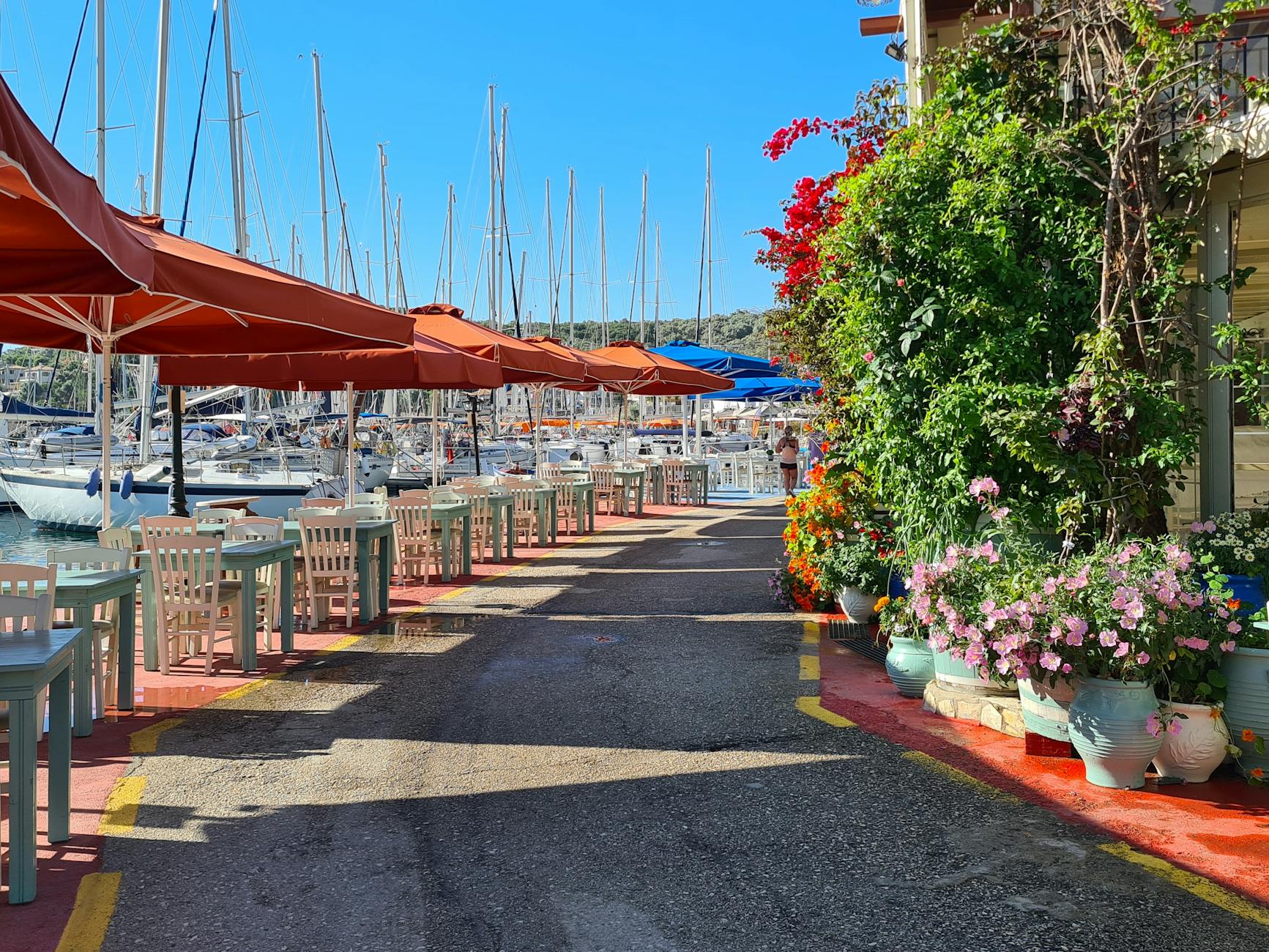
Self-catering and when to eat out
A self-catering apartment with a kitchen is the single most effective way to reduce the daily cost. Greek supermarkets stock good-quality local produce at prices well below anything you’d pay in a resort restaurant. Bread, cheese, olives, fresh tomatoes and local cold meats make an excellent breakfast for a fraction of the café price.
The approach most families settle on: self-cater for breakfast and lunch, eat out for dinner. Greek taverna food in the evening, when the light is low and the harbour is lit up, is genuinely worth the price. You get cost control during the day and the experience in the evening.
6. Time your visit around the school calendar. The last two weeks of June, before most English schools break up, can offer summer conditions and shoulder-season prices. Late September, once most schools are back, sees a noticeable price drop compared with the second week of the school holiday window.
7. Hire a car for two or three days. On larger islands such as Crete and Rhodes, a hire car opens up beaches and villages that organised tours charge a premium to reach. The saving on excursion costs can more than cover the rental. Book in advance through a comparison site.
8. Use ferries for island hopping. Inter-island ferries are cheap, scenic and a genuine experience in their own right. A Crete to Santorini ferry costs around €30–40 per person versus considerably more for the domestic flight. Children under five typically travel free.
9. Pack sunscreen, medicines and nappies from home. These are dramatically more expensive in Greek tourist resorts than in UK supermarkets. Factor them into your luggage allowance. The same applies to any branded children’s medicines.
10. Use a fee-free travel card. Greek islands are largely cash-friendly but cards are accepted almost everywhere. Using a card with no foreign transaction fees saves roughly 3% on every purchase. On a £3,000 family holiday, that’s £90 in bank charges avoided with no effort.
Frequently Asked Questions
What is the best Greek island for families with young children?
Naxos is the most consistently recommended Greek island for families with toddlers and young children, primarily because of its calm, very shallow west-coast beaches at Agios Prokopios and Plaka. Crete is the best choice for families who want variety, including water parks, historical sites and a wider range of accommodation. Corfu is the easiest option for a first Greek island holiday, with the shortest flight times and good tourist infrastructure.
When is the cheapest time to visit the Greek islands with children?
May, June and October offer the lowest prices. If you are tied to school holidays, late September sees prices fall once most English schools are back, and the sea remains warm. Booking in October or November for the following summer makes the most significant difference to school holiday flight costs.
How much does a week in Greece cost for a family of four?
Costs vary by timing and accommodation type. A self-catering week for four in early July or September, including flights from the UK, can be achieved for around £2,500–3,500 with careful booking. Peak August with mid-range hotel accommodation typically costs more. Package holidays from Jet2 and easyJet Holidays can be more cost-effective than booking separately for school holiday periods.
Do UK travellers need a visa to visit Greece?
UK citizens can currently visit Greece for up to 90 days in any 180-day period without a visa. Greece is part of the Schengen Area, so the 90-day limit applies across all Schengen countries combined. Children require their own valid passport. Check current entry requirements before travel, as the EU ETIAS electronic travel authorisation scheme may apply to UK nationals.
Is travel insurance necessary for a Greek island holiday with children?
Yes. The Global Health Insurance Card (GHIC) covers emergency medical treatment in Greece at the same cost as a Greek resident, but it does not cover repatriation, cancellation, lost luggage or the broader range of scenarios that arise when travelling with children. Annual family travel insurance, which typically costs less than two single-trip policies for those travelling twice a year, is strongly recommended.

Jane Robinson is Senior Editor at Flight Tribe. She has a Master’s in English and Journalism, and writes about flight deals, holiday offers and practical ways UK travellers can spend less without wasting time on weak promotions. Jane has spent time living and working across Asia and New Zealand, which gave her a lasting interest in how people travel, eat, move around and spend their free time in different places.
At Flight Tribe, her work focuses on verified prices, realistic travel dates, booking terms and whether a deal is actually worth attention.
How Jane works
Jane checks offers against live supplier pages wherever possible, including prices, dates, departure points, baggage rules and booking conditions. She is quietly sceptical of anything that sounds too good to be true, and helps keep Flight Tribe’s travel advice useful, honest and easy to act on.
Editorial standards
Flight Tribe covers deals for readers first. Affiliate links do not decide whether an offer is worth writing about.