Published 11 June 2026 | Updated 29 August 2026 by Kate Acaster
Seville budget travel rewards the visitor who understands one rule: everything in this city has two prices, and the gap between them is wider than almost anywhere else in Spain. A tapa at the bar costs €2 to €3. The same tapa at a terrace table facing the Cathedral costs €7. A flamenco dinner show costs €80. A seat at a local cultural club costs around €12 and the dancing is better. Seville isn’t expensive. Seville in the wrong seat is expensive.
Advertisement
You can find more UK budget travel advice across Flight Tribe’s destination guides.
Search Seville flights and hotels
Direct flights run from around £21 return from UK airports. The historic centre is compact and walkable. The Plaza de España, Triana neighbourhood, and the full perimeter of the world’s largest Gothic cathedral are all free. This guide covers how to fly there cheaply, what the airport bus costs, what the main sights will set you back in 2026, and how much a city break realistically costs at each price point.
How to get to Seville from the UK
Seville San Pablo Airport (SVQ) sits about 10 km north-east of the city centre. Ryanair, easyJet, Vueling, and Jet2 all fly direct from UK airports, with flight times of around two hours and 20 to 35 minutes from London. Booking six to eight weeks ahead and avoiding late April (Feria de Abril) and peak June will cut costs significantly. For more on finding cheaper fares, see our guide to travel hacks for cheaper flights.
| Airline | Main UK routes | Flight time | Typical one-way fare |
|---|---|---|---|
| Ryanair | Stansted, Manchester, Bristol, Edinburgh, Birmingham | 2h 20–2h 35m | From around £21 |
| easyJet | Gatwick, Bristol | 2h 25–2h 35m | From around £30 |
| Vueling | Gatwick | 2h 30m | From around £35 |
| Jet2 | Manchester, Leeds Bradford, Birmingham, Edinburgh, Glasgow | 2h 30–2h 45m | From around £45 |
Getting from the airport to the city
The EA Special Airport bus is the cheapest way into Seville from SVQ. It runs from 5:20am to 1:00am and stops at Puerta de Jerez, close to the Cathedral and the Alcázar, making it genuinely useful rather than just affordable. The journey takes around 35 minutes. For most city-break visitors, this is all you need.
| Option | Journey time | Fare (single) | Notes |
|---|---|---|---|
| Airport bus (EA) | ~35 mins | €4 | Orange bus; stops at Puerta de Jerez near Cathedral |
| Taxi | 20–25 mins | €22–28 | Official taxis from the airport rank |
| Rideshare (Bolt/Cabify) | 25–35 mins | €18–24 | App-based; meter applies |
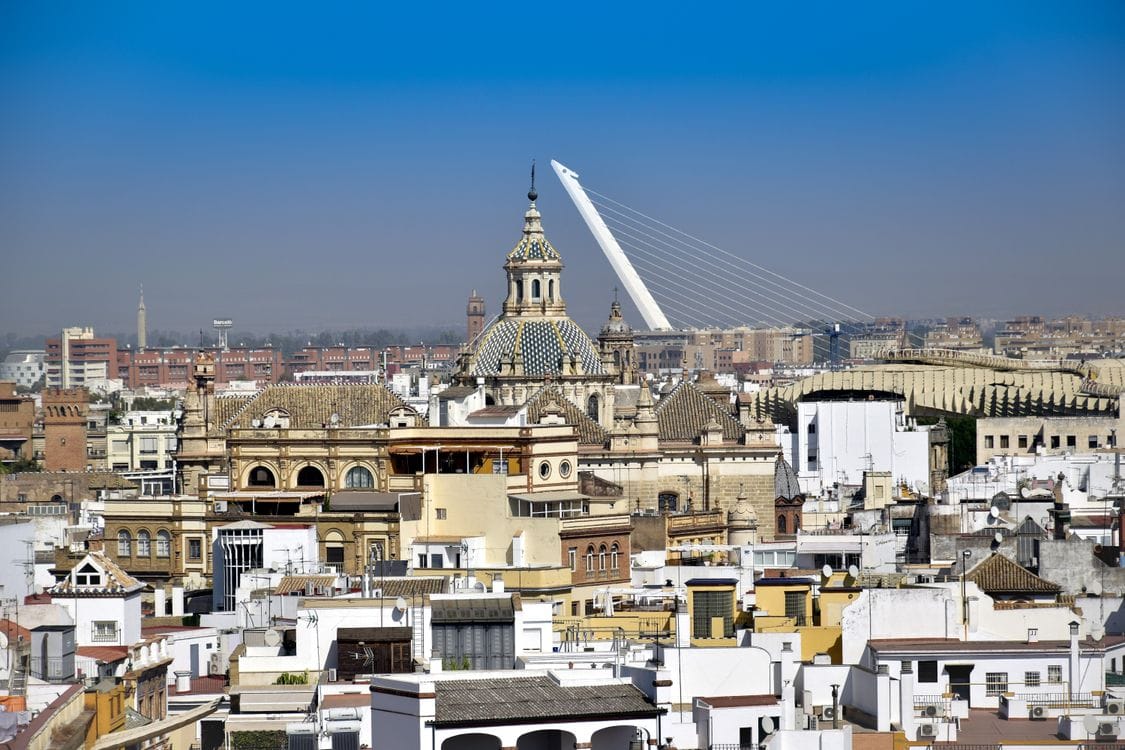
Once you’re in the city, your feet will cover most of what you want to see. The Cathedral and Alcázar are at the heart of the historic centre. Triana is a 10-minute walk west across the Guadalquivir. The Plaza de España is 20 minutes south on foot or five minutes by bike. You don’t need taxis for any of this.
When to go, and when it’s cheapest
Seville has a brutally hot summer and a mild, pleasant winter. That gap matters more for budget visitors than for any other type, because July and August at 40°C force costs up: you take taxis instead of walking, buy bottled water constantly, and sit in air-conditioned cafes to survive. January and February are the cheapest months for both flights and accommodation, and the city is genuinely enjoyable for walking.
Two events to avoid entirely if budget is your priority: Semana Santa (Holy Week, March or April) and the Feria de Abril (April, one to two weeks after Easter). During both festivals, hotel prices triple, restaurant surcharges appear, and availability disappears weeks in advance. If you’re not specifically there for the festivals, these are the worst weeks of the year to visit.
| Season | Months | Weather | Prices and crowds |
|---|---|---|---|
| Winter | Nov–Feb | Cool and dry; 10–16°C | Cheapest months; Jan–Feb 30–50% lower than peak |
| Spring | Mar–May | Warm; 18–26°C | Shoulder pricing except Semana Santa + Feria de Abril |
| Summer | Jun–Aug | Very hot; 32–40°C in Jul–Aug | High season prices; Jul–Aug cheaper than June |
| Autumn | Sep–Oct | Warm; 22–30°C | Shoulder pricing; fewer queues than spring |
Getting around Seville
The historic centre is walkable. The Cathedral, Triana, and the Plaza de España form a rough triangle you can cover on foot in half a day. If you want to range further, the Sevici bike share scheme is the best-value option in the city: a day pass costs around €1.35, with the first 30 minutes of each ride free. It’s widely used by locals and the city’s cycling infrastructure is genuinely good.
| Transport | Cost | What it covers |
|---|---|---|
| Walking | Free | Cathedral to Plaza de España is about 20 minutes on foot |
| Sevici bike share | ~€1.35/day | City-wide bike sharing network |
| TUSSAM bus | €1.40 single | Full city bus network |
| Metro | €1.40 single | One line (SE1) serving outer areas |
The best things to do in Seville
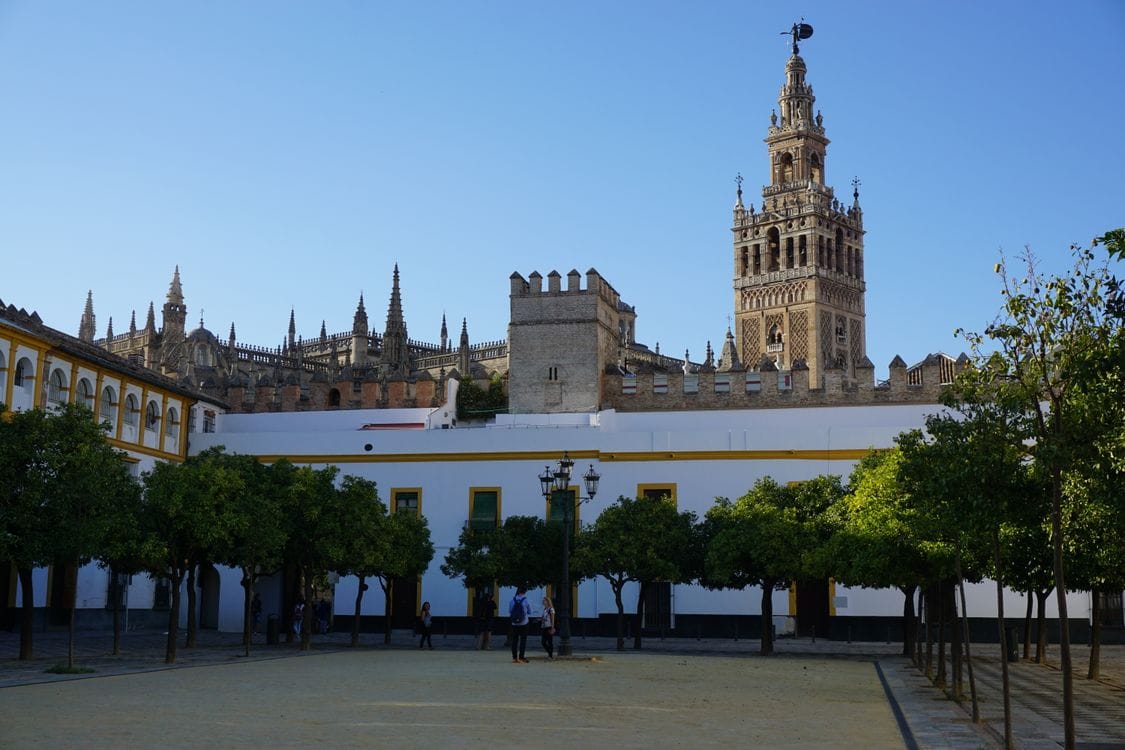
The paid attractions in Seville are worth the money. The Real Alcázar is an extraordinary living palace that’s been in continuous use since the 14th century, and it shows. The Cathedral and Giralda climb together give you the world’s largest Gothic building plus a 360-degree view over the city from what was originally a Moorish minaret. The free options are just as compelling: the Plaza de España alone is one of the finest public spaces in Europe, and it costs nothing.
| Attraction | What you get | 2026 adult price |
|---|---|---|
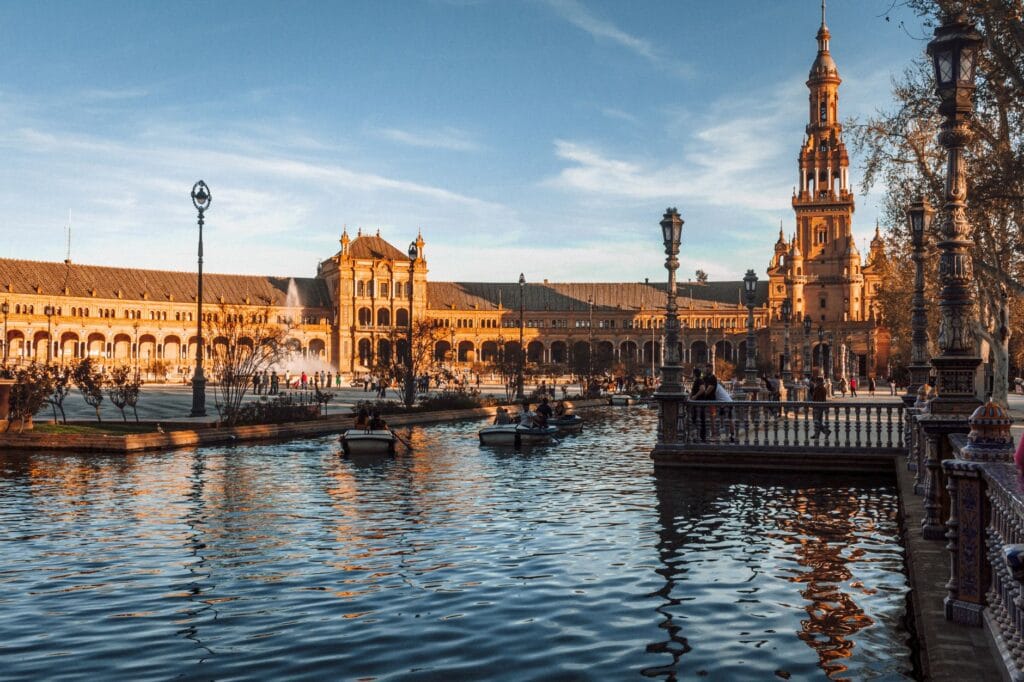
| Plaza de España | Semicircular 1929 landmark; tiled benches for all 50 Spanish provinces; canal with rowing boats | Free |
| Real Alcázar | UNESCO royal palace; Mudéjar architecture; formal gardens still used by the Spanish royal family | €16.50 |
| Cathedral + Giralda | World’s largest Gothic cathedral; climb the 12th-century Moorish tower for panoramic city views | €12 |
| Triana neighbourhood | Historic flamenco quarter; working ceramic workshops; Mercado de Triana; riverside views back to the old city | Free |
| Peña Flamenca | Non-profit cultural clubs where flamenco artists perform for the art, not the tourist market | €10–15 |
| Flamenco dinner show | Choreographed performance with dinner; tourist-facing format; the food is secondary | €60–100 |
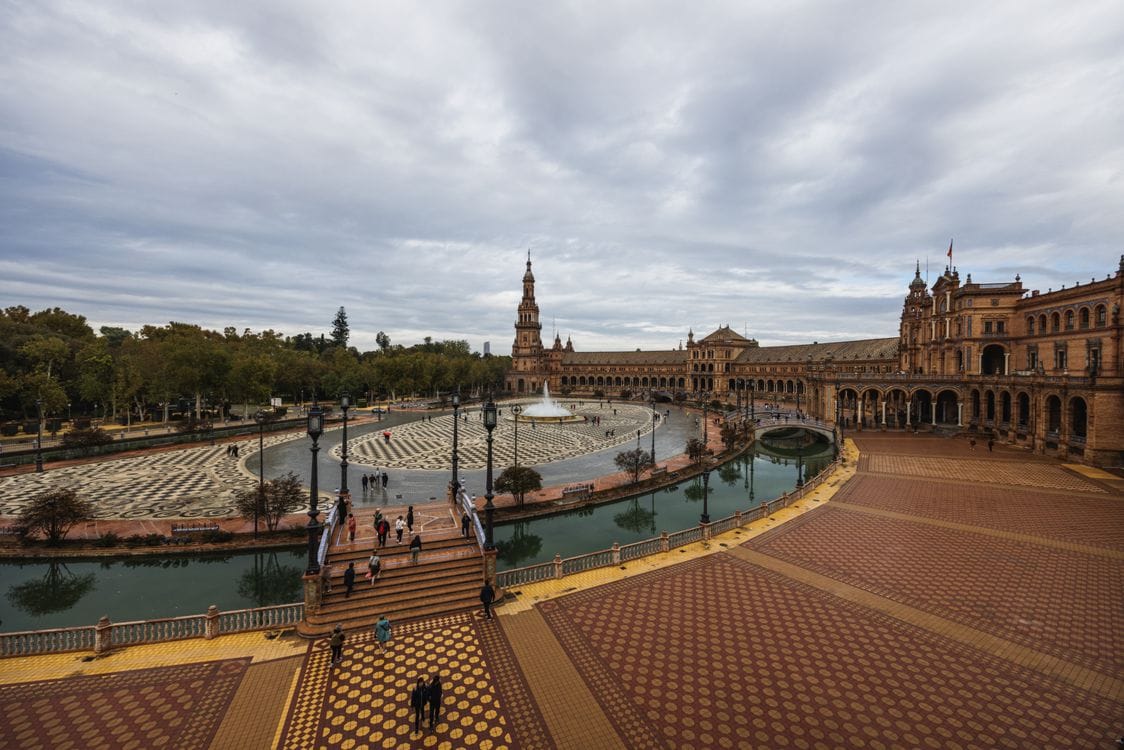
The Plaza de España takes 45 minutes to walk properly, from the towers at either end to the provincial tile benches along the curved facade. Go at sunset when the tour buses have left, and you’ll have one of the best free hours in Spain. The rowing boats on the canal cost €6 to €8 for 30 minutes; the view from the bridges is identical at no cost.
Where to eat
The core budget mechanism in Seville is the taberna system. You stand at the bar and eat tapas. Every bar in the city has two prices: standing at the counter gets you the local rate, while sitting at a table, especially on a terrace, adds a surcharge that can double the cost of the same food. This isn’t a hidden fee; it’s standard. Stand up.
What to order: espinacas con garbanzos (spinach and chickpeas with cumin and garlic) is the definitive Seville budget dish at around €3. Montaditos, small toasted sandwiches filled with slow-cooked pork or tortilla, cost €1.50 to €2.50 each. Tinto de verano, red wine mixed with lemon soda, costs €1.50 to €2.50 at the bar and is what locals actually drink. Order this, not Sangria.
When to eat: Seville runs on a different clock to northern Europe. Lunch happens at 2pm. Dinner doesn’t start until 9pm. If you try to eat at 12:30pm or 6pm, you’ll end up in a tourist trap that stays open specifically for visitors who can’t adjust. Eat at local hours and your food costs drop immediately.
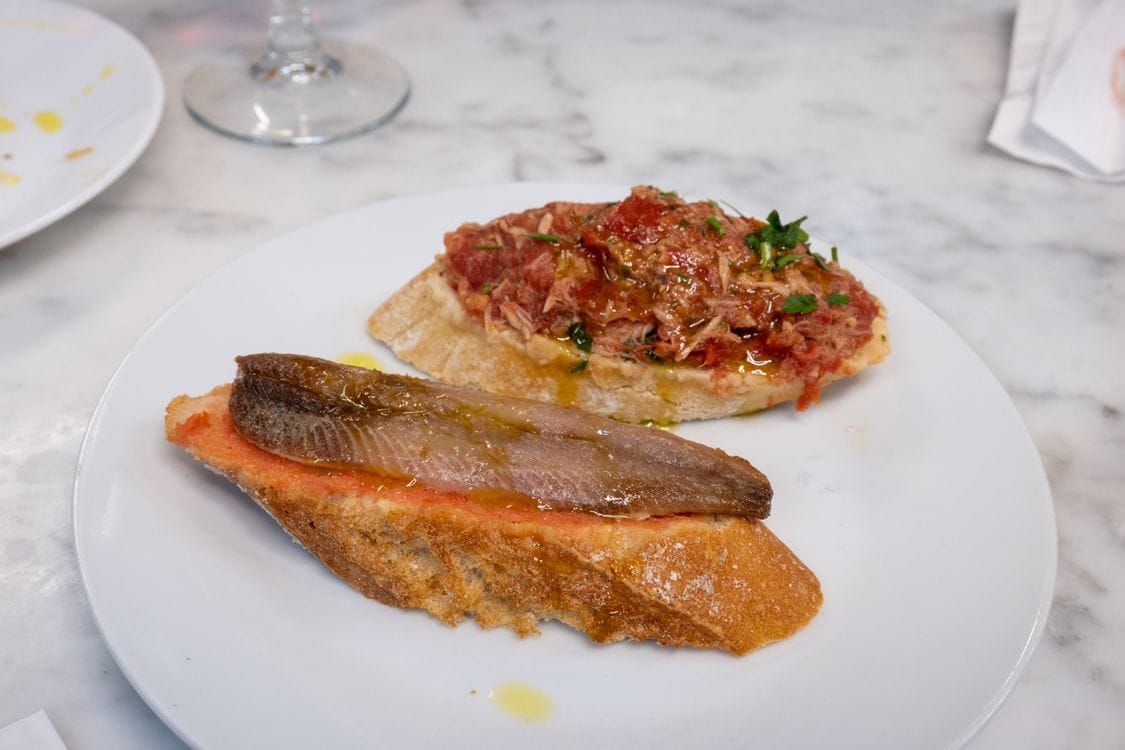
For specific places to eat, here are three worth knowing at different price points. El Rinconcillo (Calle Gerona, 40) has been operating since 1670. Stand at the bar, order a caña and a tapa; it’s not expensive. The bartenders chalk your tab on the wooden counter. For creative tapas with a serious following, Eslava (Calle Eslava, 3) has been running acclaimed raciones out of the San Lorenzo neighbourhood for over 30 years. If you’re spending more for a proper sit-down dinner, Casa Robles near the Cathedral is the traditional fine-dining option, built on three generations of family ownership and focused on Andalusian seafood.
Where to stay
The best budget base in Seville is the Alfalfa neighbourhood: central, five minutes from the Cathedral, and with bars and cafes priced for residents rather than tourists. Santa Cruz is beautiful but commands a 30 to 40 per cent premium over equivalent rooms three blocks north. Macarena is the cheapest area in the city, with a genuine neighbourhood feel, though you’ll need a bus or bike to reach the main sights.
| Area | Best for | What to expect |
|---|---|---|
| Alfalfa | Budget stays, central location | 5 minutes from the Cathedral; local bars at local prices |
| Santa Cruz | Walking to everything | Immediately adjacent to Cathedral and Alcázar; very atmospheric |
| Macarena | Cheapest nightly rates | Most genuine neighbourhood feel in the city; lower accommodation and food prices |
Three properties worth knowing at different price points, all bookable via Expedia with confirmed 2026 listings:
Budget: Hotel Alcántara sits in the historic centre close to the Giralda. It’s a well-run three-star with a 9.0 guest rating, a garden terrace, and private rooms from around £65 to £85 per night. For a budget hotel within walking distance of everything, it’s one of the better options in the city.
Mid-range: Becquer Hotel is a four-star in the historic city centre, comfortable and well-located, with rooms typically running £100 to £160 per night. It’s a solid mid-range choice if you want a proper hotel rather than a budget option.
Worth the spend: EME Catedral Mercer Hotel is a five-star directly facing the Cathedral, with a rooftop pool overlooking the Giralda tower. Rooms start from around £280 per night. If it’s in budget for a special trip, the location and the rooftop view are exceptional.
For a wider range of Seville accommodation at all prices, see our hotel deals page.
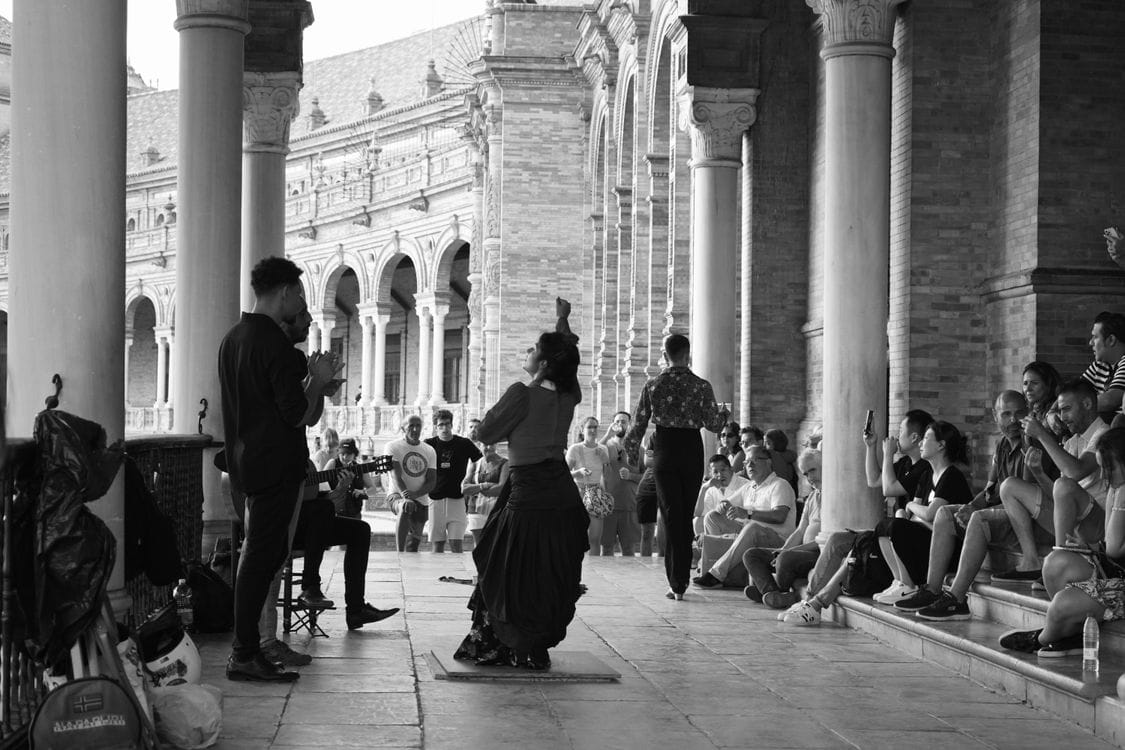
For real flamenco without paying dinner-show prices, a Peña Flamenca is the right option. These are non-profit cultural clubs where the performance is for the art form, not for the format. Entry typically costs €10 to €15 and includes a drink. The tourist flamenco dinner packages covering the same duration cost €60 to €100 and the dancing is choreographed for the audience. A Peña is not. The contrast is immediately obvious.
How much does a Seville city break cost?
The table below covers daily costs on the ground, excluding flights and accommodation. Seville is significantly cheaper than Madrid or Barcelona once you move away from the tourist areas near the Cathedral and Alcázar. Food and transport are where budget visitors save the most: a day of bar tapas, walking, and free sights costs very little.
| Category | Budget (per day) | Mid-range (per day) |
|---|---|---|
| Accommodation | £30–55 | £90–140 |
| Transport | £0–5 | £5–12 |
| Food | €15–22 | €35–55 |
| Sights | €0–12 | €16–30 |
| Daily total | ~£50–80 | ~£145–210 |
Know before you go
A few practical things for UK visitors worth knowing before you arrive, including one that catches people out every time: the plugs.
| Topic | What UK visitors need to know |
|---|---|
| Entry and visa | No visa required. Valid passport needed (not just a driving licence). |
| Plugs and adaptors | Type C or F (round two-pin). UK three-pin plugs won’t fit. |
| Currency | Euro (€). Cards accepted widely. |
| Language | Spanish (Andalusian accent differs notably from standard Castilian). |
| Time zone | CET (1 hour ahead of UK in winter; same as BST in summer). |
| Health | Get a free Global Health Insurance Card (GHIC) before you go. |
For cheap flights to Spain and Spain holiday deals, including packages and hotels, see our dedicated pages. For weekend breaks in Europe at all price points, see our full guide.
Seville is an excellent base for a wider Andalusian trip. Granada and the Alhambra are about two and a half hours east by bus or train. Córdoba, with its extraordinary Mezquita, is under an hour on the high-speed AVE. Cádiz, the oldest continuously inhabited city in western Europe, is an hour and a half by bus. All three work as day trips or extra nights if your itinerary allows.
Seville budget travel: your questions answered
Is Seville expensive for UK visitors?
Seville is one of the most affordable major cities in Spain if you eat where locals eat and avoid table service near the Cathedral. A tapa and a small beer at a bar counter costs €3 to €4; the same order at a terrace facing the Alcázar costs €9 to €12. Geography and posture are your main budget levers.
What’s the cheapest time of year to visit Seville?
January and February have the lowest flight and hotel prices, typically 30 to 50 per cent below the spring and summer peak. Avoid Semana Santa and the Feria de Abril entirely if budget is a priority; accommodation prices triple and availability disappears weeks in advance.
Do you need ETIAS to visit Spain from the UK?
ETIAS, the EU’s planned online entry authorisation for non-EU nationals, had not launched at the time of writing (June 2026). Once it does, UK visitors to any Schengen country including Spain will need to register online for a €7 authorisation valid for three years. Check gov.uk for the latest status before you travel.
What’s the cheapest way to get from Seville airport to the city?
The EA Special Airport bus runs from SVQ to Puerta de Jerez near the Cathedral for €4 single. It takes about 35 minutes and operates from 5:20am to 1:00am. The taxi alternative costs €22 to €28 for the same journey.
| Seville quick fact | What you need to know |
|---|---|
| Flight time from London | Around 2 hours 25 minutes |
| Airport bus to centre | €4 single, ~35 minutes |
| Cathedral + Giralda | €12 adult |
| Real Alcázar | €16.50 adult |
| Tap water | Safe to drink throughout Seville |
| Best budget months | January and February |
What are the best free things to do in Seville?
The Plaza de España, Triana neighbourhood, Parque de María Luisa, and the full exterior walk around the Cathedral all cost nothing. Free walking tours run daily from the Cathedral area and operate on a tip basis; they’re worth knowing about if you want context for the city’s history without paying for a private guide.
What’s the best area to stay in Seville on a budget?
Alfalfa gives you the best combination of central location and price, five minutes from the Cathedral with bars priced for residents. Santa Cruz is beautiful but costs 30 to 40 per cent more for equivalent rooms. Macarena is the cheapest area and has the most genuine neighbourhood feel, though the Cathedral is 15 to 20 minutes away by bus or bike.
How many days do you need in Seville?
Three nights is the right amount for a first visit. That gives you time for the Alcázar, the Cathedral climb, a full afternoon at the Plaza de España, an evening in Triana, and a Peña Flamenca without feeling rushed. Two nights is possible but you’ll need to choose between the paid sights.
Is Seville safe for tourists?
Seville is generally safe by European city standards. Pickpocketing can occur around the Cathedral and in tourist markets; keep valuables secure in crowds. The main concern for first-time visitors is heatstroke in summer rather than personal safety; stay hydrated and avoid midday sun in July and August.

Kate Acaster is Chief Editor at Flight Tribe. She writes about practical travel planning, budget airlines, baggage rules, city breaks, beach holidays and good hotels that do not cost daft money.
Kate has travelled through Europe, South America and beyond, usually with a notebook, a half-formed plan and a strong opinion on airport snacks. At Flight Tribe, her work focuses on helping UK travellers understand what is included, what costs extra, and whether a trip is worth booking at the price shown.
How Kate works
Kate checks the details that can change the value of a trip, including cabin-bag rules, airline fees, hotel location, seasonality, travel dates and booking conditions. She is especially interested in offers that look useful on the surface but need a proper reader-first check before they are worth recommending.
Editorial standards
Flight Tribe covers deals and travel advice for readers first. Affiliate links do not decide whether an offer is worth writing about.