
Published 7 June 2026 | Updated 21 October 2026 by Kate Acaster
Most UK travellers file Cyprus under package holiday and leave it there. The reality is a Mediterranean island where the euro is in your pocket, English is spoken on every menu, the plugs match the ones at home and cars drive on the left. Behind the resorts sit Roman mosaics, painted mountain churches and some of the clearest water in the Mediterranean, and the whole lot is a short hop from a dozen UK airports.
Advertisement
This is a guide to doing Cyprus well on a budget: the cheapest way to fly out, when to go, how to get around without a hire car, what is worth your time, where to eat at three price points, and what a week actually costs once you land. Cyprus budget travel is easier than the brochures suggest, and a good deal cheaper.
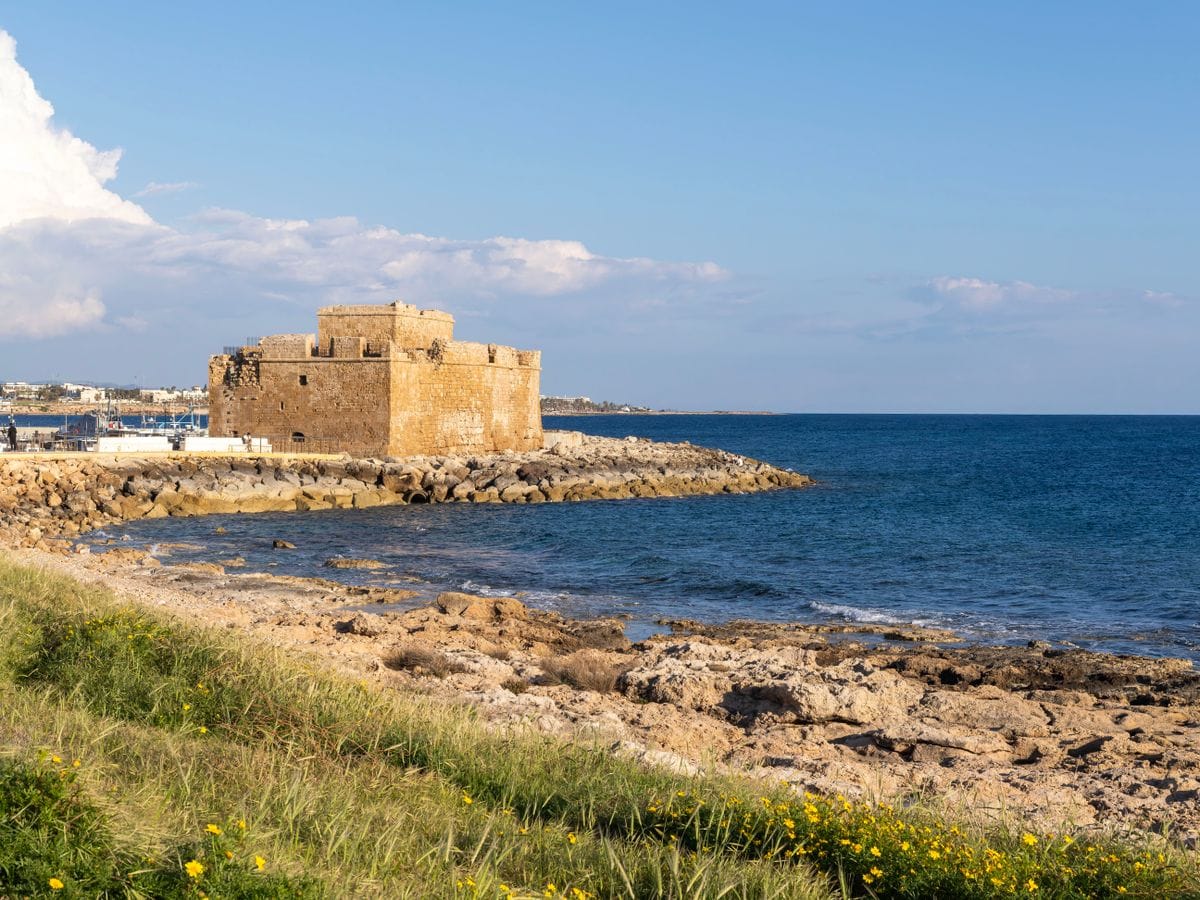
Cyprus is the third largest island in the Mediterranean, but the bits most visitors want sit close together in the south. Paphos in the west, Limassol in the middle, Larnaca and Ayia Napa in the east, and the Troodos mountains rising in between. The euro is the currency, English is spoken almost everywhere, and the island runs two hours ahead of the UK rather than one.
How to get to Cyprus from the UK
Cyprus has two airports that take UK flights, Paphos in the west and Larnaca in the east, and between them they pull in every major budget airline. The flight is around four and a half hours, longer than Spain or Malta, but fares stay low if you avoid the school holidays. Pick your airport to match your base: Paphos for the west, Larnaca for the east coast and Ayia Napa. No direct flight from your nearest airport? British Airways sells one-ticket connections from regional UK airports via Heathrow to Larnaca, which protects you if the first flight runs late.
| Airline | Flies direct from | Flight time | Typical return |
|---|---|---|---|
| Ryanair | Stansted, Manchester, Birmingham, Newcastle and Liverpool, to Paphos only | 4h 25m | £40 to £130 |
| easyJet | Gatwick, Luton, Manchester, Bristol, Edinburgh, Birmingham and more, to Paphos and Larnaca | 4h 30m | £60 to £160 |
| Jet2 | Manchester, Birmingham, Stansted, Newcastle, Leeds Bradford, Edinburgh, Glasgow | 4h 35m | £90 to £220 |
| TUI | Regional airports across the UK, to Paphos and Larnaca | 4h 35m | Package-led |
| British Airways | Heathrow and Gatwick, mainly to Larnaca | 4h 30m | £110 to £260 |
The two levers that move the price are timing and baggage. Dodge the school holidays and you can often halve the fare, and our guide to finding cheap flights from the UK covers the rest. If you fly Ryanair or easyJet, packing light pays, so read up on the best carry-on bag for Ryanair before you book a hold bag you may not need.
When to go, and when it’s cheapest
Cyprus has the longest beach season in the Mediterranean, with the sea warm enough to swim from May into November. The sweet spot for weather and value is spring and autumn. Summer is hot, busy and dear; winter is mild, quiet and the cheapest time of all to fly.
| Season | Weather | Crowds and feel | Cost |
|---|---|---|---|
| Spring (Mar to May) | Highs of 18 to 24°C, dry, wildflowers | Quiet, ideal for walking, ruins and the mountains | Low to midGood value |
| Summer (Jun to Aug) | Highs around 30°C on the coast, mid-30s inland, warm sea | Busiest and liveliest, beaches packed, August hottest | HighestPeak |
| Autumn (Sep to Oct) | Highs of 26 to 28°C, sea still warm | Calmer, swimming still on, the best all-round balance | MidSweet spot |
| Winter (Nov to Feb) | 17 to 22°C midday, mild, some rain, snow on Troodos | Quietest, sightseeing weather, sea too cold for most | LowestCheapest |
If the school calendar fixes your dates, plan around it rather than against it. Our guides to when to book a holiday for the best price and cheaper school holiday breaks both apply directly to Cyprus. For late warmth it is one of our top picks in where’s hot in October, when the sea is still warm and the summer crowds have gone, and it features again in where’s hot in March for early spring sun.
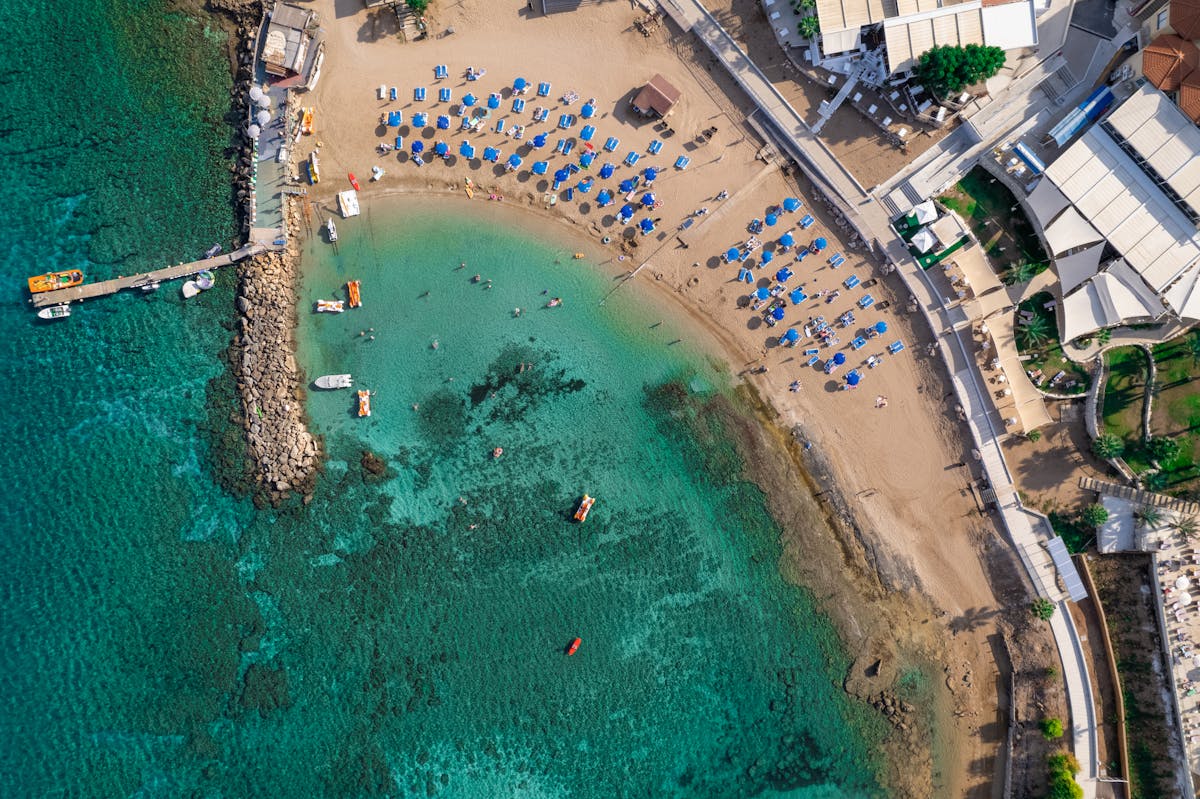
The sea is the reason many people come, and Cyprus holds its warmth longer than anywhere else in the region. It is swimmable from May into November, and the bays around Protaras, Ayia Napa and the Akamas peninsula are some of the clearest in the Mediterranean. If the beach is the point of your trip, aim for late September or October, when the water is still warm but the prices and crowds have dropped.
Getting around Cyprus
There are no trains in Cyprus, but the bus network covers the towns and resorts cheaply, and a daytime single costs €2 in Paphos, Limassol and Ayia Napa, or €2.70 in Nicosia and Larnaca. Each region runs its own buses, so services are frequent within a town and less so between them. A hire car earns its keep only if you want the Troodos mountains, the Akamas peninsula or the quiet beaches under your own steam.
| Option | Cost | Good for |
|---|---|---|
| Bus single | €2 day / €3 night in Paphos, €2.70 / €4.70 in Nicosia and Larnaca | Day-to-day trips around a town or resort |
| Day ticket | €6.50 | A full day of sightseeing in one area |
| 7-day pass | €35 | A beach-based week without a car |
| Intercity bus | €5 to €8 one way | Hopping between the main cities |
| Car hire | From around £25 a day | Troodos, the Akamas and remote bays |
For a beach holiday in one resort, a 7-day bus pass and the odd taxi covers everything. If your plan takes in the mountains or the wilder west, a hire car for two or three days is the cheaper and more flexible option than booking organised tours, and you already know the side of the road.
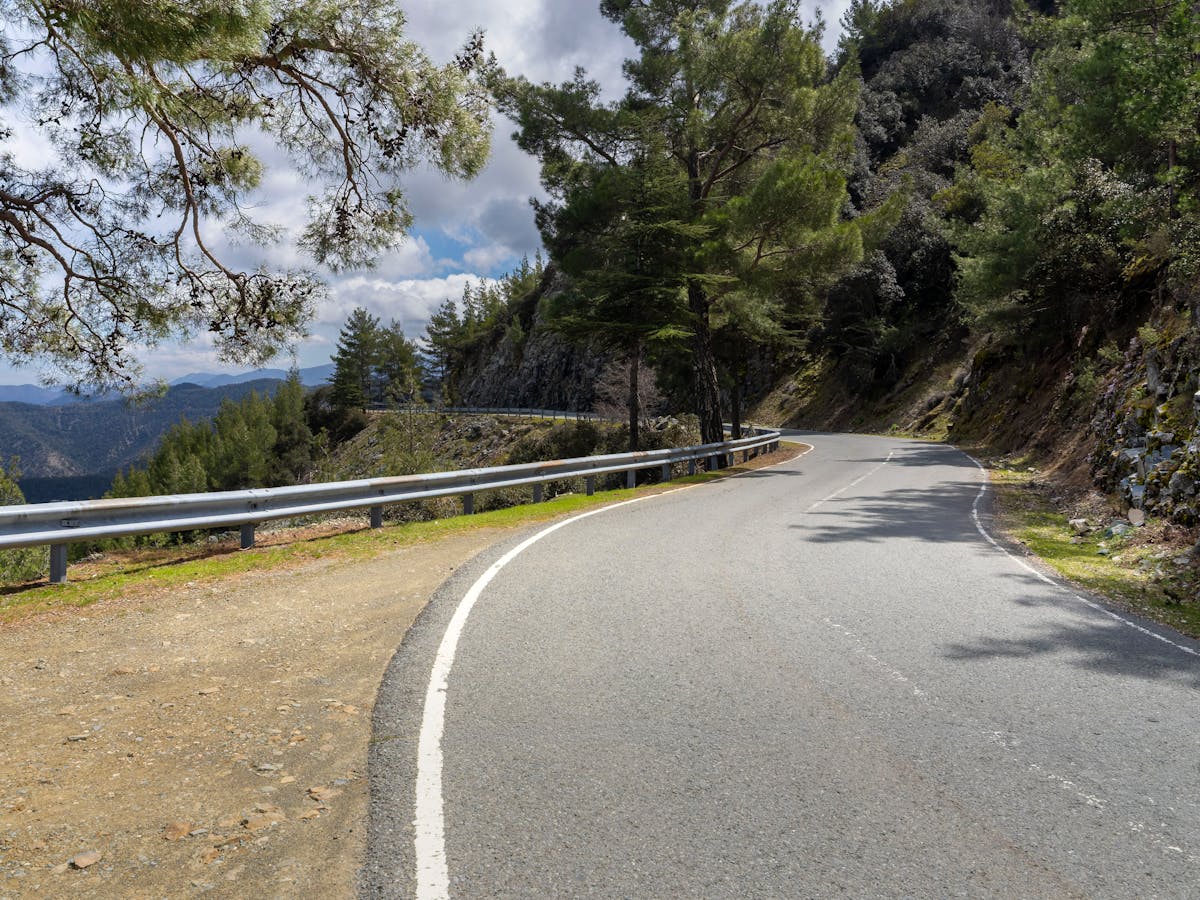
The Troodos mountains are the part most package tourists never see. Pine forests, stone villages, painted Byzantine churches and a string of small wineries climb towards Mount Olympus, the island’s highest peak at just under 2,000 metres. In summer the air is cooler than the coast, and from January to March you can usually ski on Mount Olympus in the morning and reach the beach by afternoon.
The best things to do in Cyprus
Cyprus packs ancient ruins, mountain monasteries and clear-water beaches into a short flight from the UK. Most of the headline sights cost a few euros or nothing, and the paid ones are cheap by European standards. Paphos alone holds enough Roman and Greek history for a couple of days.
| Place | What it is | Cost |
|---|---|---|
| Paphos Archaeological Park | UNESCO site of Roman villas, mosaics and a lighthouse | €4.50 |
| Tombs of the Kings | Rock-cut tombs by the sea, also UNESCO listed | €2.50 |
| Petra tou Romiou | Aphrodite’s Rock, mythical birthplace of the goddess | FreeNo charge |
| Kourion | Greco-Roman theatre and mosaics on a clifftop near Limassol | €4.50 |
| Troodos Mountains | Painted churches, Kykkos Monastery, wineries and hiking | FreeNo charge |
| Nissi Beach | Blue Flag sandy beach in Ayia Napa, shallow and calm | FreeNo charge |
| Nicosia old town | The last divided capital in Europe, walls and museums | Free to wander |
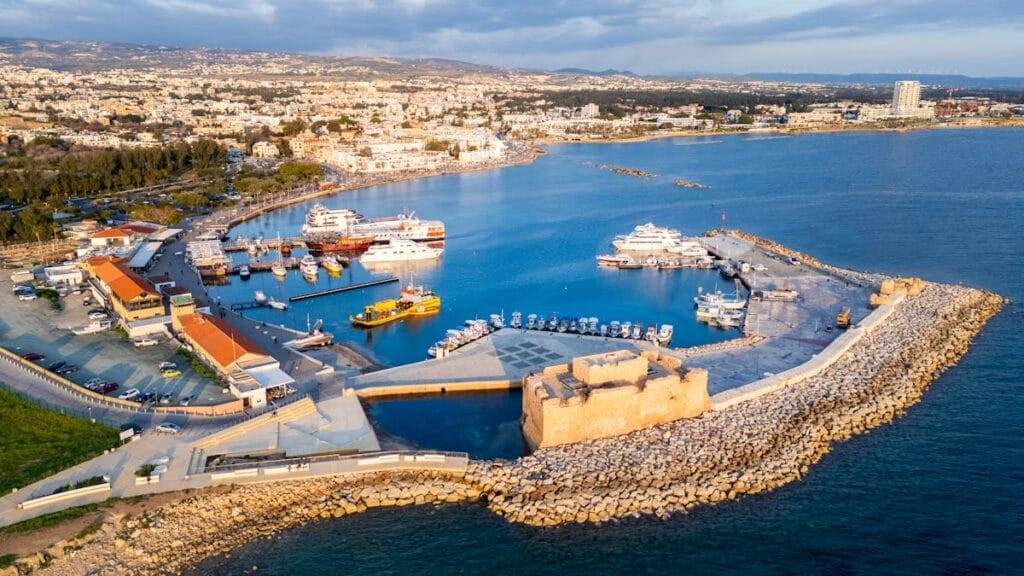
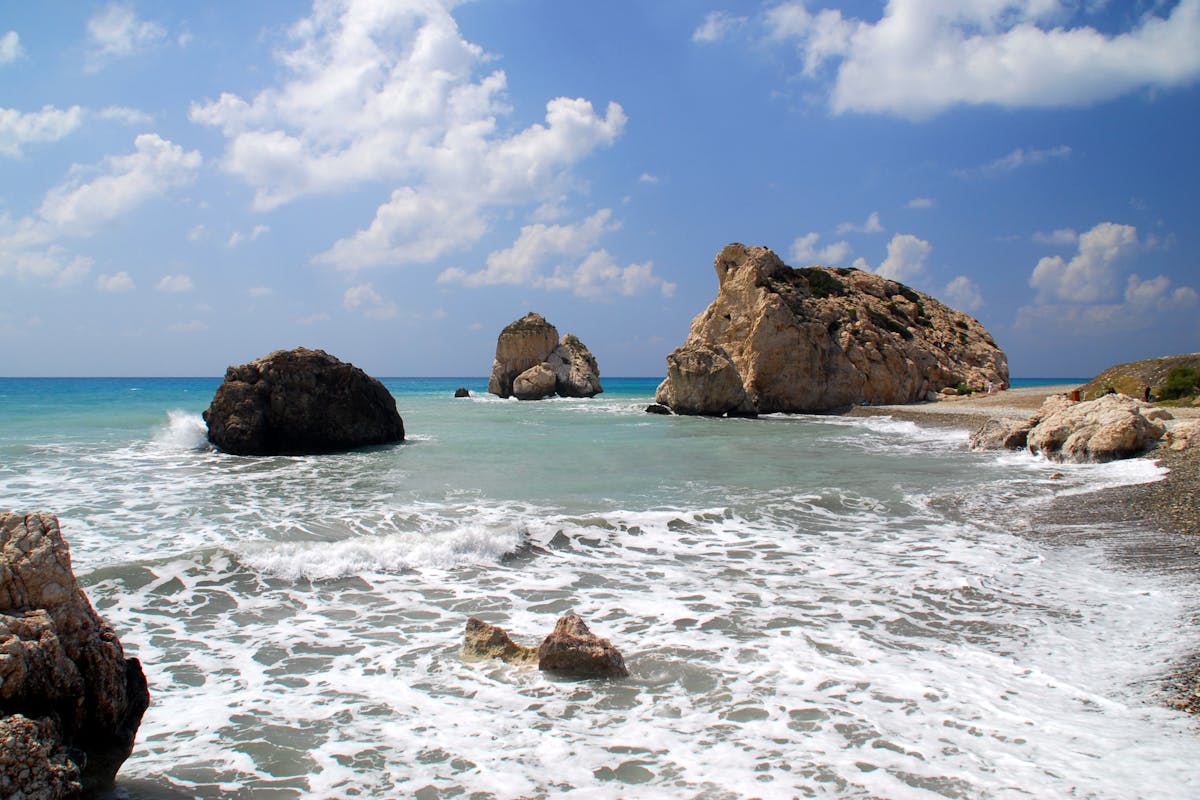
Give Paphos a full day. The Archaeological Park’s Roman mosaics are among the best preserved in the eastern Mediterranean, and the Tombs of the Kings, a short way north, cost €2.50 to enter. South of town, the sea rocks at Petra tou Romiou draw the coaches for the Aphrodite legend, but they are at their best early or late when the light is low and the car park is empty.
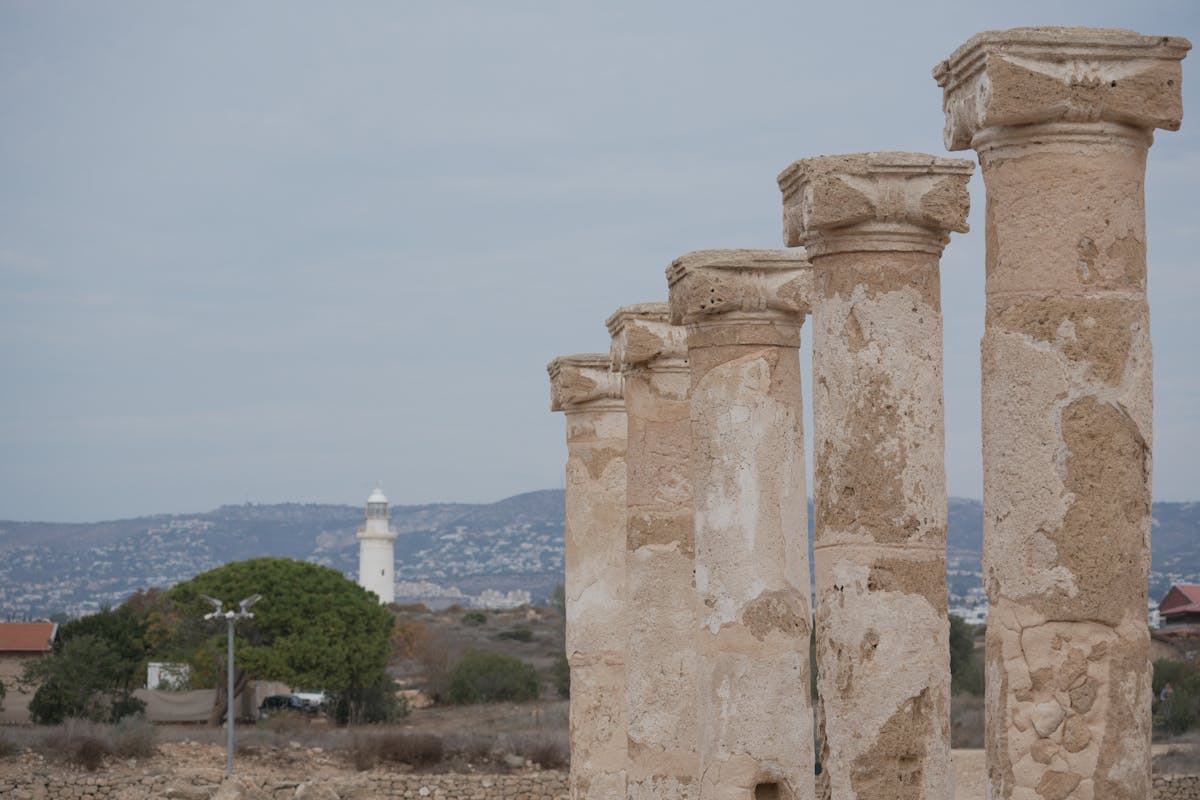
Inland and along the coast there is more history than a week can hold. Kourion’s Greco-Roman theatre still stages summer concerts above the sea near Limassol, the painted churches of the Troodos carry a UNESCO listing of their own, and Nicosia is the only divided capital left in Europe, where you can cross between the Greek and Turkish sides on foot through the old walls.
Where to eat
Cypriot food is generous and cheap, built around the meze and the charcoal grill. Expect halloumi straight off the flame, slow-cooked kleftiko lamb, fresh fish and the local sausages, washed down with a Keo beer or a glass of Commandaria. You can eat well for under €10 or take a clifftop table at sunset, and here is a pick at each price point.
Budget (under £13): Ocean Basket at Paphos harbour does fresh fish and chips from around €8 and generous seafood plates for two for about €40. For the cheapest local lunch, do as Cypriots do and pick up a souvlaki or gyros wrap from a village grill for €3 to €4.
Mid (£20 to £30): 7 St. Georges Tavern in Geroskipou, just outside Paphos, is a family-run kitchen serving a full Cypriot meze from organic local produce, with the menu changing by the day. Go hungry, because the small plates keep coming.
Worth the spend (£45 to £65): Phos, at Cap St Georges above Peyia, plates seasonal Cypriot dishes with modern technique and claims one of the finest sunset views on the island. Book a table for golden hour and make an evening of it.
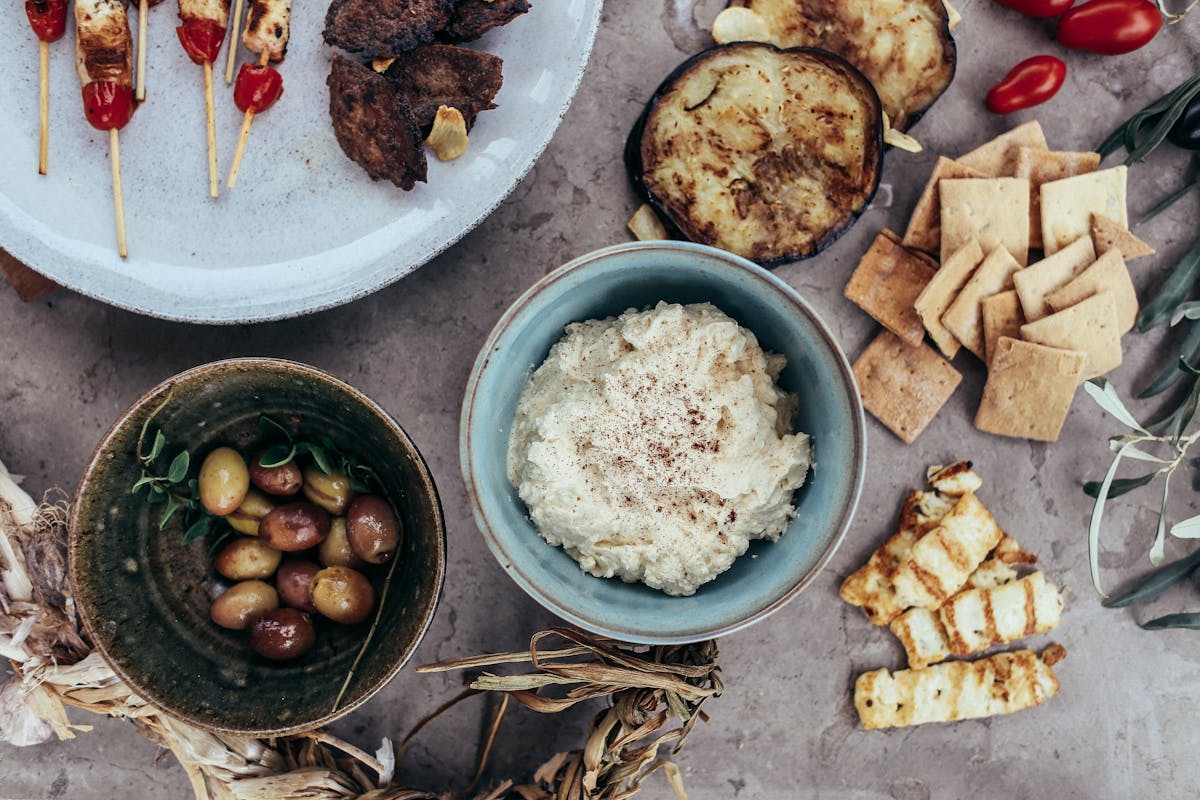
The meze is the smart order for a budget table. One set price brings a parade of dips, grilled halloumi, olives, sausage, fish and meat, and it feeds two generously for the price of a single main course back home. Skip the harbour-front tourist menus and look for the tavernas a street or two back, where locals eat and the cooking is better and cheaper.
Where to stay
Where you base yourself shapes the trip. Paphos suits first-timers and history, Ayia Napa and Protaras have the best beaches, Limassol brings the city buzz and the marina, and Larnaca is the easy-airport value pick. Wherever you choose, prices climb steeply in July and August, so book early for summer.
| Area | Best for | Feel |
|---|---|---|
| Paphos | History, the harbour, first-timers | Relaxed and characterful |
| Ayia Napa | Beaches and nightlife | Lively, younger crowd |
| Protaras | Family beaches, a calmer pace | Quieter resort |
| Limassol | City life, dining, the marina | Big and cosmopolitan |
| Larnaca | Value, an easy airport, the palm promenade | Laid-back town |
Budget: Kissos Hotel sits in the historical district close to the Tombs of the Kings, with two outdoor pools and breakfast included. It is a well-reviewed, family-run base that does the job without eating into the rest of your budget.
Mid-range: Roman Boutique Hotel is built around a preserved archaeological site near the harbour, with a spa, a pool and Faros Beach a few minutes away. It has more character than most hotels at the price.
Worth the spend: Almyra is a five-star seafront design hotel in Kato Paphos, with four restaurants, a spa and a family-friendly streak that sets it apart from the usual adults-only luxury. It is the most polished splurge in the west of the island.
How much does a Cyprus holiday cost?
A week in Cyprus costs less than most UK travellers expect once the flight and hotel are booked. Day-to-day spending is modest, because the buses are cheap, the sights cost a few euros, and a meze feeds two for the price of one main back home.
| Traveller | Daily, on the ground | What it covers |
|---|---|---|
| Budget | £45 to £55 | Buses, street food and self-catering, free beaches and sights |
| Midrange | £80 to £110 | Taverna meals, a hire-car day or a boat trip |
| Comfortable | £150+ | Taxis, fine dining and guided tours |
Add it up and a careful week in spring or autumn, flights and a modest hotel included, comes in well under what the same trip would cost in much of mainland Europe. That gap, between what people assume Cyprus costs and what it actually costs, is the whole case for going. For more island and city ideas at this kind of value, browse our destination guides.
Know before you go
Cyprus makes life easy for British visitors. The currency is the euro, English is spoken almost everywhere as a legacy of British rule, and the plugs are the same three-pin sockets as home, so leave the adapter behind. The island drives on the left, like the UK, and sits two hours ahead on Eastern European Time. One thing to know: the north of the island is a separate Turkish-controlled territory that uses the Turkish lira, and everything in this guide refers to the Republic of Cyprus in the south.
On entry, your passport must have been issued less than 10 years before you arrive and be valid for at least 3 months after the day you plan to leave. You can stay up to 90 days in any 180-day period without a visa. Cyprus is not in Schengen and does not use the EU’s new Entry/Exit System, but a €20 online permit called ETIAS is expected to be required from late 2026. Check the GOV.UK Cyprus entry requirements page before you book.
| Detail | What to know |
|---|---|
| Currency | Euro in the south; the north uses Turkish lira |
| Language | Greek official, English spoken almost everywhere |
| Plugs | Type G, UK three-pin, 230V, no adapter needed |
| Driving | On the left, the same as the UK |
| Time zone | Eastern European Time, two hours ahead of the UK |
| Flight time | Around 4h 30m from London to Paphos or Larnaca |
Cyprus budget travel: your questions answered
Is Cyprus expensive to visit?
No, Cyprus is one of the better-value Mediterranean destinations for UK travellers. Budget on roughly £45 to £55 a day on the ground, before flights and your hotel.
How many days do you need in Cyprus?
Five to seven days covers Paphos, a beach base and a day in the Troodos mountains. A week lets you add Nicosia or the eastern beaches and slow the pace down.
Do they speak English in Cyprus?
Yes, English is spoken almost everywhere in the south, a legacy of British rule, though Greek is the official language. UK visitors rarely hit a language barrier.
What is the cheapest time to fly to Cyprus?
November to March outside the school holidays has the lowest fares, and February is cheapest of all. Spring and late autumn give the best balance of price and weather.
Do I need a visa or ETIAS for Cyprus?
No visa is needed for stays of up to 90 days in any 180-day period. A €20 online ETIAS permit is expected to be required from late 2026, so check the latest government advice before you travel.
Is Paphos or Ayia Napa better for a budget holiday?
Paphos suits history, harbour life and a quieter pace, while Ayia Napa is built around beaches and nightlife. Both have cheap flights and plenty of budget hotels.
Can you get around Cyprus without a car?
Yes, buses link the towns and resorts for €2 to €2.70 a daytime single, and a 7-day pass in Paphos costs €35. A hire car only pays off for the mountains and remote beaches.

Kate Acaster is Chief Editor at Flight Tribe. She writes about practical travel planning, budget airlines, baggage rules, city breaks, beach holidays and good hotels that do not cost daft money.
Kate has travelled through Europe, South America and beyond, usually with a notebook, a half-formed plan and a strong opinion on airport snacks. At Flight Tribe, her work focuses on helping UK travellers understand what is included, what costs extra, and whether a trip is worth booking at the price shown.
How Kate works
Kate checks the details that can change the value of a trip, including cabin-bag rules, airline fees, hotel location, seasonality, travel dates and booking conditions. She is especially interested in offers that look useful on the surface but need a proper reader-first check before they are worth recommending.
Editorial standards
Flight Tribe covers deals and travel advice for readers first. Affiliate links do not decide whether an offer is worth writing about.