
Published 24 May 2026 | Updated 23 September 2026 by Jane Robinson
Search flights and hotels
Package holidays bundle several travel components under one price, but the types of package holiday inclusions vary far more than most brochures let on. Two holidays at the same headline cost can deliver completely different value once you look at what is actually covered. Flights with no luggage allowance, transfers that leave you stranded at midnight, or “all-inclusive” that stops at house wine — these are not edge cases. Knowing what each inclusion type means in practice helps you compare deals honestly, avoid nasty surprises, and spend your money where it actually counts.Table of Contents
- Key takeaways
- 1. Transportation inclusions: flights, transfers, and car hire
- 2. Accommodation inclusions: hotel types, room grades, and stay specifics
- 3. Meals and dining inclusions: from self-catering to all-inclusive
- 4. Activities, excursions, and entertainment inclusions
- 5. Travel protection and insurance included in packages
- 6. Additional inclusions: luggage, airport fees, and extras
- 7. Comparison of key inclusion types
- My honest take on package holiday inclusions
- Find package deals with clear inclusions on Flighttribe
- FAQ
Key takeaways
| Point | Details |
|---|---|
| Inclusions vary widely | Two packages at the same price can differ significantly in what is actually covered. |
| Meals need close reading | “All-inclusive” does not always mean unlimited premium drinks or off-site dining. |
| ATOL protection matters | Booking a package with a UK-licensed operator gives you financial protection that separate bookings do not. |
| Small extras add up | Luggage fees, airport taxes, and transfers can shift the real cost considerably. |
| Activities often cost extra | Pre-included entertainment is the exception; most excursions and spa treatments are paid separately. |
1. Transportation inclusions: flights, transfers, and car hire
The core of most packages is round-trip flights with hotel accommodation and local transfers. But the detail matters enormously.Most standard packages include economy class flights only. Hold luggage, seat selection, and upgrades are nearly always charged on top. If you are travelling as a family and need four checked bags, that cost can add £80 to £200 to your total before you have left the airport. Always check the baggage policy before comparing prices.Airport transfers are where packages diverge most sharply. The main options you will encounter are:- Shared coach transfer: The cheapest option, often included as standard. Can involve long waits and multiple hotel drop-offs before yours.
- Private shuttle: Faster and more direct, but usually costs extra. Worth it for late-night arrivals or remote resorts.
- Self-transfer: Some packages leave you to arrange your own transport from the airport, which is worth knowing upfront.
2. Accommodation inclusions: hotel types, room grades, and stay specifics
Accommodation quality in package holidays ranges from budget two-star city hotels to five-star beach resorts, and the difference in experience is enormous. The star rating is only the start of it.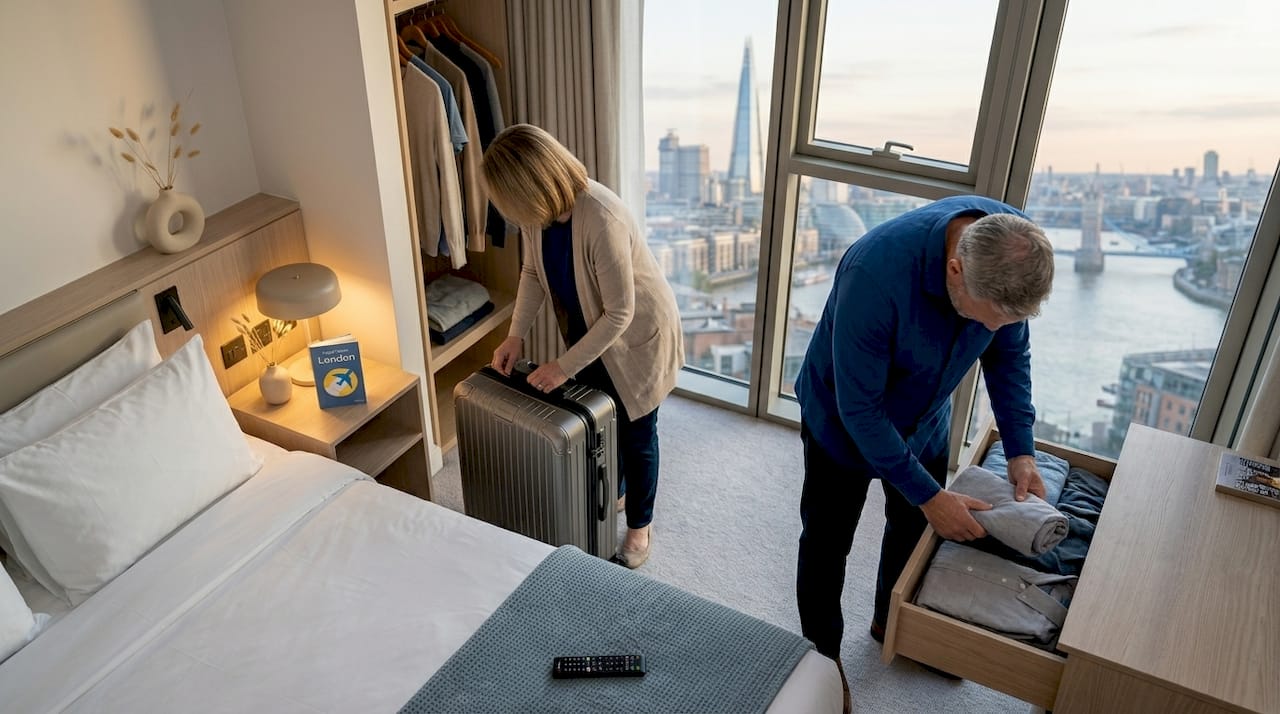 Room grade matters as much as the hotel itself. A standard room at a large resort might face a car park. A sea-view room at the same property is a different holiday. Packages typically book you into the lowest available room category unless you pay to upgrade. Some operators include resort credits or welcome amenities at mid-range and above, which can offset the cost of drinks or spa treatments.Key things to check on accommodation inclusions:
- Length of stay: Most packages are seven or fourteen nights, but some offer flexible durations or free-night promotions.
- Resort fees: Some hotels, particularly in the US and Caribbean, charge a mandatory daily resort fee that is not included in the package price.
- Wi-Fi: Increasingly standard in Europe, but not guaranteed in all destinations or room categories.
- Taxes: Usually included for UK packages, but worth confirming for long-haul destinations.
3. Meals and dining inclusions: from self-catering to all-inclusive
Meal plans are the inclusion type that generates the most confusion, and the most disappointment. The terminology sounds clear until you read the small print.Here is what each meal plan actually means in practice:- Room only / self-catering: No meals provided. You cook or eat out entirely at your own cost.
- Bed and breakfast: Morning meal included. Quality ranges from a continental spread to a full cooked breakfast depending on the property.
- Half board: Breakfast and dinner included. Lunch is your own expense, which suits travellers who want flexibility during the day.
- Full board: All three meals included. Drinks are usually charged separately unless specified.
- All-inclusive: Meals, snacks, and standard drinks included throughout the day. Premium spirits, branded soft drinks, and off-site dining typically cost extra.
4. Activities, excursions, and entertainment inclusions
Most packages include very little in the way of activities beyond access to the resort’s basic facilities. A pool, a gym, and perhaps a nightly entertainment show are typical. Anything beyond that usually costs extra.Some packages bundle activities such as tickets to attractions, spa treatments, or recreational activities, but premium experiences typically cost extra. Theme park tickets are sometimes included in Florida packages, for example, which can represent genuine savings of £80 to £120 per person. Always confirm whether these are genuinely included or simply discounted.Common activity inclusions and exclusions:- Typically included: Pool access, gym, nightly entertainment, kids’ club (at family resorts), non-motorised water sports at some all-inclusives.
- Usually charged extra: Scuba diving, jet skiing, spa treatments, guided excursions, golf, and premium shows.
- Worth confirming: Whether kids’ clubs require pre-booking, and whether there are age restrictions.
5. Travel protection and insurance included in packages
This is the inclusion most people overlook until something goes wrong. It is also one of the most genuinely valuable parts of booking a package rather than piecing a holiday together yourself.Package holidays sold under a single contract provide simplified consumer protection and support if travel components fail or plans change. In the UK, this means ATOL protection for flight-inclusive packages, which covers you financially if the operator collapses. Many UK providers are also ABTA members, offering additional consumer safeguards.What package protection typically covers and what it does not:| Protection type | What it covers | What it does not cover |
|---|---|---|
| ATOL | Financial failure of the operator | Medical emergencies, cancellation by you |
| ABTA | Disputes and repatriation | Pre-existing medical conditions |
| Included travel insurance | Basic cancellation and medical | Adventure sports, high-value items |
| Comprehensive travel insurance | Broader medical, cancellation, baggage | Specific exclusions vary by policy |
6. Additional inclusions: luggage, airport fees, and extras
The smaller inclusions can shift the real cost of a package by more than you might expect. Airport fees and taxes are usually included in the total price for UK packages, but checked baggage is not always standard and can vary considerably between operators.Things to check before you assume they are included:- Hold luggage: Some packages include one checked bag per person; others include none. Budget-positioned packages increasingly treat luggage as an extra.
- Fuel surcharges: Usually included in the headline price for UK packages, but worth confirming on long-haul routes.
- Welcome services: Some operators include a meet-and-greet at the airport, a welcome pack at the hotel, or a local representative service. Others do not.
- Airport lounge access and priority boarding: Almost always optional extras, priced separately.
- Resort transfers on departure: Occasionally omitted from packages that include arrival transfers. Read the itinerary carefully.
7. Comparison of key inclusion types
| Inclusion type | What is typically included | Pros | Cons | Cost impact |
|---|---|---|---|---|
| Flights | Economy return, sometimes hand luggage only | Convenience, one booking | Luggage and upgrades cost extra | High |
| Transfers | Shared coach in most cases | Included in price | Slow, multiple stops | Low to medium |
| Accommodation | Standard room, basic amenities | Predictable cost | Room grade often lowest available | High |
| Meals | Varies from room-only to all-inclusive | All-inclusive saves money for heavy users | Premium options usually charged extra | Medium to high |
| Activities | Pool, gym, basic entertainment | Good for families | Most excursions cost extra | Low |
| Travel protection | ATOL, sometimes basic insurance | Financial safety net | Does not replace comprehensive insurance | Low (high value) |
| Extras | Taxes usually included; luggage varies | Simplifies budgeting | Hidden fees still possible | Low to medium |
My honest take on package holiday inclusions
I’ve looked at hundreds of package deals over the years, and the single most overlooked inclusion is the transfer. People fixate on flights and meal plans, which is understandable, but a shared coach transfer at 1am after a long flight, stopping at six hotels before yours, is a miserable experience that colours the first day of a holiday. A private transfer that costs £30 extra per couple is almost always worth it.The other thing I’ve noticed is that “all-inclusive” has become a marketing term as much as a description. I’ve seen all-inclusive packages where the included wine is undrinkable and the premium drinks list kicks in at 11am. The real value of package holidays lies not in the lowest upfront price, but in the protection, convenience, and included extras that reduce unexpected costs. That is the honest case for packages over DIY bookings.My advice for first-time package travellers: read the inclusions list as if you are looking for what is missing, not what is there. Careful attention to inclusions prevents overspending and disappointment. And always check the cancellation policy before you book. Package components are interdependent; changing a flight can unravel the hotel and transfer bookings alongside it.— Jane Robinson
Find package deals with clear inclusions on Flighttribe
Flighttribe cuts through the marketing noise to show you what a package deal actually includes and whether it is genuinely good value. You will not find every deal on the site. You will find the ones worth your attention, assessed honestly against what comparable holidays cost. Right now there is a 5-star all-inclusive Crete deal at £329 per person that represents real value once you account for what is included. If you want to browse the full range of current offers, the Flighttribe deals page is the place to start. For flight-only options you can build a package around, check the Virgin Atlantic sale for current fares.
FAQ
What does a standard package holiday include?
A standard package holiday typically includes return flights, hotel accommodation, and airport transfers. Meals, activities, and luggage are included only in specific package types and should always be confirmed before booking.Is all-inclusive worth it for UK travellers?
All-inclusive works well for travellers who eat and drink frequently at the resort and want a predictable total cost. It is less good value if you plan to eat out often or prefer premium drinks, which are usually charged extra.What is ATOL protection and does my package include it?
ATOL is a UK financial protection scheme that covers you if a flight-inclusive package operator goes out of business. Most UK-licensed operators are ATOL-protected; you should receive an ATOL certificate at the time of booking.Are airport transfers always included in package holidays?
Not always. Some packages include shared coach transfers, others include private shuttles, and some leave you to arrange your own transport. Check the itinerary carefully, particularly for late-night arrivals.What is the difference between half board and full board?
Half board includes breakfast and dinner. Full board adds lunch. Neither typically includes drinks unless specified. All-inclusive goes further by covering snacks and standard beverages throughout the day.Recommended
- Last-second: 5-star All-Inc Turkey Holiday for £317
- Mauritius 14-night holiday from £1008 – First week all-inclusive, second week free (room-only)
- Virgin Holidays: save up to £150 on hotel-only bookings (book by 31 May)
- This £329 All-Inclusive 5-star week in Crete is £229 Off

Jane Robinson is Senior Editor at Flight Tribe. She has a Master’s in English and Journalism, and writes about flight deals, holiday offers and practical ways UK travellers can spend less without wasting time on weak promotions. Jane has spent time living and working across Asia and New Zealand, which gave her a lasting interest in how people travel, eat, move around and spend their free time in different places.
At Flight Tribe, her work focuses on verified prices, realistic travel dates, booking terms and whether a deal is actually worth attention.
How Jane works
Jane checks offers against live supplier pages wherever possible, including prices, dates, departure points, baggage rules and booking conditions. She is quietly sceptical of anything that sounds too good to be true, and helps keep Flight Tribe’s travel advice useful, honest and easy to act on.
Editorial standards
Flight Tribe covers deals for readers first. Affiliate links do not decide whether an offer is worth writing about.