
Published 16 May 2026 | Updated 13 October 2026 by Kate Acaster
The short answer is yes. Budget airlines operating from UK airports are regulated to the same mandatory safety standards as British Airways or any other carrier. The Civil Aviation Authority does not make exceptions for ticket price.
Advertisement
Search flights and hotels
The longer answer is worth knowing. Understanding what budget airlines actually cut, and what they legally cannot cut, changes the question entirely. This guide covers the regulatory framework, the latest safety ratings, and a per-airline breakdown of the carriers UK travellers use most.
What “safe” means in aviation
Every commercial airline operating flights to and from UK airports must hold an Air Operator Certificate. Without one, it cannot carry paying passengers. This applies equally to Ryanair and to British Airways.
For UK airlines, that certificate is issued by the Civil Aviation Authority. When the UK left the European Union Aviation Safety Agency framework on 31 December 2020, UK-based carriers moved to CAA regulation exclusively. Non-UK carriers operating into the UK, including Ryanair (Ireland), Vueling (Spain), and Wizz Air (Hungary), remain under EASA oversight.
Both the CAA and EASA operate within international standards set by the International Civil Aviation Organisation. The frameworks are designed to be equivalent, and on core safety matters they are effectively identical.
To hold an Air Operator Certificate, an airline must demonstrate:
- Airworthy aircraft, maintained to a mandatory schedule
- Licensed pilots with minimum hours and regular proficiency checks
- Cabin crew trained in emergency procedures
- Operations manuals that are regularly audited by the regulator
None of these requirements change based on the airline’s business model. A Ryanair pilot flying a Boeing 737-800 needs the same type rating and recurrency checks as a British Airways pilot flying the same aircraft type. The maintenance schedule for the aircraft does not change depending on who owns it.
The UK CAA publishes its oversight activities and publishes enforcement actions when airlines fall short of requirements. Budget carriers appear in those records, as do legacy carriers. Neither category is systematically more or less compliant than the other.
What budget airlines do cut
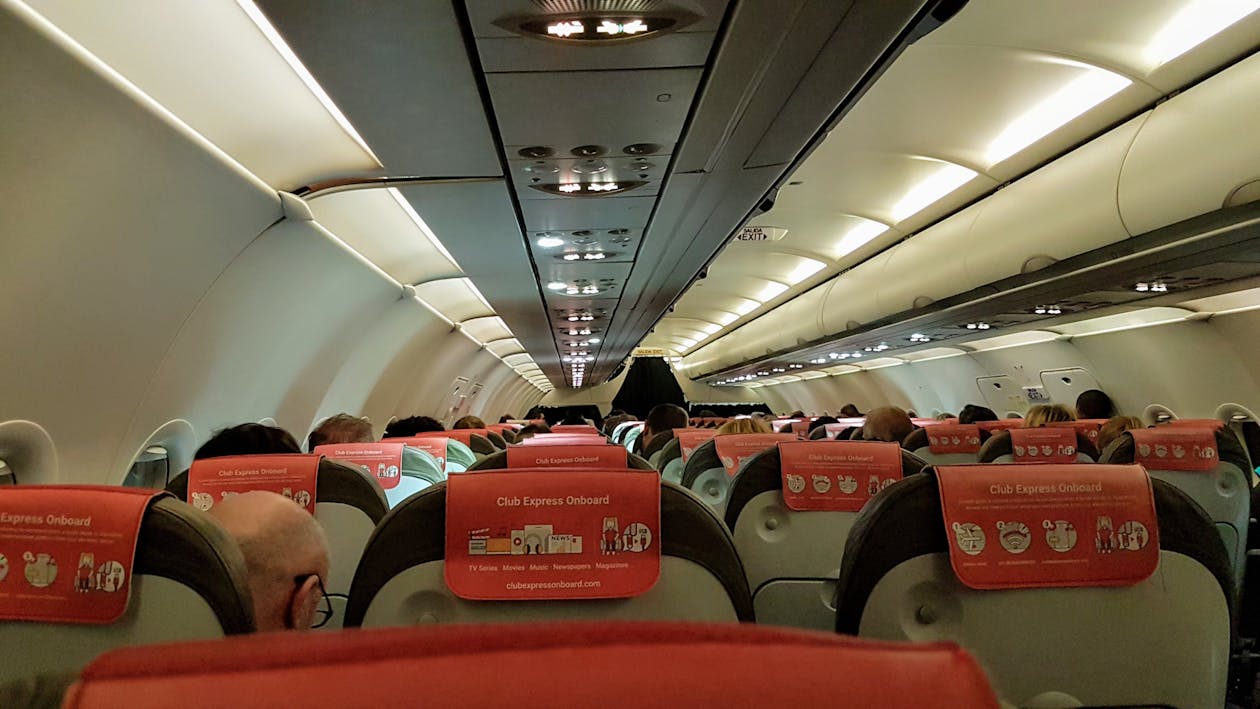
Seat pitch, the distance between seat rows, is typically 28 to 30 inches on budget carriers, compared to 31 to 33 inches on most legacy airlines. Three hours in a seat with 28-inch pitch is uncomfortable. It is not unsafe.
Budget carriers also remove free hold luggage, onboard meals, in-flight entertainment, and seat selection without an upcharge. They use fewer airports, prioritise fast turnarounds, and operate leaner crews per route.
None of this affects airworthiness. An Airbus A320 with 28-inch seat pitch operates under the same maintenance requirements as one with 31-inch pitch. The aircraft does not know what the ticket cost.
Some budget carriers use secondary airports: Stansted rather than Heathrow, Charleroi rather than Brussels, Bergamo rather than Milan Malpensa. These airports generally have good safety records, but they may have fewer facilities available if something goes wrong during a delay or diversion. That is an operational concern, not a safety one.
What they cannot cut
The following are legal requirements, not commercial choices. Any airline that fails to meet them loses its right to fly.
| Must comply, no exceptions | Can choose to reduce or remove |
|---|---|
| Air Operator Certificate | Free seat selection |
| Aircraft airworthiness certification | Hold luggage allowance |
| Pilot type rating and recurrency checks | Onboard food and drink |
| Mandatory aircraft maintenance schedules | In-flight entertainment |
| Cabin crew emergency procedure training | Flexible ticket changes |
| Crew fatigue and rest time regulations | Lounge access |
| Life vests, oxygen masks, safety equipment | Wi-Fi |
| CAA or EASA compliance audits | Airport choice |
Fatigue rules, which limit how many hours a crew can work in any given period, are set by the CAA and EASA. They apply to all carriers without exception. Some pilot unions have publicly raised concerns about rostering pressure at certain budget carriers. The legal minimums apply regardless of what an airline prefers.
One area that receives legitimate scrutiny is pilot pay at some carriers. Lower pay can affect who applies for jobs and how long pilots stay. It does not, however, lower the mandatory training or certification standard. A pilot flying a Ryanair 737 has passed the same proficiency checks as a pilot flying a BA 737. Both will have been assessed by a CAA-approved examiner to the same standard.
UK budget airline safety ratings: the latest list
AirlineRatings.com, the independent aviation safety assessor, publishes annual rankings based on incident data, fleet age, safety audits, and operational factors. Their 2026 low-cost airline rankings place every major budget carrier flying UK routes in the global top 25.
The organisation says the differences between ranked airlines are small. It does not publish the scores behind the low-cost list, only the order. A difference in rank should not be read as a meaningful difference in safety.
| Airline | AirlineRatings 2026 | Regulator | Fleet | Passenger fatalities (10 yrs) |
|---|---|---|---|---|
| easyJet | 5th (low-cost) | UK CAA | Airbus A319/A320/A321 | None |
| Wizz Air | 9th (low-cost) | EASA (Hungary) | Airbus A320 family | None |
| TUI Airways | 11th (low-cost) | UK CAA | Boeing 737 MAX | None |
| Jet2 | 17th (low-cost) | UK CAA | Boeing 737 / Airbus A321neo | None |
| Ryanair | 18th (low-cost) | EASA (Ireland) | Boeing 737-800 / MAX | None |
| Vueling | 12th (low-cost) | EASA (Spain) | Airbus A319/A320 | None |
The Aviation Safety Network maintains a public database of incidents and accidents. You can search any carrier’s full history there. For the airlines above, the passenger fatality record over the past decade is consistent: none.
Airline notes
Ryanair’s fleet averages around ten years old, and new Boeing 737 MAX aircraft are steadily joining it. Its Boeing 737-800 and 737 MAX aircraft are maintained to EASA standards. Its safety record is strong. The complaints that follow Ryanair around, fees, delays, customer service, are legitimate grievances. They are separate from safety. For luggage specifics before you book, the Ryanair hand luggage guide covers everything.
easyJet has had no fatal accidents since it began flying in 1995. It carries more than 90 million passengers a year and consistently appears near the top of independent safety assessments. For bag rules, see the easyJet cabin bag size guide.
Jet2 has been named the UK’s most punctual short-haul airline in past years, though CAA figures for January to September 2025 put it mid-table, with 69% of flights on time. Its fleet includes some older aircraft, though age is not a safety indicator if maintenance is current. For a full comparison across UK carriers, see the UK airline hand luggage size guide.
Wizz Air has faced public criticism from pilot unions about working conditions and rostering practices. Its safety record as measured by incidents and accidents remains strong. The two questions, are pilots treated fairly and is the airline safe to fly, are related but not identical.
TUI Airways returned the Boeing 737 MAX to service in summer 2021, following the global grounding triggered by the Lion Air and Ethiopian Airlines crashes in 2018 and 2019. TUI’s own fleet had no involvement in those accidents. The recertified MAX now operates with multiple carriers worldwide.
Vueling is part of the International Airlines Group alongside British Airways and Iberia. Its EASA certification and safety record are consistent with the other carriers listed above.
Delays and disruption: the realistic risk
The realistic concern on a budget airline is not a crash. It is a disrupted journey.
Budget carriers operate with tighter turnaround windows and fewer spare aircraft in reserve. When one flight runs late, the knock-on effect through a day’s schedule can be significant. Ryanair, Wizz Air, and easyJet all experienced notable disruption in 2022 and 2023, driven by post-pandemic staffing shortages and air traffic control strikes across Europe. The disruption was real. The safety implications were zero.
Punctuality changes from year to year. In CAA figures for January to September 2025, Wizz Air ran 76% of flights on time, easyJet 72%, Ryanair 70%, Jet2 69% and TUI 57.5%. Both score better than the ultra-low-cost carriers on customer satisfaction during disruption. The trade-off is a higher base ticket price.
Secondary airports add a practical layer to this. Being delayed at Bergamo Orio al Serio is a different experience to being delayed at Heathrow Terminal 5. The facilities differ. Neither situation is unsafe.
Your rights if things go wrong
UK travellers are protected by UK261, the retained version of European Regulation 261/2004. It covers every flight departing a UK airport, whichever airline operates it, and flights arriving in the UK on a UK or EU airline.
If your flight is cancelled or delayed by more than three hours and the cause is within the airline’s control, you are entitled to fixed compensation:
- Under 1,500km: £220 per person
- 1,500 to 3,500km: £350 per person
- Over 3,500km (4+ hour delay): £520 per person
During significant delays, the airline must also provide meals, refreshments, and where necessary, accommodation. Budget carriers must comply with UK261 in the same way as full-service airlines. If a carrier refuses, you can complain to the UK CAA or escalate to an approved alternative dispute resolution scheme.
Note that airlines can avoid paying compensation by citing “extraordinary circumstances”, including severe weather, ATC strikes, and security incidents. This exemption is frequently claimed, sometimes legitimately and sometimes not. The CAA’s guidance and the ADR schemes are the right route if an airline disputes your claim.
How to pick a budget airline for your route
For most UK routes, the safety differences between the main budget carriers are too small to inform a booking decision. Pick based on price, departure airport, timing, and what the luggage policy means for your trip.
If you want to go further:
- Check AirlineRatings.com for the current year’s independent assessment
- Search the Aviation Safety Network database for a carrier’s full incident history
- For booking strategy, the guide to getting cheap flights from the UK covers the key tools and timing
One practical point: whichever budget airline you book, build in a generous buffer if you have connecting flights or a tight onward schedule. On separately booked flights, a missed connection is usually your cost, not the airline’s. The safety standard is the same.
Frequently asked questions
Is British Airways safer than budget airlines?
No evidence supports that claim. British Airways holds the same type of Air Operator Certificate as Ryanair or easyJet, issued by the same regulator. Both airlines have had no fatal passenger accidents in recent history. The regulatory standards are equivalent. Ticket price is not a safety indicator.
Has Ryanair ever had a fatal crash?
Ryanair has had no fatal passenger accidents in its operating history. The airline has had incidents, including runway excursions and hard landings, but no crashes resulting in passenger deaths. This is consistent with the broader record of European carriers in the modern regulatory era.
Which is the safest budget airline in the UK?
easyJet ranks highest among UK-relevant budget carriers in AirlineRatings.com’s 2026 low-cost assessment, placing 5th globally. However, AirlineRatings says the differences between airlines are small. All the major UK budget carriers have equivalent records when measured by fatal accidents: none in the last decade. There is no meaningful safety difference between booking easyJet over Ryanair.
Why are budget airline tickets cheaper if the safety standards are the same?
Budget airlines cut costs in areas that are discretionary: seat pitch, meals, luggage, entertainment, and booking flexibility. They also maximise aircraft utilisation, flying more hours per aircraft per day. The safety infrastructure, pilot training, maintenance, and certification, cannot be cut. It is not a factor in the price difference.
Is Wizz Air safe to fly?
Yes. Wizz Air ranks 9th globally among low-cost airlines in AirlineRatings.com’s 2026 assessment and has had no fatal passenger accidents. Public concerns about Wizz Air relate to working conditions and operational disruption, not aircraft safety standards.
What happens if a budget airline goes bust?
If you booked a package holiday through a tour operator, ATOL protects you. For flights-only bookings, ATOL does not apply. Your options are a credit card Section 75 claim for purchases over £100, a debit card chargeback request, or travel insurance with airline failure cover. The Monarch (2017) and Flybe (2020) failures are useful reference points, as protection varied significantly based on how passengers had booked.

Kate Acaster is Chief Editor at Flight Tribe. She writes about practical travel planning, budget airlines, baggage rules, city breaks, beach holidays and good hotels that do not cost daft money.
Kate has travelled through Europe, South America and beyond, usually with a notebook, a half-formed plan and a strong opinion on airport snacks. At Flight Tribe, her work focuses on helping UK travellers understand what is included, what costs extra, and whether a trip is worth booking at the price shown.
How Kate works
Kate checks the details that can change the value of a trip, including cabin-bag rules, airline fees, hotel location, seasonality, travel dates and booking conditions. She is especially interested in offers that look useful on the surface but need a proper reader-first check before they are worth recommending.
Editorial standards
Flight Tribe covers deals and travel advice for readers first. Affiliate links do not decide whether an offer is worth writing about.