Published 8 May 2026 | Updated 15 October 2026 by Jane Robinson
You will find more destinations covered in Flight Tribe’s destination guides, each built around verified prices for UK travellers.
Advertisement
Albania on a budget is easy: it is one of the most affordable holiday destinations in Europe for UK travellers. A realistic daily budget covering a guesthouse, three proper meals, and local transport is £30-50. Off-peak return flights from London with Wizz Air and Ryanair usually run about £35 to £70. UK citizens do not need a visa, and the country still has the feel of somewhere that has not been overrun. This guide covers what everything costs, where to stay, how to get there, and what to do when you arrive.
How much does Albania cost?
The table below covers typical prices for a UK visitor to Albania. Costs vary most by season, particularly for flights and coastal accommodation.
| Category | Typical cost | Notes |
|---|---|---|
| Flights (low) | £35-70 return
Budget | |
| Flights (peak) | £120-180 return
High season | |
| Hostel/night | £9-15
Budget | |
| Guesthouse | £18-35
Budget | |
| Food/day | £8-15
Budget | |
| Transport/day | £2-7
Budget | |
| Daily total | £30-50
Typical |
Peak season
Typical
Flights from the UK to Albania
Wizz Air, Ryanair and British Airways fly direct from London to Tirana Rinas International Airport (TIA). Wizz Air flies from Luton and Gatwick, Ryanair from Stansted and British Airways from Heathrow. Ryanair also flies from Birmingham in summer. Between them there are over 50 direct departures per week, making Albania one of the better-connected destinations in the Balkans from the UK.
Off-peak fares, broadly October to March outside school holidays, usually run about £35 to £70 return. The booking sweet spot is 8-12 weeks in advance. Book earlier and you often pay a premium; leave it to the final two weeks and prices tend to jump unless an airline is trying to fill empty seats.
Shoulder season, meaning May, June, and September, offers a useful middle ground. Fares typically run £60-100 return, temperatures on the coast reach 24-28°C, and beaches are noticeably less crowded than in midsummer.
Peak summer, July and August, is a different market. Expect £120-180 return from most London airports. If you are travelling with children during school holidays, Albania is still affordable once you are there, even if the flights cost more.
There is also an alternative entry point for the southern coast: fly to Corfu in Greece and take the ferry to Saranda. The fast boats take about 30 minutes, one-way fares usually run about £13 to £35 (€15 to €40), and the trip is sometimes cheaper in total than flying to Tirana.
For timing your purchase, our guide to cheap flights from the UK covers booking windows and tools that apply to both carriers. If you are flying with Wizz Air, check Wizz Air’s hand luggage rules before booking. The free bag must fit under the seat and the cabin bag fee can add significantly to the fare. For current fares, see our Albania flight deals page.
Where to stay in Albania
Albania has accommodation at every price point, and the quality-to-price ratio is high by European standards.
Affordable:
Tirana Backpacker Hostel has dorm beds at the lower end of the £9 to £15 hostel range above, with breakfast included. SR Backpackers in Saranda costs about the same and has a sea-view terrace.
Mangalemi Hotel in Berat occupies a restored Ottoman house in the old Mangalem quarter. Stone City Hostel in Gjirokastër has a rooftop terrace overlooking the old town.
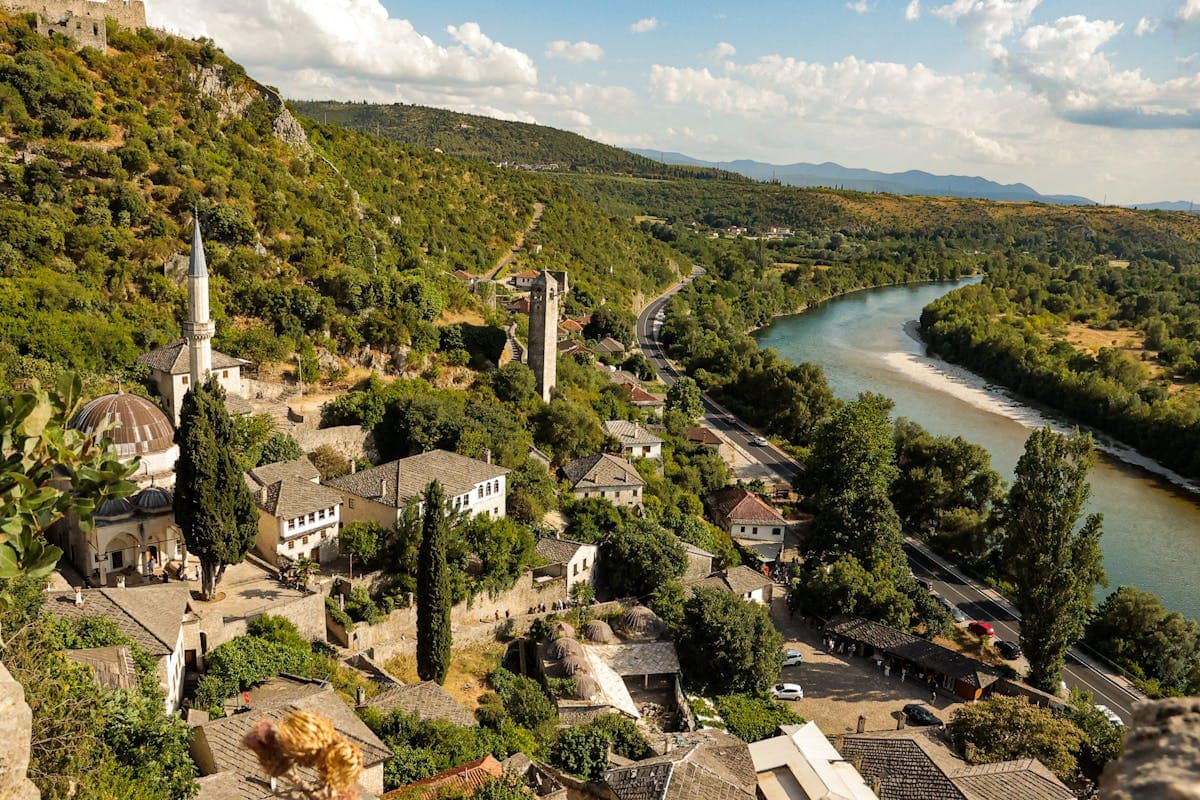
Berat, Albania’s most popular historic town and one of the best-value bases
Mid-range:
Mid-range hotels are the right choice for couples or anyone who wants their own bathroom and reliable air conditioning. Hotel Vila e Arte in Tirana is well-located and includes breakfast. Hotel Brilant in Saranda is a few minutes from the beach at a similar rate.
High-end, worth it:
Luxury for less is achievable in Albania. Rogner Hotel Tirana is a five-star property whose rates fall noticeably outside peak season. Butrinti Hotel in Saranda has sea-facing rooms that are far better value if you avoid July and August. Both Tirana and Saranda add a tourist tax of around £1 per night.
| Destination | Type | Price/night | Best for |
|---|---|---|---|
| Tirana | Hostel dorm | £9-12 | City break
Budget |
| Berat | Guesthouse | £18-30 | History & culture
Cultural |
| Saranda | Budget hotel | £25-40 | Beach access
Beach |
| Gjirokastër | Guesthouse | £15-25 | Old town character
Budget |
| Riviera | Apartment | £30-60 | Beach holiday
Beach |
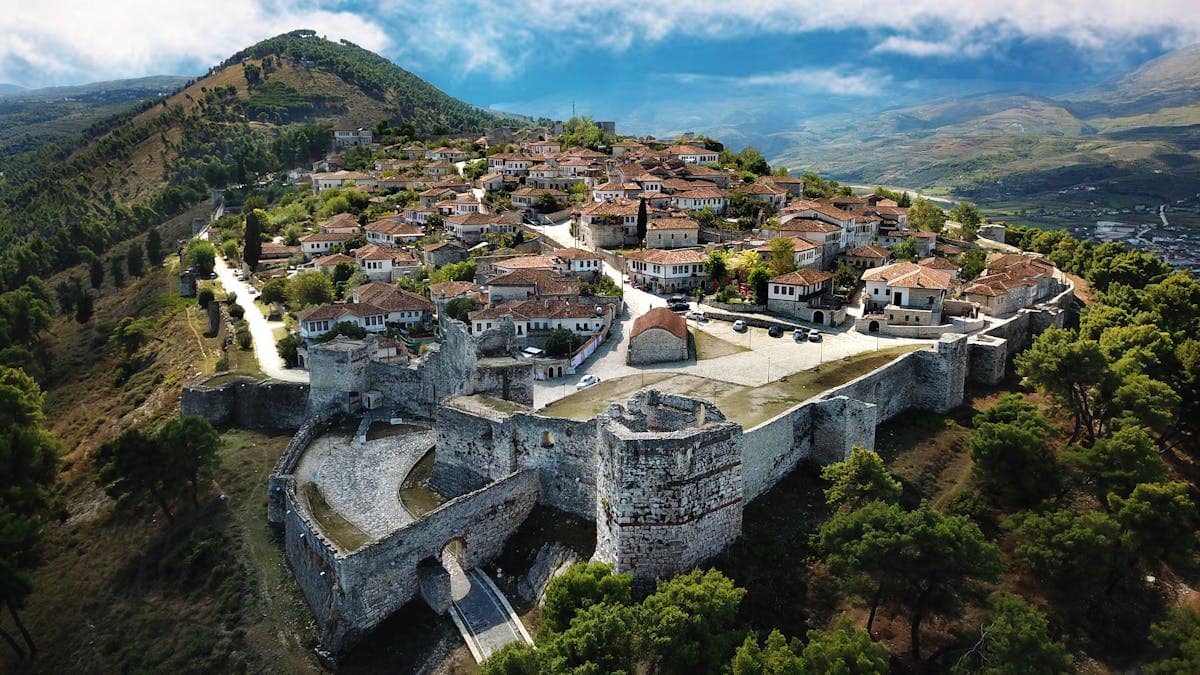
Gjirokastër Castle: about £3.50 entry (400 lek), one of the best-value historic sites in Europe
Food and drink
Eating in Albania is cheap by any European standard. A byrek, the savoury pastry filled with cheese or spinach that you will find at street stands across the country, costs about £0.50. Tavë kosi, the national dish of baked lamb with yogurt, is £4-5 at a local restaurant. A full sit-down dinner for two with drinks rarely exceeds £15, except at tourist-facing places on the coast.
For a more considered meal, Oda in Tirana serves traditional Albanian food in a setting that justifies the slightly higher price, with mains from around £5. Taverna Vasili in Korçë is reliable for seafood under £8. In Tirana, Padam Boutique Restaurant has tasting menus from around £25 per head. Hotel Apollon in Saranda offers seafood dining with sea views.
The most useful local habit is to treat lunch as your main meal. Many restaurants run set lunch menus at roughly half the price of the evening menu.
Self-catering is easy and cheap. Pazari i Ri, Tirana’s covered market, sells fresh vegetables, local cheeses, and olives for very little. Most guesthouses have a kitchen available. One practical note: restaurants charge for bottled water by default. GOV.UK advises against drinking tap water anywhere in Albania, so buy large bottles from a shop rather than paying restaurant prices.
Getting around Albania
The standard way to travel between towns is the furgon, a shared minibus. There are no timetables: you turn up at the bus station, find the furgon going where you need to go, and wait until it fills. Fares run from about £2 for short hops to about £11 to £13 (1,200 to 1,400 lek) for long trips such as Tirana to Gjirokastër.
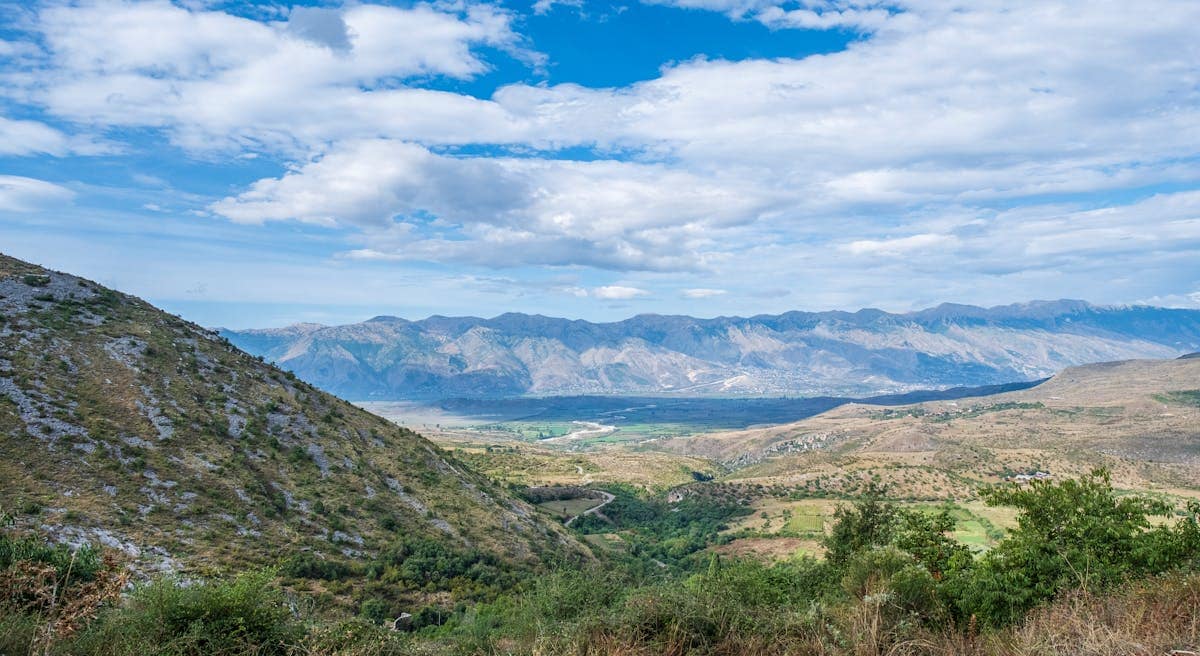
The Albanian countryside: furgons connect towns across mountain valleys like this one near Gjirokastër
- Tirana city buses: £0.30 per ride; £1.50 day pass
- Taxis: around £5 for a 15-minute journey; use the UPs app or Speed Taxi (both work like Uber) to avoid overcharging
- Airport to central Tirana: Rinas Express bus, 400 lek (about £3.50); considerably cheaper than a taxi
- Cycling on the Riviera: practical between Dhermi, Himara, and nearby beaches; bike hire around £5 a day
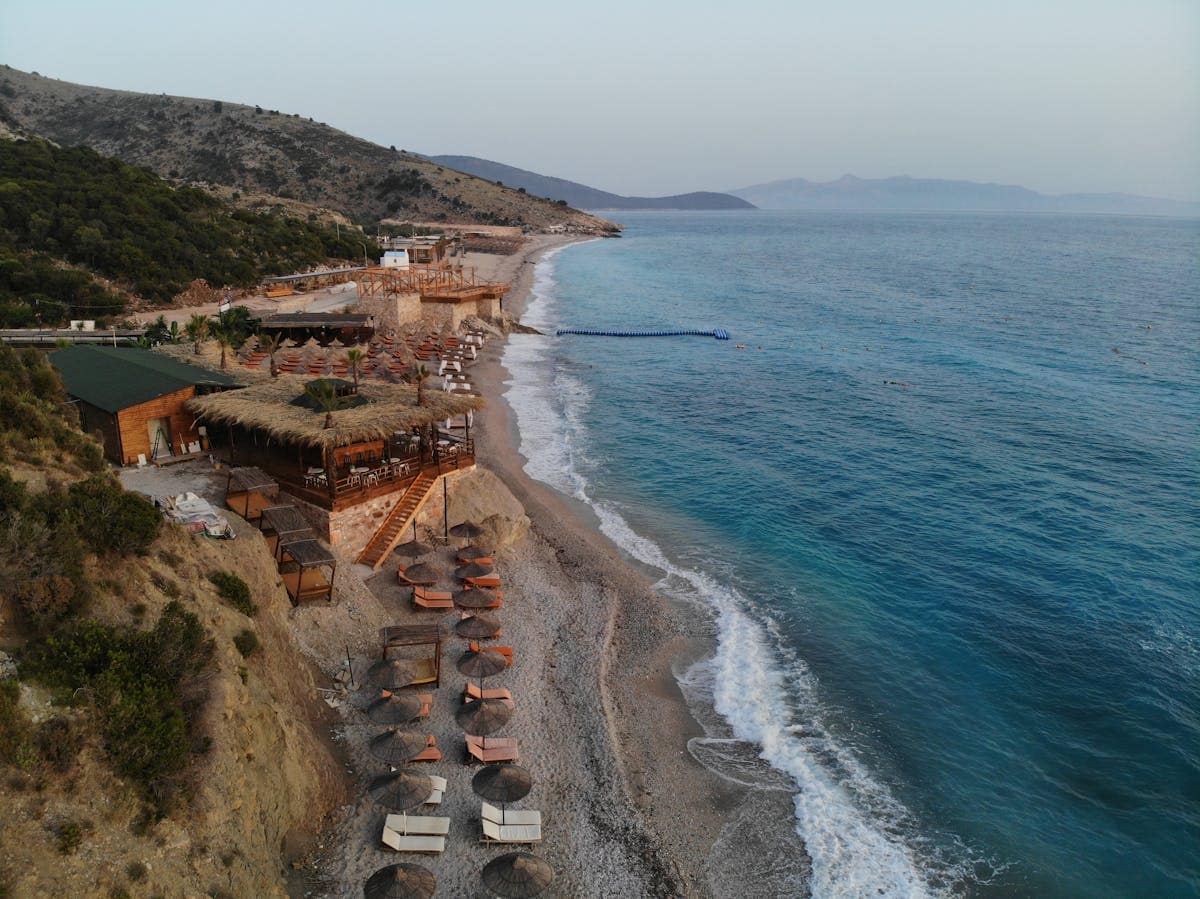
The Albanian Riviera: beach resorts like this near Himara charge nothing for beach access
What to do in Albania
Albania has cultural and natural attractions on a par with much better-known destinations in the region, at considerably lower entrance prices.
- Butrint National Park: UNESCO World Heritage Site near Saranda, with Greek, Roman, and Byzantine ruins inside a nature reserve. Entry 1,000 lek (about £9).
- Gjirokastër Castle: sweeping views over the old stone town. Entry 400 lek (about £3.50).
- Bunk’Art, Tirana: Cold War bunker turned history museum covering Albania’s communist period. Entry is roughly £6 to £8, cash only.
- Tirana Grand Park: free entry, large artificial lake, good walking paths.
For outdoor activities and the coast:
- Albanian Riviera (Vlorë to Greek border): beaches at Dhermi, Himara, and Ksamil are excellent; free access, sun lounger hire a few pounds.
- Valbona to Theth hike, Albanian Alps: one of the better day hikes in the Balkans; costs nothing beyond transport.
- Free walking tours: daily in both Tirana and Berat.
For a full breakdown of the capital, see our Tirana travel guide.
For error fares to Albania and Wizz Air and Ryanair sale alerts, sign up to Flight Tribe to catch deals as they appear. You can also browse all current offers on our Albania holiday deals page.
Best time to visit Albania
- May and June: coastal temperatures 24-28°C, sea swimmable from late May, prices below the summer peak. The best all-round window for most UK visitors.
- September and October: crowds thin out, sea temperatures stay warm into October, accommodation prices drop noticeably.
- July and August: best beach weather, but also peak prices and the busiest beaches.
- November to March: cheapest flights and accommodation; good for city or cultural breaks in Tirana or Berat, though some coastal businesses close for winter.
Do UK travellers need a visa for Albania?
No. UK citizens can visit Albania without a visa for up to 90 days in any 180-day period. This applies post-Brexit and has not changed. Your passport must have an expiry date at least three months after the day you plan to leave Albania. Albania is not part of the Schengen Area, so time spent there does not count towards the 90-day Schengen limit.
Frequently asked questions
Is Albania safe for UK tourists?
Generally yes. Albania has a low rate of violent crime against tourists, and hospitality towards visitors is a strong cultural value. The main practical risks are road safety outside major cities and standard petty theft precautions in busy tourist areas.
How much does a week in Albania cost from the UK?
A comfortable week including return flights booked two to three months ahead in mid-season, guesthouses, three meals a day, and a few paid activities costs around £500-700 per person. Budget travellers staying in hostels and eating mainly street food can do it for £350-450 all in.
What currency does Albania use?
Albania uses the Albanian Lek (ALL). Euros are widely accepted in tourist areas, and many hotels quote prices in euros. Cash is essential outside Tirana and major resorts.
Is the water safe to drink in Albania?
No. GOV.UK advises visitors not to drink tap water in Albania. Stick to bottled water.
Are credit cards accepted in Albania?
Increasingly in Tirana hotels and larger restaurants, but cash remains the default almost everywhere else. Always carry Lek if you are travelling outside the capital.
Read more in our money-saving travel guides.

Jane Robinson is Senior Editor at Flight Tribe. She has a Master’s in English and Journalism, and writes about flight deals, holiday offers and practical ways UK travellers can spend less without wasting time on weak promotions. Jane has spent time living and working across Asia and New Zealand, which gave her a lasting interest in how people travel, eat, move around and spend their free time in different places.
At Flight Tribe, her work focuses on verified prices, realistic travel dates, booking terms and whether a deal is actually worth attention.
How Jane works
Jane checks offers against live supplier pages wherever possible, including prices, dates, departure points, baggage rules and booking conditions. She is quietly sceptical of anything that sounds too good to be true, and helps keep Flight Tribe’s travel advice useful, honest and easy to act on.
Editorial standards
Flight Tribe covers deals for readers first. Affiliate links do not decide whether an offer is worth writing about.