Published 11 May 2026 | Updated 15 October 2026 by Kate Acaster
Madrid is one of Western Europe’s most affordable capitals, and it still doesn’t get the credit it deserves from UK travellers. Off-peak return flights on budget carriers are often cheap, a central hotel costs far less than in Paris or Amsterdam, and the city hands you a world-class art collection for free most evenings. The food does the rest: a three-course menú del día lunch with wine or beer costs £10-13 at most working restaurants, and ordering a drink at a tapas bar still gets you fed in many parts of the city.
Advertisement
For more destinations like this, see the full set of Flight Tribe destination guides.
This guide to Madrid on a budget covers everything a UK traveller needs to know: what to spend, when to go, where to stay, what to eat, and how to see the best of the city without paying tourist prices.
How much does Madrid cost per day?
Madrid is one of the cheapest major European capitals for UK visitors. A tight budget of €60-80 per day covers a hostel or basic hotel room, three meals, the metro and one paid attraction. Mid-range travellers spending €120-180 get a comfortable hotel, restaurant meals and paid museum entry without feeling any pressure.
| Category | Budget (€/day) | Mid-range (€/day) | Comfortable (€/day) |
|---|---|---|---|
| Accommodation | €25-40 | €70-110 | €130-200 |
| Food | €15-20 | €30-45 | €60-90 |
| Transport | €3-7 | €7-15 | €15-30 |
| Activities | €0-15 | €20-35 | €40-70 |
| Daily total | €60-80
Budget | €120-180
Mid-range | €250+
Premium |
Madrid is generally cheaper than Barcelona for accommodation, and noticeably cheaper than Rome for eating out. It’s one of those cities where a mid-range trip feels comfortable rather than compromised.
When to visit Madrid for the best prices
January and February are Madrid’s cheapest months by a clear margin. Return flights from UK airports are at their cheapest, and central Madrid hotel rates fall well below peak-season levels. It’s cold by Spanish standards (10-12°C daytime), but dry and sunny, and the city is remarkably quiet.
| Season | Months | Temp | Price level | Best for |
|---|---|---|---|---|
| Low season | Jan, Feb, Aug | 10-35°C | Lowest
Cheapest | Pure savings |
| Shoulder | Mar to May, Sep to Oct | 15-25°C | Moderate
Value | Best overall |
| Peak | Jun, Jul, Dec | 30-38°C (summer) | Highest
Peak prices | Atmosphere seekers |
August deserves a separate mention. It’s officially cheap, with many Madrileños on holiday and hotels running discounts, but the heat is fierce (35-38°C is normal) and many neighbourhood restaurants close. It’s doable, but go knowing it’s a hot, quieter version of the city rather than its best self. For first-time visitors, March to May or September to October hit the sweet spot.
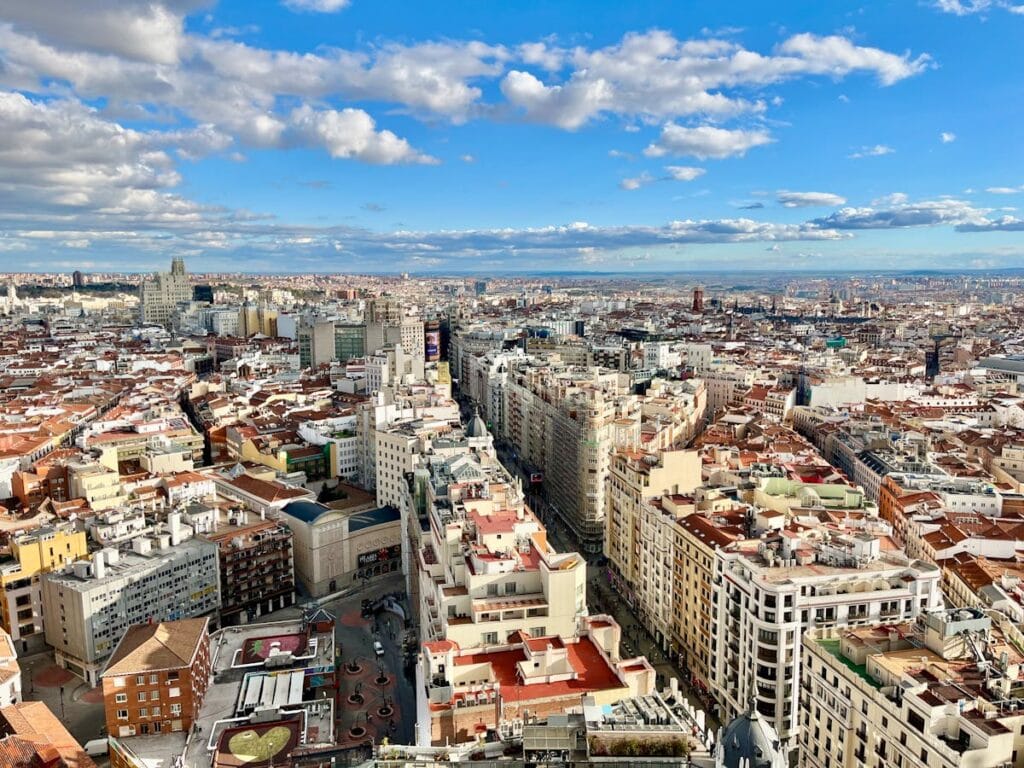
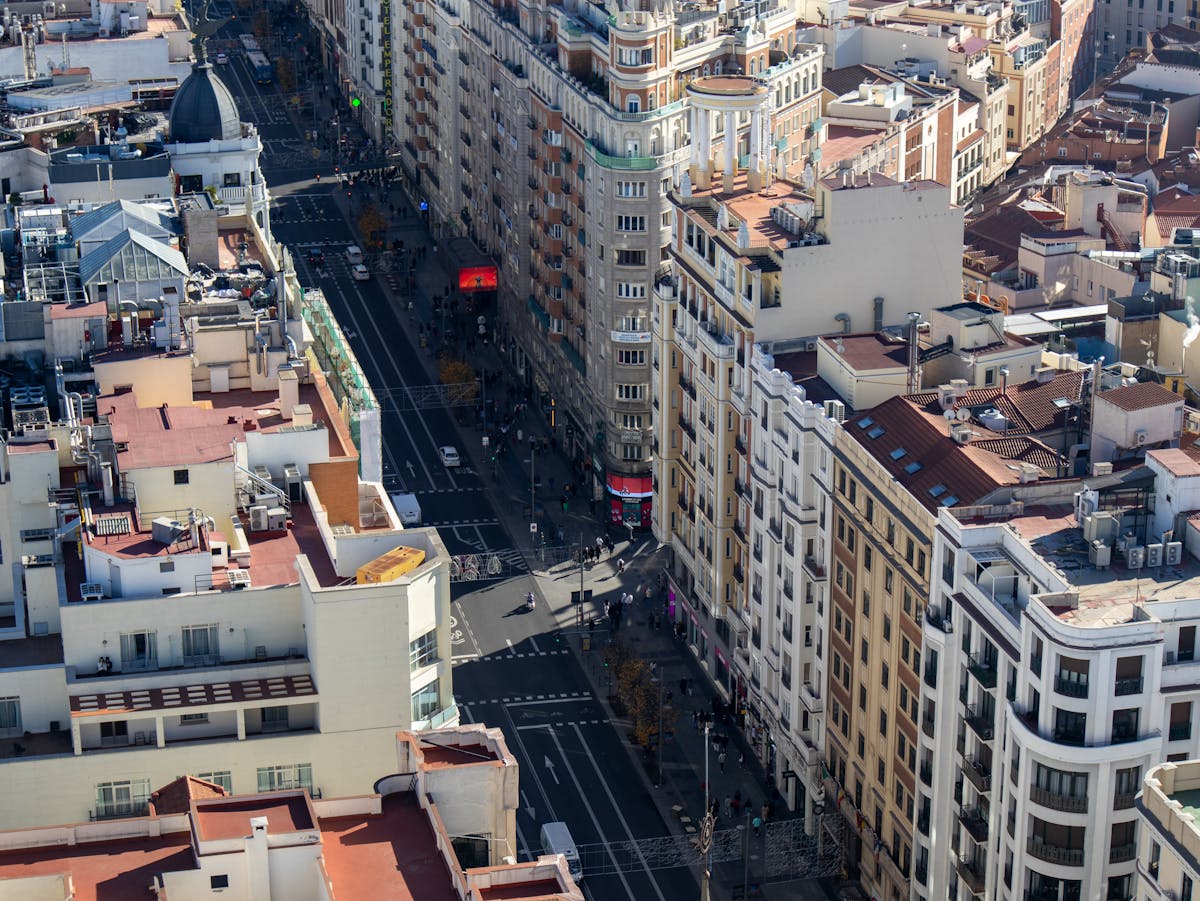
Madrid’s Gran Via, the main boulevard that cuts through the city centre, is a good way to gauge how the city feels at different times of year. In January it’s almost eerily calm. By May it buzzes with café terraces and evening passers-by. In July the heat bounces off the asphalt and you’ll want to be indoors between 2pm and 6pm.
Flights from the UK to Madrid
Madrid Barajas Airport (MAD) is well served from across the UK. On budget carriers, return fares start around £30-50 when booked six to eight weeks ahead. You’ll pay £80-120 for most shoulder season bookings, and £150+ if you leave it late or fly at peak times. Search easyJet flights to Madrid to compare current fares.
| UK Airport | Airlines | Typical return (budget) |
|---|---|---|
| London Stansted | Ryanair | £40-90 |
| London Gatwick | easyJet, Vueling | £50-100 |
| London Luton | easyJet | £50-100 |
| London Heathrow | Iberia, British Airways | £90-200 |
| Manchester | Ryanair, Vueling | £60-120 |
| Edinburgh / Bristol | Ryanair, easyJet | £70-130 |
The flight takes about two hours and twenty minutes from London. If you want to understand how far in advance to book and when sales tend to hit, our guide on how to get cheap flights from the UK covers the full strategy.
Getting around Madrid cheaply
Madrid’s metro is clean, frequent and covers the whole city. The most cost-effective option for most visitors is the 10-trip ticket, loaded onto a reusable Tarjeta Multi card, which costs €7.30 for Zone A and works on metro, bus and light rail. For airport journeys, a €3 supplement applies on top of the standard fare, bringing the total to around €5 each way. The fixed taxi fare from Barajas to anywhere inside the M-30 ring road is €33.
| Transport | Cost | Best for |
|---|---|---|
| Metro (10-trip) | €7.30 | Best everyday value |
| Tourist Pass | €10.30 to €43.201-7 days, Zone A | First-timers, lots of journeys |
| Airport metro | ~€5 | Airport arrivals/departures |
| BiciMAD e-bikes | €2/hour | Short trips, good weather |
| Walking | Free | City centre sightseeing |
The city centre is compact. From Puerta del Sol to the Prado is a twelve-minute walk. From Sol to the Royal Palace is fifteen. Most first-time visitors use the metro for the airport transfer and then walk almost everywhere else.
Where to stay in Madrid on a budget
Malasaña is the pick for most budget-conscious travellers: central, lively, and home to a good range of hostels and mid-range hotels. La Latina puts you right in tapas territory. Lavapiés is the most affordable neighbourhood in the centre, with an interesting multicultural mix but fewer tourist facilities. Sol and Gran Via are convenient but the most expensive.
| Area | Best for | Budget hotel | Hostel dorm |
|---|---|---|---|
| Malasaña | Young travellers, nightlife, cafés | €60-85/night | €25-38 |
| La Latina | Tapas bars, El Rastro Sunday market | €65-90/night | €28-42 |
| Lavapiés | Cheapest area, multicultural, local feel | €45-70/night | €20-32 |
| Retiro | Quieter, families, park access | €70-100/night | €30-45 |
| Gran Via/Sol | Central, tourist convenience | €80-120/night | €35-55 |
For hotel bookings, these Expedia links take you directly to available properties in the neighbourhoods mentioned:
- Hotels in Malasaña, the neighbourhood most travellers choose
- Hotels in La Latina, for tapas bars and local character
- Hotels near Retiro Park, quieter, good for families
- Central Madrid hotels, Sol and Gran Via area
- Madrid budget hotels, filtered for best value
Affordable:
- TOC Hostel Madrid. Near Sol, one of Madrid’s most central and consistently well-reviewed hostels. Rooftop terrace with city views, rare for a hostel in a European capital.
- Onefam Madrid. In Malasaña, the neighbourhood most short-stay travellers should prioritise. Social and well-run, with free family dinners most nights. The area it sits in is reason enough to stay there.
Mid-range:
- Only YOU Boutique Hotel Madrid. In Chueca, close to Gran Vía, design-led inside a restored 19th-century palace, with a gym and an adults-only policy. The interiors punch above the price point, and rates often drop in flash sales.
- Vincci Soho. In Barrio de las Letras, one of Madrid’s most pleasant central areas, near the Prado. Reliable four-star quality at rates that undercut the Sol/Gran Vía alternatives nearby. A good default for couples who want a proper hotel without the premium address mark-up.
High-end, worth it:
- Urso Hotel & Spa. Boutique hotel near Alonso Martínez with a pool, spa and the kind of personal service you cannot replicate at scale. It makes one of the best arguments for why Madrid’s hotel market outperforms most comparable European cities on value.
Where to eat and drink in Madrid
The menú del día is Madrid’s great equaliser. Monday to Friday at lunchtime, almost every working restaurant offers a set menu of two or three courses plus bread and a drink for €10-15. This is how the city’s office workers eat, and the quality is consistently good. Avoid anywhere that doesn’t display the price outside and steer clear of restaurants aimed primarily at tourists around the Plaza Mayor and Puerta del Sol.
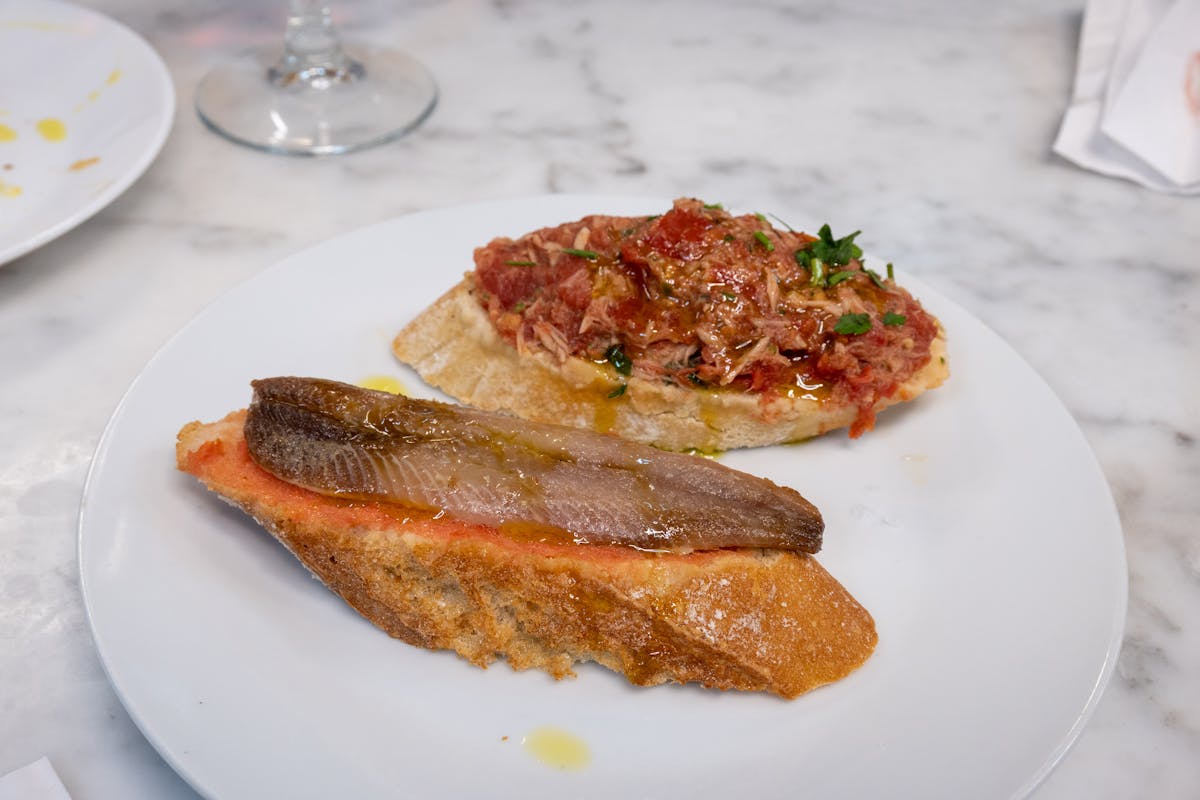
Tapas in Madrid work differently from most of Spain. In some bars, a small plate arrives automatically when you order a drink. In others, you order and pay per tapa. The neighbourhoods of La Latina, Malasaña and Lavapiés have the best-value options, with plates typically running €2-5 each.
Some restaurants worth knowing:
- Casa Mono (Argüelles), Mediterranean cooking in a neighbourhood setting, well away from the tourist trail
- La Musa Latina (La Latina), popular for creative tapas, long queues Sunday lunchtime
- El Sur de Torrecilla (Lavapiés), local restaurant, excellent value, neighbourhood atmosphere
- Bodega de los Secretos (Barrio de las Letras), a converted 17th-century wine cellar, good for a special meal without extreme prices
- Restaurante Sacha (north of centre), neighbourhood bistro beloved by Madrileños, worth the short metro ride
- Casa Lucio (La Latina), a Madrid institution, known for eggs and jamón; lunch is far better value than dinner
The Mercado de San Fernando in Lavapiés is a covered market with food stalls from multiple cuisines. It’s cheaper and less crowded than the more famous Mercado de San Miguel near Plaza Mayor, which has become heavily touristy.
Free and cheap things to do in Madrid
Madrid packs an extraordinary amount of culture into its free hours. Between the three major museums offering free entry at specific times and the city’s parks and public spaces, you can fill three or four days without paying for a single attraction.
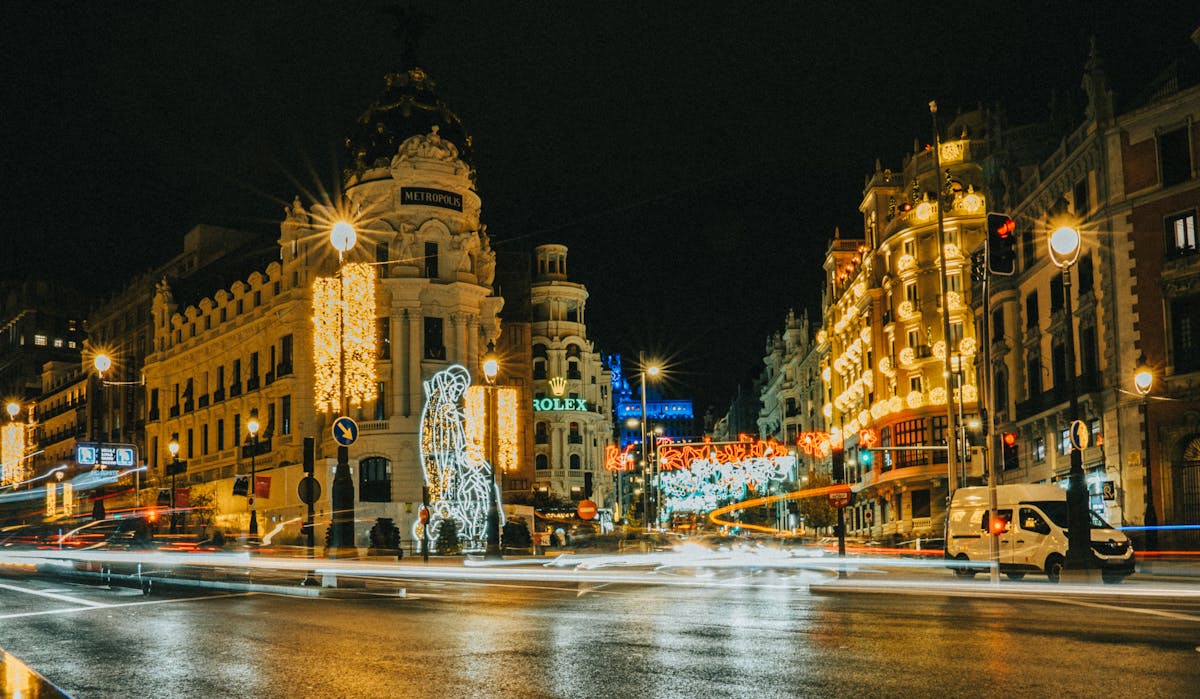
Gran Via at night is a free spectacle in itself. The ornate 20th-century architecture, illuminated storefronts and constant flow of people make it worth walking end to end after dark. It connects the city’s main neighbourhoods and gives you a feel for Madrid’s late-night culture: restaurants fill up after 9pm and the streets stay busy past midnight.
- Prado Museum (free evenings), One of the world’s great art collections, home to Velázquez, Goya and El Greco. Free entry Monday to Saturday from 6pm to 8pm, and Sundays from 5pm to 7pm. Queues form from 5:30pm; arrive early.
- Museo Reina Sofía (free evenings), Picasso’s Guernica is here, alongside major 20th-century Spanish art. Free on Monday and Wednesday to Saturday from 7pm to 9pm, and Sundays from 12:30pm to 2:30pm (you still need a free ticket, bookable online). Closed Tuesdays.
- Thyssen-Bornemisza (free Mondays), An outstanding collection spanning seven centuries. Free entry every Monday from noon to 4pm (book a free timed slot online in advance). Also free Saturday evenings from 9pm to 11pm.
- Retiro Park, 125 hectares of formal gardens, a boating lake, the glass Palacio de Cristal (closed for building work) and free exhibitions at the Palacio de Velázquez. Open from 6am to 10pm from October to March and until midnight from April to September, best in the mornings.
- Madrid Rio, A vast riverside park that replaced a motorway, running along the Manzanares river. Good for cycling and walking, with views back to the Royal Palace.
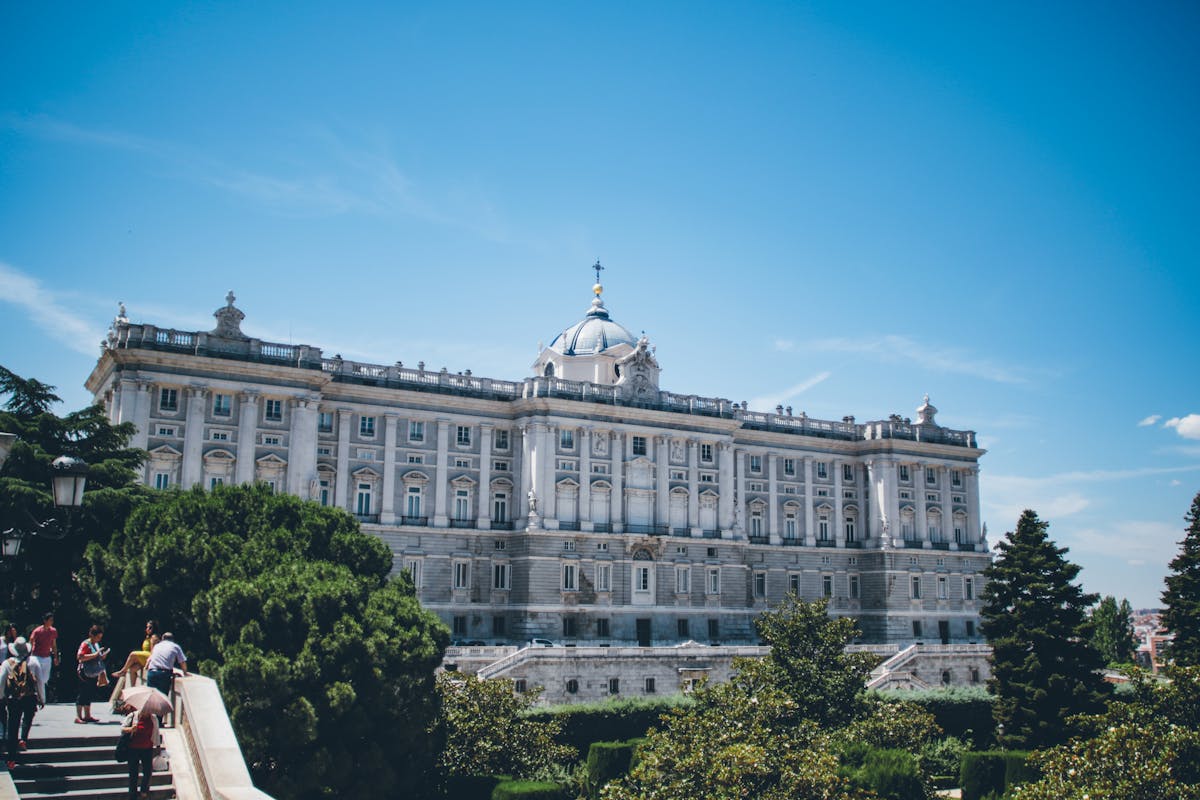
- Royal Palace exterior and Plaza de la Armería, The exterior is free. Entry to the palace interior costs €18, but the plaza and views over Casa de Campo are worth the visit alone. Check for free entry dates, the palace is occasionally open without charge on certain national days.
- Puerta del Sol and Plaza Mayor, The symbolic centre of Madrid. Both are free, both are always busy, and both are better at night or early morning when the coach parties have gone.
- Lavapiés street art, The Lavapiés neighbourhood has some of the best street art in Spain. Walk it yourself for free, or join a guided tour that covers the context behind the murals.
Museum passes: are they worth buying?
For most visitors using free hours at the Prado and Reina Sofia, buying a combined pass rarely adds up. The maths change if you want to visit all three major museums in a short window, or if you’re going during peak daytime hours and can’t or won’t queue for free entry.
| Pass / option | Price | What’s included | Verdict |
|---|---|---|---|
| Prado alone | €15 | Full Prado access | Skip (use free hours)
Skip |
| Reina Sofia | €12 | Guernica + full collection | Skip (use free hours)
Skip |
| Thyssen | €14 | Seven centuries of art | Free Monday is best
Skip |
| Paseo del Arte | €32.80All three museums | Prado + Reina Sofia + Thyssen | Worth it for daytime visits
Good value |
In short: for a four-night trip, you can visit all three major museums for free by timing visits to free hours. The only reason to buy combined tickets is if your schedule is inflexible and you need to visit during the day. The Paseo del Arte card saves money versus buying three separate daytime tickets, but the free entry windows are generous.
Day trips from Madrid
Madrid’s central position on the Iberian Peninsula makes it an excellent base for day trips. The high-speed rail network runs directly from Atocha station, and several historic cities are within easy reach.
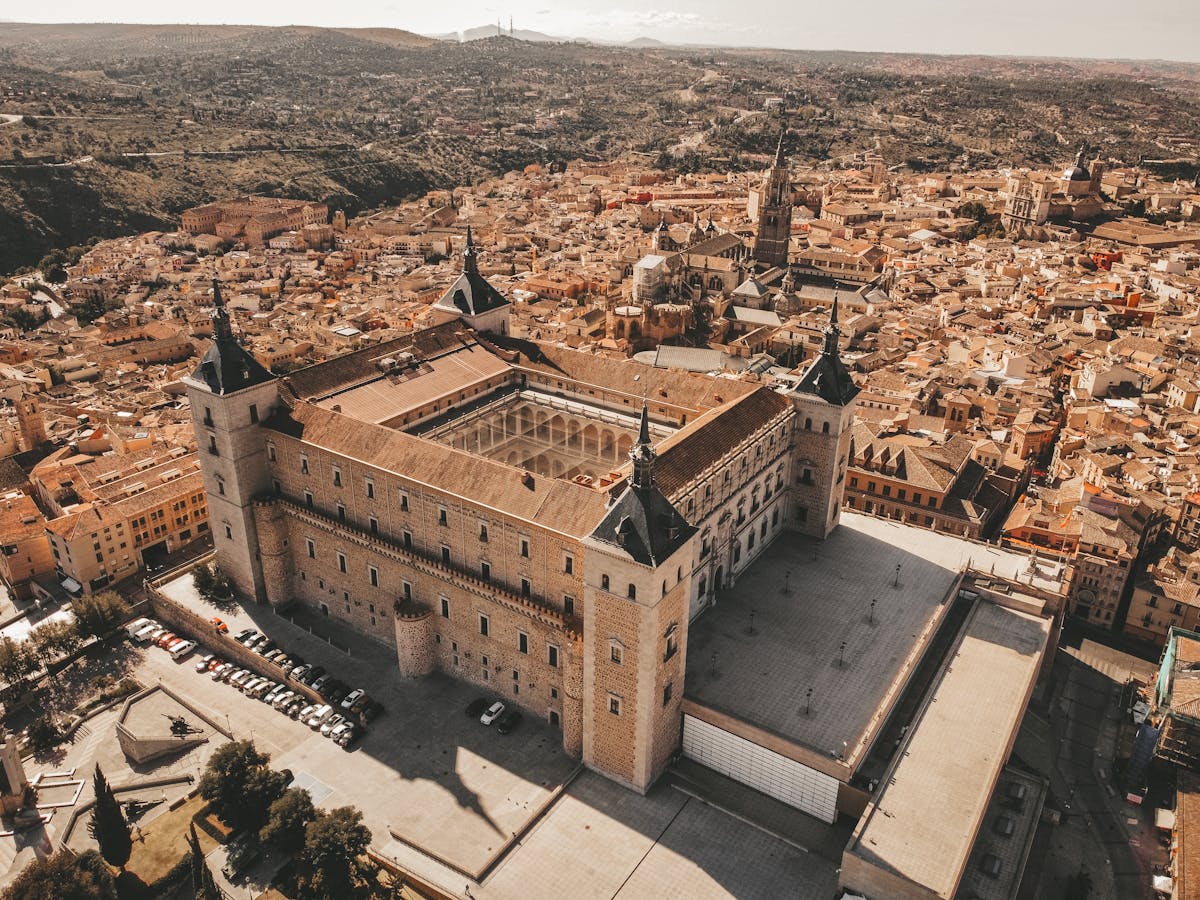
Toledo is the most rewarding day trip and the easiest to reach. The Avant high-speed train from Atocha takes about 33 minutes, and fares are lowest if you book ahead. Toledo sits on a rocky promontory above the Tagus river, surrounded by medieval walls, and packs in a Gothic cathedral, the Alcázar fortress and several El Greco paintings in a compact, walkable historic centre. It’s crowded in summer; go early or in shoulder season.
The Alcázar of Toledo dominates the city’s skyline. Built as a Roman palace and later converted into a fortress, it now houses a military museum. The view from the Mirador del Valle across the Tagus, with the Alcázar and cathedral rising above the medieval rooftops, is one of Spain’s best-known panoramas. You can drive or take a local bus to reach it.
Segovia is about half an hour from Madrid Chamartín by high-speed train and famous for its intact Roman aqueduct and a fairy-tale Alcázar castle. It’s slightly less crowded than Toledo and arguably more impressive architecturally. Go on a weekday to avoid coach-party congestion.
Manzanares el Real is often overlooked: a 15th-century castle just 47km from Madrid, set against the granite peaks of the Sierra de Guadarrama. The castle and surrounding park make a relaxing half-day or full-day trip. Drive or take a direct bus from Plaza de Castilla.
For flight planning to and from Madrid, our guide to when flights are cheapest by season will help you find the best window for your trip.
Ten budget tips for Madrid
The biggest savings in Madrid come from three habits: timing museum visits for free hours, eating the menú del día at lunch, and booking flights on weekdays well ahead. These alone make a big dent in the cost of a four-night trip compared with a weekend city break booked at short notice.
Madrid’s nightlife culture works in your favour if you’re on a budget. Locals eat dinner at 9-10pm, which means early restaurant tables are often available at reduced prices and happy hour drinks (la hora del vermut, traditionally 1-3pm, now extended through the evening in many bars) stretch your money further than the same drinks at a tourist-facing bar.
- Book flights midweek. Travelling Tuesday to Thursday usually costs less and gets you quieter planes and better seat availability.
- Use the 10-trip metro card. At €7.30 for Zone A, the Tarjeta Multi costs €0.73 per journey versus €1.50+ per single. It pays for itself on the fifth trip.
- Time your museum visits. Prado free from 6pm Monday to Saturday, Reina Sofia free Monday and Wednesday to Saturday evenings, Thyssen free Monday lunchtime. You can see all three for free with a bit of planning.
- Eat lunch at set-menu restaurants. The menú del día is available Monday to Friday and gives you three courses plus a drink for €10-15. Skip restaurants displaying menus only in English near the main tourist squares.
- Order a drink and eat free. In La Latina and parts of Lavapiés, a beer or wine still comes with a free tapa at traditional bars. Bodega de la Ardosa in Malasaña, El Anciano Rey de los Vinos and many small bodegas still do this.
- Visit El Rastro on Sundays. Madrid’s famous flea market runs every Sunday in La Latina. Free to browse, good for people-watching, and the surrounding streets fill with stalls. Combine with the free Reina Sofia Sunday slot from 12:30pm to 2:30pm.
- Take the metro to the airport. Line 8 from Nuevos Ministerios serves both T4 and T2/T3. With the €3 airport supplement, your journey costs around €5 versus the €33 fixed taxi fare. Allow 35-40 minutes.
- Stay in Malasaña or Lavapiés. Both are walking distance from the main attractions and significantly cheaper than Sol or Gran Via. Malasaña has the better hostel and mid-range hotel supply.
- Do a flamenco show on a budget. Las Tablas and Café Central offer authentic live music at lower prices than the tourist-targeted tablaos. Café Central is one of the best jazz clubs in Europe and also hosts flamenco evenings.
- Use the tourist pass if you’re doing the airport run. If you’re arriving and leaving by metro and making five or more journeys per day, a 2-day Zone A Tourist Pass at €17.50 (which includes the airport supplement) can undercut the 10-trip card.
Frequently asked questions
Is Madrid cheap to visit?
Yes. Madrid is one of Western Europe’s most affordable capitals for UK travellers. A daily budget of €60-80 covers a hostel or budget hotel room, three meals including a menú del día lunch, metro travel and one paid attraction. Mid-range visitors spending €120-180 per day get a comfortable hotel, restaurant dinners and museum entry.
How much does Madrid cost per day?
Budget travellers typically spend €60-80 per day. That breaks down as roughly €25-40 on accommodation, €15-20 on food and €5-15 on transport and activities. Mid-range visitors spend €120-180. These figures exclude flights.
Is Madrid cheaper than Barcelona?
Generally yes. Hotel prices in Madrid are generally lower than for equivalent properties in Barcelona. The menú del día costs a similar amount in both cities, but Madrid’s compact centre means you spend less on transport. The nightlife and bar culture is also more affordable in Madrid’s local neighbourhoods.
When is the cheapest time to visit Madrid?
January and February are the cheapest months. Return flights from UK airports and central hotel rooms are at their cheapest. Shoulder season, March to May and September to October, offers the best balance of price, weather and things to see. Avoid August: it’s cheap but brutally hot (35-38°C) and many neighbourhood restaurants close.
How do you get from Madrid airport to the city cheaply?
Take metro Line 8 from Barajas Airport (T4 or T2/T3) to Nuevos Ministerios, then switch for central stations including Sol or Gran Via. The total fare is around €5 (standard Zone A fare plus the €3 airport supplement). The journey takes 35-40 minutes. A fixed-price taxi from the airport to central Madrid costs €33.
Is the Prado Museum free?
The Prado offers free entry Monday to Saturday from 6pm to 8pm, and on Sundays from 5pm to 7pm. Queues start forming from around 5:30pm on busy days. Standard tickets cost €15. If you can time your visit for the free window, it’s one of the great free cultural experiences in Europe. The Reina Sofia and Thyssen also have free entry windows, detailed in the museum passes section above.
Which UK airports fly to Madrid?
Ryanair operates from London Stansted, Manchester, Edinburgh and Bristol. easyJet flies from London Gatwick and London Luton. Iberia and British Airways operate from London Heathrow. Vueling also flies from Gatwick and Manchester. Most routes operate year-round, with additional frequencies in summer.

Kate Acaster is Chief Editor at Flight Tribe. She writes about practical travel planning, budget airlines, baggage rules, city breaks, beach holidays and good hotels that do not cost daft money.
Kate has travelled through Europe, South America and beyond, usually with a notebook, a half-formed plan and a strong opinion on airport snacks. At Flight Tribe, her work focuses on helping UK travellers understand what is included, what costs extra, and whether a trip is worth booking at the price shown.
How Kate works
Kate checks the details that can change the value of a trip, including cabin-bag rules, airline fees, hotel location, seasonality, travel dates and booking conditions. She is especially interested in offers that look useful on the surface but need a proper reader-first check before they are worth recommending.
Editorial standards
Flight Tribe covers deals and travel advice for readers first. Affiliate links do not decide whether an offer is worth writing about.