Published 5 June 2026 | Updated 13 October 2026 by Kate Acaster
Most UK travellers underestimate Malta. They picture somewhere far-flung and pricey, when the reality is a three-hour flight, the euro in your pocket, English on every menu and three-pin plugs in the wall. It’s one of the few Mediterranean islands where a British visitor can step off the plane and feel half at home, then spend the week somewhere that looks nothing like home at all.
Advertisement
This guide covers the practical side of a Malta trip done well on a budget: the cheapest way to fly out, when to go, how to get around, what’s worth your time, where to eat at three price points, and what a week actually costs once you’re on the ground.
Malta is small, smaller than the Isle of Wight, so nothing is far. It drives on the left, the language is Maltese and English, and the currency is the euro. There’s no time difference worth worrying about either, just one hour ahead of the UK. The practical friction of a foreign holiday is mostly absent, which is a large part of the appeal.
How to get to Malta from the UK
Malta is one of the easiest Mediterranean islands to reach from Britain, with direct flights from around 17 UK airports and a flight time of just over three hours. Fares swing widely with the school calendar, so the airline matters less than the week you pick.
| Airline | Flies direct from | Flight time | Typical return |
|---|---|---|---|
| Ryanair | Stansted, Manchester, Birmingham, Edinburgh, Glasgow and more | 3h 10m | £40–120 |
| easyJet | Gatwick, Bristol, Birmingham, Manchester | 3h 10m | £60–150 |
| Jet2 | Manchester, Birmingham, Stansted, Edinburgh, Glasgow, Newcastle, Leeds Bradford, Bristol | 3h 15m | £90–200 |
| KM Malta Airlines | Heathrow, Gatwick | 3h 10m | £100–220 |
| British Airways | Gatwick | 3h 10m | £110–250 |
The two levers that move the price are timing and baggage. Avoid the school holidays and you’ll often halve the fare, and our guide to finding cheap flights from the UK walks through the rest. If you’re flying Ryanair or easyJet, packing light pays: read up on the best carry-on bag for Ryanair before you book a hold bag you may not need.
When to go, and when it’s cheapest
Malta works year-round, but the sweet spot for weather and value is spring and autumn. Summer is hottest, busiest and dearest; winter is mild, quiet and cheap, with the trade-off that the sea is too cold for most and some lidos close.
| Season | Weather | Crowds and feel | Cost |
|---|---|---|---|
| Spring (Mar–May) | 15–25°C, dry, wildflowers | Quiet, ideal for walking and sightseeing | Low to midGood value |
| Summer (Jun–Aug) | 30°C+, hot and dry, warm sea | Busiest and liveliest, beaches packed | HighestPeak |
| Autumn (Sep–Oct) | 18–25°C, sea still 24°C | Calmer, swimming still on, great balance | MidSweet spot |
| Winter (Nov–Feb) | 12–18°C, mild, some rain | Quietest, sightseeing only, sea too cold | LowestCheapest |
If your dates are fixed by the school calendar, plan around it rather than against it. Our guides to when to book a holiday for the best price and cheaper school holiday breaks both apply directly to Malta. For shoulder-season warmth, Malta is also one of our picks in where’s hot in September, when the sea is at its warmest and the summer crowds have gone.
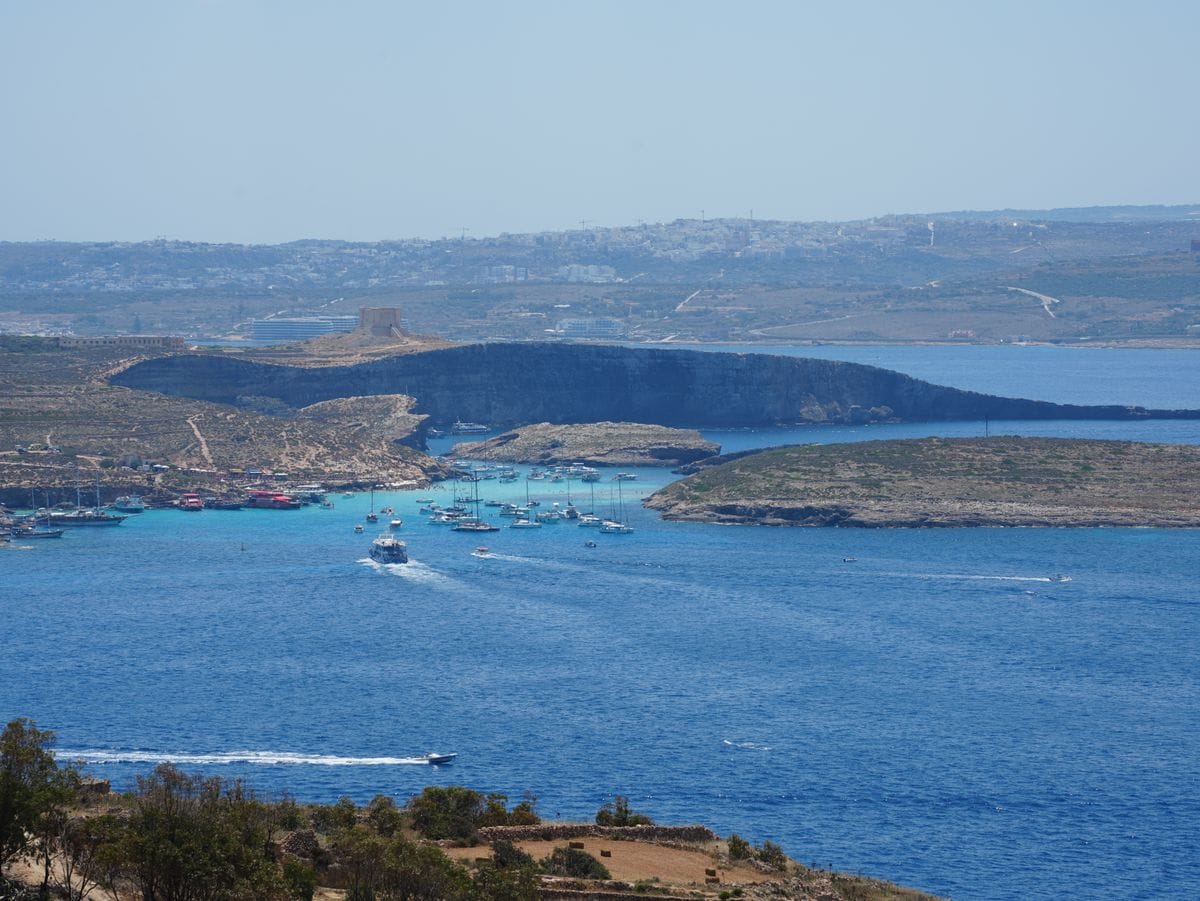
The sea is the reason many people come. It’s warm enough to swim from June into late October, and the water around Comino and the smaller bays is some of the clearest in Europe. If swimming is the point of your trip, aim for September or early October: the sea holds its summer warmth, but the prices and the crowds have dropped.
Getting around Malta
You don’t need a car in Malta. Buses reach almost everywhere from the Valletta terminal for a couple of euros, and short ferry hops link the main sights cheaply. A car only earns its keep if you want to reach quiet bays under your own steam or you’re staying on Gozo.
| Option | Cost | Good for |
|---|---|---|
| Bus single | €2 winter / €2.50 summer | Most day-to-day trips around the island |
| 7-day Explore card | €25 | A week of sightseeing, pays off in three days |
| Gozo ferry | €4.65 return | A day trip to the quieter sister island |
| Bolt or taxi | €8–20 a hop | Late nights and early airport runs |
| Car hire | From around £25 a day | Remote bays, dramatic Dingli cliffs, Gozo |
Buses can be slow and crowded in peak summer, so build in buffer time rather than packing your day too tight. For most visitors, a 7-day Explore card plus the odd Bolt covers everything without the cost or stress of parking in Valletta, where cars entering the city pay a Controlled Vehicular Access charge on weekday mornings.
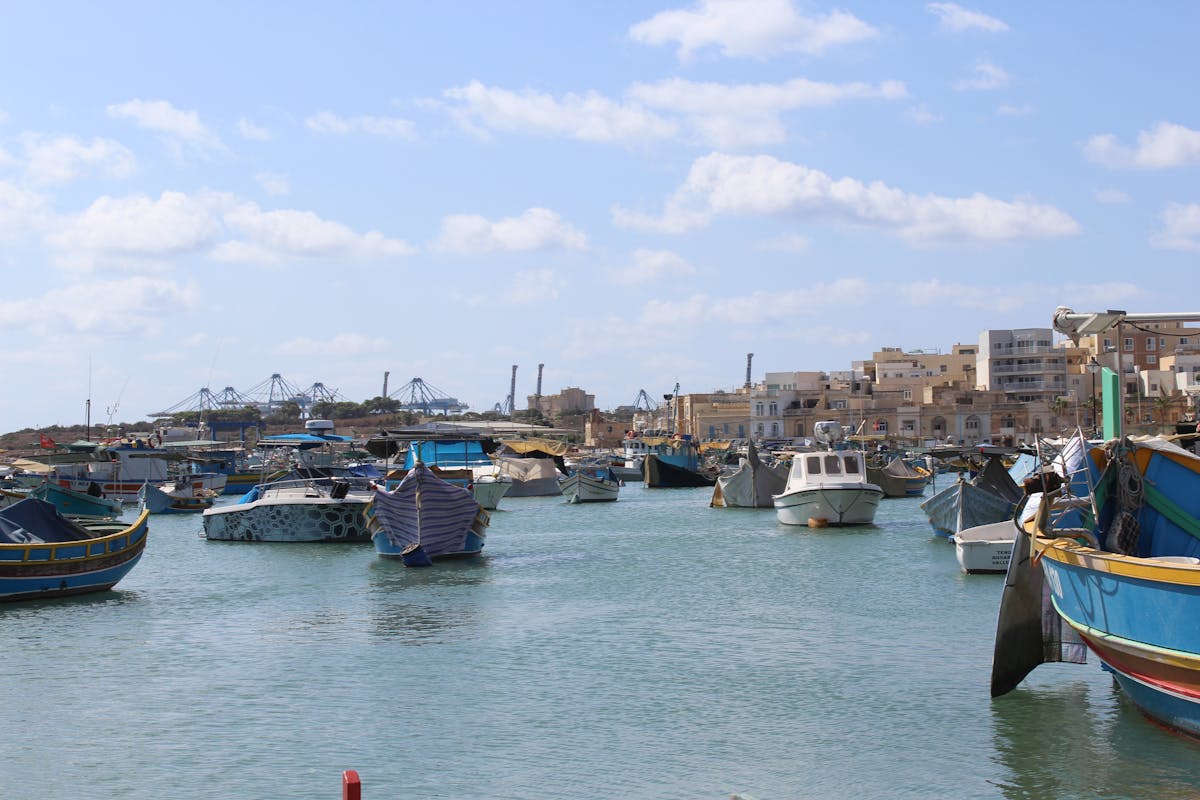
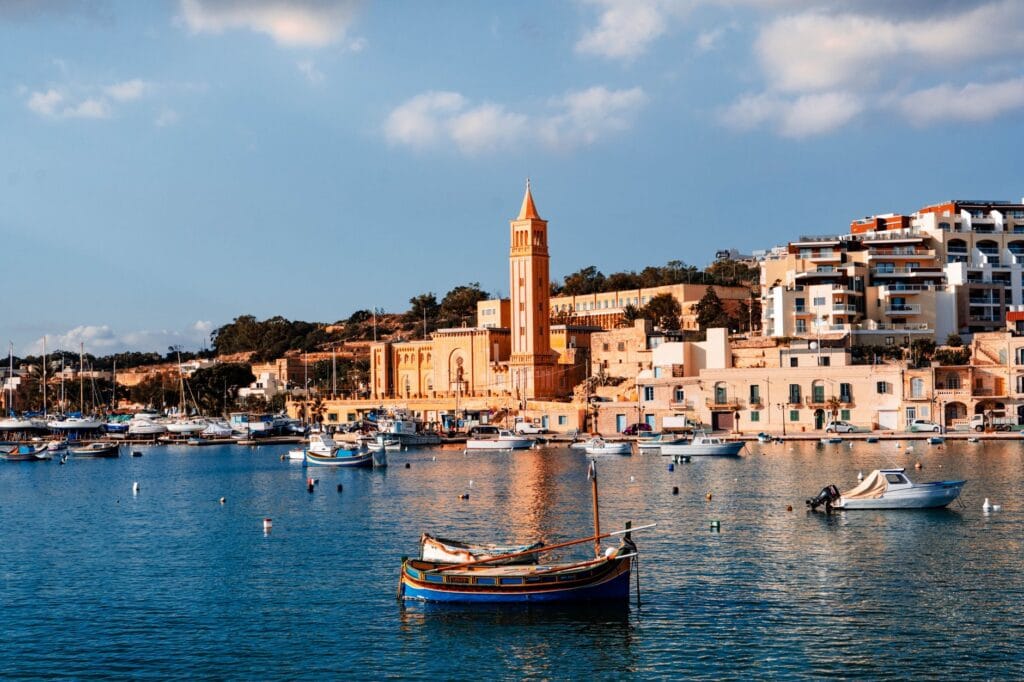
Some of Malta’s best half-days cost nothing but a bus fare. Marsaxlokk, the fishing village in the south, fills with colourful luzzu boats and a Sunday market, and it’s one of the best places on the island for cheap, fresh seafood straight off the quay. From Valletta it’s a single bus and well under an hour.
The best things to do in Malta
Malta packs three thousand years of history and some of the clearest water in Europe into an island smaller than the Isle of Wight. Most of the headline sights cost little or nothing, and the few that charge are worth the entry.
| Place | What it is | Cost |
|---|---|---|
| Valletta | UNESCO capital, St John’s Co-Cathedral, Upper Barrakka Gardens | Free to wander |
| Mdina | The Silent City, walled medieval former capital | FreeNo charge |
| Blue Lagoon | Comino’s sheltered cove, Malta’s clearest swimming | Free to swim |
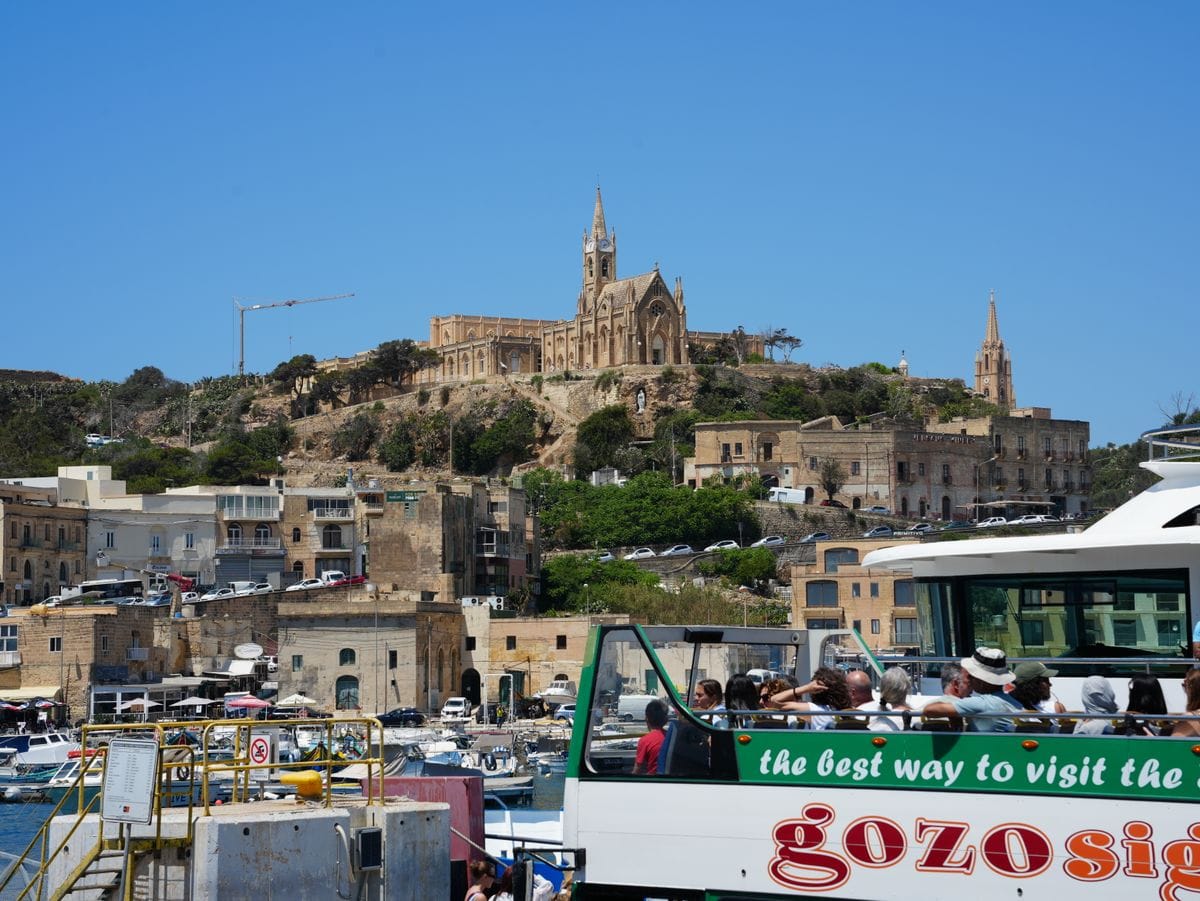
| Gozo | Quieter sister island, hilltop Cittadella in Victoria | Citadel free, museums €5 |
| Marsaxlokk | Fishing village, Sunday market, seafront seafood | FreeNo charge |
| Three Cities | Vittoriosa, Senglea and Cospicua across the Grand Harbour | Free |
| Hypogeum | 5,000-year-old underground temple, one of Europe’s oldest | €35Book weeks ahead |
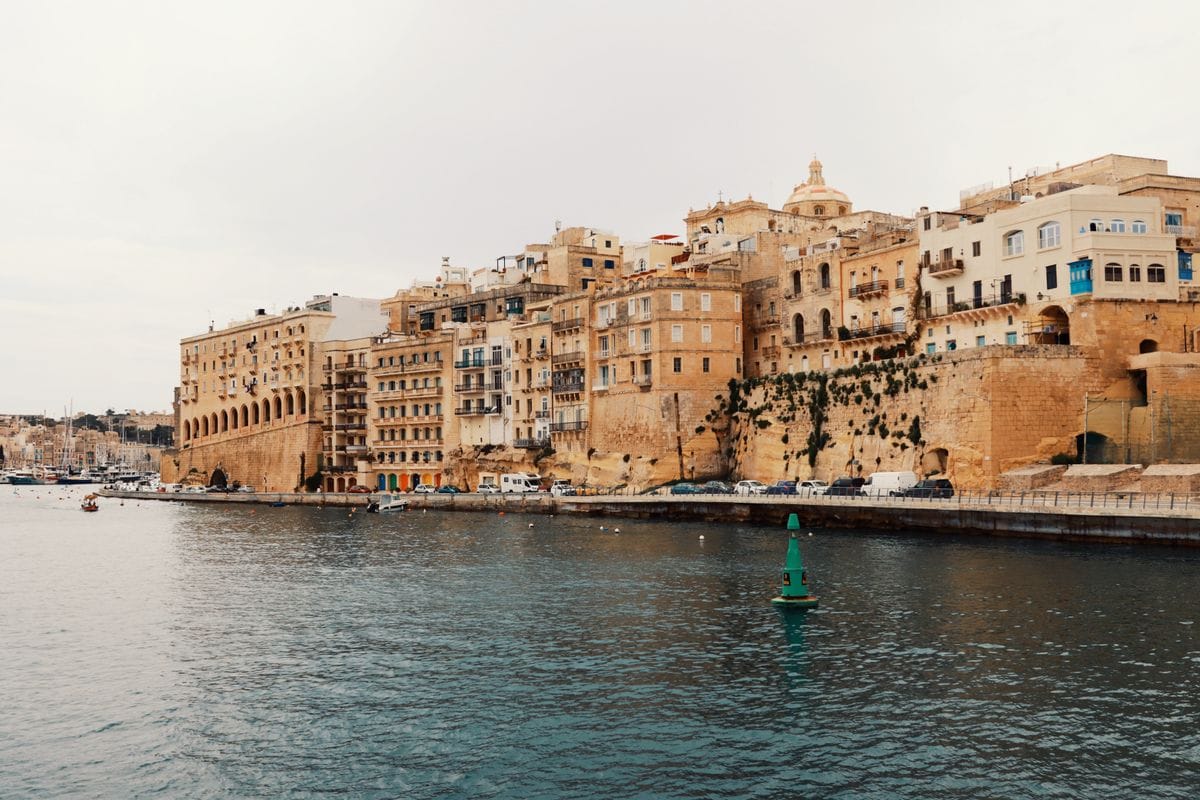
Give Valletta a full day. It’s tiny and walkable, but the cathedral alone, home to Caravaggio’s Beheading of Saint John the Baptist, rewards an unhurried visit and the Upper Barrakka Gardens look straight across the Grand Harbour. The Three Cities across the water are quieter and just as handsome, reached by a short, cheap ferry rather than the tourist coaches.
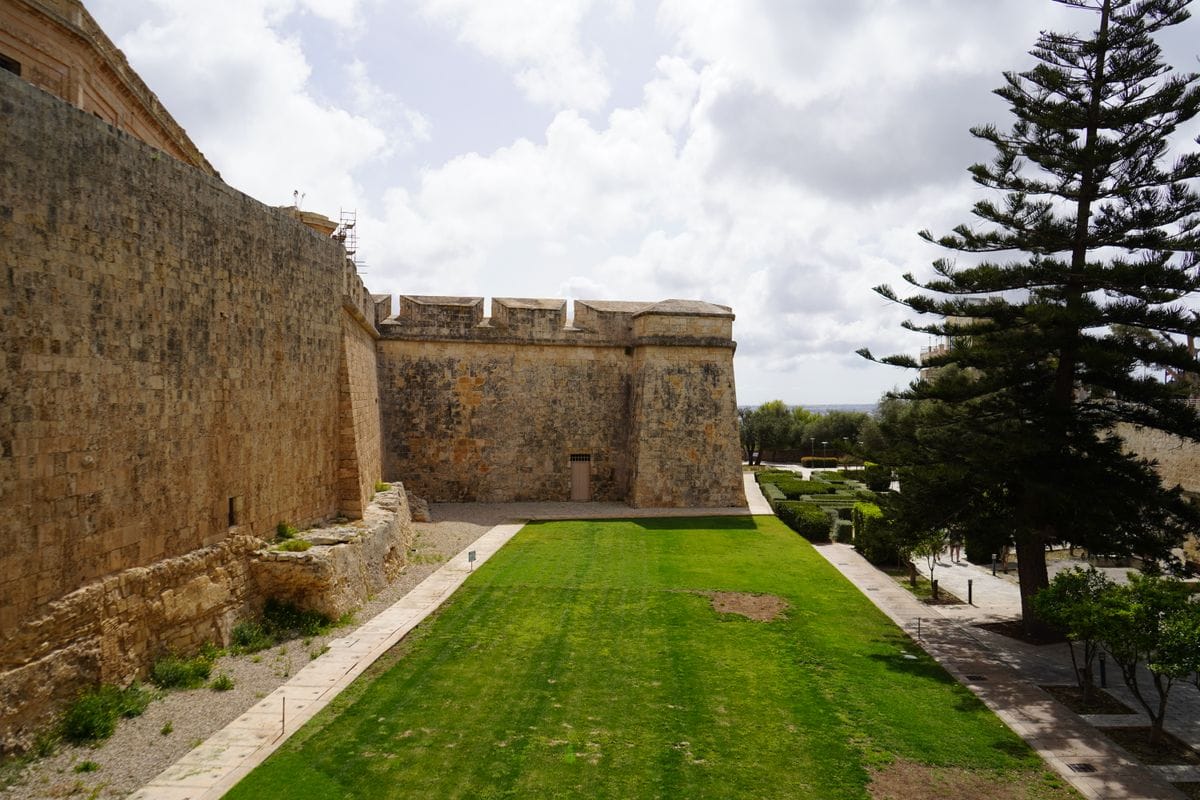
Inland, Mdina is the other essential. The old walled capital is car-free, almost silent after the day-trippers leave, and free to wander. Pair it with neighbouring Rabat, where the best pastizzi on the island are sold from a hole-in-the-wall counter for about fifty cents each.
Where to eat
Maltese food is cheap, generous and worth seeking out. The island’s cooking sits somewhere between Sicily and North Africa: rabbit stew, fresh fish, ftira flatbread and those flaky pastizzi. You can eat well for a few euros or treat yourself in a Valletta palazzo, and here’s a pick at each price point.
Budget (under £13): Ta’ Nenu on St Dominic Street in Valletta bakes its ftira in a stone oven, with a generous one costing around €10.50 and a sharing platter of Maltese cheese, bigilla bean dip and sausage not much more. For an even cheaper lunch, do as the locals do and buy pastizzi by the counter in Rabat.
Mid (£18–28): Rubino has been going on Old Bakery Street since 1906 and holds a Michelin Bib Gourmand for good cooking at fair prices. The menu changes daily and is read off a blackboard, and the rabbit is the thing to order.
Worth the spend (£35–55): Guzé Bistro, in a 400-year-old Valletta palazzo, plates Maltese land and sea dishes for around €50 a head and features in the Michelin Guide. Book ahead; it’s small and it fills.
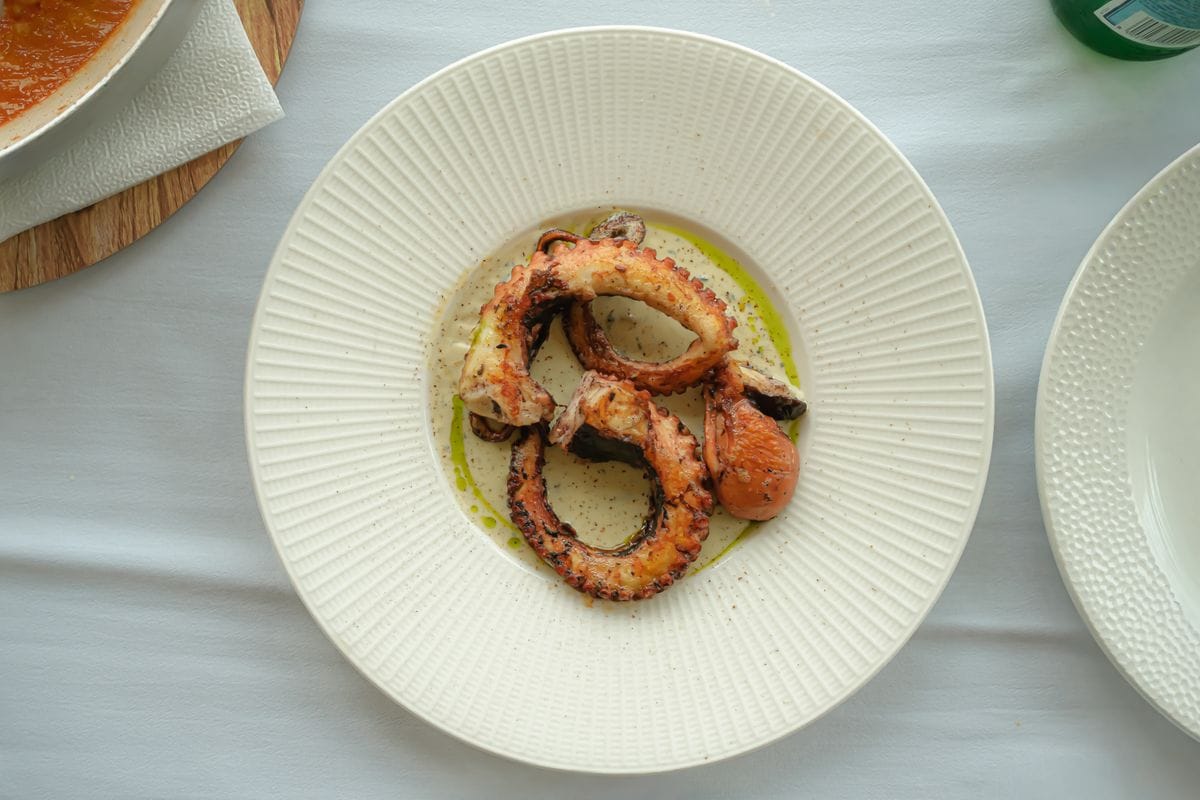
For fish, skip the tourist strips in Sliema and St Julian’s and head to a harbour village. The seafood at Marsaxlokk comes off the boats that morning, and a plate of grilled fish or octopus with a glass of local wine costs a fraction of what you’d pay on the promenade. A bottle of Cisk lager runs about €3 in a neighbourhood bar.
Where to stay
Sliema and St Julian’s are the best bases for first-timers, with buses and ferries to everywhere and plenty of cheap beds. Valletta is for atmosphere, Bugibba for the lowest prices, and Gozo for quiet. Wherever you pick, prices climb steeply in July and August, so book early for summer. Hotels also add Malta’s eco-contribution of €1.50 per adult per night, capped at €22.50 a stay.
| Area | Best for | Feel |
|---|---|---|
| Sliema | First-timers, shopping, the ferry to Valletta | Busy seafront town |
| St Julian’s | Restaurants and nightlife | Lively, younger crowd |
| Valletta | Culture and atmosphere on the doorstep | Historic and characterful |
| Bugibba | The cheapest beds, families | Cheerful package resort |
| Gozo | A quiet, slow base away from the crowds | Rural and relaxed |
Budget: The Londoner Hotel Sliema is a three-star on The Strand, Sliema’s harbour-front road, with a British-style restaurant and bar downstairs and the Valletta ferry and buses close by. It’s the kind of well-run base that does the job without eating into the rest of your budget.
Mid: AX The Victoria Hotel in Sliema is a proper four-star with a rooftop infinity pool, a spa and the Valletta ferry close by. Good value for the standard, especially outside high summer.
Worth the spend: The Phoenicia Malta, opened in 1947, is a grande dame on Valletta’s doorstep, with gardens running down towards the harbour and a pool below the bastions. It’s a member of the Leading Hotels of the World and the most characterful splurge on the island.
How much does a Malta holiday cost?
A week in Malta costs less than most UK travellers expect. Flights and your hotel are the big numbers; once you’re on the ground, daily spending is modest, because the sights are cheap and the food doesn’t have to be expensive.
| Traveller | Daily, on the ground | What it covers |
|---|---|---|
| Budget | £45–55 | Buses, pastizzi and self-catering, free sights |
| Midrange | £80–110 | Restaurant meals, a boat trip or two |
| Comfortable | £150+ | Taxis, fine dining, guided tours |
Add it up and a careful week in spring or autumn, flights and a modest hotel included, comes in well under what the same week would cost in much of mainland Europe. That gap, between what people assume Malta costs and what it actually costs, is the whole argument for going. For more island and city ideas at this kind of value, browse our destination guides.
Know before you go
Malta makes life easy for British visitors. Here are the essentials at a glance.
| Detail | What to know |
|---|---|
| Currency | Euro (€) |
| Language | Maltese and English, both official and widely spoken |
| Plugs | Type G, the same three-pin sockets as the UK |
| Driving | On the left, like the UK |
| Time | Central European Time, one hour ahead of the UK |
| Tipping | 5 to 10% in restaurants, round up elsewhere |
On entry, your passport needs to have been issued within the last 10 years and stay valid for at least three months after you leave. There’s no visa for stays under 90 days, but the EU’s Entry/Exit System now runs at all Schengen borders, so expect to give fingerprints and a photo rather than a passport stamp. A separate €20 online permit, ETIAS, is expected to follow later in 2026. Check the GOV.UK Malta entry requirements page before you book.
Malta budget travel: your questions answered
Is Malta expensive to visit?
No, Malta is one of the cheaper Mediterranean destinations for UK travellers. Expect roughly £45 to £55 a day on the ground for a budget trip, before flights and your hotel.
How many days do you need in Malta?
Four to five days covers Valletta, Mdina, Marsaxlokk and a day on Gozo or Comino. A week lets you add the beaches and slow the pace down.
Do they speak English in Malta?
Yes. English is an official language alongside Maltese and is spoken almost everywhere, so there’s no language barrier for British visitors.
What is the cheapest time to fly to Malta?
Late autumn to early spring, roughly November to March, has the lowest fares outside the school holidays. January and February are cheapest of all.
Do I need a visa or ETIAS for Malta?
No visa is needed for stays under 90 days in any 180-day period. A €20 online ETIAS permit is expected to launch later in 2026, so check GOV.UK before you travel.
Is Malta good for a beach holiday?
Malta’s beaches are small and mostly rocky, with the best sand at Mellieħa Bay and Golden Bay. For the clearest swimming, head to the Blue Lagoon on Comino.
Can you get around Malta without a car?
Yes. Buses reach almost everywhere from Valletta for €2 to €2.50 a journey, and a 7-day Explore card costs just €25.

Kate Acaster is Chief Editor at Flight Tribe. She writes about practical travel planning, budget airlines, baggage rules, city breaks, beach holidays and good hotels that do not cost daft money.
Kate has travelled through Europe, South America and beyond, usually with a notebook, a half-formed plan and a strong opinion on airport snacks. At Flight Tribe, her work focuses on helping UK travellers understand what is included, what costs extra, and whether a trip is worth booking at the price shown.
How Kate works
Kate checks the details that can change the value of a trip, including cabin-bag rules, airline fees, hotel location, seasonality, travel dates and booking conditions. She is especially interested in offers that look useful on the surface but need a proper reader-first check before they are worth recommending.
Editorial standards
Flight Tribe covers deals and travel advice for readers first. Affiliate links do not decide whether an offer is worth writing about.