Published 17 August 2026 | Updated 13 October 2026 by Kate Acaster
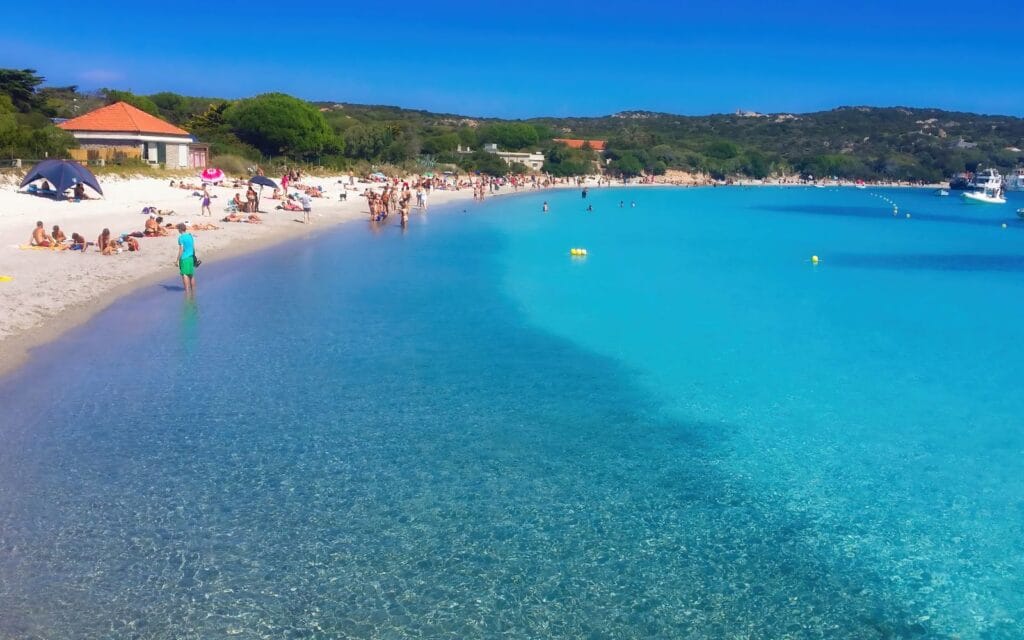
The water off Sardinia reads the same particular turquoise almost everywhere on the island: off the granite in the north-east, off the dunes in the south, off the cliffs of the Gulf of Orosei. What changes is the price of standing next to it. So, is Sardinia expensive? Only at one end of it.
Advertisement
Sardinia at a glance
- Flight timeAround 2 hours 45 minutes from London
- AirportsThree: Cagliari (CAG), Olbia (OLB) and Alghero (AHO)
- CurrencyEuro (EUR), check the live rate before you budget
- Tourist taxSet town by town. €1 to €5 a night in Cagliari, by star rating
- BeachesSeveral now charge and cap numbers. Book before you travel
- VisaVisa-free for UK passports, up to 90 days in any 180
The Costa Smeralda is 55 kilometres of the north-east coast, developed from 1962 by a consortium led by the Aga Khan, and it charges what that history implies. Drive an hour inland from Porto Cervo and you are in ordinary Italy, where a city bus fare is €1 and a plate of pasta costs what it costs in Bologna.
That gap explains most of what follows, and it catches British holidaymakers out because the flight map pushes you towards the expensive half. Olbia, the airport for the Costa Smeralda, has four UK airlines flying into it. Alghero has one and Cagliari has two. Book on price alone from your local airport and you can end up sleeping on the most expensive coastline in Italy.
There is also something new to plan around. Sardinia now caps the number of people who can stand on three of its best-known beaches, and charges an entry fee at all three. All three have to be booked. At La Pelosa, 500 of the 1,500 daily places can be booked at any time in the season and the other 1,000 open at 09:00 two days before. At Tuerredda booking opens at 08:00 the day before.
How to keep Sardinia costs down
Four decisions do most of the work, and three of them are made before you leave the UK.
| Do this | Why it works |
|---|---|
| Fly to Cagliari or Alghero, not Olbia | Olbia is the Costa Smeralda gateway, and the prices around it follow. The south and the north-west run on normal Italian money. |
| Take the train from Cagliari airport | Elmas Aeroporto station is joined to the terminal by a covered walkway, and the fare into the city is €1.30 on a 0 to 10 kilometre ticket. |
| Book the beach before you book the taxi | La Pelosa takes 1,500 people a day and Tuerredda 1,100. Between 08:00 and 18:00 you do not get on either beach without a QR code. |
| Check the star rating on your hotel | Cagliari bands its tourist tax straight off the stars, from €1 a night at one star to €5 at five. It is charged for the first five nights only. |
"Cagliari’s airport train costs €1.30 and runs every 20 minutes into a city with a beach on a bus route. That’s the Sardinia most British visitors never see, because the cheap flights don’t go there. We’ve watched readers price up the Costa Smeralda, decide Sardinia’s beyond them, and never find out about the other 1,800 kilometres of coast."
Kate Acaster, Chief Editor, Flight Tribe
Latest Italy deals
Getting to Sardinia from the UK
Three airports, and they are not interchangeable. Olbia sits at the top of the north-east coast, twenty minutes from the edge of the Costa Smeralda. Cagliari is the capital, at the bottom of the island. Alghero is on the north-west coast, a Catalan-speaking port town with a walled old quarter. Driving Olbia to Cagliari takes about three hours, so the airport you choose decides your holiday.
| Airline | UK airports with direct flights | Which Sardinian airport |
|---|---|---|
| Ryanair | London Stansted only | All three: Cagliari, Olbia and Alghero. The only UK carrier serving Alghero at all. |
| easyJet | Bristol, Edinburgh, London Gatwick, London Luton | Olbia only. Nothing to Cagliari or Alghero. |
| Jet2.com | Birmingham, Manchester, London Stansted | Olbia only. Jet2 says so in as many words on its own Sardinia page. |
| British Airways | London City, London Gatwick, London Heathrow, London Stansted | Gatwick to Cagliari, Heathrow and London City to Olbia, and a BA CityFlyer Stansted to Olbia service that ran at weekends from 23 May to 27 September in 2026. Check for 2027 dates. |
| Wizz Air | None | Wizz flies Olbia from Warsaw, Rome Ciampino and Milan Malpensa, but nothing from a British airport. |
If you live near Bristol, Edinburgh, Birmingham or Manchester, every direct flight you can get to Sardinia lands at Olbia. Reaching the cheap end of the island means Stansted with Ryanair, Gatwick with British Airways, or a connection. That is what the flight map costs you, and it is usually worth the extra fare to get round it.
Visa and entry requirements for UK travellers
Italy is in the Schengen area, so a British passport gets you 90 days in any 180 without a visa. Two passport rules trip people up, and they are separate tests. Your passport must have been issued less than ten years before the day you arrive, and it must still have at least three months left on it after the day you plan to leave the Schengen area. A passport can pass one test and fail the other.
The EES booth on arrival
The EU’s Entry/Exit System is now being rolled out across the Schengen area, and it changes what happens when you land. On your first entry under the scheme you may be sent to a booth to have your fingerprints and photograph taken. It is free, it creates a digital record that lasts three years, and it is replacing the passport stamp. Children under 12 are photographed but not fingerprinted. On the way out you may be asked for a fingerprint or a photo again.
ETIAS, the pre-travel authorisation people keep confusing with EES, is not in force for Italy. There is nothing to apply for and nothing to pay before you fly. That will change, but it has not changed yet.
| Requirement | What it means in practice |
|---|---|
| Passport age | Issued less than ten years before the day you arrive. Check the issue date, not the expiry. |
| Passport validity | At least three months left on the day you leave the Schengen area. Separate test from the one above. |
| Visa | None for stays up to 90 days in any 180. |
| EES | Being rolled out. Fingerprints and a photograph on first entry, free, at a booth. Under-12s are photographed only. |
| ETIAS | Not in force for Italy. Nothing to apply for and nothing to pay before you fly. |
What a border officer can ask for
Officially, you can be asked to show proof of where you are staying, travel insurance, a return or onward ticket and enough money for the trip. In practice this is rare on a Sardinian summer flight, but the power exists and is used. Have the hotel booking somewhere you can find it. Your hotel will also register your passport with the police at check-in, which is normal Italian law and not a sign of anything.
Getting from the airport into town
All three airports have a cheap public link into their own town, and all three are better value than a taxi. Cagliari’s is the best of them by a distance.
| Airport | Into town, cost and timing |
|---|---|
| Cagliari (CAG) | Elmas Aeroporto station is joined to the terminal by an indoor walkway with moving pavements. Trains run about every 20 minutes from 05:30 to 23:00, every day, and take six to eight minutes into Cagliari centrale. The fare is €1.30. |
| Olbia (OLB) | ASPO city buses on lines 2 and 10 stop about 50 metres outside arrivals, roughly every half hour. A single is €1 and covers 90 minutes, or €1.50 if you buy it from the driver. A 24-hour ticket is €2.80 and a book of 12 journeys is €10. |
| Alghero (AHO) | ARST urban line 3, badged AL.F.A., runs airport to Fertilia to Alghero and finishes at Via Catalogna. A single is €1 for 90 minutes, and you can buy one on board by contactless card or phone at no extra cost. A day ticket is €2.80. |
| Taxi from any of the three | Fares are set by the operator and vary by time of day, so no figure is quoted here. On the Cagliari run in particular a taxi is hard to justify against a €1.30 train that takes under ten minutes. |
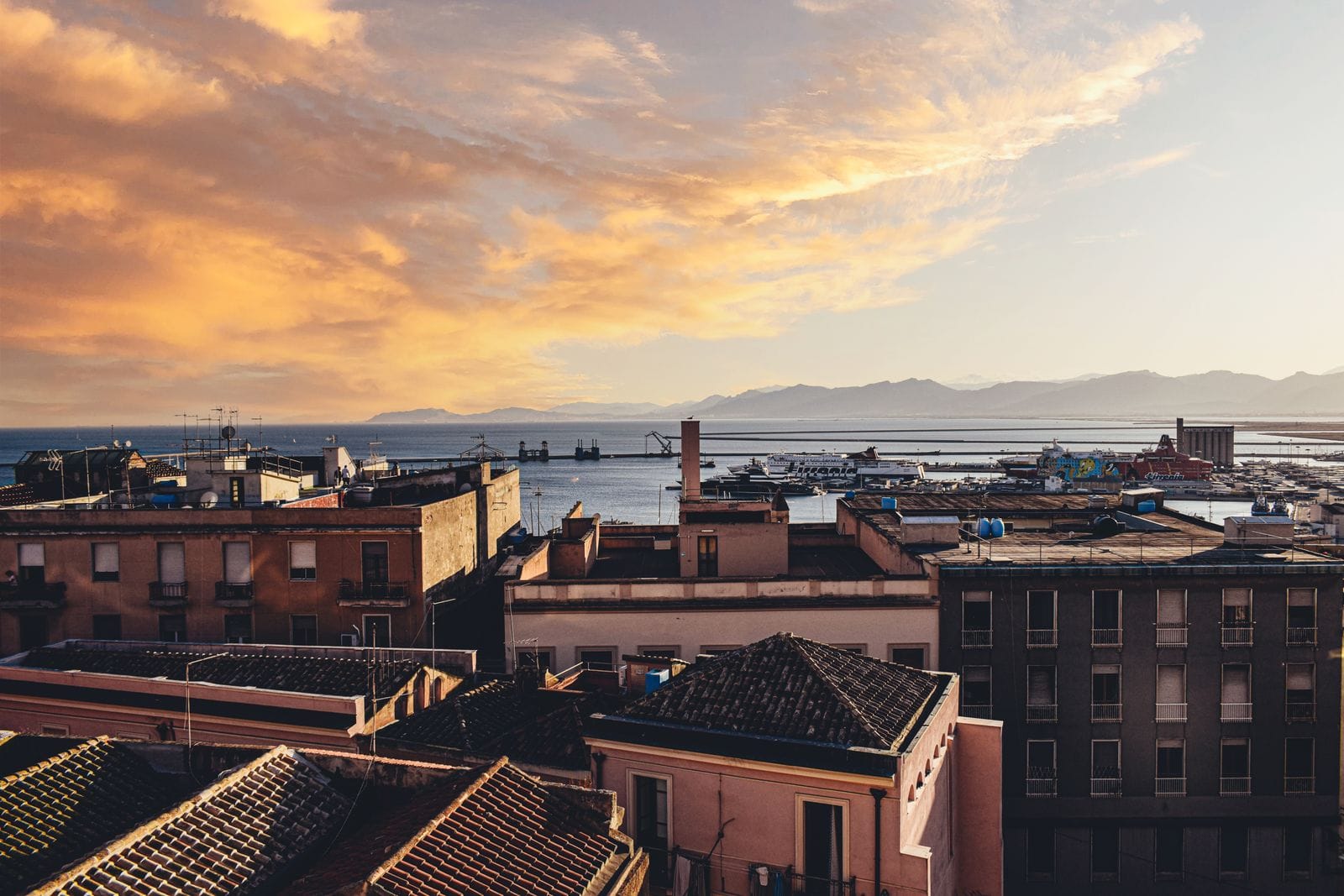
Cagliari has 150,000 residents and a container terminal. Tourism happens to the city; it is not why the city exists, and prices reflect that.
Poetto beach runs for several kilometres along the city’s eastern edge and is reachable on a city bus. Very few Italian cities of its size have a beach that size on a bus route.
Getting around Sardinia
Sardinia is 270 kilometres long and public transport is built for people who live there, not people touring it. ARST runs the intercity coach network and prices it in distance bands, which makes short hops cheap and long ones reasonable.
| Distance | Single | Typical journey |
|---|---|---|
| Up to 10 km | €1.30 | The next village along the coast |
| 20 to 30 km | €2.50 | Alghero out to Porto Conte and the Capo Caccia headland |
| 50 to 60 km | €4.30 | Alghero to Bosa down the west coast road |
| 90 to 100 km | €6.70 | Cagliari north towards Oristano |
| 100 to 125 km | €8.10 | Sassari across the north of the island |
| Over 325 km | €21 | Top band, and further than any single Sardinian route needs |
This network connects towns, not beaches. Rail is thinner still, with the Trenitalia standard-gauge line plus four narrow-gauge ARST lines, one of which runs Sassari to Alghero. Coaches out of Alghero airport reach Sassari, Bosa, Nuoro, Oristano, Macomer and Cagliari, and add Stintino and Santa Teresa Gallura from 1 June to 30 September. If the plan is one town and the beach it already has, you do not need a car. If the plan is a different cove every day, you do.
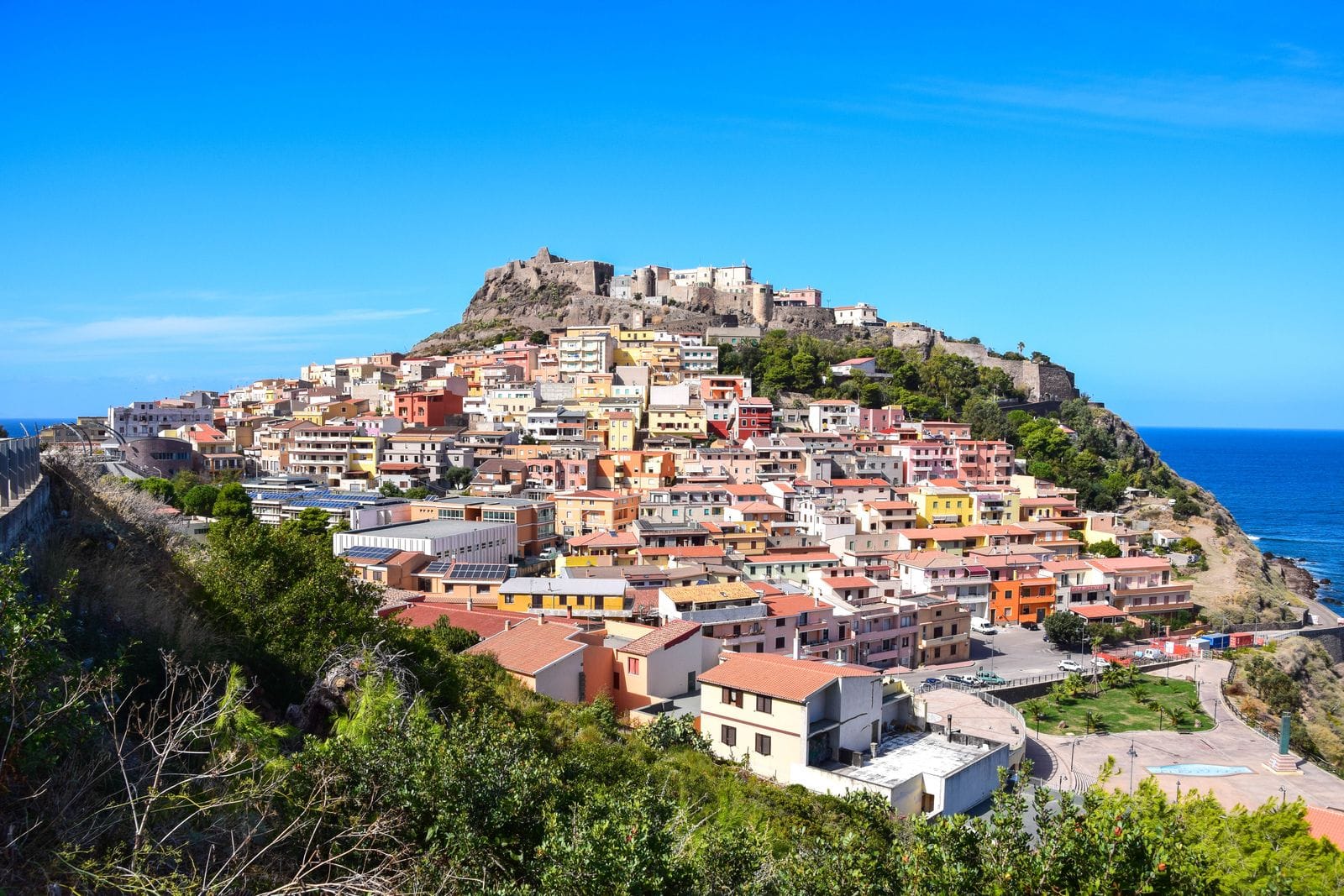
Towns like Castelsardo are the argument for a hire car. It is 60 kilometres from Alghero, on a coast road with no scheduled service running the length of it.
The castle at the top was built by the Doria family of Genoa in 1102. The pastel paint below it is much newer, and it is the reason the town photographs the way it does.
Where to base yourself in Sardinia
| Area | Suits | Trade-off |
|---|---|---|
| Cagliari | Anyone who wants a real city, cheap transport and a long beach on a bus route | Three hours from the famous north-east coves |
| Alghero | A walled old town on the sea, Catalan street signs, and a direct Ryanair route from Stansted | Only one UK airline serves it, so fares are less competitive than Olbia’s |
| Costa Smeralda | People who came for the water and are not counting | The most expensive coast on the island by a wide margin, and the least useful without a car |
| The west coast, Bosa to Oristano | Quiet, cheap, and the part of Sardinia most British visitors never reach | Thin bus service and windier water; a hire car makes far more sense here |
| The south coast, around Villasimius and Teulada | Costa Smeralda-standard beaches without Costa Smeralda pricing | Two of the best beaches here cap numbers and have to be booked before you set off |
What Sardinia’s main attractions cost
Sardinia’s ticketed attractions cost roughly what you would expect. The change is at the ones that used to be free: three of the best-known beaches now need booking, and a daily cap counts you in.
| Attraction | Adult admission |
|---|---|
| Grotta di Nettuno, Alghero | €18 full price, €10 for ages 6 to 17. That is the cave only: it does not include the shuttle bus if you come by land or the boat if you come by sea. If you come by land, a timed slot must be booked. |
| La Pelosa beach, Stintino | €3.50 a head, booked in advance, capped at 1,500 people a day from 15 May to 15 October. Under-12s are not counted. Access is by QR code from 08:00 to 18:00 and free after that. |
| Tuerredda beach, Teulada | €3 a head per day, capped at 1,100 people, 2 June to 15 October 2026. Bookings open at 08:00 the day before. Under-18s are not counted. |
| Cala Goloritzè, Baunei | Booking is compulsory and the daily cap is 250 people, the tightest on the island. Entry is €7, free for under-5s. Booking opens three days ahead on the Heart of Sardinia site or app, and tickets cannot be refunded. |
| Su Nuraxi di Barumini | One ticket covers three sites: the UNESCO nuraghe, the Casa Zapata complex and the Giovanni Lilliu centre. Open daily year-round. The guided tour at Su Nuraxi is compulsory, leaves every 30 minutes and takes about an hour. The foundation does not publish its 2026 tariff in a readable form, so check before you go. |
| Poetto beach, Cagliari | Free and uncapped, on a city bus route from the centre. Cagliari has never imposed a cap here, and at several kilometres long the beach absorbs a summer crowd without one. |
Sardinia has answered overcrowding by rationing its most photographed beaches rather than pricing them out, so the cap matters more than the fee. Turn up at La Pelosa on an August morning without a QR code and you will be turned away at the top of the path, whatever you are willing to pay. Come back after 18:00 and the gate is open.
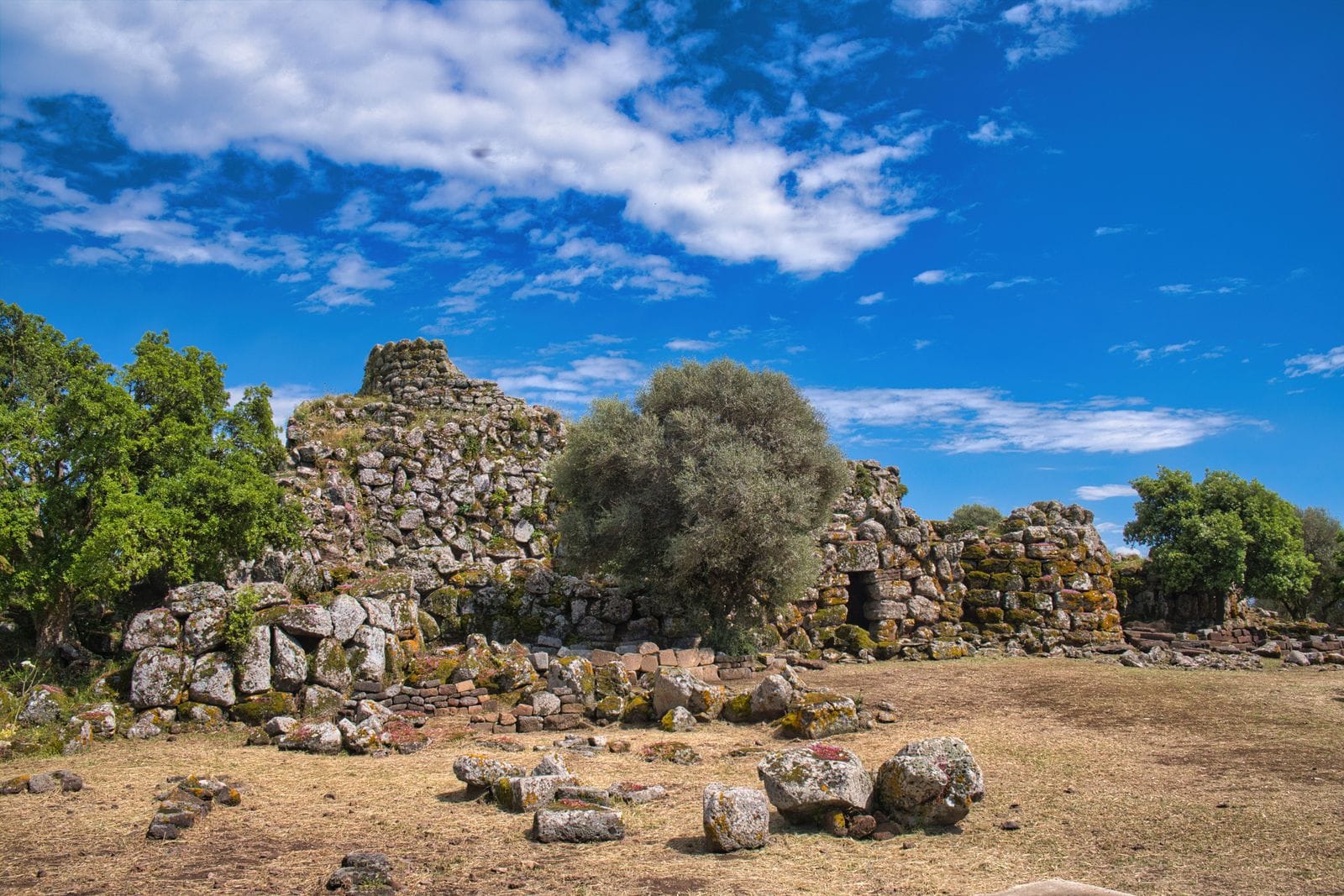
The nuraghi are Bronze Age stone towers built roughly between 1800 and 1100 BC. They exist nowhere else, and thousands of them still stand.
Su Nuraxi di Barumini is the excavated, UNESCO-listed one with a guide and a gate. The rest are largely just there, in fields, free to walk up to.
Where to stay in Sardinia
One property in each corner of the island, at three price levels.
| Tier | Hotel | What you get |
|---|---|---|
| Budget | On the Poetto seafront with breakfast included, on the city bus route into Cagliari. A beach hotel at the cheap end of the island. | |
| Mid | Out at Maristella on the Porto Conte bay, with a pool and breakfast, near the Capo Caccia headland and the cave. Alghero old town is a short bus ride back. | |
| Worth the spend | One of the original Costa Smeralda hotels, at Liscia di Vacca, low-built into the rocks above its own cove. Open it if you want to see what the north-east coast charges. |
The tax is worth checking before you book, because it is set town by town and the rules differ more than the money does.
Cagliari charges by star rating, from €1 a night at one star to €5 at five, with holiday lets and B&Bs at €2 for most of the year and €3 from July to September, and hostels at €1.50. It applies to the first five consecutive nights only, and under-12s and over-70s are exempt.
Alghero runs a flatter scheme: €4 a night at four stars and above, €2 in anything up to three stars and in non-hotel accommodation. It dropped its high-season and low-season split entirely, so one rate applies all year, it caps at seven nights rather than five, and it exempts under-12s. Olbia also caps at seven nights and exempts under-16s, though the town does not publish its 2026 rates anywhere we could read them, so ask the property.
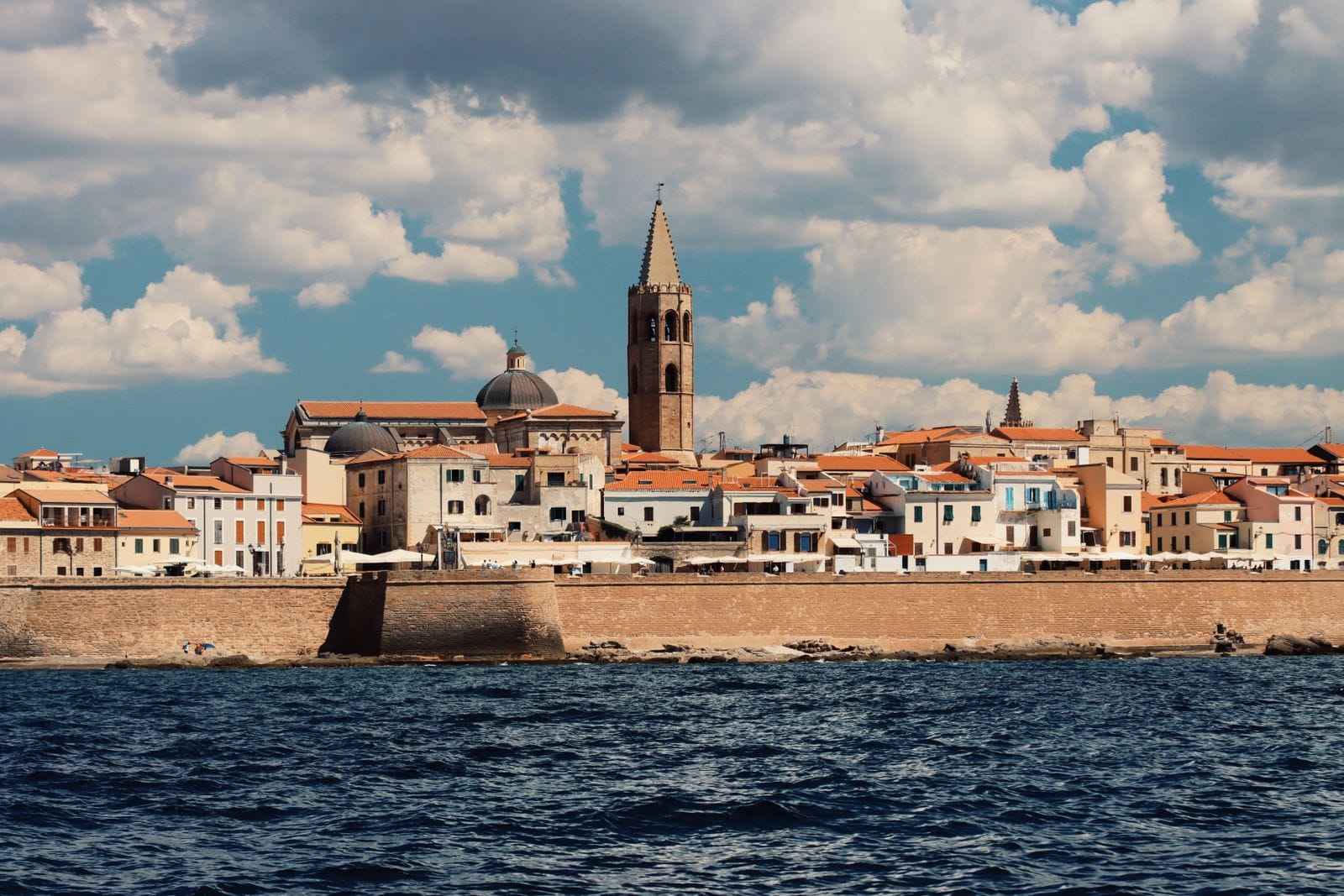
Alghero was Catalan for four centuries and never quite stopped. Street signs are bilingual, the local dialect is a form of Catalan, and the town calls itself Barceloneta.
The old quarter sits behind sixteenth-century walls that now carry a bar-lined walkway. The bars charge for the drink, not the view.
Where to eat and drink in Sardinia
Sardinian food is its own cuisine rather than a regional accent on Italian. The staples to look for are malloreddus, a ridged semolina gnocchetti usually served with sausage and saffron, culurgiones, a pleated ravioli filled with potato and mint, porceddu, suckling pig cooked over myrtle wood, and pane carasau, the crisp flatbread that turns up on most tables.
| Tier | Where | What to expect |
|---|---|---|
| Budget | The San Benedetto covered market, Cagliari | One of the largest fresh markets in Italy, fish downstairs and everything else above. Mornings only, and the obvious place to build a picnic for Poetto. |
| Budget | An agriturismo inland, anywhere | Working farms serving a fixed multi-course meal of what they produce, usually including the wine. Almost always the best value on the island. Almost never on the coast, so you will need a car. |
| Mid | The back lanes of Alghero’s old town | Catalan-Sardinian crossover cooking, particularly lobster done the Alghero way. Prices climb on the harbour front and fall a street back from it. |
| Worth the spend | Porto Cervo’s marina restaurants | Waterfront dining priced for the boats moored in front of it. Worth one evening if you want to see the other Sardinia. One is enough. |
Costa Smeralda or the rest of the island
The Costa Smeralda is roughly 55 kilometres of the north-east coast. It was developed from 1962 by a consortium led by the Aga Khan, on land that had been grazing country, under a building code that kept everything low and terracotta and hid the car parks. It worked. It is beautiful, well made, and the most expensive coastline in Italy.
Everything else is the other 1,800 kilometres of Sardinian coast, and much of it has water just as clear. Villasimius and Chia in the south, the whole west coast from Bosa down to the Sinis peninsula, the Gulf of Orosei on the east: all of these have the turquoise, none of them have the price tag. You are paying for service and status, not for better scenery. There is no marina full of superyachts at Bosa, which for most people is the point.
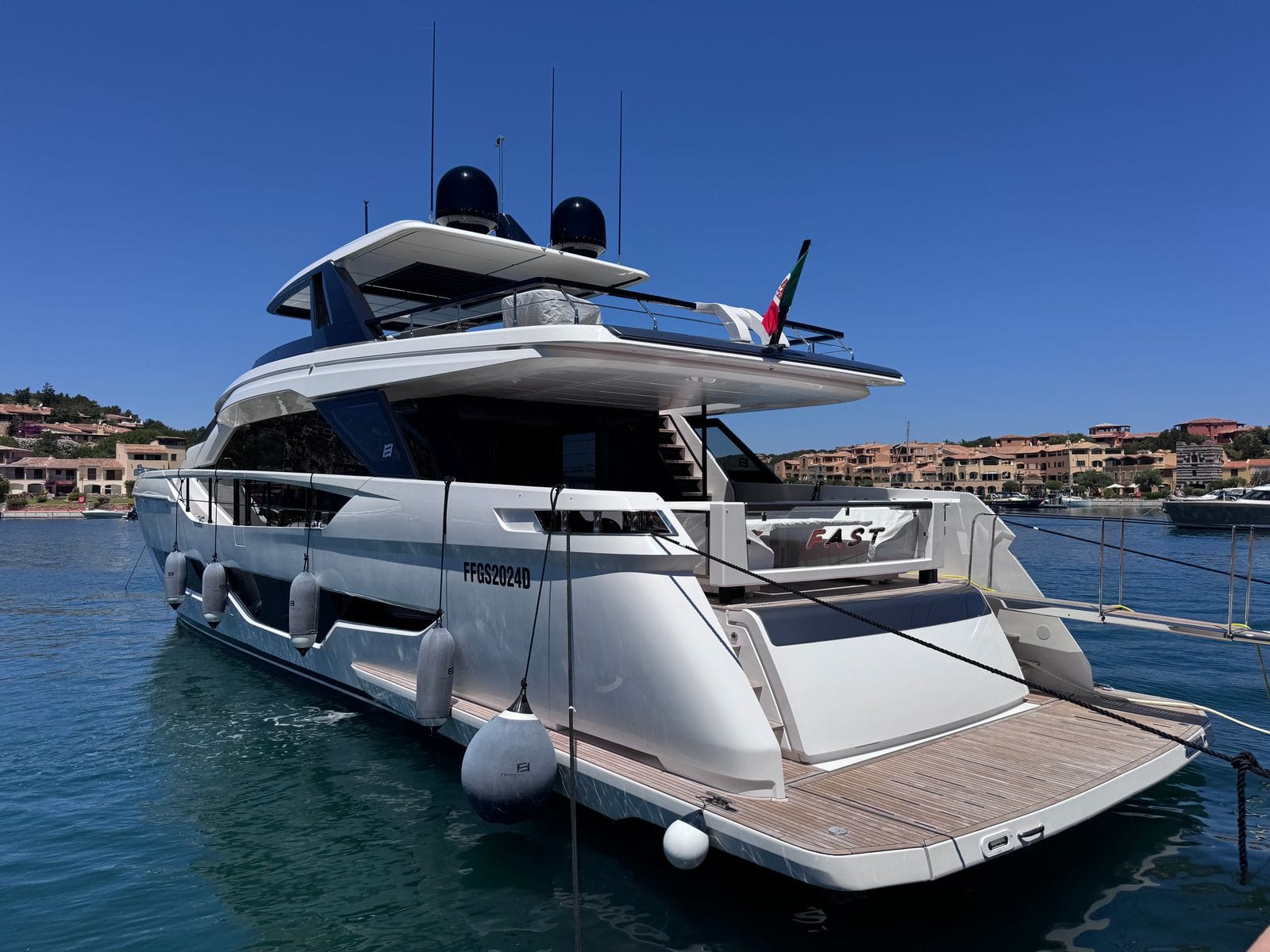
Porto Cervo was built as the consortium’s harbour village. The buildings are deliberately low and weathered so that nothing competes with the granite and the water.
It is worth an afternoon even if you are staying elsewhere. Nobody stops you walking round the quay and reading the transom names.
How much does Sardinia cost per day?
This is a Cagliari-based day for one adult sharing a room, in shoulder season. Only the lines marked published are prices somebody has printed. The rest are labelled as assumptions, because no hotel or restaurant publishes a fixed figure.
| Item | Cost per person | Published or assumed |
|---|---|---|
| Room, split two ways | €40 to €65 | Assumed band, three-star Cagliari, shoulder season |
| Coffee and a pastry | €3 to €5 | Assumed band |
| Lunch from the market | €6 to €10 | Assumed band |
| Airport train, in and out | €2.60 | Published: two €1.30 singles on the 0 to 10 km rail band |
| Dinner with a glass of wine | €22 to €35 | Assumed band, a normal trattoria rather than a seafront one |
| Tourist tax, three-star Cagliari | €3 | Published: Comune di Cagliari tariff, first five nights |
| Realistic daily total | €76.60 to €120.60 | Total |
On those assumptions a Cagliari day runs €76.60 to €120.60. Porto Cervo runs on a different scale, and the hotel link above will give you a live figure for your dates. The difference between the two comes from one decision, made when you choose a flight.
Best time to visit Sardinia on a budget
| Period | What to expect |
|---|---|
| May and early June | Warm, green and cheap before the caps bite. La Pelosa opens its booking season on 15 May and Tuerredda on 2 June, so late May gets you one system running and the other not yet started. |
| July and August | The most expensive weeks of the year and the ones where beach caps bite hardest. Cagliari charges €3 on holiday lets from July to September, up from €2. |
| September and early October | The best value on the calendar. The sea is still close to its late-August peak, the booked beaches still run to mid-October, and rates drop once Italian schools go back. |
| Late October to April | Cheapest outright. Cagliari and Alghero both carry on as normal towns. Much of the coastal resort trade shuts, and the BA CityFlyer Stansted route does not run. |
So, is Sardinia expensive?
No, unless you go to the part of it that is. Cagliari is one of the better-value city breaks on the Mediterranean: a €1.30 airport train, Poetto beach on a city bus route, and €3 a night in tourist tax on a three-star. Alghero costs a little more and throws in a walled old town on the sea. The Costa Smeralda has belonged to a different price economy since 1962 and still does.
What has changed is the beaches. Three of the best-known now run on a cap and a QR code, and you book them the way you book a table. The money is small. The planning is the part that catches people out.
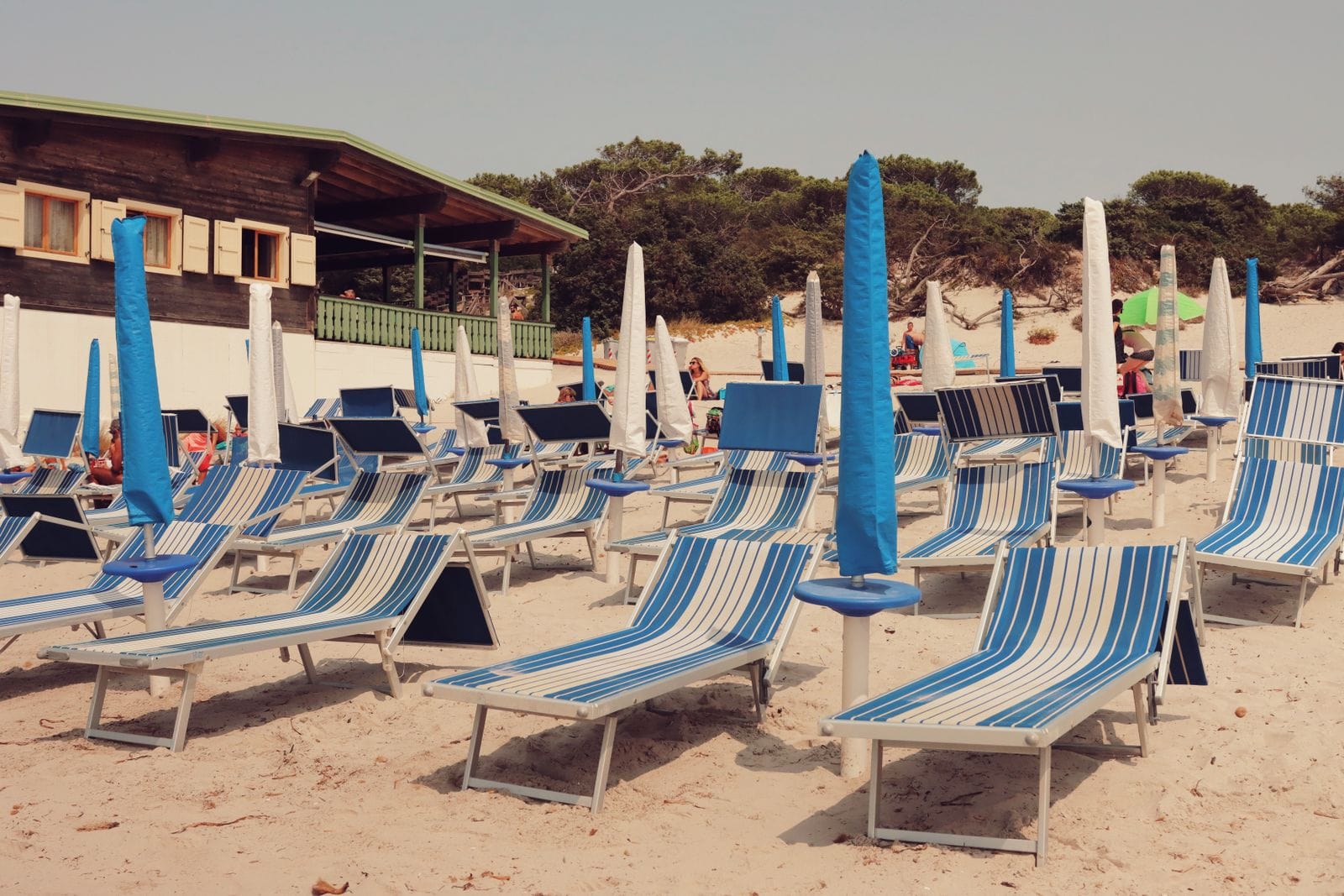
Italian law keeps the shore public up to the waterline. A concession can rent you a lounger, but it cannot fence off the sand behind it.
The booked beaches work differently: the cap is on people, not loungers, and it applies whether you hire anything or spread a towel.
Frequently asked questions
Is Sardinia expensive?
Not at the southern end, and very much at the northern one. Cagliari and the south run on ordinary Italian prices: €1.30 for the train in from the airport, €3 a night in tourist tax on a three-star, and Poetto beach on a city bus route. The Costa Smeralda in the north-east is the most expensive coastline in Italy and has been since it was built in the 1960s. Budget €76.60 to €120.60 a day in Cagliari. There is no comparable figure for Porto Cervo, because the room rate alone rewrites it.
Do you have to pay to go on the beach in Sardinia?
On some of them, yes, and the fee is the least of it. La Pelosa at Stintino charges €3.50 a head and caps entry at 1,500 people a day from 15 May to 15 October. Tuerredda charges €3 and caps at 1,100 from 2 June to 15 October. Cala Goloritzè charges €7, caps at 250 and must be booked. At La Pelosa and Tuerredda a QR code is checked at the gate between 08:00 and 18:00. Most Sardinian beaches, including Cagliari’s Poetto, are still free and uncapped.
Does Sardinia charge a tourist tax?
Each town sets its own. Cagliari charges by star rating, €1 a night at one star rising to €5 at five, with holiday lets at €2 for most of the year and €3 from July to September, capped at five consecutive nights. Alghero charges €4 at four stars and above and €2 below that, all year round, capped at seven nights. Olbia also caps at seven and exempts under-16s. Under-12s are exempt in both Cagliari and Alghero, and Cagliari exempts over-70s too.
Which UK airports fly to Sardinia?
Fewer than you would expect, and they nearly all go to one airport. easyJet flies Bristol, Edinburgh, Gatwick and Luton to Olbia. Jet2 flies Birmingham, Manchester and Stansted, also to Olbia only. Ryanair flies Stansted to all three Sardinian airports and is the only UK carrier serving Alghero. British Airways flies Gatwick to Cagliari and Heathrow and London City to Olbia. In 2026 it also ran a weekend Stansted to Olbia service from 23 May to 27 September.
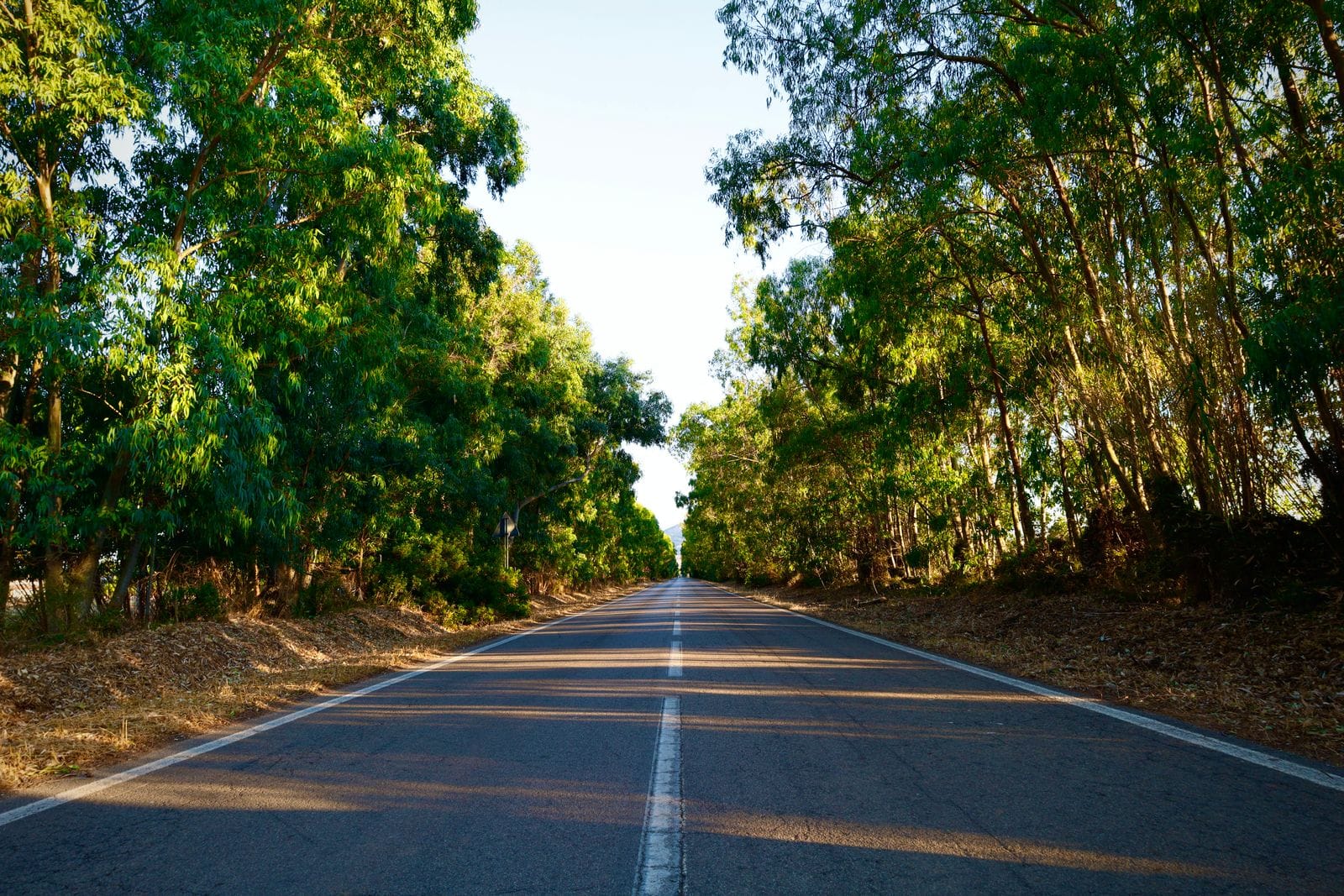
Sardinian roads are quiet and in good repair. The island has fewer than 1.6 million residents spread over an area a little larger than Wales.
That is the case for hiring a car and the reason the buses are thin. Both facts come from the same low population density.
How do I get from Cagliari airport to the city?
Take the train. Elmas Aeroporto station connects to the terminal by an indoor walkway with moving pavements, trains run about every 20 minutes from 05:30 to 23:00 every day of the week, the journey takes six to eight minutes, and the fare is €1.30. A taxi is hard to justify against that.
How much does the Grotta di Nettuno cost?
Adult admission is €18, with a reduced rate of €10 for ages 6 to 17. That buys the cave and nothing else: the shuttle bus if you arrive by land and the boat if you arrive by sea are both charged separately. Booking a time slot is mandatory for land visits, and from June to October the ticket office at Capo Caccia itself is closed, so you cannot simply turn up at the entrance and pay.
Do you need a hire car in Sardinia?
Only for some trips. ARST’s coach network connects towns rather than beaches, and rail is limited to one Trenitalia line plus four narrow-gauge routes. If you are basing yourself in Cagliari or Alghero and using that town’s own beach, buses and trains will do the job for €1 to €2.50 a journey. If the plan is a different cove every day, particularly on the west coast, a car stops being optional.
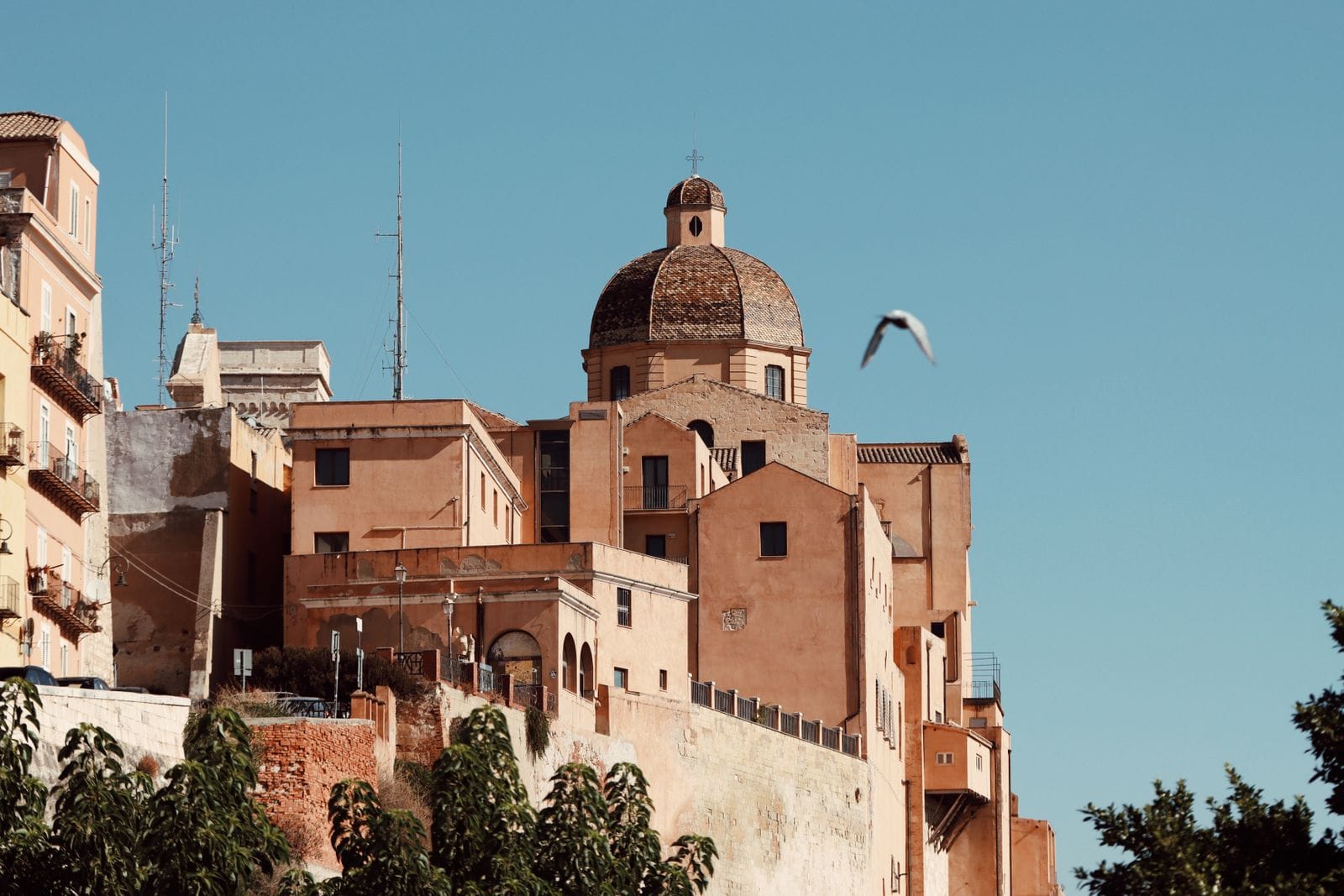
Castello is the walled quarter on the hill above Cagliari, and the lifts up to it from the lower town are free to use.
The Bastione di Saint Remy terrace at the top looks out over the whole gulf. It is the view most people photograph and it has no gate.
Is Sardinia cheaper than Sicily or Corsica?
Corsica is harder and usually dearer to reach from Britain, with fewer direct routes. Sicily comes out cheaper on the coast and about level inland. Sardinia sits in the middle of the three: costlier than mainland southern Italy, cheaper than the Amalfi Coast, and it varies widely inside its own borders.
When is the cheapest time to visit Sardinia?
September and early October. The sea is still close to its late-August peak, Italian schools have gone back, and the booked beaches still run to mid-October. Late October to April is cheaper still, but much of the coast shuts and the BA CityFlyer Stansted route stops.
What do I need to enter Italy on a British passport?
A passport issued less than ten years before you arrive and valid for at least three months after you leave the Schengen area, which are two separate tests. No visa for stays up to 90 days in any 180. The EU’s Entry/Exit System is now running, so you may be fingerprinted and photographed at a booth on first entry, free of charge. ETIAS is not yet in force for Italy, so there is nothing to apply for before you fly. Full detail is on the GOV.UK Italy entry requirements page.
More Italy and Mediterranean guides

Kate Acaster is Chief Editor at Flight Tribe. She writes about practical travel planning, budget airlines, baggage rules, city breaks, beach holidays and good hotels that do not cost daft money.
Kate has travelled through Europe, South America and beyond, usually with a notebook, a half-formed plan and a strong opinion on airport snacks. At Flight Tribe, her work focuses on helping UK travellers understand what is included, what costs extra, and whether a trip is worth booking at the price shown.
How Kate works
Kate checks the details that can change the value of a trip, including cabin-bag rules, airline fees, hotel location, seasonality, travel dates and booking conditions. She is especially interested in offers that look useful on the surface but need a proper reader-first check before they are worth recommending.
Editorial standards
Flight Tribe covers deals and travel advice for readers first. Affiliate links do not decide whether an offer is worth writing about.