
Published 18 July 2026 | Updated 13 October 2026 by Kate Acaster
A Yorkshire holiday built around Robin Hood’s Bay is riding real momentum for 2026. The village placed fifth in Sykes Holiday Cottages’ staycation index, a survey of 2,000 people carried out by OnePoll.
Advertisement
It’s a real smugglers’ village on the North Yorkshire coast, not a rebranded one. A maze of cobbled streets and red-roofed cottages tumbles down a cliff to a tidal beach. Whitby is a few miles north, and the North York Moors rise up behind it.
For more of the towns riding this year’s staycation wave, see our full guide to UK staycations in 2026. For deals on this and other domestic breaks, our UK breaks page is updated daily.
Robin Hood’s Bay at a glance
- RegionNorth Yorkshire coast, North York Moors National Park
- StationWhitby, on the Esk Valley Line from Middlesbrough
- RoadA171 between Whitby and Scarborough
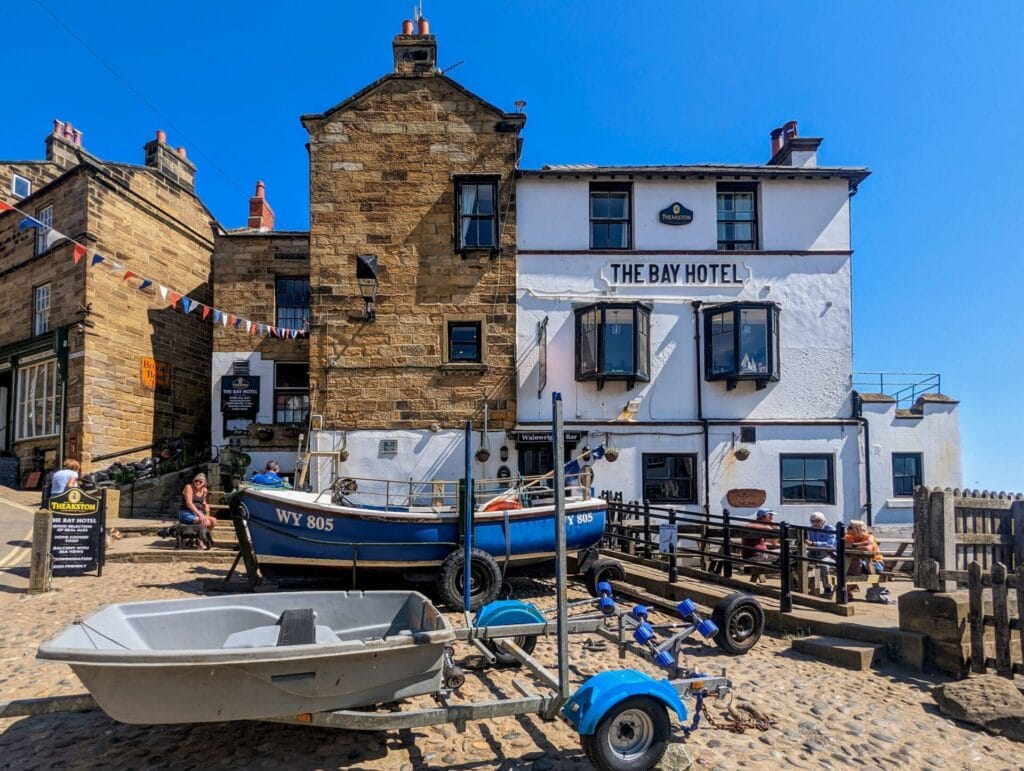
- LandmarkThe Bay Hotel, at the foot of the village’s cobbled slipway
- Walking trailFinish point of Wainwright’s 190-mile Coast to Coast Walk
- Peak seasonAugust school holidays, and low tide for fossil hunting
Why a Yorkshire holiday in Robin Hood’s Bay is trending in 2026
Robin Hood’s Bay’s placing in Sykes’ 2026 staycation index, based on a survey of 2,000 people, puts it ahead of well-known names including Brighton and Bourton-on-the-Water. It’s a small place to be competing with seaside cities and Cotswolds honeypots.
The reason is the village itself. It’s a working fishing settlement that’s kept its cobbled ginnels and clifftop cottages, rather than tidying them into a resort.
The village’s own history pages put the smuggling trade at its 18th-century peak. It was “the busiest smuggling community on the Yorkshire coast” at the time.
A bale of contraband silk could reportedly pass from the bottom of the village to the top without leaving the houses. It moved through a warren of interconnecting cellars.
Local resistance to the excise men went well beyond looking the other way. Bay wives were known to pour boiling water over them from bedroom windows.
The village had grown to around fifty cottages by 1540. 16th-century Dutch sea charts marked the bay, while leaving Whitby off entirely, a sign of how significant the fishing trade here once was.
It’s also the official finish of Alfred Wainwright’s Coast to Coast Walk. Wainwright devised the roughly 190-mile route from St Bees on the Cumbrian coast.
Walkers who’ve spent two or three weeks crossing the Lake District, the Yorkshire Dales and the North York Moors finish here. They dip a boot in the sea at the bottom of the village slipway, right by the Bay Hotel.
There’s a sense of occasion in the village most summer afternoons, as they arrive.
Things to do in Robin Hood’s Bay
The village itself is the main attraction: a scramble of red pantiled roofs and whitewashed cottages down a 1:3 gradient hill to the sea, with no through-road at the bottom. Beyond wandering the ginnels, the picks below cover the highlights.
| Attraction | Type | Why go |
|---|---|---|
| Old Coastguard Station | National Trust visitor centre | Free entry, a rock pool tank, and exhibits on the coast’s geology and smuggling history, right on the slipway |
| Fossil hunting on the beach | Free, tide-dependent | Part of Yorkshire’s Dinosaur Coast, with ammonites and belemnites turning up among the rock pools at low tide |
| Robin Hood’s Bay Museum | Free local museum | Housed in a former mortuary, covering the village’s fishing and smuggling past. Run by volunteers, it aims to open from noon to 4pm at busy times, and entry is free |
| Boggle Hole | Coastal walk | A secluded cove about a mile south along the beach or the Cleveland Way, with a YHA hostel and a café |
| St Stephen’s Church | Georgian church | A rare, largely untouched Georgian interior with original box pews, on the hillside above the village, off the B1447, usually open daily |
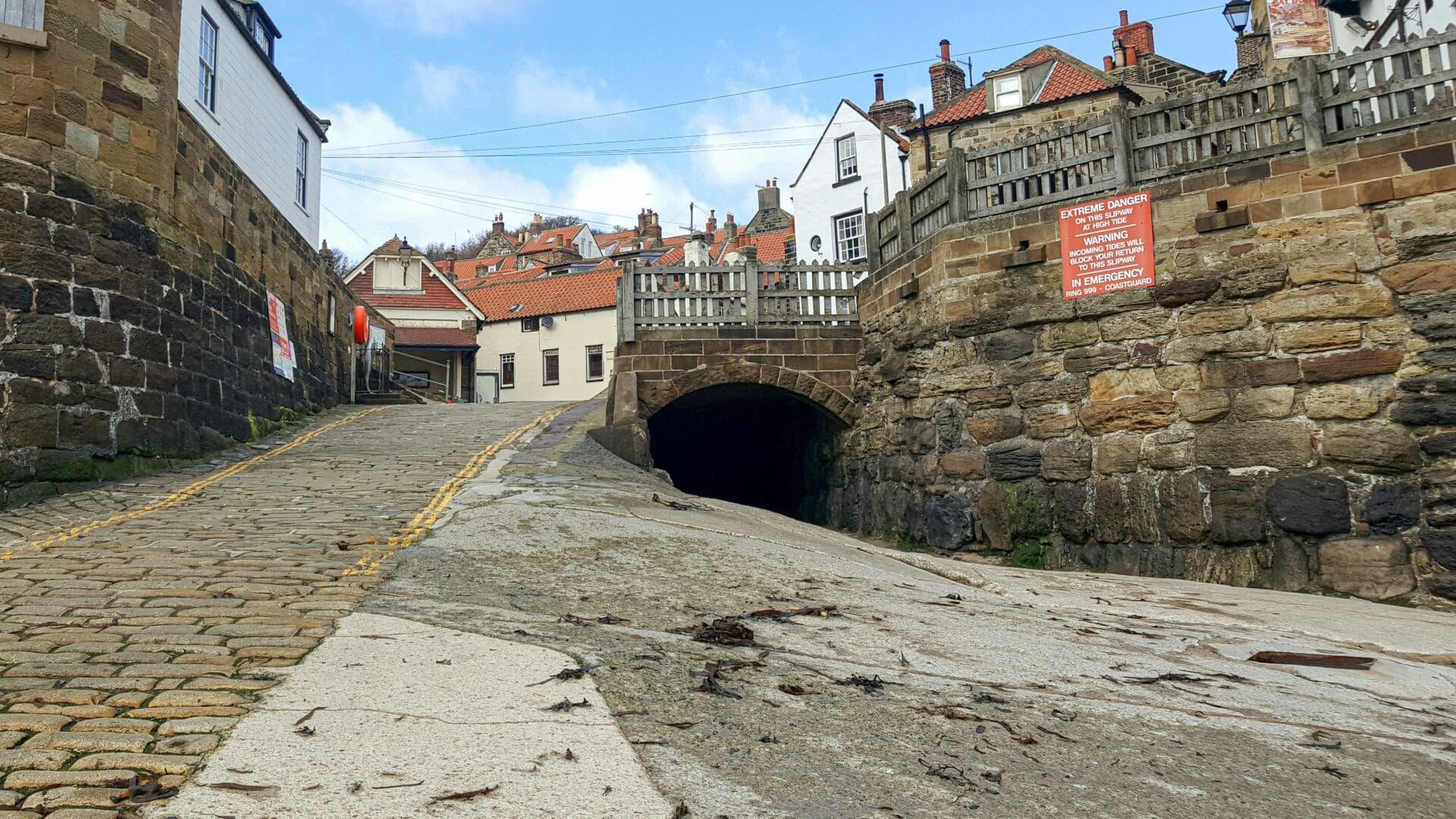
The lower village is pedestrian-only. The cobbled slipway down to the sea has a warning sign about incoming tides, for anyone tempted to park a boat or a pushchair on it at the wrong moment.
It’s worth the walk down anyway. This is the view most people come for, and it’s free.
Where to eat in Robin Hood’s Bay
The village’s dining runs from a pub meal at the bottom of the slipway to an AA Rosette restaurant with sea views. All three picks below are in Robin Hood’s Bay itself, not a drive away.
| Restaurant | Tier | Location | Why go | Book |
|---|---|---|---|---|
| The Bay Hotel | Pub food Budget | The Dock, foot of the slipway | Home-cooked pub food at the Coast to Coast finish line, with outdoor tables and a sea-facing balcony in good weather | |
| Brambles Bistro | Bistro and bar Mid-range | Old Village | A proper bistro menu and a decent wine list, a step up from the village’s pubs without leaving the old streets | |
| Osborne’s at Hotel Victoria | AA Rosette dining Worth it | Clifftop, Station Road | Seasonal North Yorkshire menus and sea views, from Whitby lobster tortellini to a proper Sunday roast |
Where to stay near Robin Hood’s Bay
The biggest hotel in Robin Hood’s Bay is the clifftop Hotel Victoria, home to Osborne’s restaurant above. The Bay Hotel at the foot of the slipway also has a few rooms. For more choice, Whitby, about six miles north, has a much wider hotel selection, and it’s an easy drive or bus ride back down to the bay.
The Royal Hotel sits on Whitby’s West Cliff. It was built in 1847 and 1848, as part of railway pioneer George Hudson’s plan to develop the West Cliff as a Victorian resort.
It’s Grade II listed, and it has a literary link. Bram Stoker stayed nearby at 6 Royal Crescent in 1890, when he began researching Dracula.

| Hotel | Tier | Location | Why book it | Book |
|---|---|---|---|---|
| Duke of York | Harbourside pub with rooms Budget | Church Street, Whitby harbourside | A 200-year-old pub right at the foot of Whitby’s 199 steps, with harbour views from the front rooms | |
| The Royal Hotel | Grade II-listed Victorian hotel Mid-range | West Cliff, Whitby | Built in 1848 on Whitby’s West Cliff Estate, with the Bram Stoker connection and sweeping harbour views | |
| Saltmoore | Luxury spa hotel Worth it | Sandsend, near Whitby | A spa hotel in 85 acres of estate and woodland a short walk from the sea, the smartest base for this stretch of Yorkshire |
Getting to Robin Hood’s Bay
There’s no railway station in the village itself. Most journeys route through Whitby instead, about 5.9 miles and a 12-minute drive to the north.
By train, Whitby is the end of the Esk Valley Line, a scenic Northern Rail branch. It starts at Middlesbrough and threads down the Esk valley through the North York Moors.
From Whitby, Arriva’s X93 bus continues down the coast through Robin Hood’s Bay to Scarborough. It’s a useful onward link if you’re not driving.
If you’re coming from further afield, see our budget travel guide for more on keeping the journey down cheap.
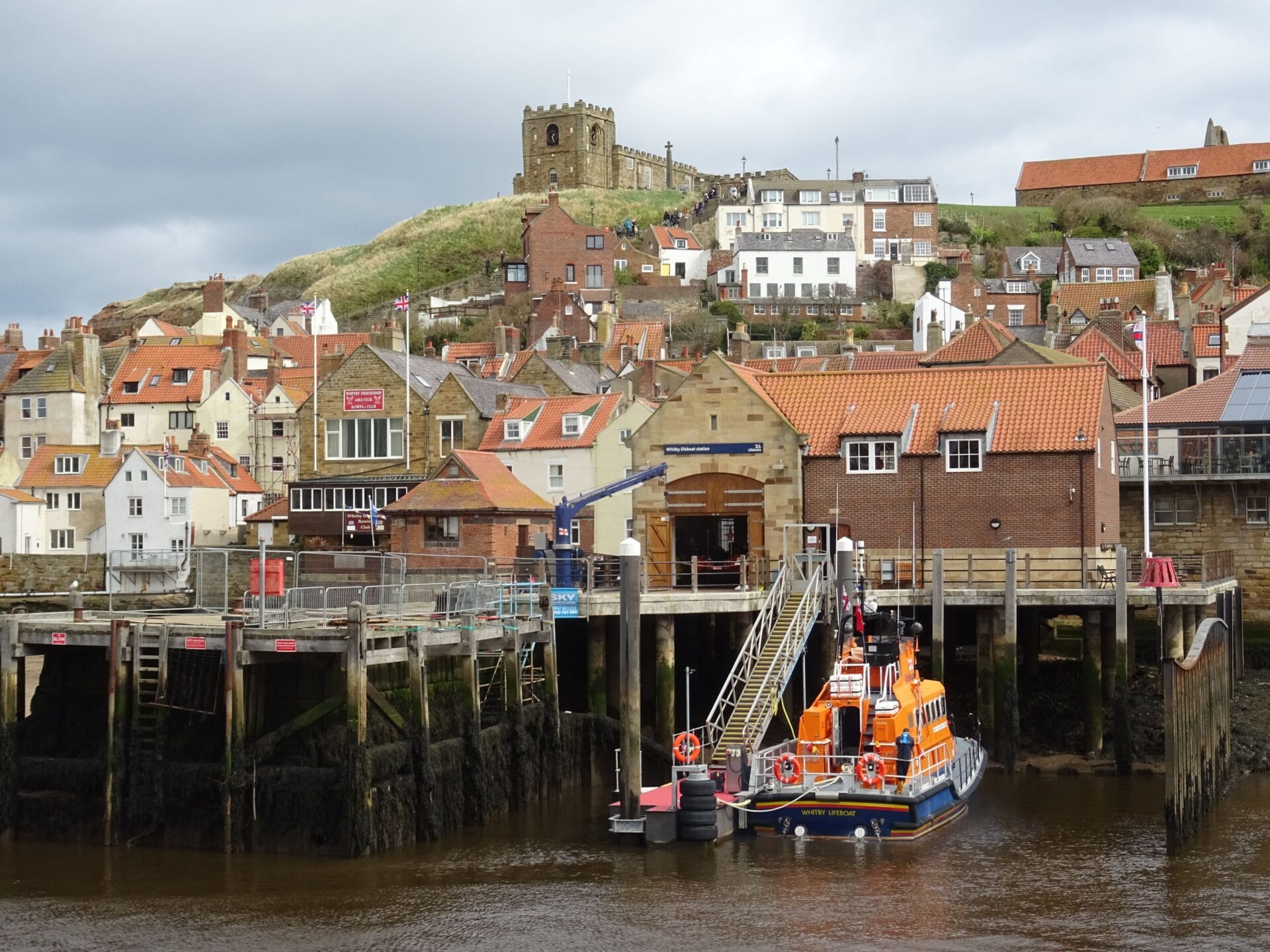
Whitby’s own harbour, overlooked by St Mary’s Church and the RNLI lifeboat station, is worth an hour or two either side of a Robin Hood’s Bay day trip. It’s also where most bus and taxi connections down the coast start from.
By car, the A171 runs along the coast between Whitby and Scarborough, with Robin Hood’s Bay signposted off it.
The lower village is pedestrian-only, and the hill down has a 1:3 gradient. Park in the upper village at the Bank Top or Station Road car parks and walk down; there’s no way to drive to the seafront itself.
Best time to visit Robin Hood’s Bay
Fossil hunting is the one activity here that’s tide-led rather than just weather-led. The beach is best explored around low tide, when the rock pools and the wave-cut platform are exposed.
It’s worth checking tide times before planning a day around it, rather than just picking a date.
August is the busiest month by a distance. It’s driven by school holidays and the steady stream of Coast to Coast walkers finishing their route.
The upper village car parks fill early on sunny weekends. Hotel Victoria and the Whitby hotels above both see rates climb accordingly.
May, June and September tend to bring quieter streets and cooler weather for the walk down the hill. There’s also a better chance of finding a table at Osborne’s without booking weeks ahead.
Frequently asked questions
Why is Robin Hood’s Bay trending in 2026?
It placed fifth in Sykes Holiday Cottages’ 2026 staycation index, a survey of 2,000 people carried out by OnePoll. A real smuggling history, a car-free seafront and a place on the Coast to Coast Walk explain why. It ranked ahead of Brighton and Bourton-on-the-Water.
Is Robin Hood’s Bay a good place for a UK staycation?
Yes, particularly for a short break rather than a week-long stay. The village itself can be explored in half a day.
Fossil hunting, the Old Coastguard Station and the walk to Boggle Hole fill the rest of the time. Whitby, six miles north, adds enough for a longer trip.
What is Robin Hood’s Bay famous for?
Its 18th-century smuggling trade is one reason: the village was described as the busiest smuggling community on the Yorkshire coast. It’s also the official finish point of Alfred Wainwright’s 190-mile Coast to Coast Walk from St Bees.
How do you get to Robin Hood’s Bay?
The nearest railway station is Whitby, on the Esk Valley Line from Middlesbrough, with Arriva’s X93 bus continuing on to Robin Hood’s Bay and Scarborough. By car, it’s just off the A171 coast road between Whitby and Scarborough.
Can you park in Robin Hood’s Bay?
Not in the lower village, which is pedestrian-only. Park at the Bank Top or Station Road car parks in the upper village and walk down the steep, cobbled hill to the seafront.
Where is the best fossil hunting near Robin Hood’s Bay?
The beach directly below the village, part of Yorkshire’s Dinosaur Coast, where ammonites and belemnites turn up among the rock pools. It’s best done around low tide, and it’s worth staying well away from the base of the cliffs, which are prone to rockfalls.
For more UK and international destination guides, see the full Flight Tribe destination guides hub. And if a Yorkshire coast trip has you thinking about the West Country too, our Cornwall staycation guide covers another stretch of Britain’s coast with its own fishing-village charm.

Kate Acaster is Chief Editor at Flight Tribe. She writes about practical travel planning, budget airlines, baggage rules, city breaks, beach holidays and good hotels that do not cost daft money.
Kate has travelled through Europe, South America and beyond, usually with a notebook, a half-formed plan and a strong opinion on airport snacks. At Flight Tribe, her work focuses on helping UK travellers understand what is included, what costs extra, and whether a trip is worth booking at the price shown.
How Kate works
Kate checks the details that can change the value of a trip, including cabin-bag rules, airline fees, hotel location, seasonality, travel dates and booking conditions. She is especially interested in offers that look useful on the surface but need a proper reader-first check before they are worth recommending.
Editorial standards
Flight Tribe covers deals and travel advice for readers first. Affiliate links do not decide whether an offer is worth writing about.