Published 17 October 2024 | Updated 3 September 2026 by Jane Robinson
France’s second city doesn’t get the attention it deserves. Marseille has a reputation, some of it earned and much of it outdated, that keeps UK travellers away. That’s a mistake. The city has one of the best natural settings in Europe, a rich and diverse food scene, and sea-swimming within 20 minutes of the city centre. It also has some of the most interesting free museums in France.
Advertisement
You can find more UK budget travel advice across Flight Tribe’s destination guides.
Search Marseille flights and hotels
It’s not as cheap as Barcelona or Lisbon, but it’s considerably cheaper than Nice or Paris. For UK travellers, it’s a realistic city break: direct flights from multiple airports, two hours in the air, and enough to fill three to five days without spending a fortune.
This guide covers everything you need for a Marseille trip on a budget, from flights and accommodation to what things actually cost and how to visit the Calanques for free.
Getting to Marseille from the UK
Seven UK airports have direct flights to Marseille Provence Airport (MRS). British Airways runs a year-round route from London Heathrow. easyJet flies daily from London Gatwick, also year-round. Ryanair operates from London Stansted year-round, with seasonal services from Bristol, Manchester, and Edinburgh.
| UK Airport | Airline | Operates | Flight Time |
|---|---|---|---|
| London Heathrow (LHR) | British Airways | Year-round | 2 hrs |
| London Gatwick (LGW) | easyJet | Year-round | 2 hrs |
| London Stansted (STN) | Ryanair | Year-round | 2 hrs |
| Bristol (BRS) | easyJet / Ryanair | Seasonal | 2 hrs |
| Manchester (MAN) | Ryanair | Seasonal | 2 hrs 15 min |
| Edinburgh (EDI) | Ryanair | Seasonal | 2 hrs 30 min |
Return flights in shoulder season (April, May, late September) typically fall in the £50–120 range from London airports. Summer fares climb considerably, particularly in August. Our guide to getting cheap flights from the UK covers the best strategies for Ryanair and easyJet routes. British Airways occasionally runs sales on the Heathrow service; we track those on our British Airways sale dates page. For timing your booking, Tuesday and Wednesday mornings tend to offer better fares eight to twelve weeks out.
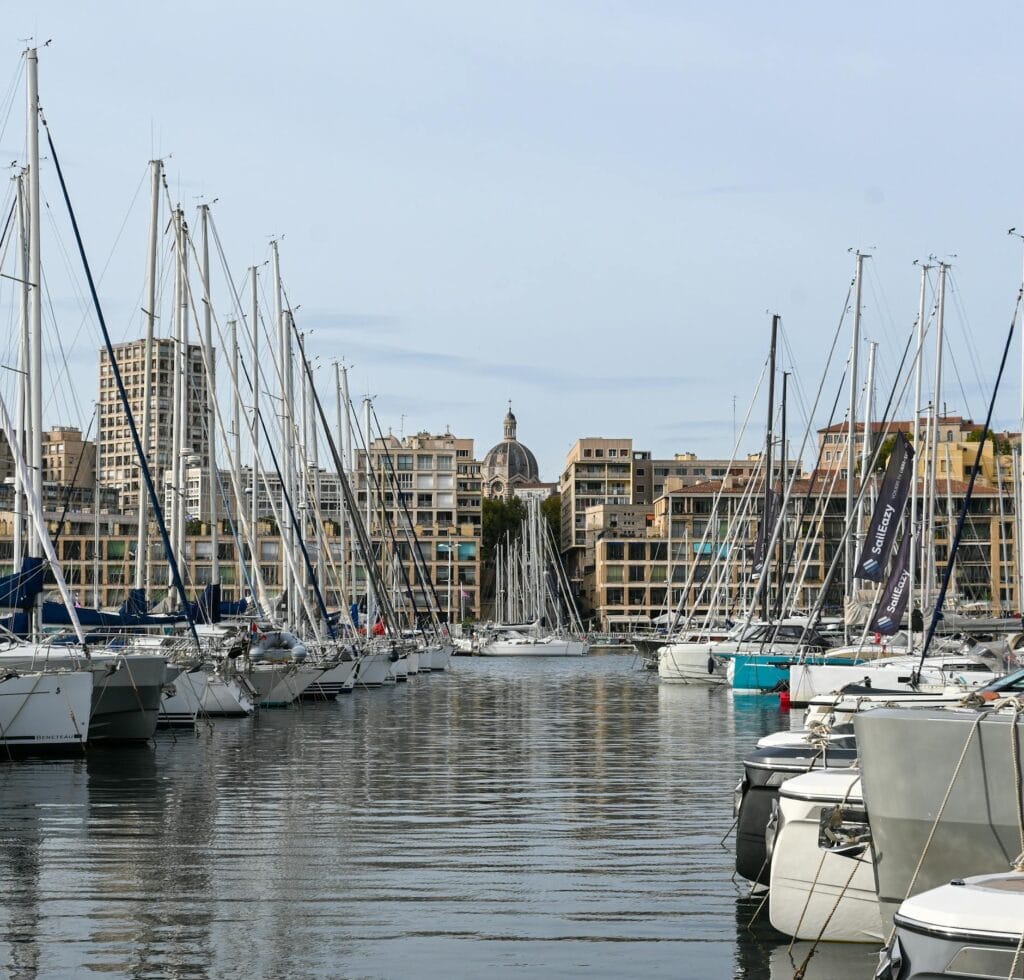
The Vieux-Port is the beating heart of Marseille. Hundreds of sailing boats line the quays. A fish market runs every morning from around 8am, where local fishermen sell their catch directly from the boat.
Sitting on the harbour steps costs nothing. The whole port area is free to explore and takes the better part of a morning to walk properly.
When to Visit Marseille
May and September are the best months for most UK visitors. Temperatures sit between 20 and 25°C, the sea is warm enough to swim in from late May, and hotel rates are 30–40% lower than in August. The Calanques are also far more pleasant to hike in this weather than at the height of summer.
June is also a strong choice and falls outside the UK school summer holidays, which keeps costs down. See our where’s hot in May and where’s hot in June round-ups for other destinations worth comparing.
August is the hottest month, with daily highs regularly reaching 30°C. It’s also the most expensive. The city fills with French holidaymakers and coastal areas get crowded. If you’re travelling in August, book accommodation well in advance and expect to pay a premium.
Winter (December to February) is mild but wet. Temperatures rarely drop below 7°C, though the Mistral wind can make it feel colder. It’s the cheapest time to visit, but some seasonal restaurants and boat services close.
Where to Stay in Marseille
Budget options are limited compared to cities like Lisbon or Prague, but they exist. The Vieux-Port area is the most convenient base, close to transport and the main sights. Saint-Victor and the 7th arrondissement are cheaper than the waterfront without being far away.
Hostel dorms run from around £18–35 per night. Budget hotels with private rooms typically start at £45–80, rising significantly in high season. Mid-range hotels near the old port cost £80–130 in spring and autumn, and £120–180 in July and August.
Apartment rentals via Booking.com or Airbnb can work out cheaper for two or more people, particularly for stays of three nights or longer. The 5th and 6th arrondissements offer good value within easy reach of the centre.
Browse Marseille hotels and city breaks on Expedia. Filtering by neighbourhood and guest rating can turn up better-value options than sorting by price alone.
Free and Cheap Things to Do
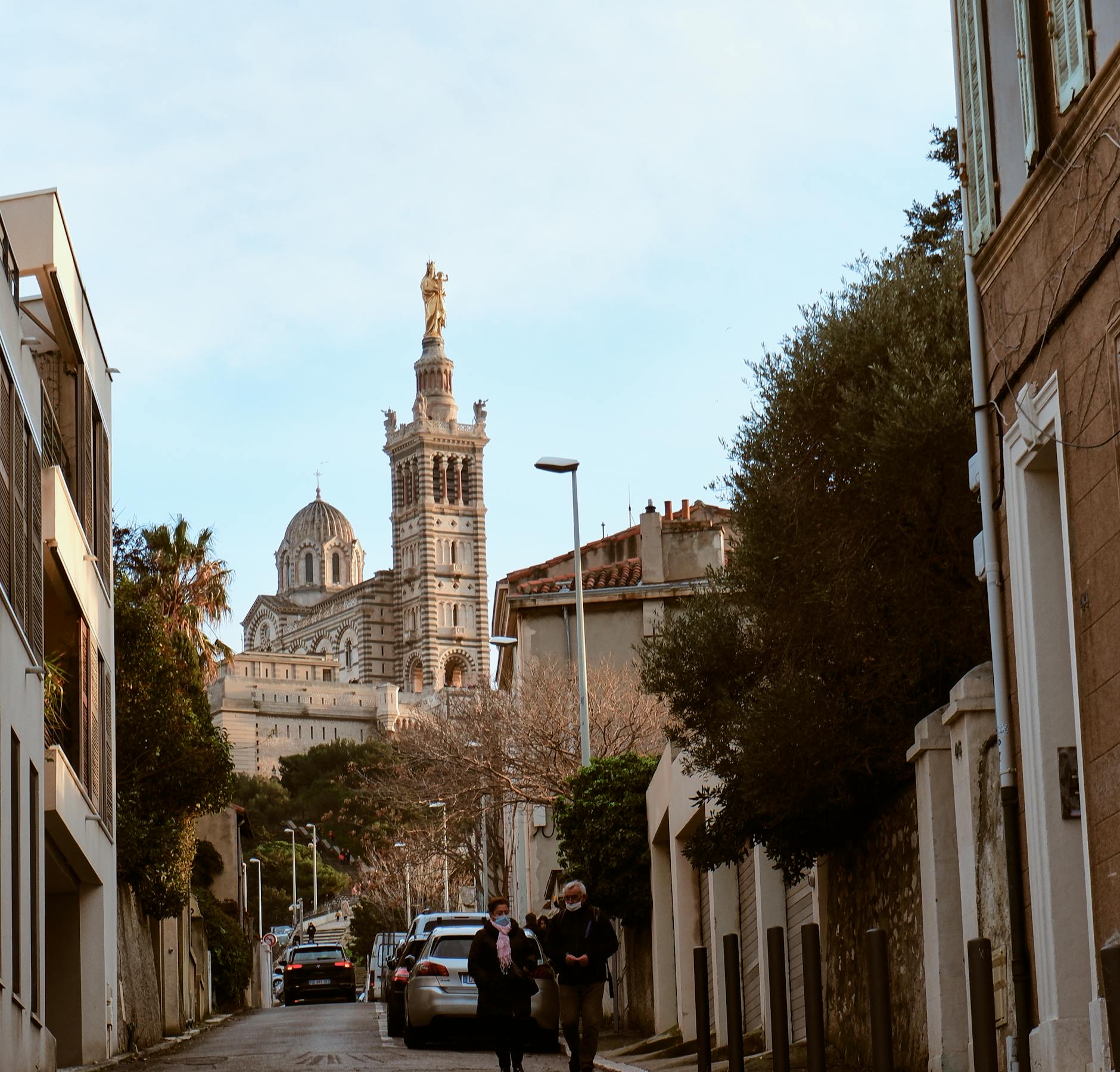
Marseille has more free attractions than its reputation suggests. Notre-Dame de la Garde, the city’s iconic basilica, sits at the highest point in Marseille and offers one of the best views in the south of France. Entry is free. The walk up from the Vieux-Port takes around 30 minutes and is worth it for the view alone.
Le Panier is the oldest neighbourhood in Marseille, dating back around 2,600 years. The streets are narrow, steep, and covered in street art. It’s free to walk and takes a couple of hours to explore properly. The Vieille Charité is a 17th-century almshouse turned arts complex, with a free courtyard and two paid museums inside.
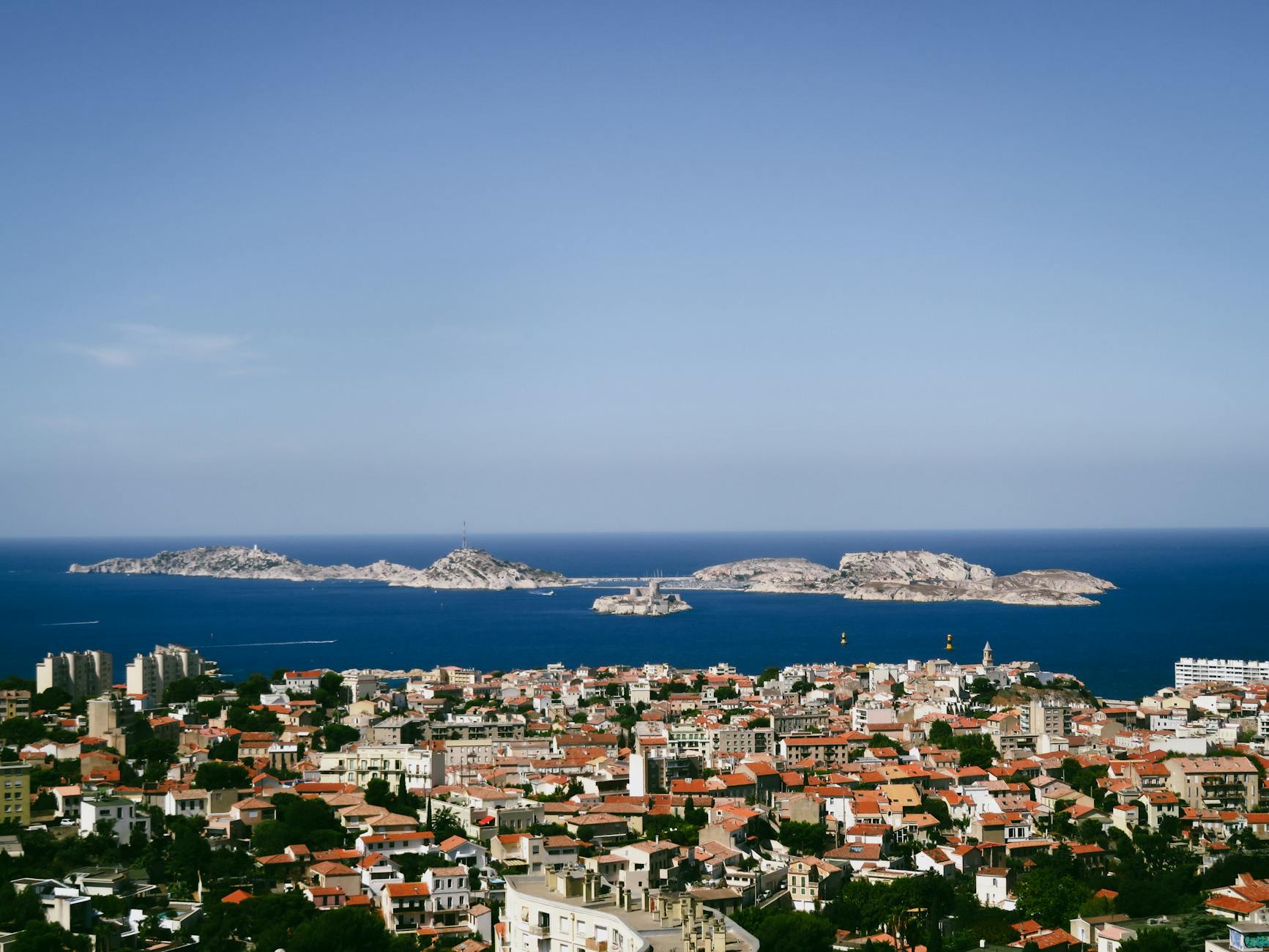
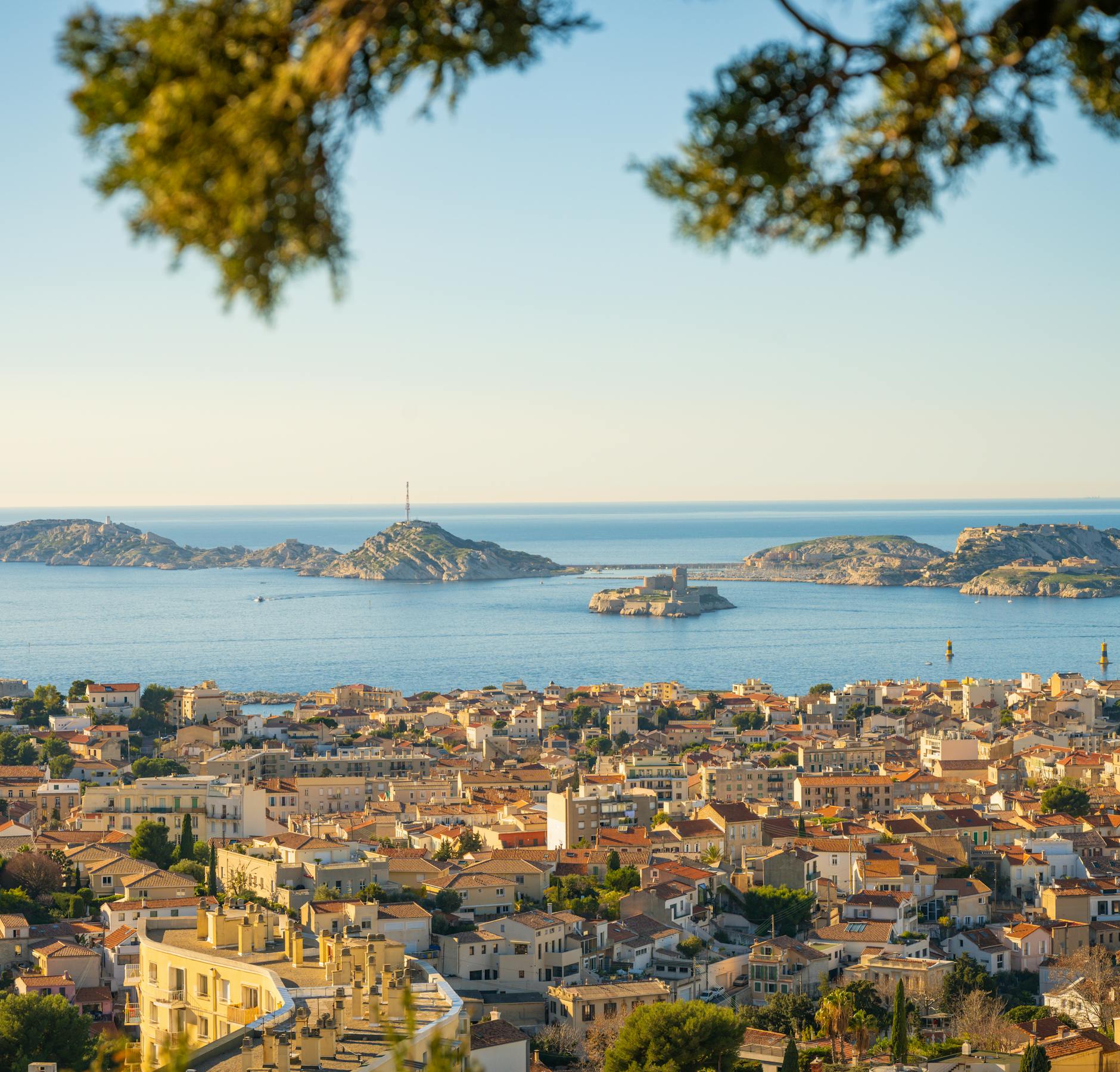
La Corniche is a 5km coastal walkway along the waterfront south of the Vieux-Port. The views over the Mediterranean towards the Frioul Islands are excellent. It costs nothing and passes some of the city’s best swimming spots.
MuCEM (the Museum of European and Mediterranean Civilisations) is one of the most architecturally striking buildings in France. You can walk around the exterior and across its fortification bridge for free. Interior exhibitions cost €11, but the free areas alone are worth an hour. The Palais de Longchamp, Borély Park, and Mazargues War Cemetery are all free.
The ferry across the Vieux-Port costs around €0.50 each way. It’s a legitimate service, not a tourist gimmick, and it saves a 15-minute walk around the harbour. Le Vélo, the public bike-sharing system, costs €1 to register for a 7-day pass, with the first 30 minutes of each ride free.
The Calanques
The Calanques are steep limestone inlets stretching along the coast east of Marseille. They are part of a national park and arguably the most dramatic natural scenery in France. Bus route 21 from the city centre goes to Luminy, the main trailhead, in around 30 minutes.
Hiking is free. The most popular route goes from Luminy to Calanque de Morgiou, around two hours each way. Calanque de Sormiou and Calanque d’En-Vau are also accessible on foot, though En-Vau requires a longer, harder hike.
Boat tours of the Calanques run from the Vieux-Port. A standard two-hour tour costs around €20–25. Full-day tours that stop at multiple inlets and allow swimming cost €35–50. Buy directly from operators at the harbour rather than through hotel concierges to avoid the markup.
The national park has access restrictions in summer (July and August) for fire risk reasons. During those months, some routes require advance booking through the park’s online reservation system. Spring and autumn have no restrictions. Cassis, the port town at the eastern end of the Calanques, is accessible by train in 25 minutes from Marseille Saint-Charles and gives access to the inlets from the other direction.
What Things Cost in Marseille
Marseille is moderately priced. It’s not cheap in the way Lisbon was a few years ago, but it’s significantly more affordable than Nice or the Côte d’Azur. The table below uses approximate current exchange rates (around €1.17 to the pound).
| Category | Budget | Mid-range |
|---|---|---|
| Accommodation | £18–30 (hostel dorm) | £50–90 (private room) |
| Breakfast | £3–5 (café/bakery) | £8–12 (sit-down) |
| Lunch | £8–12 (set menu) | £15–22 (restaurant) |
| Dinner | £12–18 (bistro) | £25–40 (restaurant) |
| Public transport | £4 (day pass) | £13 (7-day pass) |
| Calanques boat tour | £17–22 (2 hrs) | £30–43 (full day) |
| Château d’If ferry + entry | n/a | £16–20 |
| Typical daily total | £45–65/day | £100–150/day |
These figures exclude flights and are based on a typical May or October visit. Prices rise roughly 20–30% in June and July, and 30–50% in August.
Day Trips from Marseille
Cassis is the easiest day trip. The train from Saint-Charles runs roughly every 30 minutes and takes 25 minutes. The town has a pretty harbour, a few beaches, and access to the western end of the Calanques. Most visitors spend half a day here.
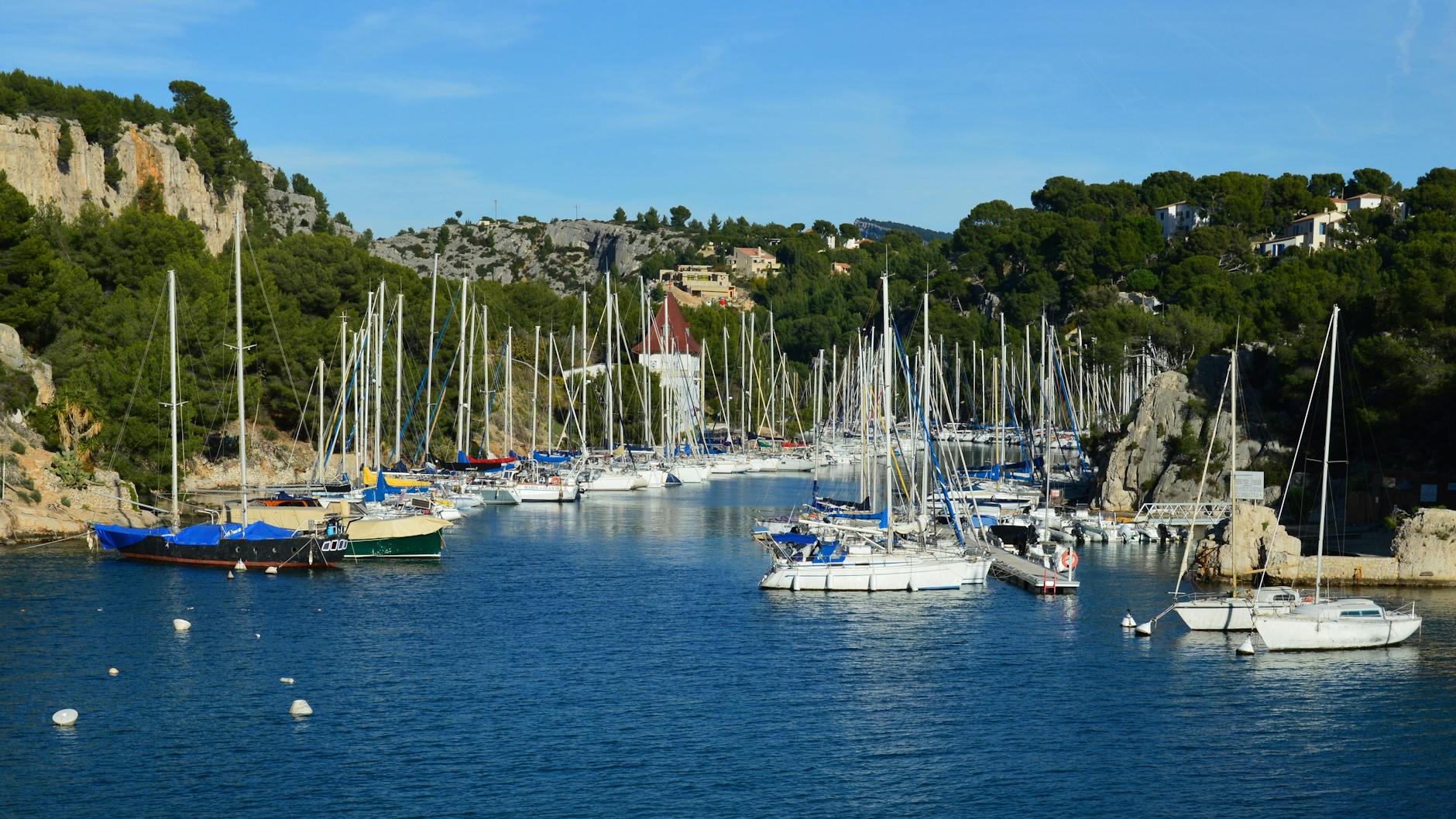
Cassis is 30 minutes by train from Saint-Charles and has a pretty harbour, limestone cliffs, and access to the western end of the Calanques. It is worth a half-day.
Aix-en-Provence is also 30 minutes by regional train. A university city with a well-preserved old town, good food markets, and a slower pace than Marseille.
The Frioul Islands (Pomègues and Ratonneau) are accessible by ferry from the Vieux-Port in about 20 minutes. The islands are largely undeveloped, with clear water for swimming and basic walking trails. Château d’If, the island fortress from Alexandre Dumas’s The Count of Monte-Cristo, is a separate stop on the same ferry route. Entry to the château costs around €6–9 on top of the ferry fare.
Money-Saving Tips
- Eat lunch as your main meal. Most brasseries offer a prix fixe menu of two or three courses for €12–18. The same meal costs nearly twice as much at dinner. Locals eat properly at lunch; tourists often miss it.
- Get a transport pass. A single metro or bus ride costs €2. A day pass is €5.20 and a 7-day pass is €15.50. If you’re staying four or more days, the weekly pass pays for itself quickly.
- Check the City Pass. The Marseille City Pass covers entry to more than ten museums and attractions, plus unlimited public transport. It costs €29 for 24 hours, €37 for 48 hours, and €43 for 72 hours. Run the numbers against what you actually plan to do before buying.
- Book Calanques boat tours at the harbour. Tickets sold by street touts and hotel concierges carry a significant markup. Walk down to the Vieux-Port and buy directly from the operators.
- Eat in Noailles. The Noailles neighbourhood (around the metro station of the same name) is Marseille’s North African quarter. The food is cheap, excellent, and nothing like the tourist brasseries near the port. The daily market sells fresh produce, spices, and street snacks at low prices.
- Use the port ferry. The Vieux-Port ferry (€0.50 each way) saves a 15-minute walk around the harbour and is a pleasant way to cross the water.
- Book accommodation early for summer. Marseille has less hostel stock than Barcelona or Berlin. Good budget places sell out months ahead for July and August. Travelling in May, June, or September gives you far more options at lower prices.
If Marseille appeals to you, the same budget travel approach works well across Europe. Our budget travel guide to Berlin covers a similar framework for another city that rewards visitors who look past the tourist trail.
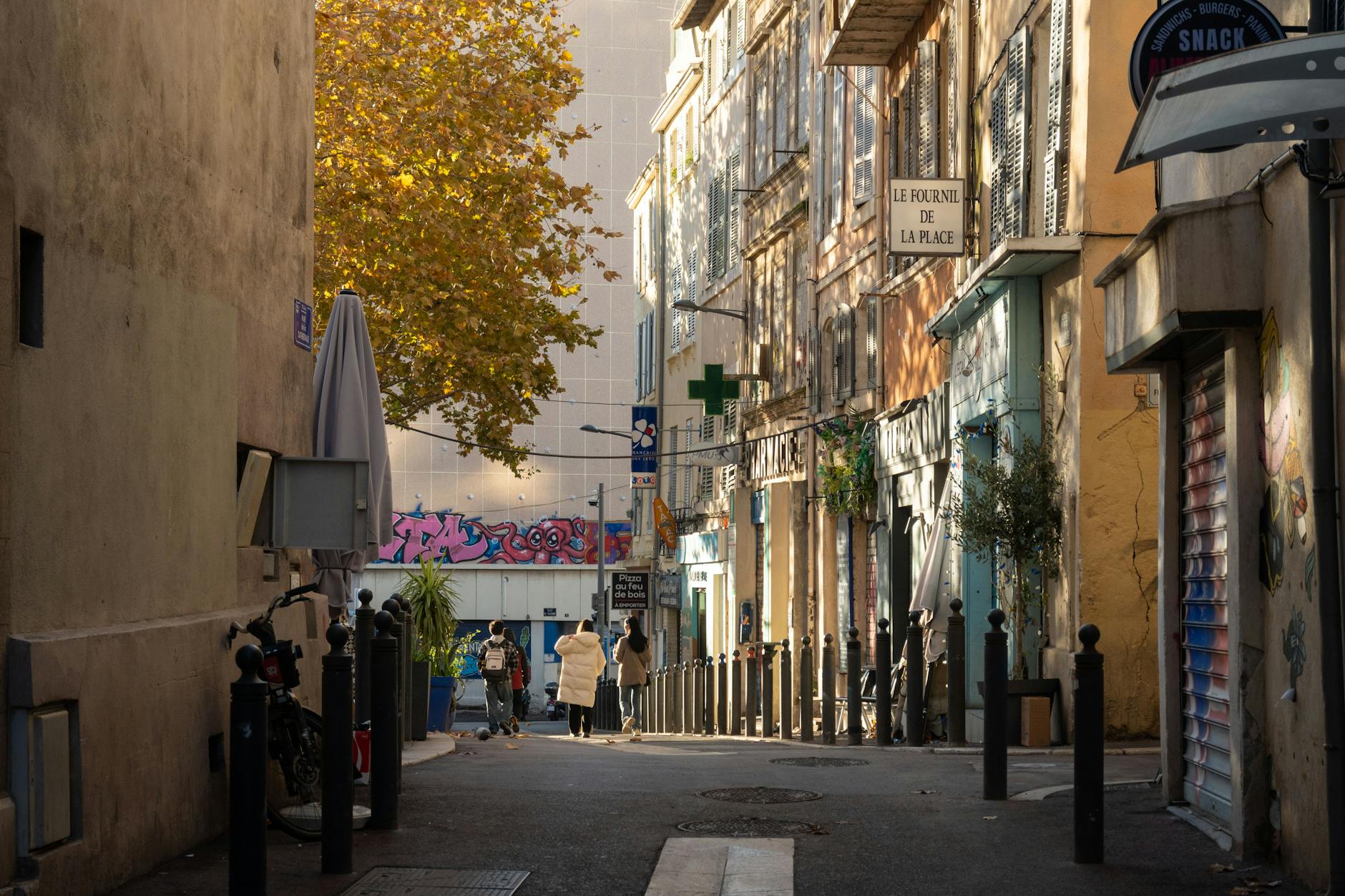
The city centre, the Vieux-Port, Le Panier, and the southern arrondissements are all safe during the day and evening. The places most visitors go are comparable in safety to any large French city.
The main risk is pickpocketing around Saint-Charles station and on the metro. Keep your bag close in busy areas and use a taxi or Uber after midnight rather than walking unfamiliar streets.
Is Marseille Safe?
Marseille’s reputation for crime is largely based on news coverage of the northern districts, which most visitors never go near. The city centre, the Vieux-Port, Le Panier, and the 6th, 7th, and 8th arrondissements are all safe during the day and in the evening.
Pickpocketing is a genuine risk around the Saint-Charles train station and on the metro. Keep your bag close in those areas, particularly at busy times. The Quartiers Nord have a higher crime rate and there’s no tourist reason to visit. Stick to the central and southern parts of the city and safety is unlikely to be a concern.
Solo travellers generally feel comfortable in the main tourist areas, though standard precautions apply: avoid walking back to accommodation alone late at night after drinking, and use a taxi or Uber after midnight rather than walking unfamiliar streets.
Frequently Asked Questions
Is Marseille cheap for UK travellers?
Marseille is moderately priced, cheaper than Paris but not as cheap as Lisbon or Krakow. Expect to spend around £45–65 per day on a budget, covering a hostel bed, market meals, and public transport.
Which UK airports fly direct to Marseille?
British Airways flies year-round from London Heathrow, and easyJet from London Gatwick. Ryanair runs routes from London Stansted year-round, plus seasonal flights from Bristol, Manchester, and Edinburgh.
What is the best time to visit Marseille from the UK?
May and September offer the best balance of warm weather (20–25°C) and lower prices. August is the peak of summer but hotel rates can be 30–50% higher and the city is at its busiest.
Is Marseille safe for tourists?
The city centre and tourist areas are safe. Watch your belongings around the Saint-Charles train station and on the metro, and avoid the northern suburbs (Quartiers Nord) after dark. The main tourist areas are comparable in safety to any large French city.
What is the Marseille City Pass and is it worth it?
The Marseille City Pass covers entry to over ten museums and attractions, plus unlimited public transport. It costs €29 for 24 hours, €37 for 48 hours, and €43 for 72 hours. Worth buying if you plan to visit several paid attractions in a short trip.
Do I need to speak French in Marseille?
English is understood at most hotels, museums, and tourist-facing businesses. Learning a few basic French phrases is appreciated but not necessary for navigating the main tourist areas.

Jane Robinson is Senior Editor at Flight Tribe. She has a Master’s in English and Journalism, and writes about flight deals, holiday offers and practical ways UK travellers can spend less without wasting time on weak promotions. Jane has spent time living and working across Asia and New Zealand, which gave her a lasting interest in how people travel, eat, move around and spend their free time in different places.
At Flight Tribe, her work focuses on verified prices, realistic travel dates, booking terms and whether a deal is actually worth attention.
How Jane works
Jane checks offers against live supplier pages wherever possible, including prices, dates, departure points, baggage rules and booking conditions. She is quietly sceptical of anything that sounds too good to be true, and helps keep Flight Tribe’s travel advice useful, honest and easy to act on.
Editorial standards
Flight Tribe covers deals for readers first. Affiliate links do not decide whether an offer is worth writing about.