Published 10 July 2026 | Updated 9 October 2026 by Kate Acaster
Greece budget travel has a reputation problem. Santorini sunsets and Mykonos beach clubs suggest a country that empties wallets, but most of Greece is priced closer to Portugal than to the French Riviera. A taverna dinner with wine rarely tops €20 a head outside the famous islands, ferries between islands cost less than a UK train ticket, and the Ionian and Dodecanese island groups run noticeably cheaper than the Cyclades most people picture when they hear the word “Greece”.
Advertisement
You will find more destinations covered in Flight Tribe’s destination guides, each built around verified prices for UK travellers.
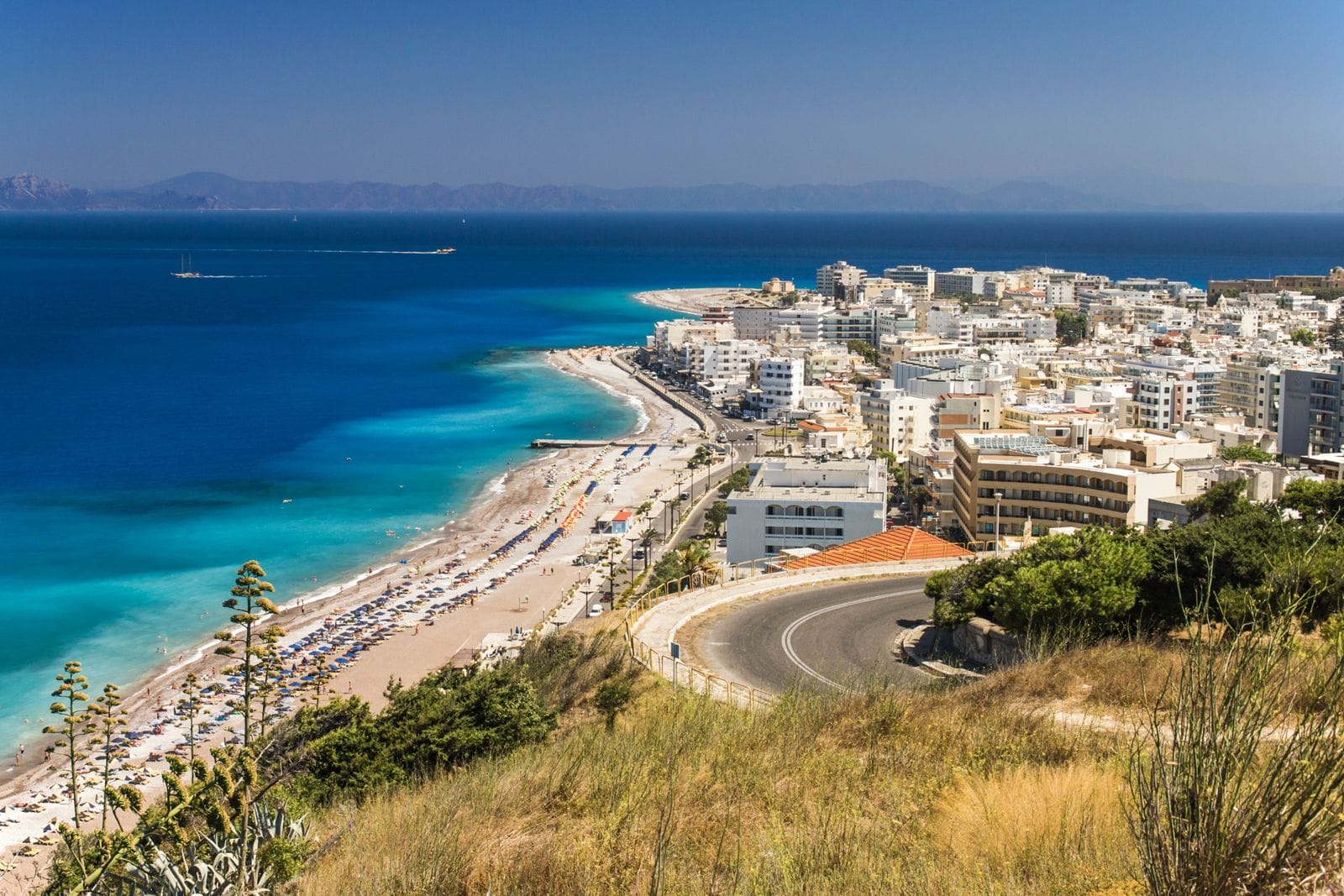
Return flights from UK airports start from around £40 to £70 in shoulder season on Ryanair and easyJet to Athens, Corfu, and Rhodes. Santorini and Mykonos run higher, typically £70 to £120 return, reflecting lower flight frequency and stronger demand. A seven-night package to Corfu or Rhodes through Jet2holidays, TUI, or easyJet Holidays starts from around £230 to £280 per person in May or late September, rising sharply to £500 to £700 or more in August.
Latest Greece deals
Loading deals…
Explore our Greece travel guides
We have detailed guides to Greek destinations, covering where to stay, what to do, and how to keep costs down. More island guides are on the way.
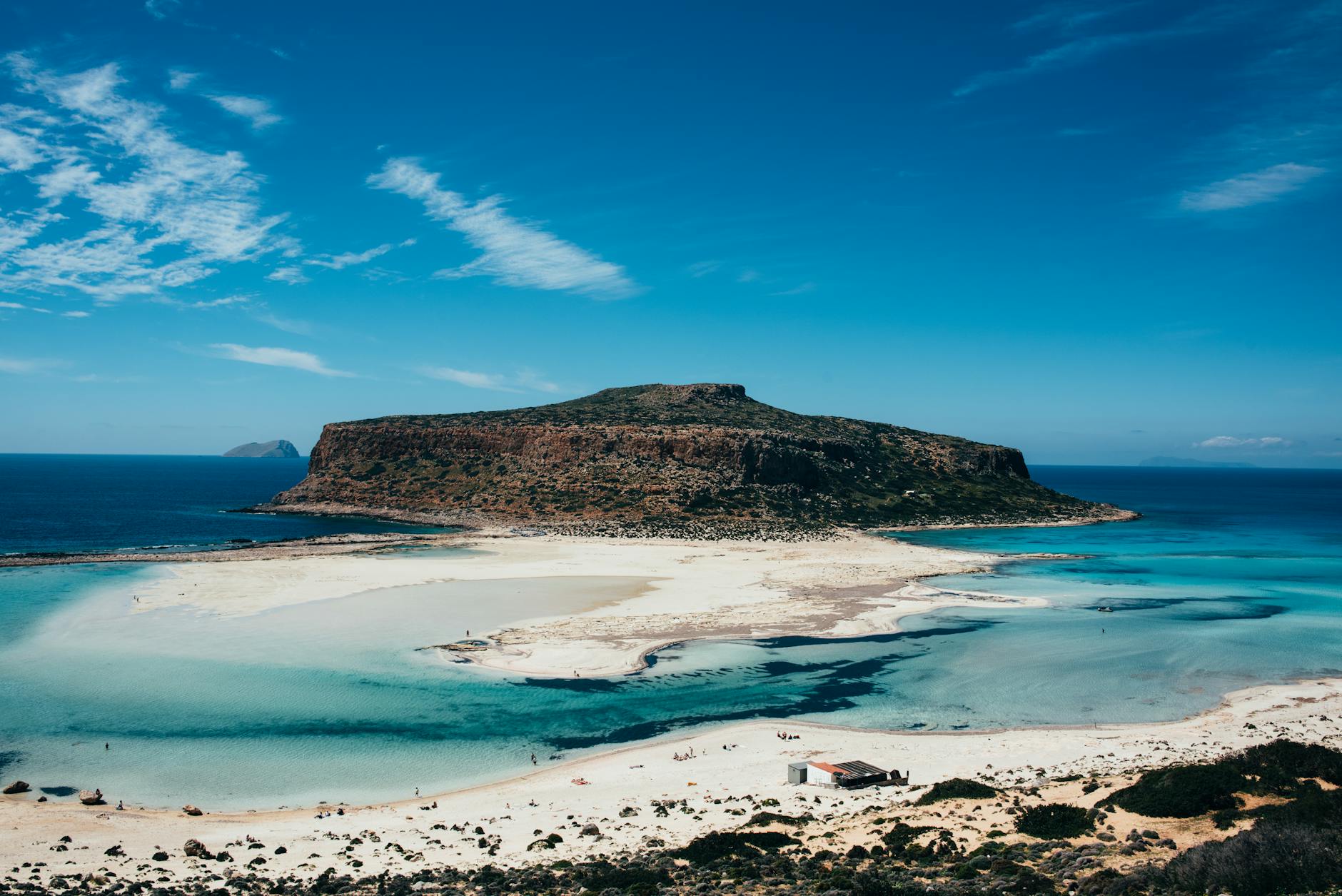
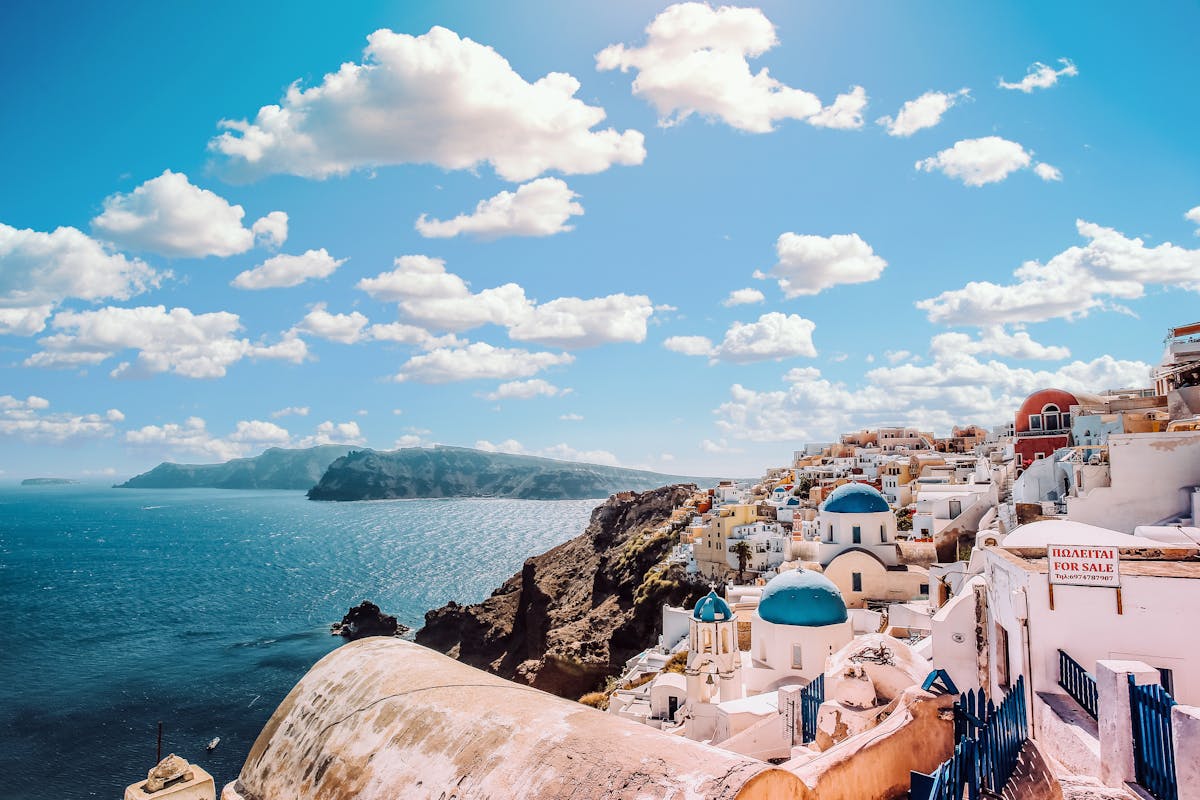
The best beaches in Greece
Greece has more coastline than almost any country in Europe, spread across more than 200 inhabited islands. These are the beaches worth planning a trip around.
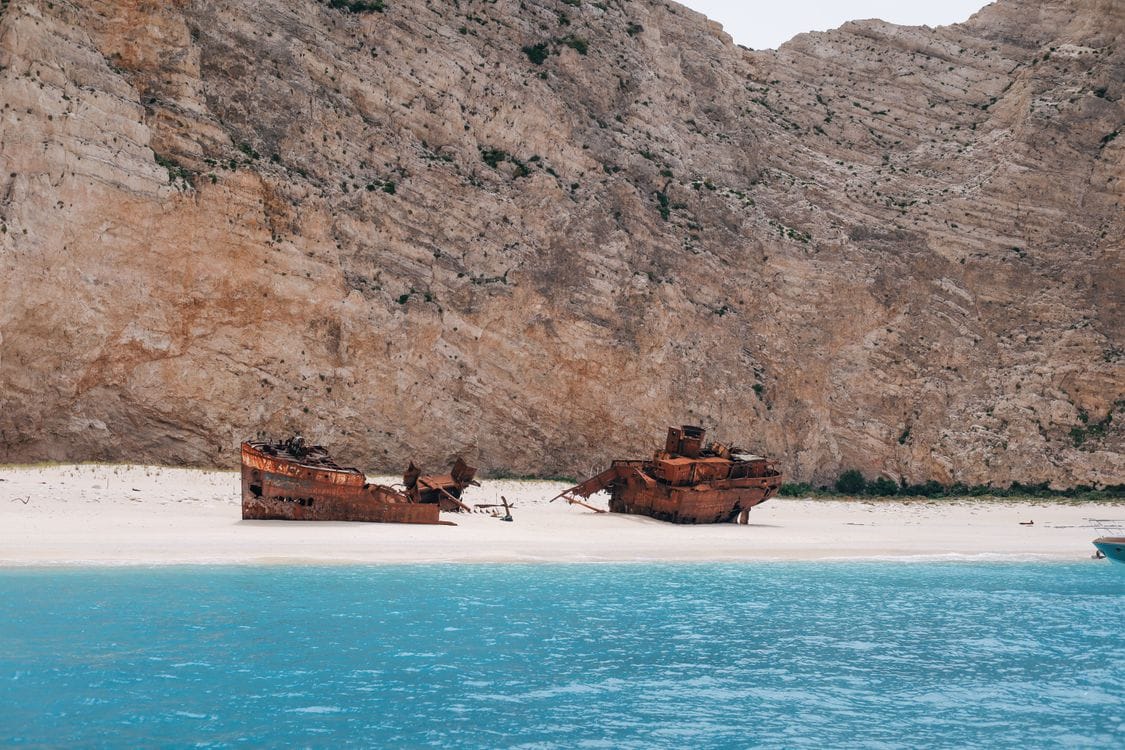
Navagio, Zakynthos
Greece’s most photographed beach, enclosed by white limestone cliffs. Landing on the beach and swimming in the bay are banned in 2026. The rusting shipwreck that gives the beach its nickname has sat there since 1980. Boat trips from Porto Vromi and Agios Nikolaos run through summer, but boats must stay 50 metres offshore. A free clifftop viewpoint above Anafonitria village gives the classic view.
Myrtos Beach, Kefalonia
A dramatic curve of pale pebble and turquoise water below steep cliffs, consistently ranked among Europe’s best beaches. A viewing platform above the beach gives the classic photograph before the drive down. Sunbeds and a snack bar operate in season.
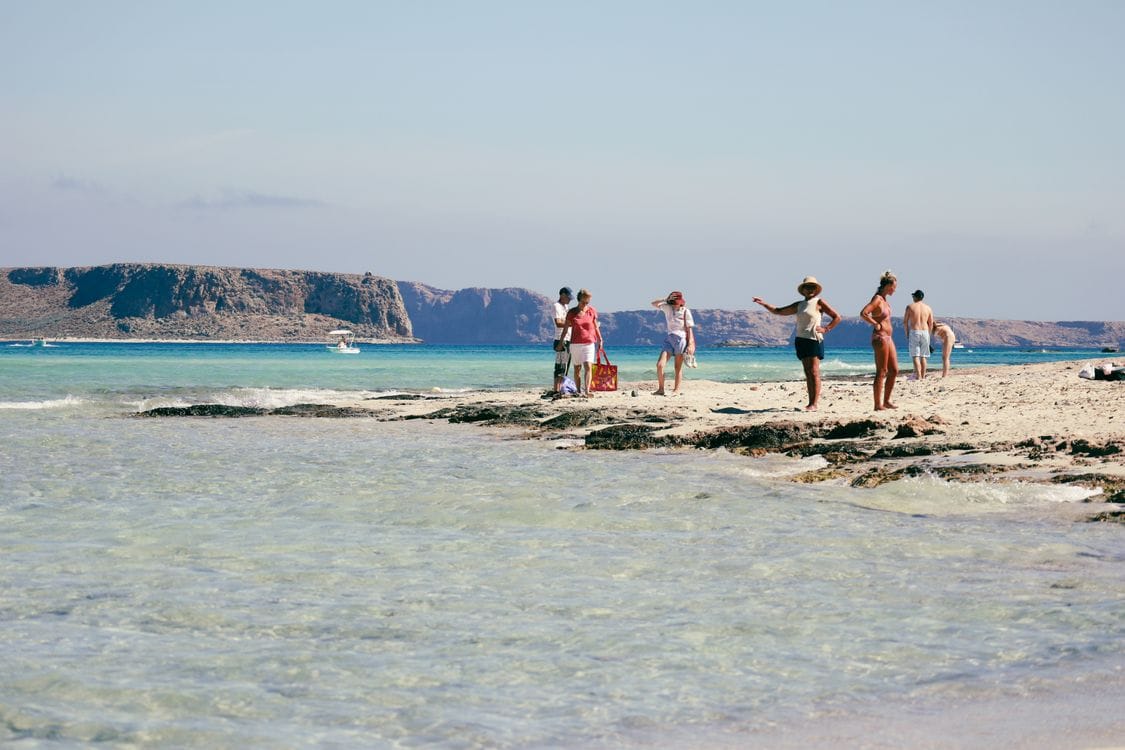
Balos Lagoon, Crete
A shallow, pale-turquoise lagoon at Crete’s north-western tip, reached by a steep path or a summer boat trip from Kissamos. The water is warm and knee-deep for a long way out, which makes it a standout for families as well as photographers.
Elafonissi, Crete
Famous for sand with a faint pink tint, caused by crushed shell fragments, most visible late in the day. The lagoon side is shallow and calm, good for young children, while the ocean side picks up more of a swell. Around an hour’s drive from Chania.
Things to do in Greece
Greece rewards visitors who leave the sunbed occasionally. These are the experiences worth building a day around, from ancient ruins to a monastery balanced on a rock pillar.
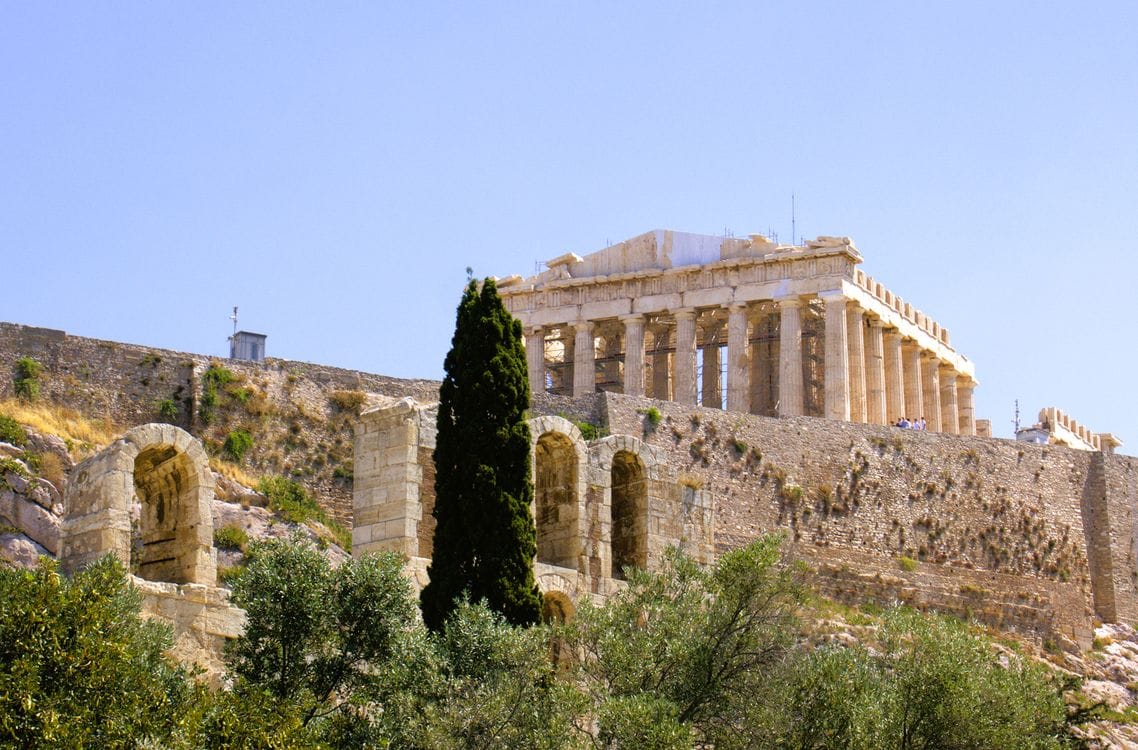
- Walk up to the Acropolis in Athens for the Parthenon at golden hour, when the crowds thin and the marble turns amber. Buy timed tickets in advance in summer.
- Get lost in Plaka, the old neighbourhood below the Acropolis. Narrow lanes, neoclassical houses, and tavernas that stay open late.
- Sail the Cyclades for a few days rather than committing to one island. Santorini, Naxos, and Paros are all a short ferry hop apart.
- Walk the Samaria Gorge in Crete, one of Europe’s longest canyons at around 16km. Starts high in the White Mountains and finishes at the coast near Agia Roumeli.
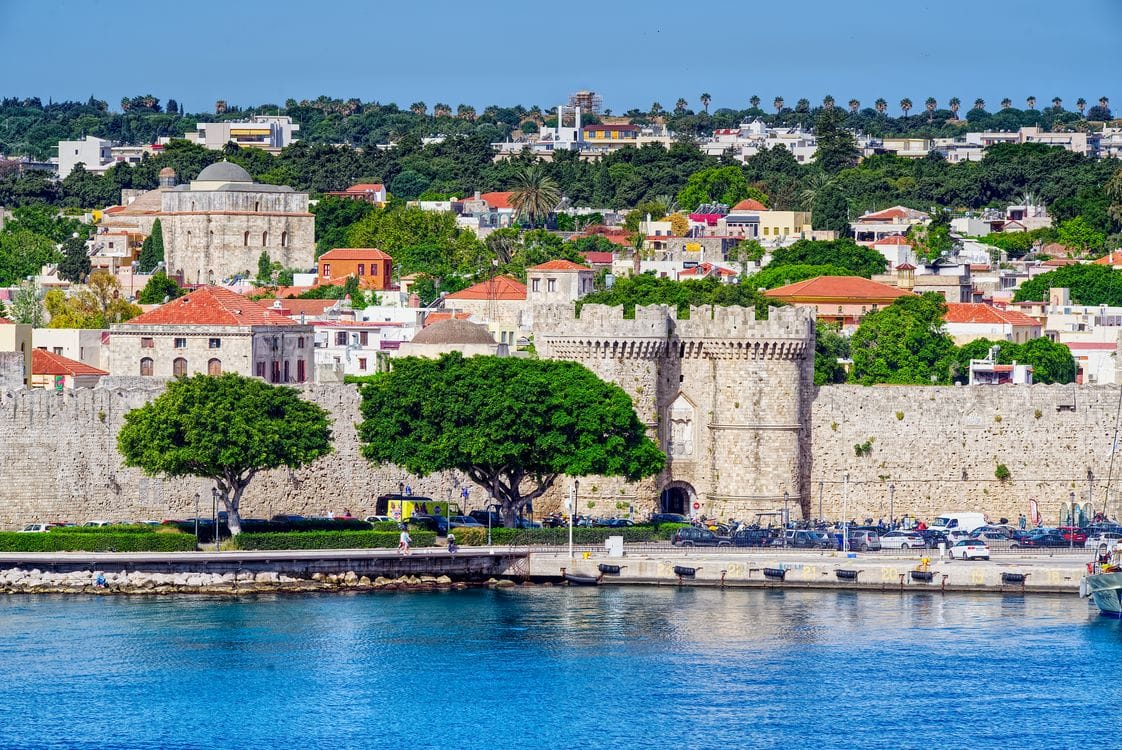
- Walk the ramparts of Rhodes Old Town, an intact medieval city built by the Knights Hospitaller. The rampart walk runs about 1km from the Palace of the Grand Master to St John’s Gate.
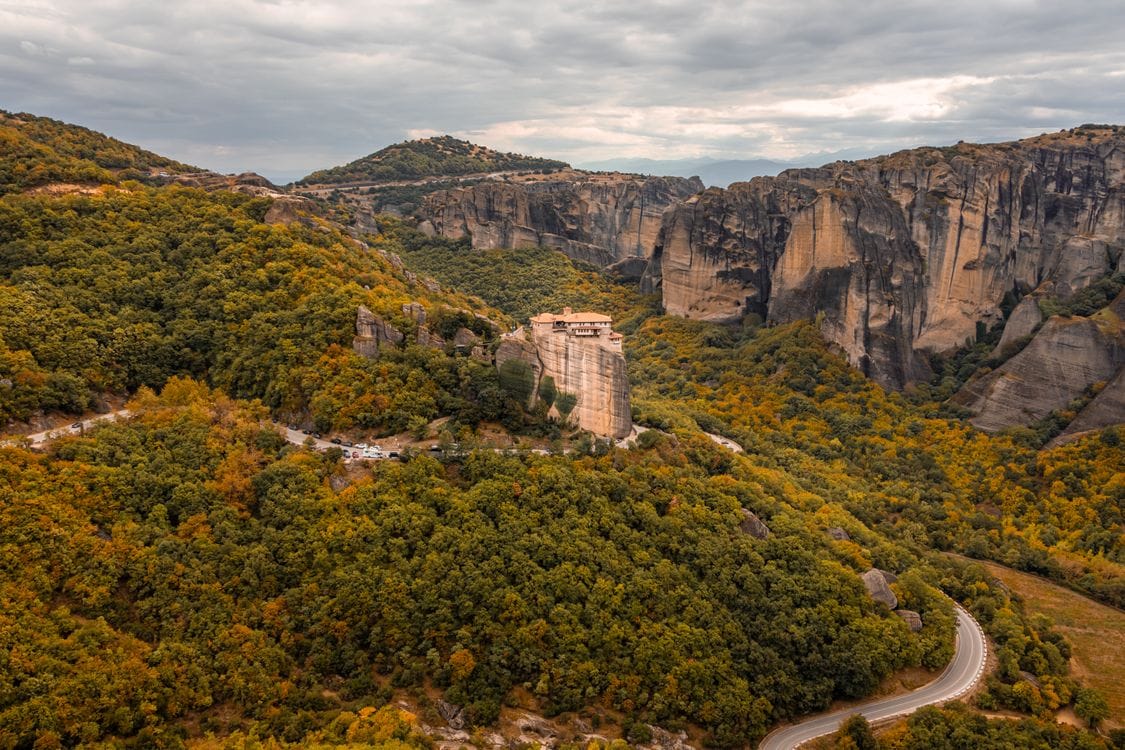
- Visit the monasteries of Meteora, built directly onto sandstone pillars in central Greece from the 14th century onward. Six are still active and open to visitors, with a modest dress code enforced at the door.
- Take a day trip to Delphi from Athens, around two and a half hours by road. The setting on Mount Parnassus is as striking as the ruins themselves.
- Eat a late taverna dinner the way locals do, starting after 9pm, ordering several small plates to share, and finishing with a complimentary glass of raki or a slice of fruit.
- Try a wine tasting in Santorini. The island’s volcanic soil produces distinctive, mineral-driven whites you won’t easily find outside Greece.
For the full official listings beyond this list, the Greek National Tourism Organisation maintains a full regional directory.
When is the best time to visit Greece?
The answer depends partly on which island group you’re heading to. Our detailed guide to the best time to visit Greece covers it fully, but here is the short version.
Late spring (May to early June) is the best overall window. The sea is warm enough to swim in most islands by mid-May, prices sit well below the August peak, and archaeological sites are far less crowded. A May package to Corfu or Crete costs £150 to £250 per person less than the same week in August.
Early autumn (September to early October) is the other strong value period. Sea temperatures stay warm through September in most of the Aegean and Ionian, and accommodation prices drop noticeably once the Greek school term restarts.
Summer (July to August) is peak season, with the highest prices and, on islands like Santorini and Mykonos, uncomfortable crowds. Winter mostly suits Athens: the city stays mild, flights are cheap, and many island hotels close entirely from November to April.
Airlines flying to Greece from the UK
Ryanair and easyJet between them serve Athens, Corfu, Rhodes, Crete (Chania and Heraklion), Kos, Santorini, Zakynthos, and Kefalonia from more than 20 UK airports in summer. Ryanair tends to have the cheapest headline fares. easyJet’s included cabin bag allowance can make it better value for a short break without checked luggage. British Airways and Aegean Airlines both fly Heathrow to Athens year-round, useful for island-hopping via the mainland outside the summer charter season. Jet2 operates seasonal routes to most major islands from Manchester, Leeds Bradford, Newcastle, Birmingham, and Stansted, with ATOL-protected packages through Jet2holidays. If you’re booking a package holiday to Greece, look for both ATOL and ABTA protection, which covers you if the operator or airline collapses before or during your trip. Fares across all carriers are cheapest from November through March to Athens, and from May or late September for the islands, outside school half-term.
Greece budget travel: what does a holiday cost?
Costs vary sharply by island. Santorini and Mykonos sit well above the Greek average; Corfu, Crete, and the Dodecanese are noticeably cheaper. Here is a rough daily guide, excluding flights, for three budget levels on a mid-priced island. See our cheapest Greek islands ranking for hotel prices on seven islands for the same June 2027 week.
| Daily spend | 7 nights (excl. flights) | What this gets you | |
|---|---|---|---|
| Budget | €55 to €75 | ~£330 to £450 pp | Studio or basic hotel, local tavernas, ferry travel, free beaches and sights |
| Mid-range | €110 to €160 | ~£660 to £970 pp | 3-star hotel or apartment, sit-down dinners, a boat trip or hire car |
| Comfortable | €190 to €270 | ~£1,150 to £1,630 pp | 4-star hotel with pool or sea view, hire car, guided tours, fine dining |
Santorini and Mykonos add roughly 40% to 60% to the mid-range and comfortable figures. August adds a further 30% to 50% across all islands and all categories. Ferries are one of the real bargains: island-hopping routes within the Cyclades typically cost €15 to €35 per person each way.
Add the Climate Crisis Resilience Fee to your budget. Hotels charge it per room per night from April to October: €2 for a one or two-star hotel, €5 for three stars, €10 for four, €15 for five, and €8 for a small holiday rental (€15 for 80 square metres or more). From November it drops to €0.50 to €4. You pay at the property, and it does not show in Booking.com prices. Hostels and campsites are exempt.
The Greek islands: how to choose
Greece has more than 200 inhabited islands split across several distinct groups, and picking the right one matters more than almost any other decision you’ll make. The differences in price, atmosphere, and travel time are significant.
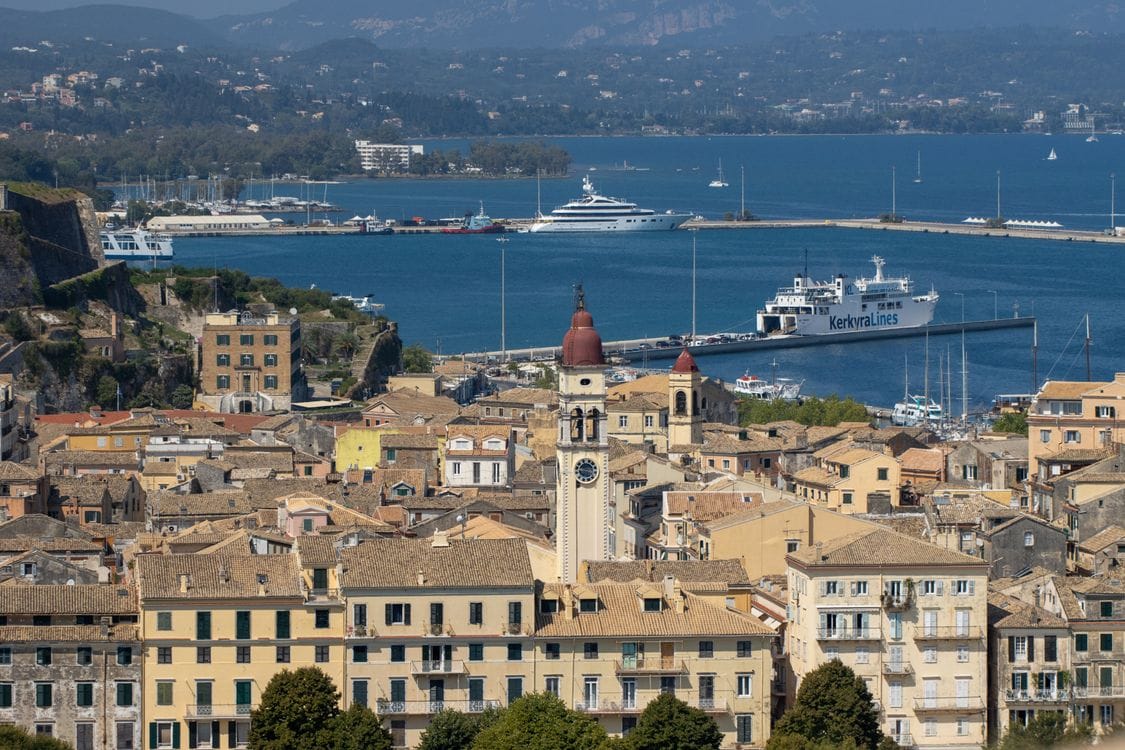
The Ionian islands (Corfu, Zakynthos, Kefalonia, Paxos) sit off Greece’s west coast, are noticeably greener than the Aegean islands, and generally run cheaper. They’re also the shortest flight from the UK, which keeps flight prices down.
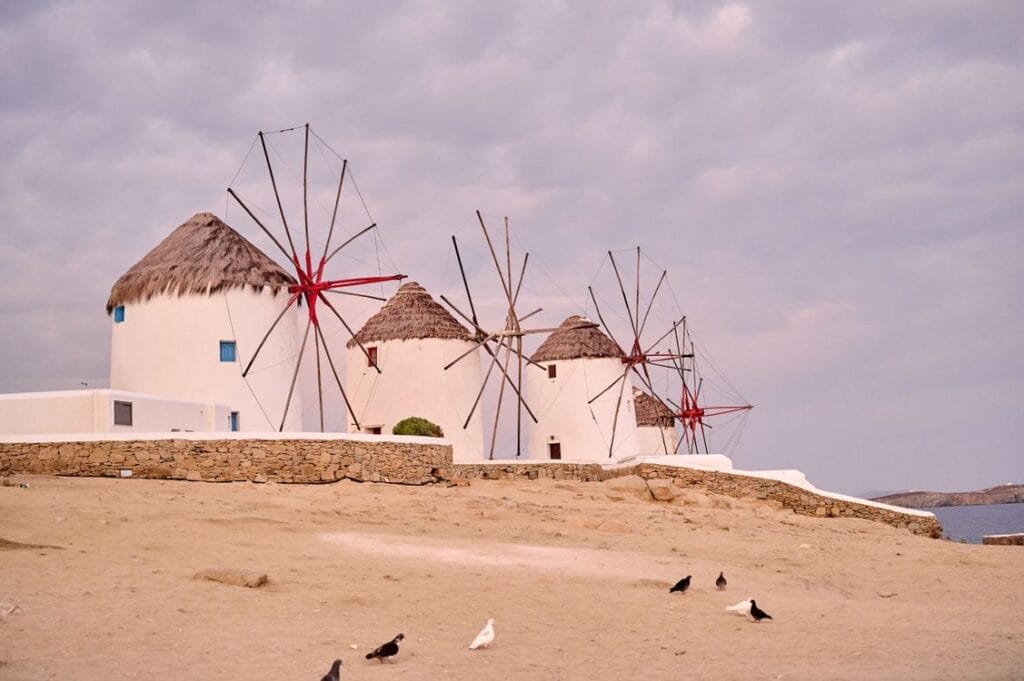
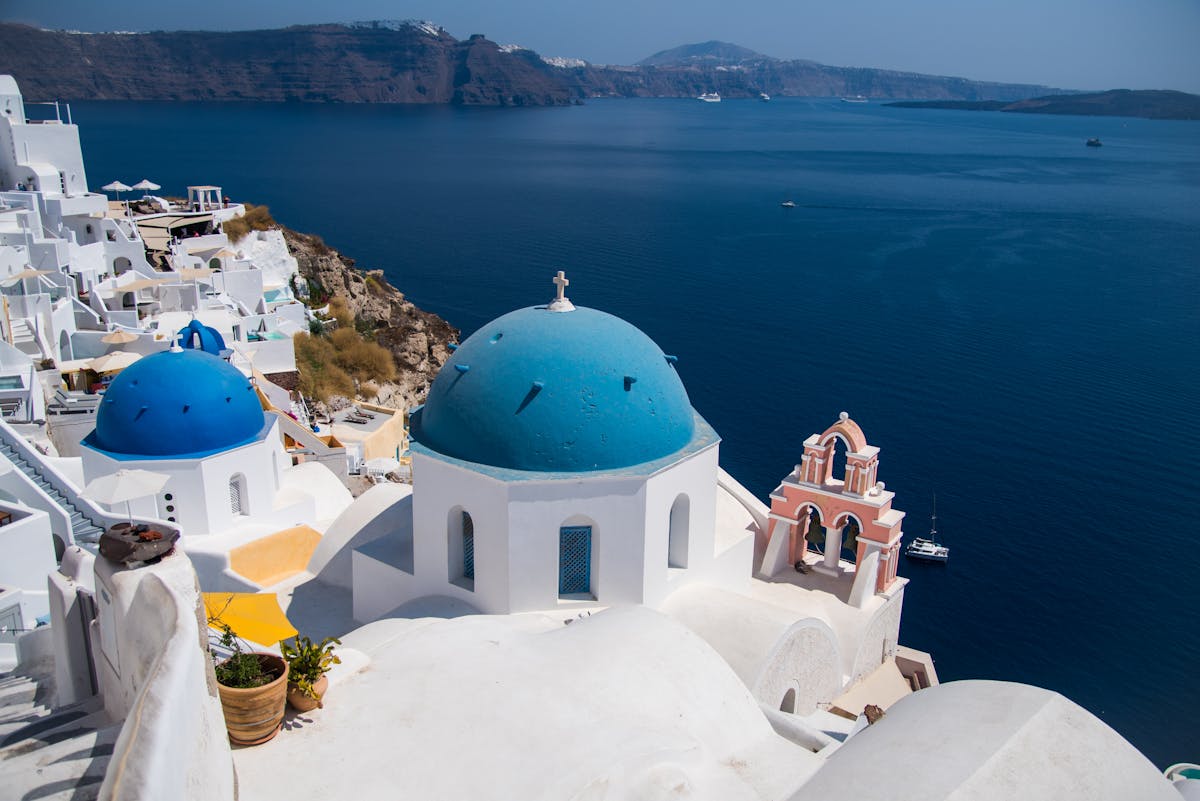
The Cyclades (Santorini, Mykonos, Naxos, Paros) are the postcard image of Greece, white cube houses and blue domes, and carry the highest prices on the list. Naxos and Paros offer a similar look at noticeably lower cost than Santorini or Mykonos.
The Dodecanese (Rhodes, Kos, Symi) sit close to Turkey, mix beach resorts with medieval history, and offer some of the best value large-resort holidays in Greece. Crete, Greece’s largest island, is really several destinations in one, big enough for a full week without repeating a beach.
Which Greek island suits you?
For a first Greek holiday with the fewest compromises, Corfu or Crete are the easiest starting points. Both have direct UK flights, a wide spread of accommodation types, and enough to do beyond the beach.
For couples wanting the classic view without the classic price, Naxos and Paros deliver the Cycladic look at 30% to 40% less than Santorini. For nightlife, Mykonos and Zakynthos’s Laganas strip both deliver, at very different price points and very different crowds.
For families, the Ionian islands work best. Shorter flights, calmer seas on the sheltered coasts, and lower prices all matter more with children in tow. Our guide to Greek islands with kids covers this in more detail.
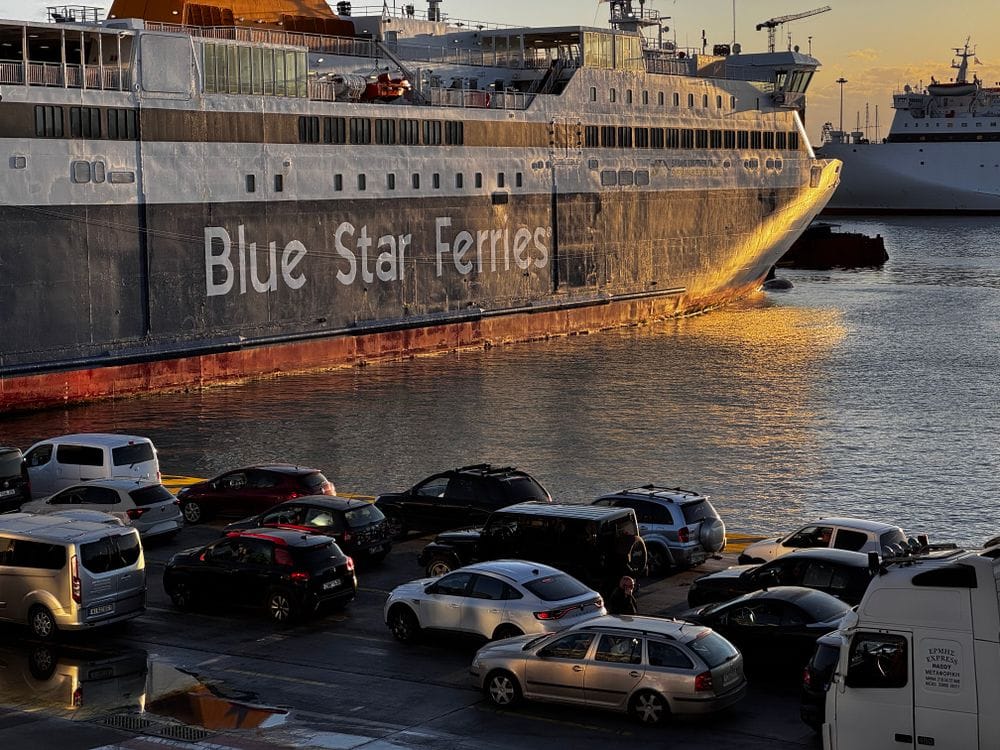
Ferries are the backbone of any multi-island trip, and they are cheaper and more frequent than most first-time visitors expect. Blue Star Ferries and SeaJets both run daily routes from Piraeus, Athens’s main port, out to the Cyclades and beyond, with tickets bookable online a few weeks ahead once your dates are set.
Booking early rarely saves much money on ferries, unlike flights, but it does guarantee you a seat or cabin on the popular July and August departures. On quieter routes and shoulder-season dates, buying a day or two before travel is fine.
If you are combining two or three islands, check the ferry timetable before booking flights. Some inter-island routes only run a few times a week outside peak summer, and a badly timed itinerary can add a full day of waiting at port.
“Everyone assumes Greece has one price, but it swings more than almost anywhere else in Europe. Fly in May and base yourself on Corfu or Crete and you’ll spend roughly half what an August week on Mykonos costs, for weather that’s nearly as good. Greece rewards people who are flexible about dates and islands far more than it punishes people on a budget.”
Kate Acaster, Chief Editor, Flight Tribe
Frequently asked questions
What is the cheapest time to visit Greece from the UK?
May, June, and late September offer the best combination of warm weather and lower prices. Flights and hotels are significantly cheaper than July and August, and the sea is still warm enough to swim in.
Do I need a visa to visit Greece from the UK?
No. UK citizens can enter Greece without a visa for stays of up to 90 days in any 180-day period, as Greece is part of the Schengen area. Your passport needs at least three months’ validity remaining beyond your departure date.
Which Greek island is best for first-time visitors?
Corfu and Crete are the easiest starting points. Both have direct UK flights, a wide range of accommodation and price points, and enough beyond the beach to fill a week without a boat transfer.
How much does a week in Greece cost?
A package week to Corfu, Crete, or Rhodes in shoulder season typically runs around £600 to £850 per person all-in, covering flights, accommodation, food, and local transport. Santorini and Mykonos usually add £200 to £400 to that figure.
Is Santorini worth the money?
For the caldera view and sunset, yes, it is one of the best in Europe. For value, no, it is the most expensive island in Greece by a clear margin. Our Santorini budget travel guide covers how to visit without overspending.
Can I island-hop between Greek islands by ferry?
Yes, mainly in the Cyclades, where routes run from Piraeus (Athens). Ionian links are short and local: Corfu to Paxos by hydrofoil, and Kefalonia to Ithaca, Lefkada and, in summer, Zakynthos. No ferry runs between Corfu and Kefalonia or Zakynthos, so you travel via the mainland. Prices typically run €15 to €35 per person each way, and booking a few days ahead in peak season is worth it.
Is Greece family-friendly?
Yes, particularly the Ionian islands and Crete. Shallow, sheltered beaches, short flight times, and a warm welcome for children in tavernas all help. Steep steps and hillside villages on islands like Santorini are worth checking in advance with a buggy.
For entry requirements and any local safety updates, check the FCDO travel advice for Greece before you book. For the latest Greece holiday deals and cheap flights from the UK, check the Flight Tribe deals page. All offers are personally verified on the day of publication.

Kate Acaster is Chief Editor at Flight Tribe. She writes about practical travel planning, budget airlines, baggage rules, city breaks, beach holidays and good hotels that do not cost daft money.
Kate has travelled through Europe, South America and beyond, usually with a notebook, a half-formed plan and a strong opinion on airport snacks. At Flight Tribe, her work focuses on helping UK travellers understand what is included, what costs extra, and whether a trip is worth booking at the price shown.
How Kate works
Kate checks the details that can change the value of a trip, including cabin-bag rules, airline fees, hotel location, seasonality, travel dates and booking conditions. She is especially interested in offers that look useful on the surface but need a proper reader-first check before they are worth recommending.
Editorial standards
Flight Tribe covers deals and travel advice for readers first. Affiliate links do not decide whether an offer is worth writing about.